Viernes, 16 de octubre de 2026




CONVERSATIONS
The European Commissioner for Defense on Agenda Pública: "Spain has a very strong defense industry"
This is a newly created position in the European Commission. The new Defense Commissioner, Andrius Kubilius, provides an in-depth analysis of the current situation in Europe in Agenda Pública: "We cannot complain that 340 million Americans do not want to permanently defend 450 million Europeans against 140 million Russians", he states.

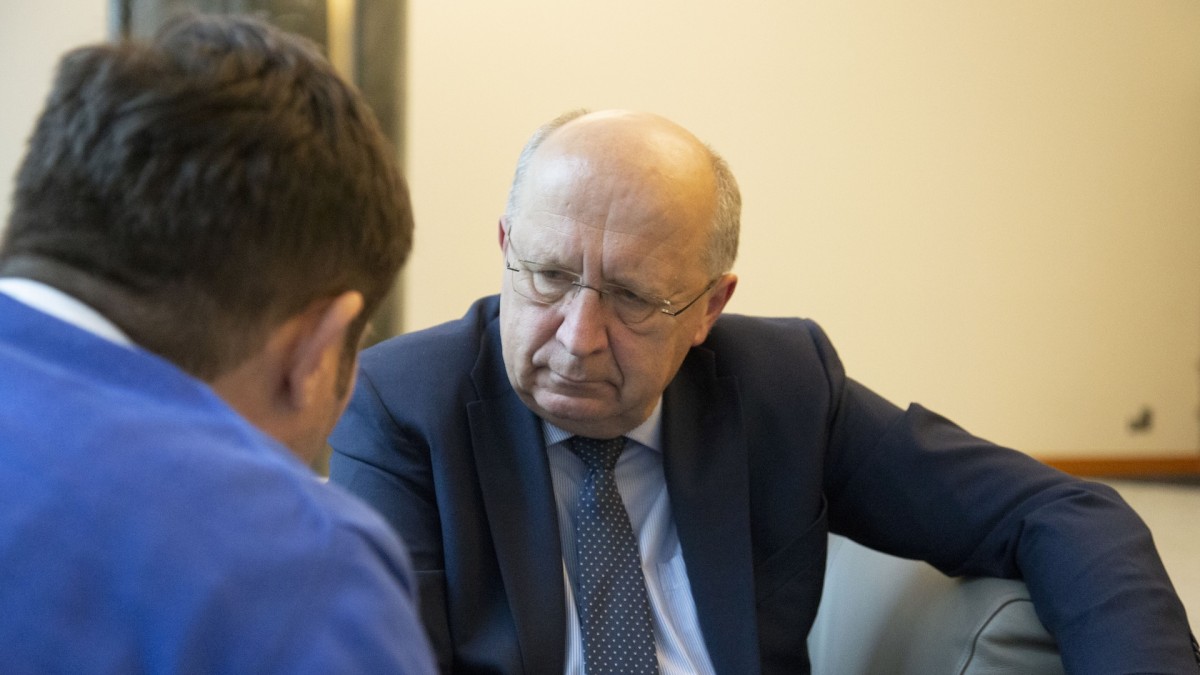
Andrius Kubilius, Commissioner for Defence of the European Union, in conversation with the director of Agenda Pública, Marc López Plana.Agenda Pública / Delmi Alvarez
Agenda Pública interviews the European Commission's top defense official in Brussels. "What I would say to Spanish politicians is that defense spending must be understood as a very important economic incentive to improve their defense industry, which means expanding an industry that is already very strong", he says.
In conversation with Marc López Plana, director of Agenda Pública, Commissioner Kubilius addresses some of the fundamental debates amid the global uncertainty generated, for various reasons, by Vladimir Putin and Donald Trump. He adds: "Instability in Africa is a great danger, not only for Mediterranean countries such as Spain, Italy, and Greece, but for the whole of Europe."
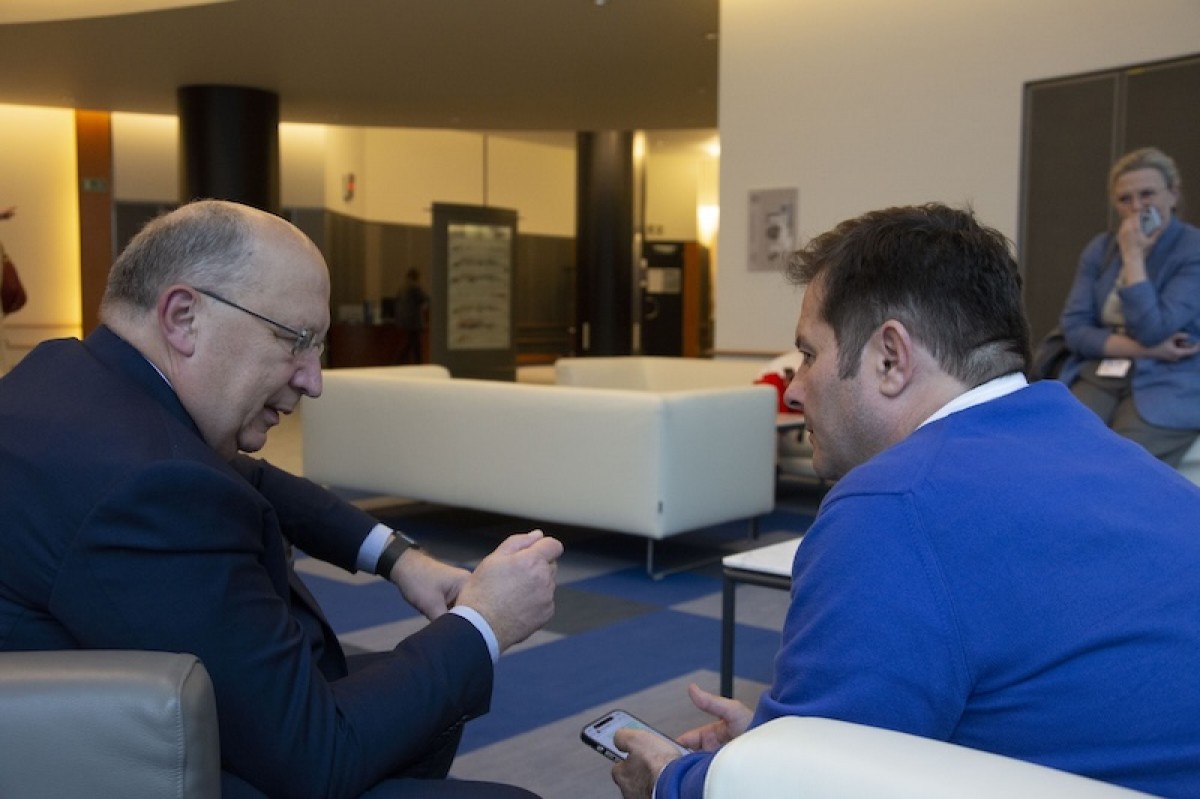
In conversation with Marc López Plana, director of Agenda Pública, Commissioner Kubilius addresses some of the fundamental debates amid the global uncertainty generated, for various reasons, by Vladimir Putin and Donald Trump. He adds: "Instability in Africa is a great danger, not only for Mediterranean countries such as Spain, Italy, and Greece, but for the whole of Europe."
Kubilius defends the use of SAFE loans rather than Eurobonds to finance European defence. Photo: Agenda Pública / Delmi Alvarez
Do you think it will be possible to finance investment in defence through Eurobonds in the near future? Spain and Italy have expressed their will to use Eurobonds as a way to finance this investment.
Well, for the time being, we are more focused on using the financial instruments that have already been created. Just today, SAFE loans were approved by ambassadors, so we are pleased to begin their implementation. Before the June European Council and NATO summit, we expect to have what we call a "panoramic picture of aggregated demand"—what member states need to build in terms of capabilities as they negotiate with NATO on their "capability targets." This will allow us to calculate quite precisely how much it will cost to implement.
We have now created possibilities for additional defence spending of around 800 billion euros over the next four years. We shall see if that is enough.
"We are now in the phase of planning to repay those pandemic bonds in the next budget, and it could take up to 20% of that budget. So, when we start to think about having defence bonds, the immediate question is: from where will they be repaid?"Regarding Eurobonds, we need to remember a very simple thing. We have created this SAFE loans mechanism, where the European Union borrows a lot of money in the market. These are cheap loans, and when member states take them, they also commit to repaying them themselves. It is a guarantee from the member states.
When we talk about Eurobonds, it means the European Union takes out loans and provides grants to member states, and the loan is repaid from the EU budget. This was done during the pandemic with NextGenerationEU.
Now, as we prepare for the future, for the next MFF, we have a big question. Member states have not found any additional financial resources, no new so-called own resources for the European Union to repay pandemic bonds. We are now in the phase of planning to repay those pandemic bonds in the next budget, and it could take up to 20% of that budget. So, when we start to think about having defence bonds, the immediate question is: from where will they be repaid? The EU budget? How? If we shall continue with Eurobonds very soon, the entire budget would be solely for the payment of those bonds, which means we would have to cut spending for other programs from the European budget very heavily. It is not about whether we like bonds or not; it is a very practical matter.
What is the real dependence that we, as Europeans, have on the United States in terms of defence?
We are quite dependent, definitely. We are very grateful to the Americans. Until now, they have provided us with a lot of support. There are figures on how many soldiers they permanently have on the European continent: currently, it is a little less than 100,000. But according to NATO plans, if what we call "Day X" were to occur, they would bring additionally around 300,000 troops.
Of course, they also provide many very important services for our defence. They have so-called "strategic enablers" like space intelligence data, airlift capabilities, and so on, which we do not have. That is one side of the story.
"I am always repeating the same numbers: we cannot complain that 340 million Americans do not want to permanently defend 450 million Europeans against 140 million Russians. We need to do our job."But on the other hand, we need to understand—and we must speak very practically—that due to China's rising military power, we can predict that the Americans will start to diminish their presence on the European continent. We need to take that into account when we talk about what capabilities we need to develop.
We need to agree with the Americans that we need some time to prepare ourselves to take on that responsibility. But we should not complain that Americans are "betraying" us or something like that. Simply, we as Europeans need to do our own homework. I am always repeating the same numbers: we cannot complain that 340 million Americans do not want to permanently defend 450 million Europeans against 140 million Russians. We need to do our job.
What do you think could be the real position of the United States regarding NATO? Not what they say publicly, but their actual position.
Well, it is difficult, perhaps, to say how things will develop over the next decades. NATO is a partnership of transatlantic partners. It is a very important organization, not only because it was created primarily to defend Europe against possible threats—at that time from Stalin, from the Soviet Union—but definitely it stays important now, when the threat map is changing. We see we have North Korea, we have Iran, and even China can become more aggressive.
That is why it is quite natural that Americans are shifting their resources towards the Pacific. We should not be angry about that, but we should look at how to maintain good relations with the Americans and how to take our responsibility for European security on our shoulders.
That will require us not only to take care of the material side of our defence, like how many tanks or how much artillery we need to develop. But also, my Mission Letter, which is my political program defined by the Commission President, clearly speaks about a new European security architecture and the development of a true European defence union. That long-term institutional arrangement is also a very important part of our agenda. If until now we were much more devoted to the material side, we will also need to start discussions about this institutional part.
The commissioner highlights the potential of Spanish defence industry, with companies like Indra and Navantia. Photo: Agenda Pública / Delmi Alvarez
You are the first Defence Commissioner in the European Union's history. Could you explain a little about your perception of what this role in a European Union that works intergovernmentally?
It is defined clearly by the treaties. So definitely, foreign policy and security policies are in the hands of the member states. But according to the treaties, the European Commission has many instruments and obligations to take care of industrial development. It is not just about the defence industry, but in general about all the industries. Industrial policy is one of the essential European policies.
"As the Commission, as the European Union, we will not compete with NATO and its member states. We come with our added value"That is why from the very beginning, I have repeated that as the Commission, as the European Union, we will not compete with NATO and its member states. NATO and its members are developing so-called defence plans and capability targets. Now we are waiting for that information. We, as the European Union, come with our added value: we can assist member states in developing those capability targets; to produce what is needed for them; to find a way to strengthen the defence industry with our industrial policy instruments, and how we can raise additional funds.
NATO cannot do that. They can just agree that they need to invest more, but we, the EU, can have regulations that allow us to find additional funds and spend them on the defence needs of the member states.
Concerning Spain, your last interview created some controversy because you asked for an investment of 3% of GDP in defence. What is your perspective on the current public political debate on defence?
Well, first of all, of course, it is very important that the Spanish government managed to agree on 2%. This is a really important step that we can only congratulate. But the Spanish government and all governments are participating not only in EU discussions, but also in NATO discussions. As we understand it, we expect that NATO will reach an agreement to raise this target from 2% up to 3% or 3.5%.
In fact, Rutte asked the other day for 5% of the GDP.
Yes, 5% with additional spending. I do not remember how I formulated it in my interview, but that was my point. 2% is very good, but we need to see that the needs are perhaps even bigger. That is what we will know very clearly when we have this "panorama of aggregated demand."
Could help explain the case to invest more in defence?
Sometimes I hear people saying, "Well, if you are spending on defence, it means you are not spending on social measures." Definitely, without security and without defence, even the social situation can become totally tragic if war comes. But in addition to that, we need to understand that investment in defence means investment in the defence industry.
"Spain has a very strong defence industry. I can talk and talk about Indra, Navantia, and the defence and space industries, which are now very much interconnected."Spain has a very strong defence industry. I can talk and talk about Indra, Navantia, and the defence and space industries, which are now very much interconnected. Spain, from that point of view, has a very good perspective. First of all, significant money is coming from all European countries. Much of that money can also come to Spain, which means new jobs, new expansion for the industry.
Now I see that industries are also starting to prepare for this money to come. They are starting to consolidate, to unite, and so on. That is what I would say to Spanish politicians: see defence spending also as a very important economic incentive to improve your defence industry. It will create additional jobs, generate good growth, and you will be, firstly, able to be strong among European defence industries, not just within your own community. Second, you could be very successful in building your own capabilities to be competitive in global development.
That is why I am always reminding people to read the Draghi report on European economic competitiveness, where he says that the defence industry is one of the most critical instruments for us to create our economic competitiveness in general. I mean that a competitive defence industry can bring a lot of added value to overall economic development. That is my argument to the Spanish government.
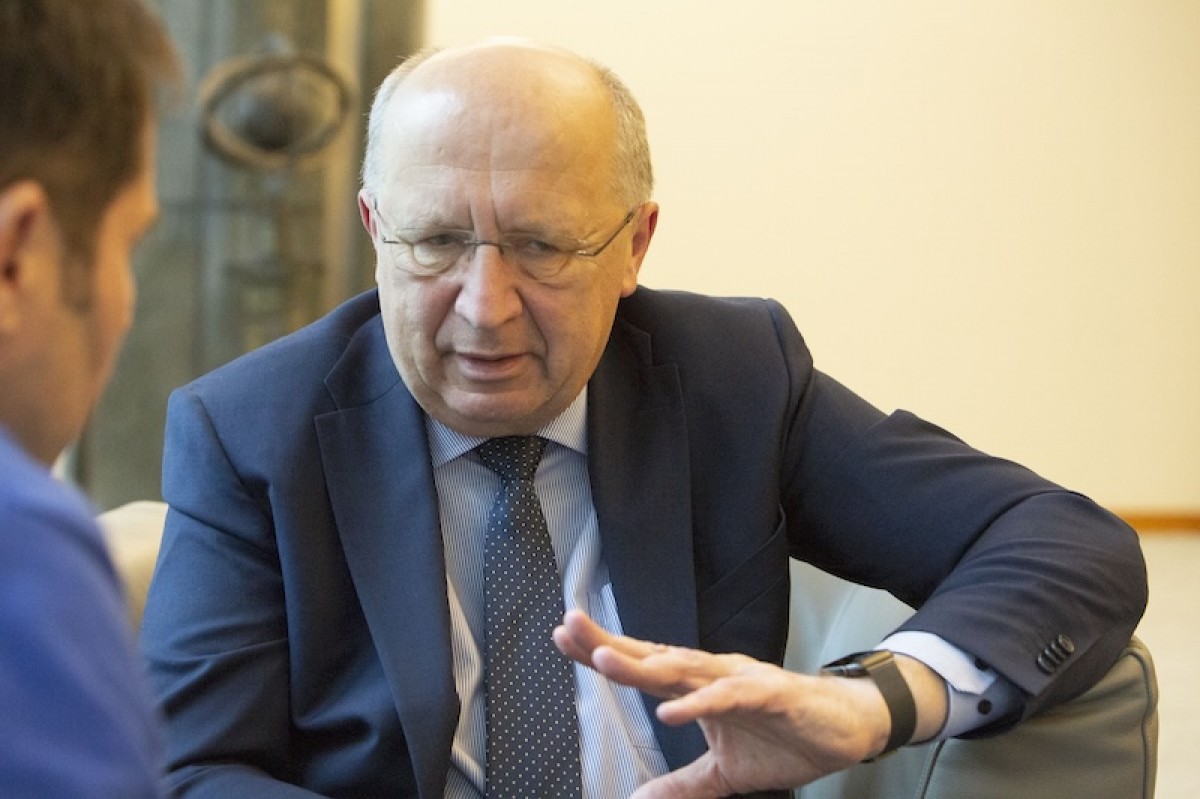
The first EU Defence Commissioner details how European industrial policy can strengthen military capabilities. Photo: Agenda Pública / Delmi Alvarez
What do you think is the role of technology in defence in the near future?
It is crucial, definitely. We are planning to have a roadmap on technological modernization of defence in the autumn, with specific attention to artificial intelligence and to quantum technologies.
I recently came back from Kyiv. What the Ukrainians are doing with innovations in defence is incredible. What they are doing with drones is not just innovation in technology. But how they created an entire digital system for their "Army of Drones" is impressive.
"War is changing. In Ukraine, I was totally impressed. They are creating those swarms of drones, managed by artificial intelligence. Almost 700 drones without any operator, all with artificial intelligence, they can do the targeting automatically."That digital platform allows them to create some very interesting developments because that army of drones in Ukraine was created by guys from the video game industry. They introduced a bonus system where operators compete among themselves to see who can hit more Russian targets. I truly believe that the Ukrainian defence industry in the future will be very strong. I know that some other European companies are now going to Kyiv to look for joint ventures.
Definitely, war is changing. This is what we are also discussing with NATO experts: how many conventional technologies will be needed, how much of these new technologies, how much artificial intelligence, and what influence will it have? In Ukraine, I was totally impressed. They are creating those swarms of drones, managed by artificial intelligence. Almost 700 drones without any operator, all with artificial intelligence, they can do the targeting automatically.
How does a Defence Commissioner from an Eastern country understand the problems of defence in North Africa, in the Sahel, and in Mediterranean countries? Because for us as Spaniards, it is vital to look also to the south.
For now, of course, we have those threats coming from Russia's aggressive behaviour. We know that, as Mark Rutte is saying, Russia is now able to produce four times more weapons than all NATO member states combined, including the United States. That is what we need to keep in mind.
"Instability in Africa and in that region is a big danger, not only for Mediterranean countries like Spain, or Italy, or Greece, but it is a danger for the whole of Europe."But definitely, instability in Africa and in that region is a big danger, not only for Mediterranean countries like Spain, or Italy, or Greece, but it is a danger for the whole of Europe. It would be a big mistake for northern countries to think that those are small issues and that you should take care of them yourselves.
I remember very well 2016-2017, when the refugee crisis came ... when we were sitting in the Baltic States, and we were saying that it was "for Spanish and Greece, this is their problem." Until we were hit by this artificial, instrumentalized Lukashenko crisis of migration on our borders. Young people started to understand that, really, here solidarity is mutual.
We need to see that South also has as a potential threat. As some politician from the south, from Mediterranean countries, was saying: "Look, Russia is not only in the north. Russia is also here." For them to destabilize is very easy. That is why we really need to pay attention to that.
What I always repeat, both for the north and for the south, is that we need to remember that our defence is based on the principle of collective defence. Alone, we are weak. But collectively, through our NATO or EU structures, we can be very strong. But it depends on all of us, - when we invest in our defence we need to understand that we are building this collective defence. If someone does not invest, it makes everyone else weaker.
You met with Spain's Defence Minister. What can you explain about your encounter?
It was a very good meeting. Of course, time was very tight. I promised to come back to Spain, but something in our agenda changed, but I will definitely come. She understands very well what Europe can bring, what added value we can bring. We truly understand those issues related to Spain, as a Mediterranean country. I do not see any different views or thoughts here.
As I said, Spain, with its defence industry, with its defence capabilities, is truly a very important country among all the European Union member states. I always appeal to those big countries, saying: "You are responsible for developing a strong Europe."
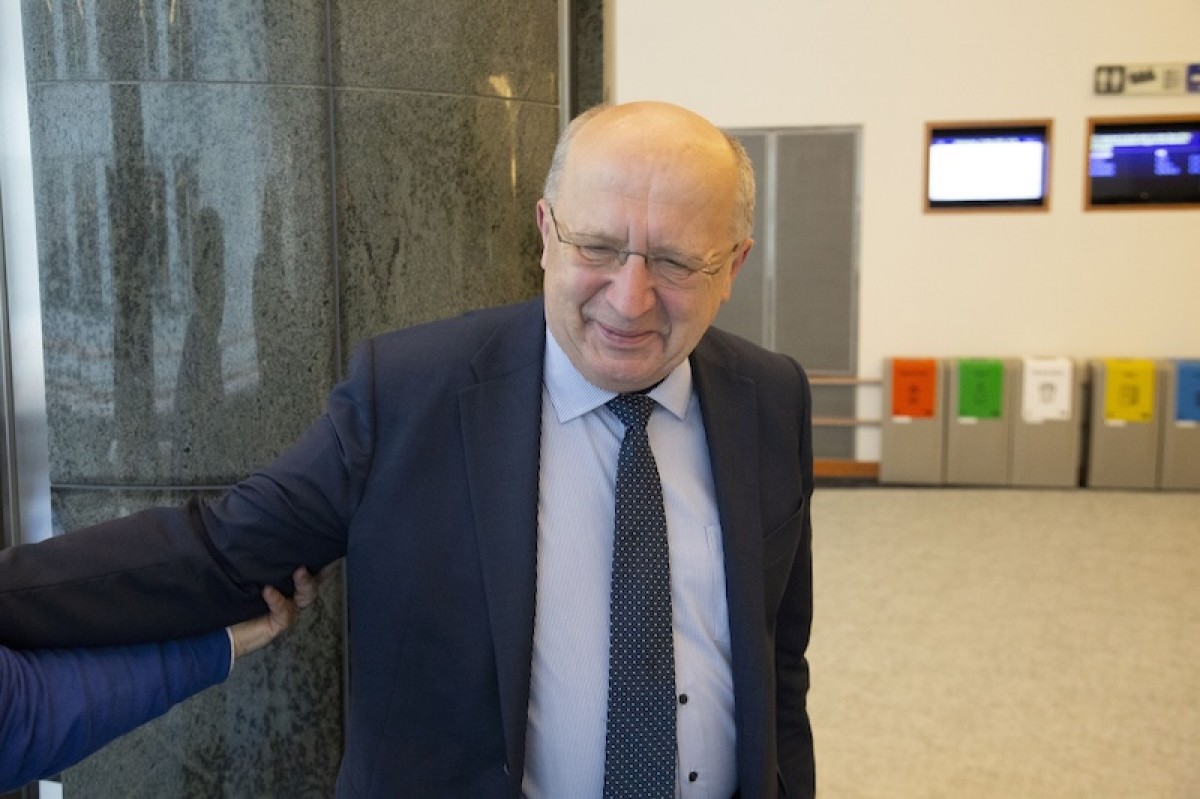
Kubilius emphasizes the importance of European collective defence against Russian military production capacity. Photo: Agenda Pública / Delmi Alvarez
Ahora en portada
16 de octubre de 2026
16 de octubre de 2026
16 de octubre de 2026
Noticias relacionadas
Hace 79 semanas
No esperemos a los bárbaros: discurso europeísta frente a discurso del miedo
Hace 82 semanas
El gasto militar ya no es tabú en España: un análisis a partir de lo que dicen los datos
Lo más leído