



"Donald Trump's reaction against traditional allies is incomprehensible"
Stan Veuger is a senior economist at the American Enterprise Institute, one of the leading think tanks in the United States and one of the global thinkers most critical of Donald Trump's economic policies. Veuger, who is also a visiting professor at Harvard and a columnist for the New York Times, talks in depth with Antonio López Isturiz, MEP for the European People's Party and member of the executive committee of the Wilfried Martens Centre for European Studies, on Agenda Pública. A transatlantic conversation promoted from Spain.
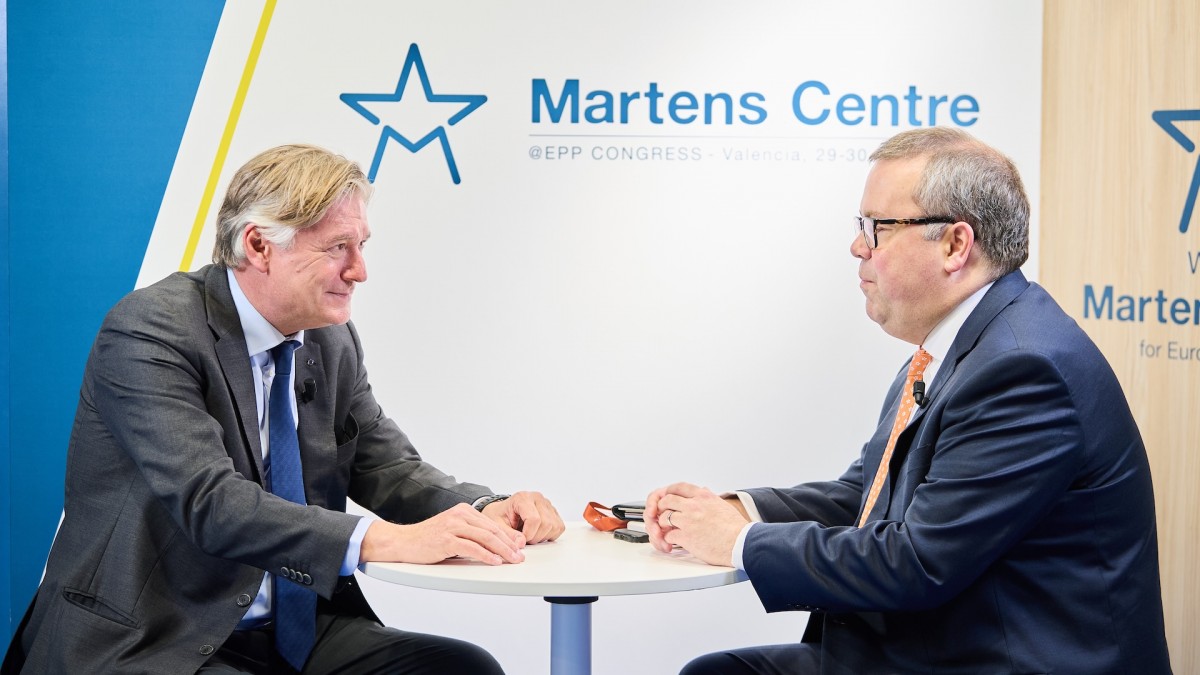
For almost a century, the American Enterprise Institute has influenced US governments and, in particular, the Republican Party. That is why this week's conversation takes on a new dimension: two leading figures from the international center-right analyze Donald Trump's impact in his first months in office.
A Spanish MEP and a Dutch economist based in Washington, who met at the recent Popular Party Congress in Valencia, analyze the implications of Trump for the international economic order. Veuger is clear: “If I look at the whole spectrum of policies in these first 100 days, it has really been a disaster.”
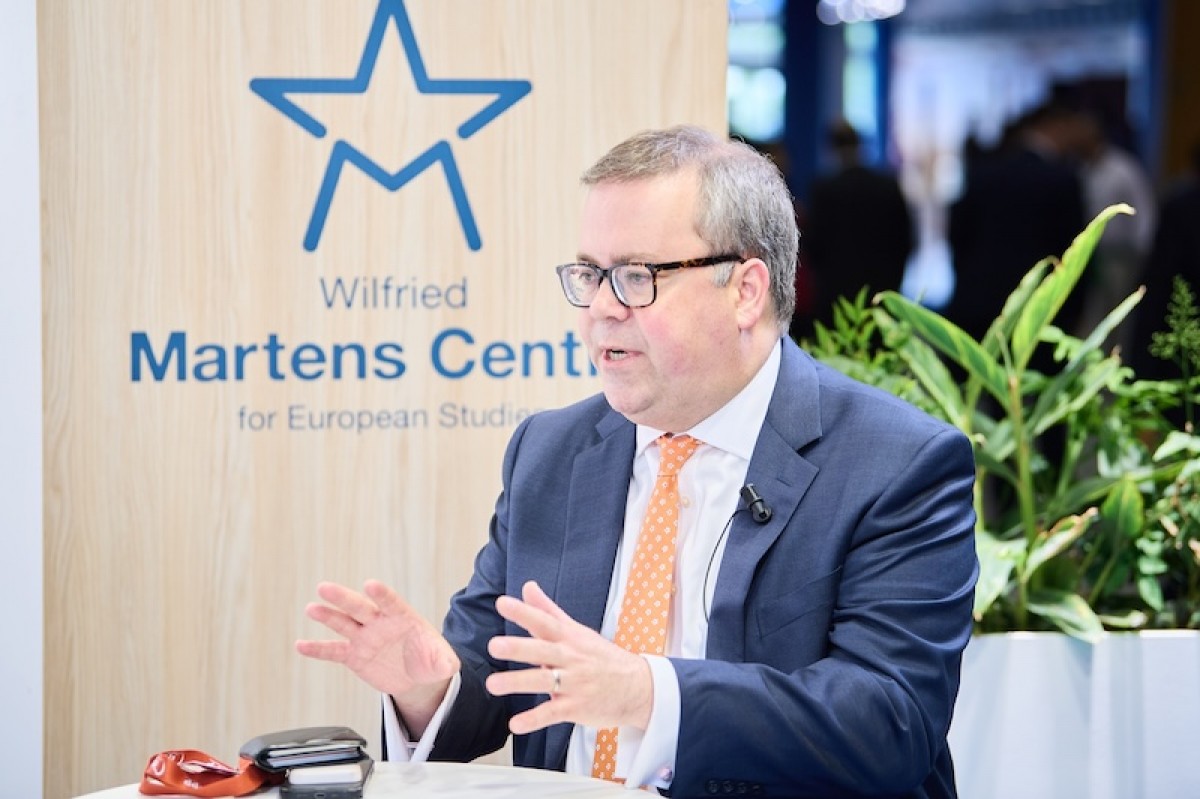
Stan Veuger is a Dutch economist who works as a senior fellow at the American Enterprise Institute. Photo: Martens Center / David Plas
What are your impressions of these first 100 days of Donald Trump?
I think it's been a rough 100 days. I was pretty sceptical about how things would go, but in basically every major policy area, it's gotten a little worse than I expected. The relationship with traditional allies has been mismanaged in an unimaginable way.
With the European Union, to some extent, but especially with Canada. That's really one of the most incredible things anyone's ever seen: the relationship with Canada is now so bad that the Canadian elections are fought on who is the most anti-American, and the winner of the election says our relationship with the United States will never be the same. The treatment of Volodymyr Zelensky was despicable as well.
"If I look at the full spectrum of policies from these first 100 days, it's really been a disaster"In economic policy, we've seen a set of disastrous tariff announcements and rollbacks that we'll talk about more. Trump has always been a protectionist, but those measures have also been significantly worse than what people typically expected, also than what I expected. Domestically, it's been chaos throughout.
Immigration policy has been more in line with what I expected, but it's been a lot of conflict with judges, with institutions, with all sorts of actors, and the number of deportations isn't even up. If I look at the full spectrum of policy, it's really been a disaster.
Your research showed that President Trump's reciprocal tariff scheme mismeasured bilateral deficits and ran afoul of basic economic principles. What lessons should future administrations take from that episode?
After President Trump announced what they call reciprocal tariffs, it became clear quite rapidly that the numbers they had put out were not based on counterparties' tariff systems or non-tariff barriers. Instead, what they had simply done was they set a 10% minimum tariff floor, but above that, they used the size of trade deficit divided by total imports times 0.5, a very simple formula.
The logic, such as it is, underneath that is that you want to reduce every bilateral trade deficit to zero, which is not a good objective. When confronted with the evidence that this was the formula they used, they said, "No, no, we did something much more sophisticated," and they put out that same formula, trade deficit divided by imports, but then they multiplied imports by two Greek letters, two different elasticities, and they sourced those elasticities to papers.
"The White House didn't want to engage on the merits with us. The communications director went on Twitter and called me a dummy, but none of the economists in the administration were willing to defend their approach"We quickly found out those numbers aren't right. If you follow their approach, all of those tariffs should be four times lower. Basically, no country should have had a tariff above 14% if you followed their approach. There were countries that had 50%, 47%.
The White House didn't really engage on the merits with us. They said, "The American Enterprise Institute, they're always coming after us." The White House communications director went on Twitter, he called me a dummy, but none of the economists in the administration were willing to defend their approach. They put out a brief statement, off the record, to a national security reporter, so you know that they were admitting they didn't do it right.
They rapidly, within 15 hours of implementation, they suspended the reciprocal part of the tariffs, and now we're at the 10% lower bound.
I think that whole approach of looking at bilateral trade deficits is bad because the aggregate trade deficit is set by domestic savings and consumption decisions. The bilateral deficits can be negative even if you're in trade balance overall. They're set by trade policy, maybe to some extent, but also just by comparative advantage.
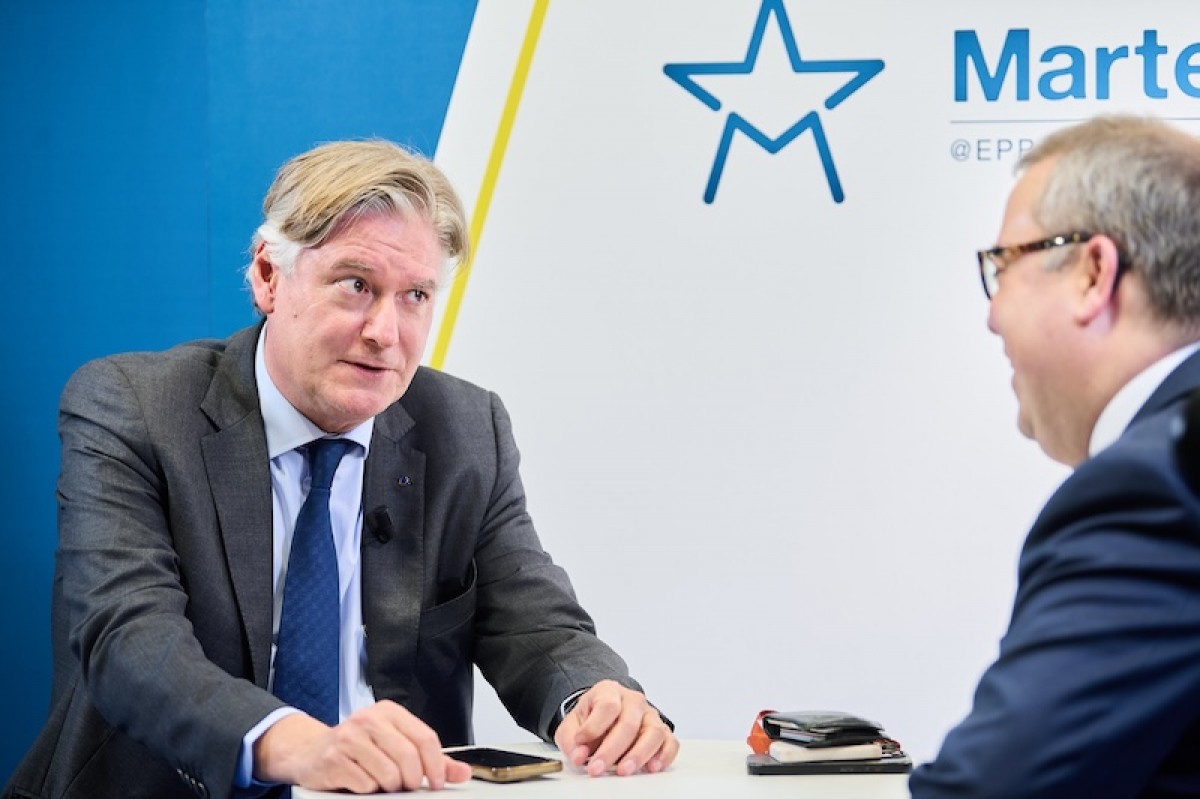
The beginning of Donald Trump's term marks the start of this conversation. Photo: Martens Center / David Plas
You and Daniel Sowak demonstrated a causal link between policy uncertainty and unemployment. How large is the current policy uncertainty shock, and which sectors or regions look most vulnerable to a new round of job losses?
The current levels are enormous, higher than they've ever been, really, in the U.S., mostly driven by trade policy uncertainty. For tons of businesses, even if you're not an importer yourself, you will rely on products from companies that are importers or you'll be selling abroad, in which case you're also affected. Numerous companies are impacted and the measured levels of uncertainty are higher than ever.
"The levels of uncertainty are higher than ever, especially affecting businesses that are very capital intensive or that would otherwise be growing rapidly"The way that will affect the macroeconomy most directly is through investment and hiring decisions. If you're planning for the long run, there will be value in waiting to see what's going to happen. And so until there's more clarity on trade policy, which I'm not sure if we're going to have during the next three years, really, people will hold off on building new factories, they will hold off on hiring.
Especially businesses that are very capital intensive or that are growing rapidly, would otherwise be growing rapidly, will be impacted the most.
Is the dollar at risk?
It doesn't really look like that so far. That was a bit of a scary moment, right before the Trump administration reversed much of its original Liberation Day tariff announcement.
What happened then, the stock market was going down and people were also selling off U.S. bonds at the same time. That's not normally how it happens. Normally, bonds go up when we sell stocks. Some people have interpreted that as foreign investors being worried about the U.S. as a safe haven.
I think the jury is still out on that a little bit. The actual volumes haven't shifted that much. There's some technical explanation that may explain it. And of course, around the same time, Europe was really changing trajectory as well with the big announcement from Germany, more availability of the safe asset there. And so it may have just also been rebalancing, maybe including by European investors, away from the U.S. into bonds and into, say, European arms manufacturers.
Washington, Beijing and Brussels are preaching about strategic autonomy, subsidizing chips, batteries, critical minerals. If every major economy follows suit, do we become safer and more resilient or simply poorer and less innovative?
I think there are arguments for being autonomous in certain national security sectors and certain strategic industries. But in general, the decoupling would make us poorer and less resilient.
I think a lot of people took the wrong lesson away from the pandemic when there were shortages of semiconductors and shortage of masks. But that was not because those supply chains were fragile. It was just because the demand for electronics and semiconductors and masks went up super rapidly. If we had produced those at home, we would have had the exact same problem.
And of course, if you produce something only at home, something happens at home, a power outage or a fire or a flood, you can be at significant risk in a way that you are not if you have a diversified supply chain.
"Decoupling would make us poorer and less resilient. The desire for protectionism is coming to the surface in many cases"It's particularly surprising in the U.S. The U.S. at the tail end of the pandemic had a major shortage of infant formula, which you're not allowed to import. And of course, demand for infant formula is super inelastic.
We had an infant at the time. You have to get infant formula, what else are you going to do? And there, people pointed out, "Oh, maybe we should import some from Europe where they are still producing them." But no one took that lesson. And so I think it's just a desire for protectionism coming to the surface in many cases.
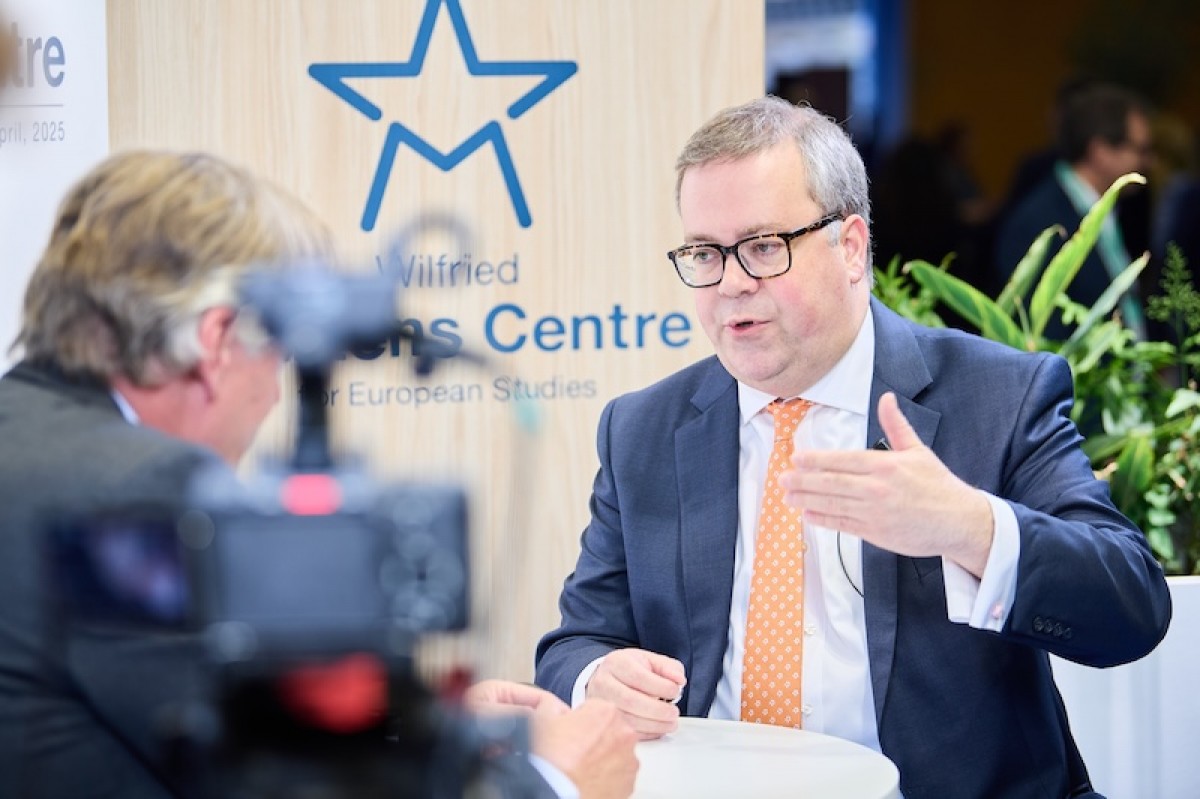
Veuger is critical of the trade policy of the new American Administration. Photo: Martens Center / David Plas
You move easily between Brussels and Washington. What structural obstacles still block deeper U.S.-European Union economic coordination?
I think the deeper economic coordination has been challenging for a number of years. I think it predates Trump. The deep negotiations were not going smoothly beforehand. And I think part of the problem is that until recently, we were charging each other pretty low tariffs. And so the gains aren't so immediate.
And the remaining industries are very sensitive politically. It includes agriculture and the automobile industry in particular, which are two very politically sensitive industries, both in the U.S. and in Europe. And so making progress there is just hard.
Then on the services side, I think there are just very different political visions of how regulation should happen. So I think it's also difficult to bring people together there. Of course, at the same time, there is a super strong investment relationship. And maybe that's the way to go.
"Migration is an underexplored area where you can make it easier for people to move back and forth, whether within companies or more generally"Maybe there's room for a little more cooperation on the migration front. Maybe not under the current administration. But that's, I think, an underexplored area where you can just make it easier for people to move back and forth, whether it be within companies or just more generally. I think that's an area where there's maybe in the mid to long run a little more space.
Where do Republicans, you feel, will go on economics? Will they ever reconnect with Europe?
I don't think they have good alternative options. I think there is a segment of the Republican Party that is still quite libertarian, read and open to free trade and the like.
There's another segment of the Republican Party that's very hawkish on China. And they need an alliance with Europe to be able to maintain economic dominance, which is a prerequisite for national security dominance. And so those two groups, I think, provide some hope.
They're not currently on the winning side of that debate. But hopefully that will change in the next few years.

Istúriz was interested in the situation of the global status of the American dollar. Photo: Martens Center / David Plas
.png)