Lunes, 19 de octubre de 2026




CONVERSATIONS
Thierry Breton: "If Elon Musk chooses to express himself using X, he must ensure that it complies with European legislation"
He is the European politician who first confronted Elon Musk. Thierry Breton, Commissioner for the Internal Market of the European Union during the previous legislature, talks exclusively to Agenda Pública at a key moment and where it is debated whether the legislation he promoted can protect the Union from the obvious external interference. His goal? "To protect users and maintain transparency in the digital age."

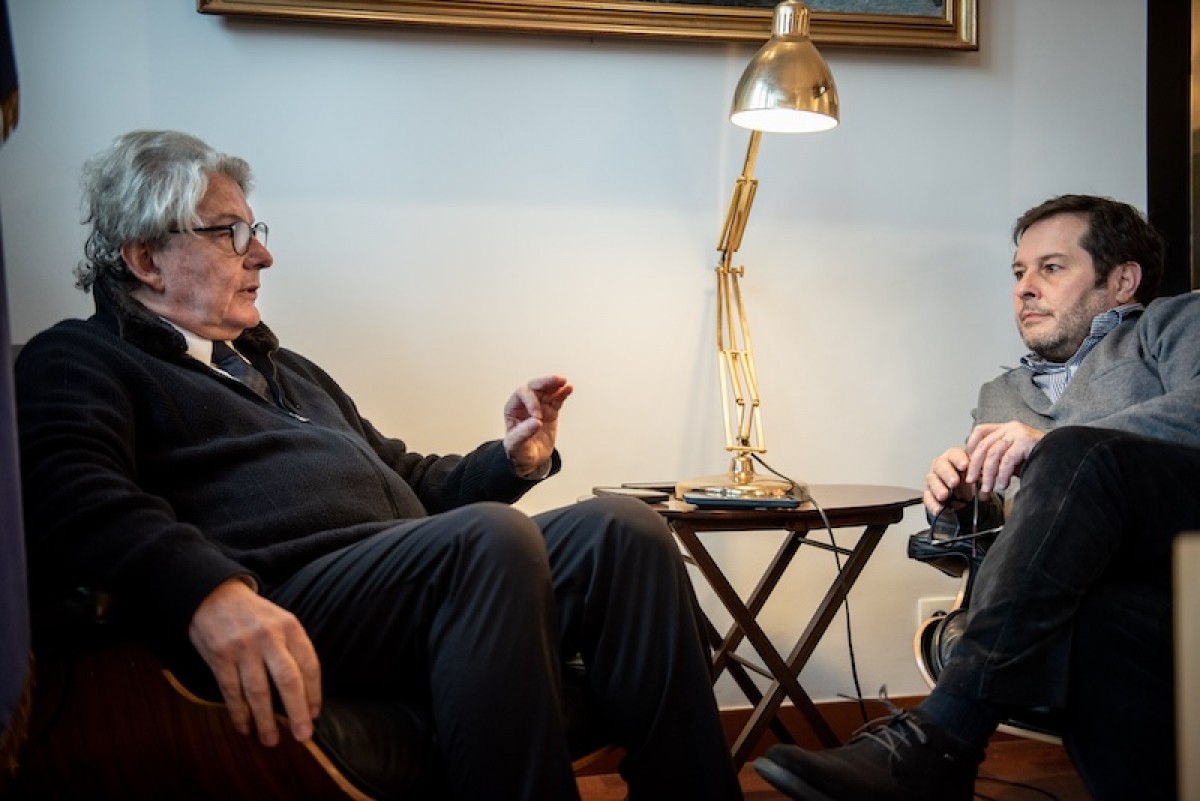
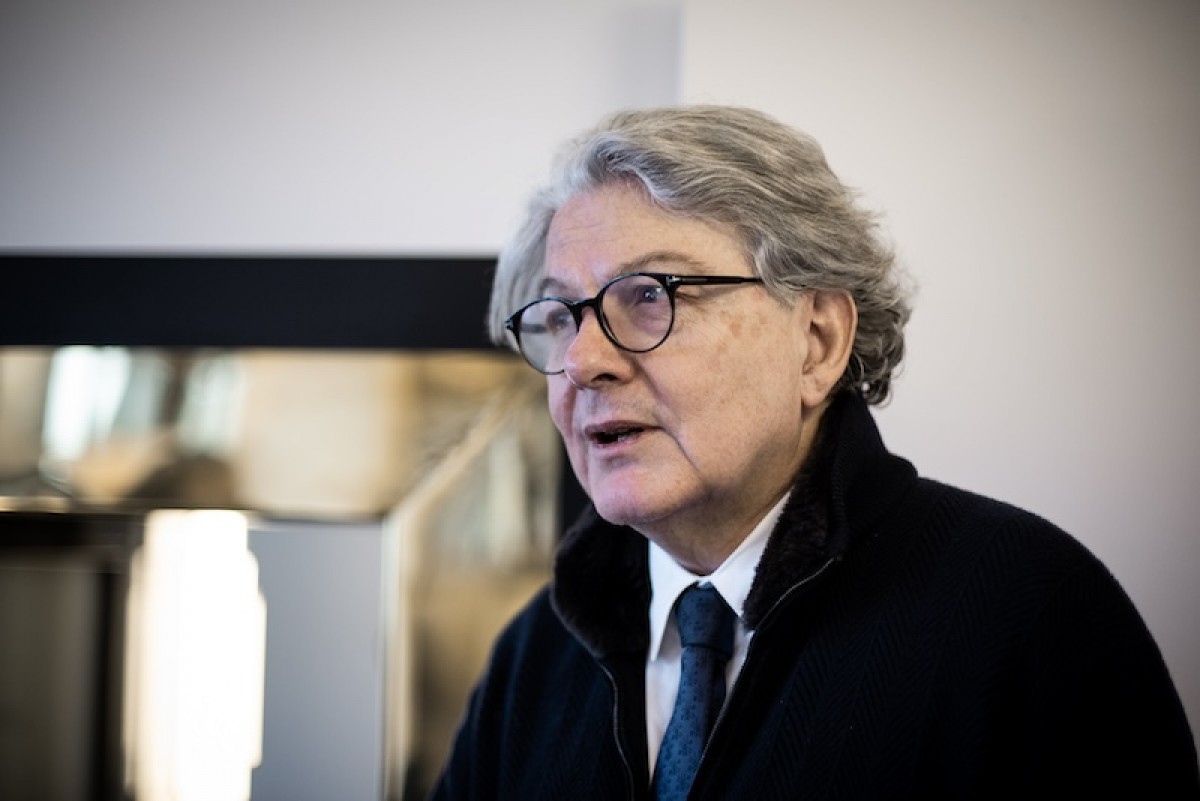
Thierry Breton, former Interior Market commissioner.Agenda Pública / Bruno Arbesu
Breton receives our Director, Marc López Plana, at his home in Paris months after Ursula von der Leyen did not want him to continue as European Union Commissioner. The Commission President and her Chief of Staff are known for their iron grip on power. However, he is the politician of the moment. Breton believes that "the European Commission has the right tools and resources to enforce European regulations on social media platforms." "I am no longer a commissioner", he says to avoid being specific in some of his answers, but during the interview he hints that he feels a bit lonely asking Elon Musk that "if he wants to express his views through X/Twitter this must comply with European regulations". He also longs for his working relationship and friendship with Spain's Josep Borrell, with whom he shares that "Europe must unite to defend itself and, if necessary, take offensive measures in cybersecurity, space, air and maritime defense".
I do not think so. The First Amendment is crucial, and for us in Europe, freedom of speech is equally paramount. The European Parliament is highly sensitive about protecting free speech, even on the internet. I can tell you that the European Parliament voted overwhelmingly in favour of the DSA because it upholds free speech. If it had infringed on free speech in any way, the Parliament would have opposed it.
Free speech is essential to us, but, as I mentioned, there are limits, just as there are in public spaces like the streets or on TV. After years or decades of experience, legislators have determined certain boundaries, such as prohibiting antisemitic or racist comments. However, this is separate from our digital law, which focuses on the specific nature of online platforms.
What does interference mean to you?
In the last few years, we have a new way to communicate between us, mainly through social networks. That's something very new in the history of humanity. These platforms, especially large ones with more than 45 million users or 10% of the European population, present unique challenges. To address these, the European Parliament and the European Council have overwhelmingly supported the Digital Services Act (DSA).
In other words, this is not about regulating speech, but about regulating the capacity to massively amplify information. This amplification can create a tsunami of information, sometimes containing false information, which can have harmful effects on individuals, including children.
How does this apply to Elon Musk?
Elon Musk is a person, and like anyone in Europe, he has the full right to express his opinions, as long as he doesn't violate the law. He is entitled to his own thoughts and to express them freely. For instance, he did so in an article for Die Welt.
Do you think that right now, X/Twitter could be in breach of European law?
I am no longer a Commissioner, so it is not my role to answer this question. However, I can share some public information. When I was a Commissioner, we launched investigations into certain platforms when we deemed it necessary. Based on the information we had, we initiated these investigations to ensure that the platforms were complying with European law. X/Twitter was one of the platforms included. My team at the time determined that it was appropriate to proceed because we had reasons to believe it was necessary. I know the investigation began, but since I am no longer a Commissioner, I cannot provide more details.
 Does the European Commission have the appropriate tools and resources to tackle these platforms?
Absolutely. The European Commission has more than 150 specialists, who are extremely professional and well-trained. A lot of them come from the social networks themselves. They know extremely well the technology, the law, and they have experience.
I can explain the philosophy behind the laws passed by our democracies, the sanctions involved, and how we intend to enforce them. There is a lot of misinformation, especially from the extreme right, claiming these digital laws are about censorship or invalidating actions, which is entirely false.
How do you understand Meta's decision regarding content moderation?
The way to moderate content is in the hands of the platforms. They decide how they want to moderate, and they must explain their moderation methods. It is not our role to comment on how they choose to do it. What will be judged is the capacity and efficiency of their moderation.
Some companies are doing this quietly, while others are more vocal. I won’t comment on individual approaches, but I noticed that Meta’s statements focused on the U.S. without mentioning any plans to change its practices in Europe. I know Mark Zuckerberg well from my time as a Commissioner responsible for digital regulation. My team and I had many interactions with him, including a visit to California, where we explained the DSA in detail and how Meta should organize itself to comply with it in Europe.
Meta understands the philosophy behind the DSA, and they are adapting their operations to comply with European law, no more, no less. It’s worth noting that Meta has spoken about changes in the U.S., such as moving some moderation teams from California to Texas, but they have been careful not to mention similar changes in Europe. This is because they are well aware of the legal requirements in Europe, and I have no doubt that they intend to respect those laws.
I think there is another way to see what Elon Musk is doing. There is a strategy to create fragmentation in Europe, but not because of an electoral or political interest, but because there is a business interest. I think one of Musk's interests is Starlink. Not so much X/Twitter.
I will discuss this in general terms, but it is not my role to interpret the motivations behind specific behaviours. Regarding Elon Musk, I have interacted with him numerous times, including discussions about the DSA. I visited him on several occasions to explain what was required for compliance with European regulations. He understood our objectives well and even supported our efforts.
As for his political stance, I knew him as a Democrat. He supported Barack Obama and later Joe Biden. However, a few months ago, I noticed a shift in his political alignment, moving from being a Democrat to supporting more extreme Republican positions. Tracking his exact stance is now challenging, and I do not judge; I’m merely observing, like everyone else.
Now, with signals from the incoming U.S. administration, we should prepare for similar behaviour. We must not be naive about this reality. Our best defence is to strengthen and promote our unity. Only by standing united can Europe negotiate on equal footing globally. Without this unity, Europe is at risk.
But right now, we have a less pro-European Council than in the past?
Yes and no. Okay. Of course, I see, like you, the fact that in many of our Member States the extreme right is really having momentum. It is obvious. And of course, we have to respect democracy. Sure. Now, in no country, the extreme right has a majority. No way. It always needs to find some compromise. They play their role, but without the majority.
What about Marine Le Pen?
Not even Le Pen says it any more; it’s not part of her program. My point is that everyone, including these parties, has come to understand that the vast majority of European citizens recognize that our strength and future lie in our ability to work together under the umbrella of the European project. They’ve realized this.
Now, they can talk a lot, but there’s a difference between speaking and acting. It’s very difficult, if not impossible, in Europe to act against the majority of the people. I won’t say more than that, but I do acknowledge this trend, which we have to respect.
However, if we look at the European Parliament, these parties represent, at most, 20% of the MEPs. That’s not 50% or 70%; it’s 20%. Some might think that’s significant, but it means that 70 to 80% of our fellow citizens do not support this trend, even though these parties are, of course, part of our democracy.
It is very well known that you had a conversation with Viktor Orbán when you finished your mandate as a Commissioner. Tell me about Orbán's position regarding Europe and how he understands the European Union right now.
First, I’d like to put this in the context of my previous role as Commissioner. I had a significant portfolio, covering areas like digital, the internal market, industry, defence, space, tourism, and media. My job involved visiting all 27 member states regularly, discussing with their governments to understand their priorities and explaining EU policies.
In our meetings, we always had frank, in-depth conversations. Orbán is an experienced prime minister, the longest-serving leader in the European Council, making it crucial to exchange views with him. We discussed various topics, including the political environment, the situation in the U.S. before their final election, Ukraine, and global issues like China. Orbán’s positions are well-known; he had a close relationship with Trump and likely will continue to maintain that connection.
More so than Meloni?
I cannot judge that. Orbán certainly has more experience and a longer relationship with Trump than Italy's Prime Minister, who is newer to this level of international engagement. Orbán's direct access and dialogue with the Trump administration are important facts to acknowledge.
Regarding his stance on Europe, while I may not agree with all his views, it is clear that dialogue is crucial. Orbán, at the end of the day, voted for sanctions against Russia. My experience as Commissioner taught me that engaging with all member states, spending time to understand their positions, and finding common ground is essential. This is how the European project is built—through compromise and collaboration among all 27 members.
You mentioned space. Why is space so critical for Europe, and what is the battle of space about?
Well, together with my former colleague and friend, Josep Borrell, who was the High Representative, we worked closely. I was the Commissioner for Defence Industry, and he had a dual responsibility for both foreign policy and defence. We collaborated well, and under his leadership, with the support of my team, we worked with the 27 Defence Ministers on what we call the Strategic Compass, which was the first time we had a unified defence framework. It took many months, even years, to complete, but it was a significant step forward.
As part of this work, we identified four contested areas where Europe needs to work together to defend and, if necessary, take offensive actions. No single country can handle these challenges alone. These areas include cybersecurity, space, air defence, and maritime defence.
We’ve already made progress, for example, with the Galileo satellite constellation. It serves both governmental and civilian purposes, and we’ve established a governance model that allows member states to collaborate comfortably. This system ensures that we work together to benefit Europe’s sovereignty, autonomy, and protection.
Now, we need to expand this model into the other contested areas. We've made substantial progress with cybersecurity, including the Cybersecurity initiative, and we have ongoing projects in air defence. In space, we are working on the IRIS project, which aims to establish a secure infrastructure for both governmental and defence applications, as well as civilian connectivity across Europe and beyond.
What does it mean to you that Meloni could strike an agreement with Elon Musk to use Starlink for Italy?
Well, first, it’s important to note that IRIS offers much more than any other constellation today. We provide more advanced technology than any competing system, which is a key differentiator. However, I do not want to comment on the strategy of any single country. What I do know is that all member states supported the IRIS project, including the European Parliament.
Of course, if, in the meantime, a country identifies a specific need and chooses to take independent action, that is not for me to comment on. But what I can say is that every member state voted for IRIS, and this constellation is crucial for our autonomy.
Why do you think we do not have a European Google?
To understand this, we need to look back at the past 20–30 years. One of the challenges we faced in Europe, especially during my time as Commissioner for the Internal Market, was the fragmented nature of our digital market. While we had a single market for goods, services, and people, we did not have a cohesive digital market. Europe essentially operated with 27 separate digital markets.
Even though, Europe’s population is one and a half times larger than the U.S. in terms of total size, with 450 million people compared to the U.S.'s 340 million. We could not offer new entrepreneurs immediate access to a vast user base. In contrast, in the U.S., startups had the advantage of a unified, large market.
Europe, unfortunately, lacked that capacity, which is also seen in China. That’s why, from my first day in the Commission, I worked diligently with my team to establish a harmonized framework for Europe’s digital market. We needed clear rules and one unified regulatory framework. This effort resulted in key regulations, such as the Data Governance Act (DGA), the Data Act, the Digital Services Act (DSA), the Digital Markets Act (DMA), and the AI Act.
Some critics argue that we over-regulate, but the reality is we’ve laid down essential rules to create a single digital market where European entrepreneurs, as well as non-European entrepreneurs, can thrive. This harmonization provides clarity and consistency, benefiting everyone. We’ve now built the foundation for a truly unified digital market, which is essential as we enter a new phase of managing industrial data, particularly with the rise of artificial intelligence.
Can the same occur for AI?
Regarding AI, our approach hasn’t been to overregulate. Instead, we’ve introduced four categories of risk to control potential harm, but beyond that, the regulations are designed to support innovation. Ultimately, the goal is to offer the full benefits of a unified digital market to 150 million customers across Europe.
Do you think that what could happen with Trump in the US is, in fact, a technological battle where tech companies are going against the rules in Europe?
Again, I would rather not speculate before the new administration takes office. First and foremost, I am no longer a Commissioner; I am simply an observer now. However, as an observer with some experience, I can say that we must prepare ourselves for discussions with everyone, including the United States. I want to remind everyone that the U.S. is our main partner and ally in today’s world.
For us, it’s crucial to ensure that we become stronger and more autonomous. The stronger we are, the better positioned we will be in any discussion.
Additionally, when laws are passed in a democracy, they are never intended to target anyone; they are for the benefit of our people and our democracy. Europe has the oldest democracy in the world, with a legacy that dates back over 1,000 years. We understand democracy very well. It’s not easy, and it’s under attack because it’s arguably the best system. But we must defend it. The more we defend our democracy, the stronger we will be—and the better ally we will be too.
Thank you very much.
Breton speaks to Marc López Plana, Agenda Publica's director. Foto: Agenda Pública / Bruno
Do you think that in the US, they have another way of understanding the concept of free speech?
I do not think so. The First Amendment is crucial, and for us in Europe, freedom of speech is equally paramount. The European Parliament is highly sensitive about protecting free speech, even on the internet. I can tell you that the European Parliament voted overwhelmingly in favour of the DSA because it upholds free speech. If it had infringed on free speech in any way, the Parliament would have opposed it.
"The European Parliament voted overwhelmingly in favour of the DSA because it upholds free speech. If it had infringed on free speech in any way, the Parliament would have opposed it"
Free speech is essential to us, but, as I mentioned, there are limits, just as there are in public spaces like the streets or on TV. After years or decades of experience, legislators have determined certain boundaries, such as prohibiting antisemitic or racist comments. However, this is separate from our digital law, which focuses on the specific nature of online platforms.
What does interference mean to you?
In the last few years, we have a new way to communicate between us, mainly through social networks. That's something very new in the history of humanity. These platforms, especially large ones with more than 45 million users or 10% of the European population, present unique challenges. To address these, the European Parliament and the European Council have overwhelmingly supported the Digital Services Act (DSA).
"The DSA focuses on the unprecedented capacity of these platforms to drastically accelerate and amplify messages through algorithms. The act aims to ensure transparency and control over these algorithms"The DSA focuses on the unprecedented capacity of these platforms to drastically accelerate and amplify messages through algorithms. The act aims to ensure transparency and control over these algorithms so users can understand why they receive a flood of information and how to manage it. This regulation is intended to protect users and maintain transparency in the digital age.
In other words, this is not about regulating speech, but about regulating the capacity to massively amplify information. This amplification can create a tsunami of information, sometimes containing false information, which can have harmful effects on individuals, including children.
How does this apply to Elon Musk?
Elon Musk is a person, and like anyone in Europe, he has the full right to express his opinions, as long as he doesn't violate the law. He is entitled to his own thoughts and to express them freely. For instance, he did so in an article for Die Welt.
"Elon Musk is a person, and like anyone in Europe, he has the full right to express his opinions, as long as he doesn't violate the law"However, if he chooses to express himself using a regulated platform, he must ensure that the platform complies with our laws. This applies to any platform regulated under our legal framework. When he used the platform to engage in a discussion with Alice Weidel, the head of the AfD, I simply reminded him that the platform must adhere to our democratic laws. That’s all I said—nothing more, nothing less.
Do you think that right now, X/Twitter could be in breach of European law?
I am no longer a Commissioner, so it is not my role to answer this question. However, I can share some public information. When I was a Commissioner, we launched investigations into certain platforms when we deemed it necessary. Based on the information we had, we initiated these investigations to ensure that the platforms were complying with European law. X/Twitter was one of the platforms included. My team at the time determined that it was appropriate to proceed because we had reasons to believe it was necessary. I know the investigation began, but since I am no longer a Commissioner, I cannot provide more details.
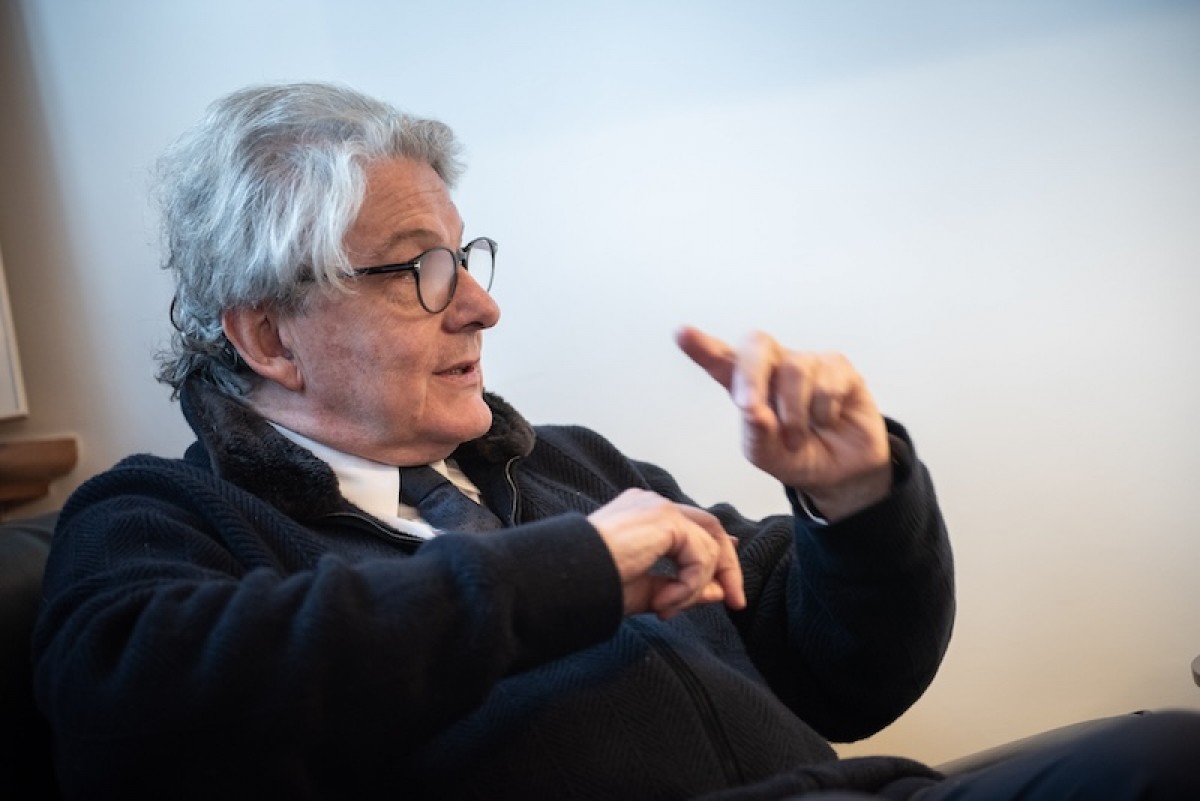
Thierry Breton, former European Commissioner, addressing the media about the importance of free speech in the digital era. Foto: Agenda Pública / Bruno
Absolutely. The European Commission has more than 150 specialists, who are extremely professional and well-trained. A lot of them come from the social networks themselves. They know extremely well the technology, the law, and they have experience.
"The European Commission has more than 150 specialists, who are extremely professional and well-trained. They know the technology, the law, and have experience"The European Commission can, if necessary, seek third-party support. Everything is in place, and I have no doubt that the actions taken were necessary. As a large democracy, we maintain a dialogue between the investigation findings and the platform involved. This phase is crucial, and I understand we are currently in that stage, which is normal. However, I cannot provide more details on the current status. For those questions, you should ask the European Commission, not me.
I can explain the philosophy behind the laws passed by our democracies, the sanctions involved, and how we intend to enforce them. There is a lot of misinformation, especially from the extreme right, claiming these digital laws are about censorship or invalidating actions, which is entirely false.
"Our rules are not about censorship or nullifying elections in Europe"This is a significant piece of fake news. Our rules are not about censorship or nullifying elections in Europe. The only sanction, if a platform fails to meet its obligations, is a financial penalty of up to 6% of the platform's revenue, which can be substantial. If the platform does not correct its non-compliance, a judge may temporarily suspend its operations in Europe until the issue is resolved. That is the extent of the law—no censorship, no election invalidation. The spread of these false claims is likely driven by political agendas, but the purpose of our digital law is to protect our citizens and children.
How do you understand Meta's decision regarding content moderation?
The way to moderate content is in the hands of the platforms. They decide how they want to moderate, and they must explain their moderation methods. It is not our role to comment on how they choose to do it. What will be judged is the capacity and efficiency of their moderation.
"The way to moderate content is in the hands of the platforms. They decide how they want to moderate, and they must explain their moderation methods"Regarding Meta, we must understand that we are at the end of a specific period in U.S. democracy. Every four years, after a new President is elected, there are about 100 days when the new President prepares to take office, while the outgoing President concludes their term. We are still in this transitional phase. For the past 20 years, stakeholders, including big companies, have adapted to the new administration, which will be in office for four years. These stakeholders usually start positioning themselves to align with the new administration, and this is what we are seeing now with the big tech industry.
Some companies are doing this quietly, while others are more vocal. I won’t comment on individual approaches, but I noticed that Meta’s statements focused on the U.S. without mentioning any plans to change its practices in Europe. I know Mark Zuckerberg well from my time as a Commissioner responsible for digital regulation. My team and I had many interactions with him, including a visit to California, where we explained the DSA in detail and how Meta should organize itself to comply with it in Europe.
Meta understands the philosophy behind the DSA, and they are adapting their operations to comply with European law, no more, no less. It’s worth noting that Meta has spoken about changes in the U.S., such as moving some moderation teams from California to Texas, but they have been careful not to mention similar changes in Europe. This is because they are well aware of the legal requirements in Europe, and I have no doubt that they intend to respect those laws.
I think there is another way to see what Elon Musk is doing. There is a strategy to create fragmentation in Europe, but not because of an electoral or political interest, but because there is a business interest. I think one of Musk's interests is Starlink. Not so much X/Twitter.
I will discuss this in general terms, but it is not my role to interpret the motivations behind specific behaviours. Regarding Elon Musk, I have interacted with him numerous times, including discussions about the DSA. I visited him on several occasions to explain what was required for compliance with European regulations. He understood our objectives well and even supported our efforts.
As for his political stance, I knew him as a Democrat. He supported Barack Obama and later Joe Biden. However, a few months ago, I noticed a shift in his political alignment, moving from being a Democrat to supporting more extreme Republican positions. Tracking his exact stance is now challenging, and I do not judge; I’m merely observing, like everyone else.
"Our best defence is to strengthen and promote our unity. Only by standing united can Europe negotiate on equal footing globally"In the broader context of Europe, it’s clear that some global powers do not favour a strong, unified European project and prefer a fragmented Europe. Putin, for instance, has engaged in bilateral efforts to influence certain countries and weaken Europe, a strategy that intensified with the war in Ukraine. China has shown similar tendencies, opting for bilateral dealings with smaller member states instead of engaging with a unified Europe.
Now, with signals from the incoming U.S. administration, we should prepare for similar behaviour. We must not be naive about this reality. Our best defence is to strengthen and promote our unity. Only by standing united can Europe negotiate on equal footing globally. Without this unity, Europe is at risk.
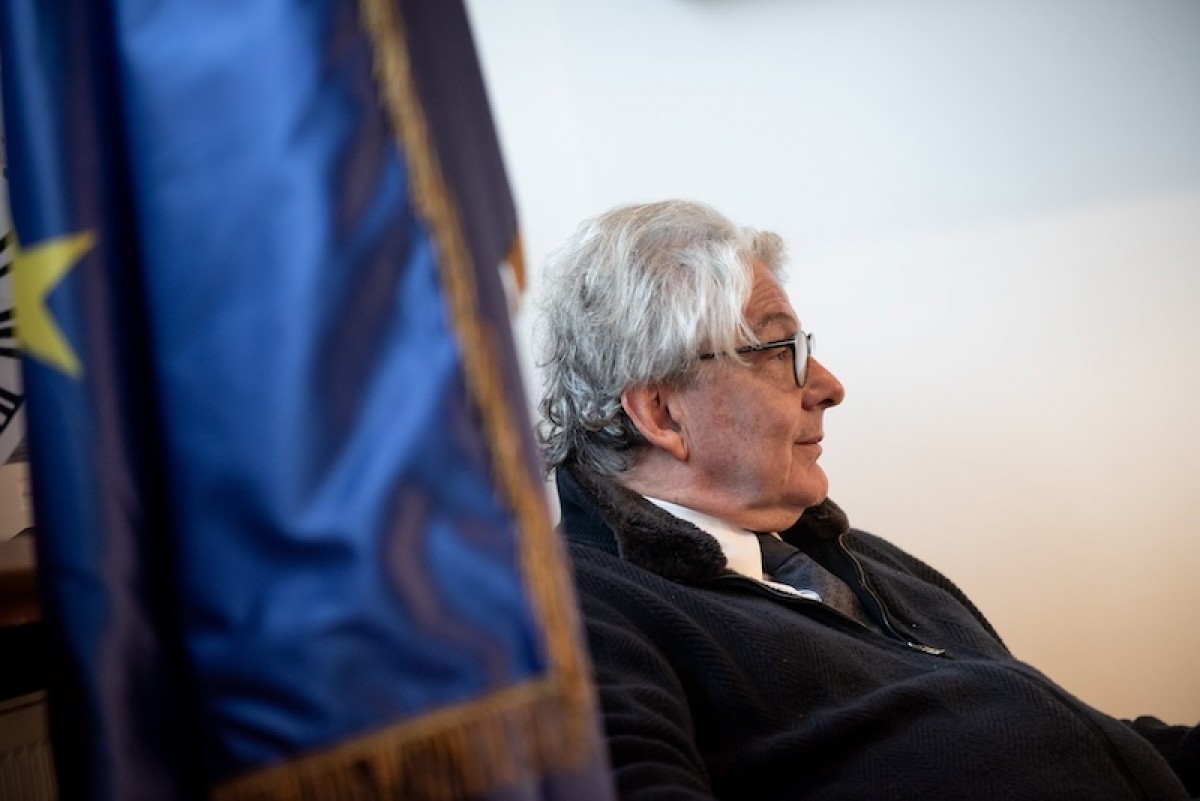
Thierry Breton sits beside an EU flag. Photo: Agenda Pública / Bruno Arbesu
But right now, we have a less pro-European Council than in the past?
Yes and no. Okay. Of course, I see, like you, the fact that in many of our Member States the extreme right is really having momentum. It is obvious. And of course, we have to respect democracy. Sure. Now, in no country, the extreme right has a majority. No way. It always needs to find some compromise. They play their role, but without the majority.
"No extreme right party is now saying that they want to leave EuropeOf course, this is an attempt to mitigate some of the comments that could make some of our fellow European citizens feel uncomfortable. But if you look carefully at all these parties, no one is now saying that they want to leave Europe, or for the ones in the Eurozone, that they intend to leave the Euro. Nobody. Five years ago, the number one priority of these parties was: vote for me, we leave Europe.
What about Marine Le Pen?
Not even Le Pen says it any more; it’s not part of her program. My point is that everyone, including these parties, has come to understand that the vast majority of European citizens recognize that our strength and future lie in our ability to work together under the umbrella of the European project. They’ve realized this.
Now, they can talk a lot, but there’s a difference between speaking and acting. It’s very difficult, if not impossible, in Europe to act against the majority of the people. I won’t say more than that, but I do acknowledge this trend, which we have to respect.
However, if we look at the European Parliament, these parties represent, at most, 20% of the MEPs. That’s not 50% or 70%; it’s 20%. Some might think that’s significant, but it means that 70 to 80% of our fellow citizens do not support this trend, even though these parties are, of course, part of our democracy.
It is very well known that you had a conversation with Viktor Orbán when you finished your mandate as a Commissioner. Tell me about Orbán's position regarding Europe and how he understands the European Union right now.
First, I’d like to put this in the context of my previous role as Commissioner. I had a significant portfolio, covering areas like digital, the internal market, industry, defence, space, tourism, and media. My job involved visiting all 27 member states regularly, discussing with their governments to understand their priorities and explaining EU policies.
"Orbán is an experienced prime minister, the longest-serving leader in the European Council, making it crucial to exchange views with him"Of course, I had many discussions with leaders like Pedro Sánchez, but also with others, including Viktor Orbán, even though his political stance differs from mine. As you know, I am a centrist liberal, but in my capacity as Commissioner, I had to engage with everyone. I met with Orbán quite frequently, perhaps every six to eight months, and even after leaving my post, I felt it was important to continue these discussions.
In our meetings, we always had frank, in-depth conversations. Orbán is an experienced prime minister, the longest-serving leader in the European Council, making it crucial to exchange views with him. We discussed various topics, including the political environment, the situation in the U.S. before their final election, Ukraine, and global issues like China. Orbán’s positions are well-known; he had a close relationship with Trump and likely will continue to maintain that connection.
More so than Meloni?
I cannot judge that. Orbán certainly has more experience and a longer relationship with Trump than Italy's Prime Minister, who is newer to this level of international engagement. Orbán's direct access and dialogue with the Trump administration are important facts to acknowledge.
Regarding his stance on Europe, while I may not agree with all his views, it is clear that dialogue is crucial. Orbán, at the end of the day, voted for sanctions against Russia. My experience as Commissioner taught me that engaging with all member states, spending time to understand their positions, and finding common ground is essential. This is how the European project is built—through compromise and collaboration among all 27 members.
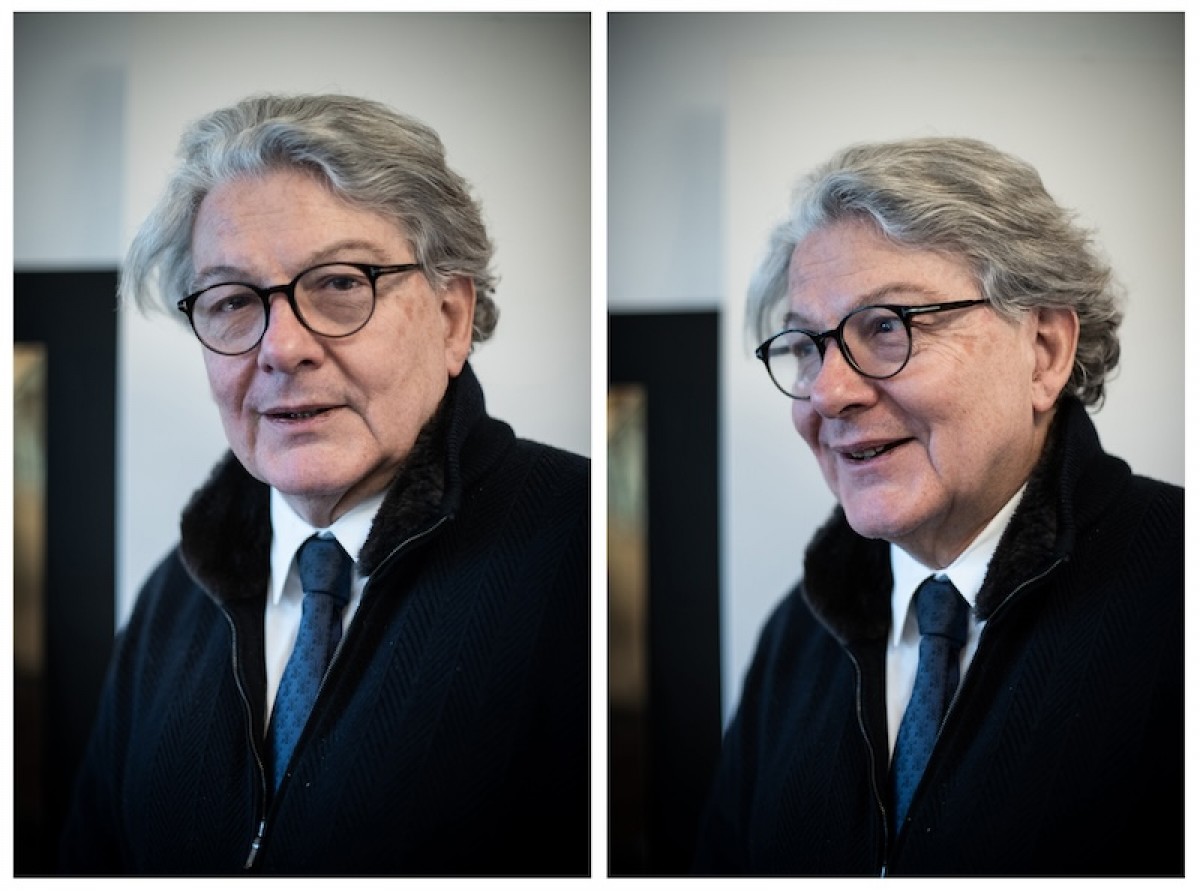
The former European Commissioner Thierry Breton during the interview, sharing insights on the challenges of regulating digital services. Photo: Agenda Pública / Bruno Arbesu
You mentioned space. Why is space so critical for Europe, and what is the battle of space about?
Well, together with my former colleague and friend, Josep Borrell, who was the High Representative, we worked closely. I was the Commissioner for Defence Industry, and he had a dual responsibility for both foreign policy and defence. We collaborated well, and under his leadership, with the support of my team, we worked with the 27 Defence Ministers on what we call the Strategic Compass, which was the first time we had a unified defence framework. It took many months, even years, to complete, but it was a significant step forward.
As part of this work, we identified four contested areas where Europe needs to work together to defend and, if necessary, take offensive actions. No single country can handle these challenges alone. These areas include cybersecurity, space, air defence, and maritime defence.
"Europe needs to work together to defend and, if necessary, take offensive actions in cybersecurity, space, air defence, and maritime defence"In terms of space, no single country can protect Europe’s position in space. In air defence, we need to work together to create a protective bubble for our airspace. Similarly, we have the largest exclusive maritime zone in the world, but no single country can defend it on its own. These are contested areas, and we need joint projects and infrastructure to ensure we can defend them effectively.
We’ve already made progress, for example, with the Galileo satellite constellation. It serves both governmental and civilian purposes, and we’ve established a governance model that allows member states to collaborate comfortably. This system ensures that we work together to benefit Europe’s sovereignty, autonomy, and protection.
Now, we need to expand this model into the other contested areas. We've made substantial progress with cybersecurity, including the Cybersecurity initiative, and we have ongoing projects in air defence. In space, we are working on the IRIS project, which aims to establish a secure infrastructure for both governmental and defence applications, as well as civilian connectivity across Europe and beyond.
Well, first, it’s important to note that IRIS offers much more than any other constellation today. We provide more advanced technology than any competing system, which is a key differentiator. However, I do not want to comment on the strategy of any single country. What I do know is that all member states supported the IRIS project, including the European Parliament.
Of course, if, in the meantime, a country identifies a specific need and chooses to take independent action, that is not for me to comment on. But what I can say is that every member state voted for IRIS, and this constellation is crucial for our autonomy.
Breton talked about his relathionship with Elon Musk. Photo: Agenda Pública / Bruno Arbesu
Why do you think we do not have a European Google?
To understand this, we need to look back at the past 20–30 years. One of the challenges we faced in Europe, especially during my time as Commissioner for the Internal Market, was the fragmented nature of our digital market. While we had a single market for goods, services, and people, we did not have a cohesive digital market. Europe essentially operated with 27 separate digital markets.
Even though, Europe’s population is one and a half times larger than the U.S. in terms of total size, with 450 million people compared to the U.S.'s 340 million. We could not offer new entrepreneurs immediate access to a vast user base. In contrast, in the U.S., startups had the advantage of a unified, large market.
"The innovation came not from complex technological evolution, but from a smart idea deployed quickly across a large market"When we look at the early 2000s, many successful tech companies like Facebook were created by individuals with limited scientific or technological expertise but with strong marketing skills. The innovation came not from complex technological evolution, but from a smart idea deployed quickly across a large market. Facebook, for example, was not a scientific breakthrough but a clever marketing strategy. It quickly scaled by leveraging access to a massive user base.
Europe, unfortunately, lacked that capacity, which is also seen in China. That’s why, from my first day in the Commission, I worked diligently with my team to establish a harmonized framework for Europe’s digital market. We needed clear rules and one unified regulatory framework. This effort resulted in key regulations, such as the Data Governance Act (DGA), the Data Act, the Digital Services Act (DSA), the Digital Markets Act (DMA), and the AI Act.
Some critics argue that we over-regulate, but the reality is we’ve laid down essential rules to create a single digital market where European entrepreneurs, as well as non-European entrepreneurs, can thrive. This harmonization provides clarity and consistency, benefiting everyone. We’ve now built the foundation for a truly unified digital market, which is essential as we enter a new phase of managing industrial data, particularly with the rise of artificial intelligence.
Can the same occur for AI?
Regarding AI, our approach hasn’t been to overregulate. Instead, we’ve introduced four categories of risk to control potential harm, but beyond that, the regulations are designed to support innovation. Ultimately, the goal is to offer the full benefits of a unified digital market to 150 million customers across Europe.
Do you think that what could happen with Trump in the US is, in fact, a technological battle where tech companies are going against the rules in Europe?
Again, I would rather not speculate before the new administration takes office. First and foremost, I am no longer a Commissioner; I am simply an observer now. However, as an observer with some experience, I can say that we must prepare ourselves for discussions with everyone, including the United States. I want to remind everyone that the U.S. is our main partner and ally in today’s world.
"When you have a strong ally like the U.S., to truly benefit from such an alliance, you must stand as a strong partner"That said, it is true that we must pay attention to what is being said, so we need to organize ourselves. If we find ourselves in a more robust discussion with our key ally, we must be prepared to respond. But I always remind everyone that when you have a strong ally like the U.S., to truly benefit from such an alliance, you must stand as a strong partner, not a weak one.
For us, it’s crucial to ensure that we become stronger and more autonomous. The stronger we are, the better positioned we will be in any discussion.
Additionally, when laws are passed in a democracy, they are never intended to target anyone; they are for the benefit of our people and our democracy. Europe has the oldest democracy in the world, with a legacy that dates back over 1,000 years. We understand democracy very well. It’s not easy, and it’s under attack because it’s arguably the best system. But we must defend it. The more we defend our democracy, the stronger we will be—and the better ally we will be too.
Thank you very much.
Ahora en portada
19 de octubre de 2026
19 de octubre de 2026
Noticias relacionadas
Hace 92 semanas
What can the EU do against the challenge of the US cybertycoons?
Hace 93 semanas
Elon Musk and the helplessness of German liberal democratic elites
Hace 92 semanas