
The urgency of a new EU strategy in the Middle East
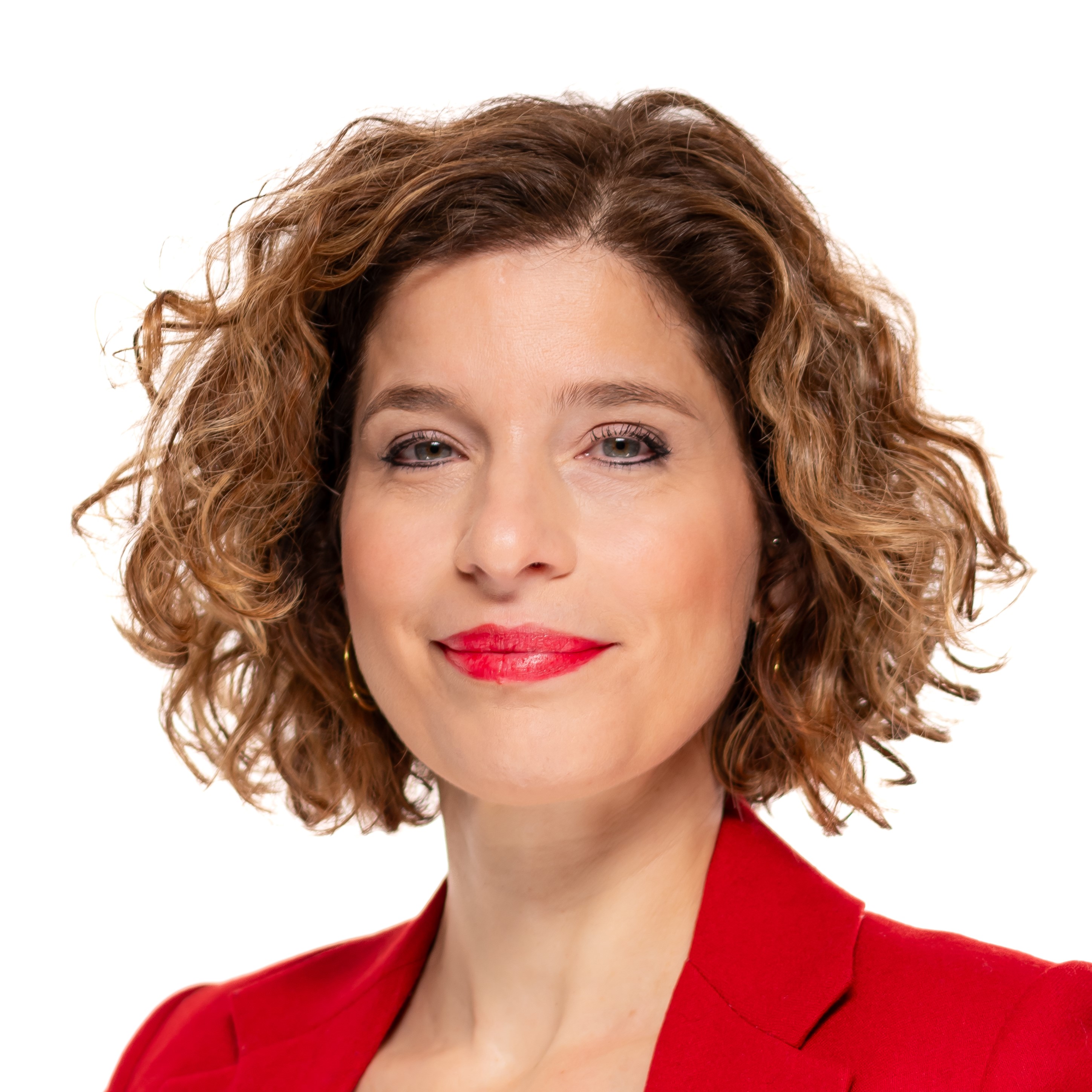
Following a recent mission as the European Parliament's rapporteur for Saudi Arabia, Hana Jalloul MEP warns that the EU must "overcome its internal divisions and define a unified strategy" in the Middle East and not settle for "a marginal role". The EU needs to strengthen economic, technological and intelligence cooperation and the fight against terrorism, without forgetting "the promotion of human rights and sustainable development".
The European Union finds itself at a turning point regarding its relationship with the Middle East. The growing regional instability, the redefinition of global alliances and the need to diversify its economic relationships are forcing the EU to rethink its strategy in the region. Until now, European policy has been fragmented, reflecting divergent positions among member states.
While some countries, such as France, Spain and Germany, have advocated for a diplomatic approach based on multilateralism and economic cooperation, others, like Hungary, have shown scepticism towards greater engagement. However, it is true that the attitude of many Member States in relation to the conflict in Gaza has been quite different. This lack of consensus has hindered the formulation of a unified and effective strategy, weakening the EU's ability to act in a coordinated manner and exert real influence in the Middle East. Nevertheless, the urgency of the situation, considering the ceasefire breakdown in Gaza and the new Trump Administration, demands a firm and coordinated response. According to the report Europe's Moment of Truth in the Middle East, the EU must take a more active position in the region to avoid being marginalised in a scenario dominated by external actors. This includes China and the United States. Previously, Russia in Syria.
The Middle East remains an epicentre of the international order. The region houses some of the world's largest oil and gas reserves, making it an indispensable energy partner for Europe. Despite the ongoing energy transition, dependency on these resources remains a key factor in EU foreign policy. Instability in countries such as Iraq and Yemen; coupled with the situation in Syria following the fall of Bashar al-Assad's regime, the collapse of the ceasefire in Gaza after Israel's latest offensive and the situation in Lebanon, has a direct impact on global security—with repercussions that include increased radicalisation, interference from external actors and the growing fragility of borders—.
The Trump Administration's policy in Gaza, characterised by its firm support for the actions of the Israeli Government and its commitment to economic initiatives to redefine the future of the Strip. This has generated a climate of deep mistrust in the region. These strategies, far from offering a sustainable solution to the conflict, have reinforced existing tensions and have been perceived as legitimising the occupation and an obstacle to negotiated peace.
"Saudi Arabia, in particular, is consolidating its position as a mediating power in regional conflicts"The Gulf countries have assumed an increasingly prominent role in global geopolitics. Through their active diplomacy and economic diversification, they have strengthened their position as key players in the region. Saudi Arabia, in particular, is consolidating its position as a mediating power in regional conflicts and has driven ambitious internal reforms under its Vision 2030 programme. This growing diplomatic prominence reflects not only its attempt to establish itself as a key mediator in major global crises, but also reinforces its influence both in the West and in the countries of the global south.
Towards the creation of a viable Palestinian state
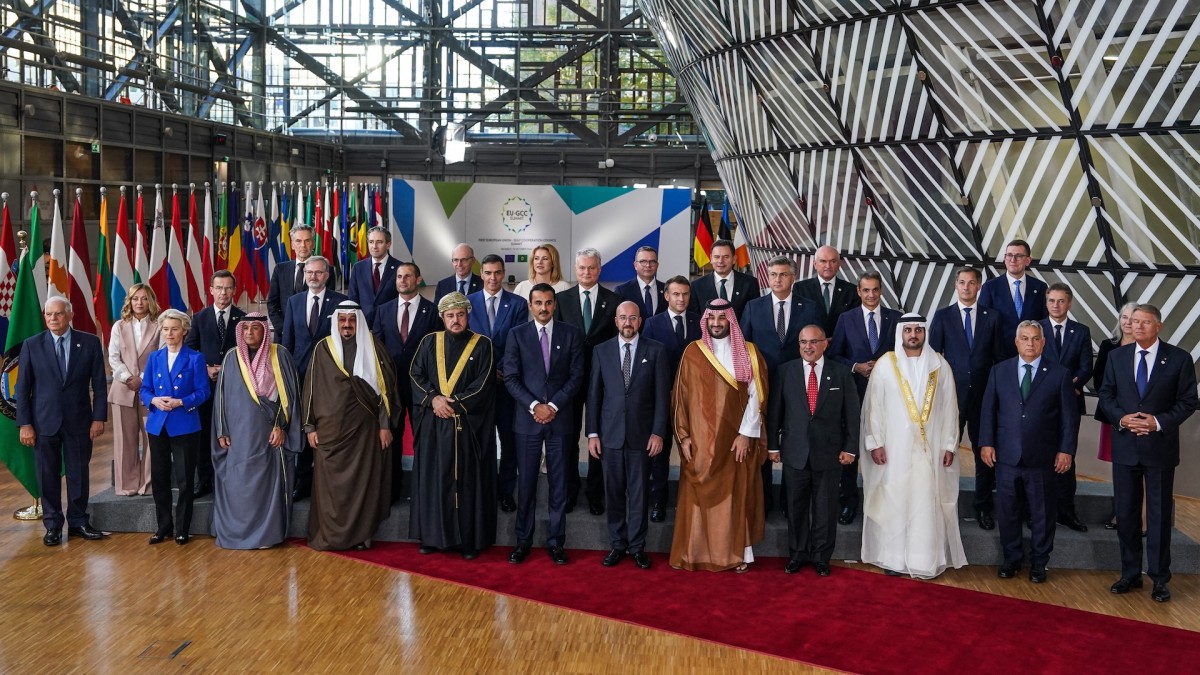
Spain's Prime Minister, Pedro Sánchez, recognised this role by thanking the Saudi Crown Prince, Mohammed bin Salman, for his commitment to peace and stability in the Middle East. This was within the framework of the EU-Gulf Cooperation Council summit held in Brussels in October 2024. During their meeting, both leaders agreed on the need for an immediate ceasefire in Gaza and Lebanon and reaffirmed their commitment to moving towards a lasting political solution.
Currently, for Saudi Arabia, any process of normalisation with Israel is conditional on concrete progress towards the creation of a viable Palestinian state. Its role is proving crucial in mediating international dialogues, such as that which it has facilitated between Washington and Moscow for peace in Ukraine. Its active participation in negotiations to achieve peace in Gaza, a stable government in Lebanon, or its support for the Syrian transitional government. This is demonstrated by the subsequent calls between Mohammed bin Salman and the French President, Emmanuel Macron, and the Prime Minister of the United Kingdom, Keir Starmer, following the resumption of Israeli attacks on the Strip.
Riyadh has presented a Human Rights Strategy for its World Cup 2034 bid, developed with the Human Rights Commission led by Hala Al-Tuwaijri. It reinforces its commitment to human rights and its stabilising role in the region. Saudi Arabia is working towards greater openness regarding the role of women in society, something especially evident in the workplace. In this regard, it has equipped itself with key legal frameworks such as the Civil Service Law, which establishes merit as the basis for public employment; the Labour Law, which explicitly prohibits gender discrimination at work, and the Health Law, which guarantees equitable and accessible health services for the entire population. Likewise, comprehensive mechanisms have been put in place to protect all workers, including migrants. Bearing in mind that this has been an issue that has attracted criticism.
"Fragmentation has weakened its negotiating capacity and has generated a loss of influence compared to other global powers"To avoid a marginal role in the Middle East, the EU must overcome its internal divisions and define a unified strategy. Fragmentation has weakened its negotiating capacity and has generated a loss of influence compared to other global powers. It is essential that Europe establishes a strategic dialogue with the leaders of the region, seeking points of convergence in matters of stability, trade, and security. This implies a greater commitment to the Middle East peace process and to the two-state solution for the Israeli-Palestinian conflict. At the recent summit in Egypt, Arab countries reaffirmed their support for an agreement based on mutual recognition and the reconstruction of Gaza under an internationally supervised administration. Additionally, the need to establish security guarantees for both Israel and Palestine was highlighted, with the backing of key international actors, including the European Union. It has expressed its support for the initiative and its willingness to collaborate in the implementation of the agreement to ensure its long-term viability.
Economic and technological cooperation is another key pillar for strengthening the relationship between the EU and Middle Eastern countries. Europe has the opportunity to promote trade agreements and investment in sectors such as renewable energy, artificial intelligence and digitalisation, areas in which Gulf countries have shown great interest. At a time when President Trump is imposing tariffs of 25% on aluminium and steel, the Union must be brave and lead in trade processes. Meanwhile, we await the ratification of the Mercosur agreement, and we find ourselves with the modernisation of the agreement with Mexico.
In addition, active negotiations are being maintained with India, Thailand, Indonesia, and the Philippines, as well as with the Gulf Cooperation Council (GCC) and the United Arab Emirates. The EU has also concluded a Digital Trade Agreement with South Korea. The President of the European Commission, Ursula von der Leyen recently visited South Africa to initiate dialogue on negotiating a new trade and investment agreement. The relationship with GCC countries has been strengthened following the EU-GCC summit last October in Brussels. They are stable partners and we should not miss this opportunity.
In terms of security, it is imperative to strengthen cooperation in intelligence and the fight against terrorism, sharing information and strategies to combat radicalisation and ensure stability in strategic areas such as the Red Sea and the Eastern Mediterranean. As explained by journalist Abdulrahman Al-Rashed, in a recent interview in Arab News. The Gulf countries are fundamental and their anti-Islamist approach in the fight against terrorism should be highlighted.
The EU must balance its relationship with the Middle East, promoting fundamental values without falling into paternalistic approaches that could generate rejection in the regionThe promotion of human rights and sustainable development cannot be left off the agenda. The EU must balance its relationship with the Middle East, promoting fundamental values without falling into paternalistic approaches that could generate rejection in the region. This includes support for social reforms and the empowerment of civil society, as columnist Faisal J. Abbas points out. A recent example is the abolition in Kuwait of article 153 of the Penal Code on so-called honour crimes, which reduced sentences for men who killed women in their circle for alleged infidelities.
The EU has the opportunity to redefine its relationship with the Middle East in a constantly changing global context, in which leadership is crucial. Pragmatism, economic cooperation and strengthening political dialogue will be key to ensuring a balanced and beneficial relationship for both parties. Only with a coherent and unified strategy can Europe secure its influence in the region, its leadership on the international stage, and contribute to global stability.