Sábado, 17 de octubre de 2026



GEOPOLITICS
The EU must become a more agile global actor: these are the reforms it needs
The European Council meeting caps a key week for the future of the EU. In an uncertain geopolitical context, should European institutions speed up their decision-making to respond with greater urgency? 'Agenda Pública' analyses the issue with Professor Alberto Alemanno, Professor Paz Andrés and Brussels correspondent Bernardo de Miguel.
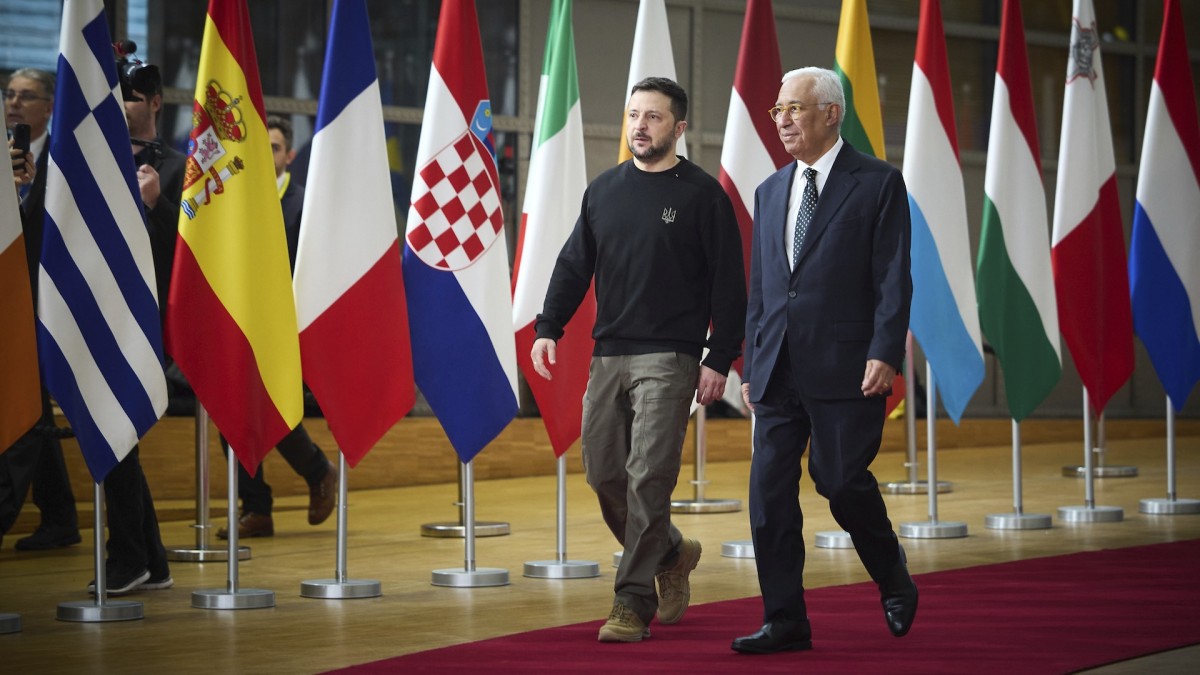
Ukraine's defence has reignited the debate on the need for EU institutions to speed up their decision-making.Ukraine Presidency/Ukrainian Pre / Zuma Press / ContactoPhoto
"Today it has become clear that the free world needs a new leader. It's up to us Europeans to take up this challenge", declared High Representative Kallas, setting a course for the defence of Ukraine. These statements came after a disturbing scene in the Oval Office, where President Trump and Vice President Vance slandered President Zelensky. An episode that some commentators see as the possible signal of the collapse of the post-war Western order.
The international context has suddenly placed Europe in a position where it must decide: to continue with its deliberative and consensus-based approach or to reform its institutions to act more quickly in a constantly changing world. In recent weeks, there have been rounds of critical talks —first in Paris, then in London, and today, March 6th, culminating in Brussels— in what is described as "a crucial week for the future of Europe". One of the few clear consensuses to emerge from these meetings is the recognition that Europe must significantly increase its military spending to offset diminishing US support. In this regard, Ursula von der Leyen, the President of the European Commission, has proposed a plan to invest 800 billion euros in rearming the Union.
The institutional dilemma: democracy versus speed
At the heart of the European challenge lies a fundamental tension. "This slowness is a consequence of having a democratic system", explains Bernardo de Miguel, a Brussels correspondent with twenty-five years of experience. The EU is composed of twenty-seven countries, each with its own government —many formed by complex coalitions— its own parliaments and public opinions to which they must respond —and, of course, be re-elected. Europe is unable to respond with the same swiftness as the United States or autocracies such as Russia or China.
This creates what Alberto Alemanno, professor of EU Law at HEC Paris, identifies as a leadership problem: "Ultimately, no national political leader in the EU is accountable to citizens beyond the borders of their country".
"The direction is set by the European Council, which decides how far it is willing to go", explains De Miguel. But day-to-day operations grant considerable power to the Commission, which, with its 32,000 officials responsible for managing the budget, is technically the "most powerful" body. This division of responsibilities often leads to fragmented and slow responses.
Alemanno takes a critical view of the current approach: "The EU has long been renouncing its more efficient decision-making method, in which the Commission led, and Member States negotiated with a democratically elected Parliament. Instead, European leaders have embraced a slower and more dysfunctional intergovernmental method".
Recent examples highlight this lack of functionality. "Macron has personified this trend by recently visiting Trump alone, without the company of any high-ranking EU officials, neither Von der Leyen nor Costa nor Kallas", notes Alemanno. Something that Professor of Public International Law at the University of Oviedo Paz Andrés also diagnoses: "In both cases, the image of the European Union has been blurred by the unilateral action of the President of the French Republic, no matter how much Macron has maintained contacts with representatives of other States. The positive advance for Europe as a geopolitical actor would have been for the institutional representatives of the Union to be the protagonists".
Politico reported that certain countries participating in Sunday's meeting would be willing to join the initiative led by France and the United Kingdom to create a European peacekeeping force in Ukraine, although it is still unclear which ones. It demonstrates how the EU's complex decision-making processes delay even announcements of intention.

Bloomberg Economics estimates that if the five largest European countries increased defence spending to 4% of GDP, the cost would amount to about 270 billion dollars annually over the next decade. According to the source, the idea that the world's largest economic bloc cannot afford such expenditures is "absurd". Therefore, this is the moment to consider whether a reform of the functioning of Brussels institutions would contribute to achieving the Union's objectives.
Possible reforms to streamline decision-making
Alberto Alemanno warns about a misdiagnosis of the problem: "The EU's recourse to omnibus laws further limits its ability to exercise one of its most successful and legitimate functions: regulating its economy and society to ensure prosperity and security for its citizens, as the Commission President continues to promise".
Yet, consensus on the need for reforms is growing. "There is agreement on the need for reforms to streamline decision-making", argues Professor Andrés. "There is also consensus on eliminating the unanimity requirement and extending qualified majority, even adjusting its requirements".
Several specific reforms have been proposed:
Implementing these reforms means overcoming major obstacles in the current political landscape. "Not long ago, the Council was dominated by popular and socialist governments. Now it is composed of parties, some clearly Eurosceptic, even Europhobic, such as Hungary or Italy. The Netherlands also has a markedly Eurosceptic government, and in Slovakia and Belgium the situation is complex", explains De Miguel.
Alemanno warns that this dynamic "puts at risk the EU's ability to guarantee security to its citizens, inside and outside its borders, and undermines its future authority".
Reasons for cautious optimism
Despite the challenges, there are reasons for optimism about the EU's capacity for reform. "All countries, even the most reluctant, know that, on their own, they are much more defenceless", argues De Miguel.
Faced with unprecedented challenges, Europe must decide whether it can reform its institutions before events force it to do so. The time for considered institutional renewal is limited, and Europe would be wise to address these structural questions while it still maintains the agency to do so on its own terms.
The international context has suddenly placed Europe in a position where it must decide: to continue with its deliberative and consensus-based approach or to reform its institutions to act more quickly in a constantly changing world. In recent weeks, there have been rounds of critical talks —first in Paris, then in London, and today, March 6th, culminating in Brussels— in what is described as "a crucial week for the future of Europe". One of the few clear consensuses to emerge from these meetings is the recognition that Europe must significantly increase its military spending to offset diminishing US support. In this regard, Ursula von der Leyen, the President of the European Commission, has proposed a plan to invest 800 billion euros in rearming the Union.
Ukraine is Europe!
— Kaja Kallas (@kajakallas.bsky.social) 28 February 2025, 21:22
We stand by Ukraine.
We will step up our support to Ukraine so that they can continue to fight back the aggressor.
Today, it became clear that the free world needs a new leader. It's up to us, Europeans, to take this challenge.
The institutional dilemma: democracy versus speed
At the heart of the European challenge lies a fundamental tension. "This slowness is a consequence of having a democratic system", explains Bernardo de Miguel, a Brussels correspondent with twenty-five years of experience. The EU is composed of twenty-seven countries, each with its own government —many formed by complex coalitions— its own parliaments and public opinions to which they must respond —and, of course, be re-elected. Europe is unable to respond with the same swiftness as the United States or autocracies such as Russia or China.
This creates what Alberto Alemanno, professor of EU Law at HEC Paris, identifies as a leadership problem: "Ultimately, no national political leader in the EU is accountable to citizens beyond the borders of their country".
"European leaders have embraced a slower and more dysfunctional intergovernmental decision-making method"The institutional deliberation that characterises EU decision-making is, in principle, a feature of the system rather than a bug. However, it has been repeatedly exploited by populist movements and sympathisers of autocracies —from Brexit supporters to Viktor Orbán and, more recently, Vice President Vance— to undermine the legitimacy and effectiveness of the Union, something in which the irony is not wasted.
"The direction is set by the European Council, which decides how far it is willing to go", explains De Miguel. But day-to-day operations grant considerable power to the Commission, which, with its 32,000 officials responsible for managing the budget, is technically the "most powerful" body. This division of responsibilities often leads to fragmented and slow responses.
Alemanno takes a critical view of the current approach: "The EU has long been renouncing its more efficient decision-making method, in which the Commission led, and Member States negotiated with a democratically elected Parliament. Instead, European leaders have embraced a slower and more dysfunctional intergovernmental method".
Recent examples highlight this lack of functionality. "Macron has personified this trend by recently visiting Trump alone, without the company of any high-ranking EU officials, neither Von der Leyen nor Costa nor Kallas", notes Alemanno. Something that Professor of Public International Law at the University of Oviedo Paz Andrés also diagnoses: "In both cases, the image of the European Union has been blurred by the unilateral action of the President of the French Republic, no matter how much Macron has maintained contacts with representatives of other States. The positive advance for Europe as a geopolitical actor would have been for the institutional representatives of the Union to be the protagonists".
"The positive advance for Europe as a geopolitical actor would have been for the institutional representatives of the Union to be the protagonists"The urgency of reforming EU decision-making processes could not be greater. Bloomberg argued that "it would be enough with 20 billion dollars distributed across the EU to help Kyiv defend itself from Russian attacks and resist under better conditions". However, mobilising even this relatively modest amount (for the largest economic bloc in the world, with a combined GDP of 18.5 trillion dollars in 2023) has proven complicated, despite the positive signs coming out of Berlin this week.
Politico reported that certain countries participating in Sunday's meeting would be willing to join the initiative led by France and the United Kingdom to create a European peacekeeping force in Ukraine, although it is still unclear which ones. It demonstrates how the EU's complex decision-making processes delay even announcements of intention.
Bloomberg Economics estimates that if the five largest European countries increased defence spending to 4% of GDP, the cost would amount to about 270 billion dollars annually over the next decade. According to the source, the idea that the world's largest economic bloc cannot afford such expenditures is "absurd". Therefore, this is the moment to consider whether a reform of the functioning of Brussels institutions would contribute to achieving the Union's objectives.
Possible reforms to streamline decision-making
Alberto Alemanno warns about a misdiagnosis of the problem: "The EU's recourse to omnibus laws further limits its ability to exercise one of its most successful and legitimate functions: regulating its economy and society to ensure prosperity and security for its citizens, as the Commission President continues to promise".
Yet, consensus on the need for reforms is growing. "There is agreement on the need for reforms to streamline decision-making", argues Professor Andrés. "There is also consensus on eliminating the unanimity requirement and extending qualified majority, even adjusting its requirements".
Several specific reforms have been proposed:
- Reducing majority thresholds in certain decisions, limiting the right of veto in areas such as foreign policy and taxation. Currently, all twenty-seven countries have veto power, which "is not always exercised for national interest, but sometimes as a negotiating weapon and, often, even as simple blackmail to obtain other concessions", according to De Miguel.
- Coalitions of the willing: allowing progress by groups of countries with common will, a method already applied in the eurozone and Schengen, and which Spain now supports for financial and stock markets. This "Europe at various speeds" approach could allow action even when unanimous agreement is impossible.
- Strengthening the political role of the European Council. António Costa, President of the European Council, is demonstrating "an effective capacity for momentum", according to Professor Andrés, citing the extraordinary summit on Ukraine and European defence taking place on 6th March in Brussels. Costa seeks to transform the European Council into a body that truly guides the Union.
Implementing these reforms means overcoming major obstacles in the current political landscape. "Not long ago, the Council was dominated by popular and socialist governments. Now it is composed of parties, some clearly Eurosceptic, even Europhobic, such as Hungary or Italy. The Netherlands also has a markedly Eurosceptic government, and in Slovakia and Belgium the situation is complex", explains De Miguel.
Alemanno warns that this dynamic "puts at risk the EU's ability to guarantee security to its citizens, inside and outside its borders, and undermines its future authority".
Reasons for cautious optimism
Despite the challenges, there are reasons for optimism about the EU's capacity for reform. "All countries, even the most reluctant, know that, on their own, they are much more defenceless", argues De Miguel.
"The Franco-German engine, with the support of Spain and Italy, generates a critical mass that is difficult to contain"History shows that, with a strong Franco-German axis, the EU has overcome seemingly insurmountable obstacles. Both countries have recently shown promising signs of breaking their political deadlocks, though concerns about their economic performance continue to linger. "That engine, with the support of Spain and, in certain areas, even of Meloni's Italy, generates a critical mass that is difficult to contain", explains De Miguel.
Faced with unprecedented challenges, Europe must decide whether it can reform its institutions before events force it to do so. The time for considered institutional renewal is limited, and Europe would be wise to address these structural questions while it still maintains the agency to do so on its own terms.
Ahora en portada
17 de octubre de 2026
16 de octubre de 2026
Noticias relacionadas
Hace 84 semanas
Javi Lopez, Vice President of the European Parliament: the moment of truth is now
Lo más leído