Sábado, 17 de octubre de 2026




DIRECTOR'S LETTER
Elon Musk continues to meddle in EU politics, Spain is still to respond
The director of Agenda Pública, Marc López Plana, wonders where Spanish politics stands in the face of Elon Musk's 'entry' into the Spanish public debate through the migration debate and public safety in Catalonia. Our director points out that "the underlying issue is that a businessman is using the technological alteration of the platform he acquired, and an algorithm designed to do away with the logic of basic competition in liberal democracies and to condition the development of democracy in Europe as well."
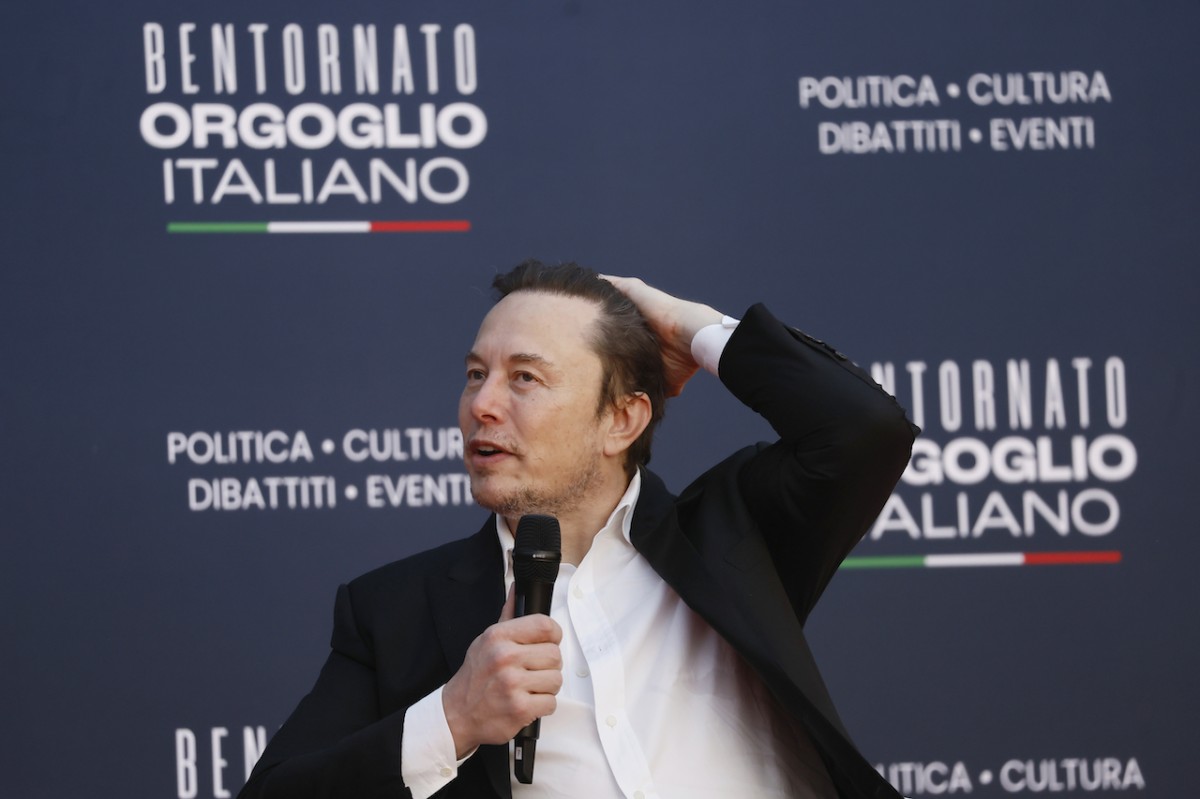
Atreju 2023 , Elon Musk was invited to a Fratelli d'Italia rally.Cecilia Fabiano / Zuma Press / ContactoPhoto
"Only the AfD can save Germany," Elon Musk noted a few weeks ago in a post on his X platform. The businessman has already fully entered European politics. Thorsten Benner spoke about this a few days ago in Agenda Pública. Our analysis has generated an intense debate in Germany. The Economist's correspondent in Berlin, Tom Nuttall, echoed him. Afterwards, Elon Musk announced that he will continue participating in the German election campaign with a live chat on his social network with the leader of the AfD. On Sunday, Musk also decided to enter fully into Spanish politics and the immigration debate in Catalonia and, surprisingly, the movement has gone practically unnoticed in the Spanish political debate.
This debate needs to be properly focused. The underlying issue is not that a businessman or a politician from a third country makes statements about the development of the internal politics of another. Although the underlying messages are a symptom of the normalization of a discourse that has caused Austria to have options for a far-right prime minister for the first time after the Second World War. As well as a party in Germany which has leaders who have a revisionist view regarding what Hitler meant for the country. Those messages are protected by the freedom of expression on which liberal democracies are based, which, paradoxically, they reject.
"The nuance is subtle but not minor. The same that separates liberal democracy from populist democracy", he pointed out: "it is the algorithms that manage the networks themselves that manipulate the visibility of content. A business decision that operates with an economic motive and leads to the design of algorithms that editorialise by promoting content that encourages populism because it is more profitable. The business model of social networks is not based on information, but on capturing human attention in order to increase data traffic. To do this, the algorithm chooses biases that make the massive use of emotions visible. This means that some content is given priority over others, and some authors or formats over others. It is they, and not the content per se, that lead network users to populism and their habits of social unrest".
Yet, it is not clear. Politico Europe echoed the view of Félix Kartte, senior advisor at Stiftung Mercator, who pointed out that "no one can definitively say whether Musk's actions violate the DSA because there is no legal precedent." "The DSA does not outright prohibit Musk from leveraging his platform to promote his views. However, the law's risk-based framework allows regulators—and society at large—to evaluate whether specific corporate practices are acceptable. If the Musk's engineered prominence creates public risks, such as amplifying illegal hate speech or undermining media pluralism, regulators could argue that X is failing to meet its risk mitigation obligations under the DSA," it concluded.
"There are times in history that cannot be repeated even as a caricature," said Felipe VI in his historic speech in the Italian Parliament a few weeks ago. Timothy Garton Ash, spoke about European memory in Europe. A personal history, the book that the Financial Times considered the best of 2023. In it, Garton Ash reminds us that the peace and freedom achieved should not be taken for granted. The defence of democracy in Europe is essential to preserve the achievements made and to be able to face the current and future challenges that threaten the stability and fundamental values of our continent. Spanish politics must promote the necessary consensus to be able to guarantee it.
— Elon Musk (@elonmusk) January 5, 2025
"Musk has decided to enter fully into Spanish politics and the immigration debate in Catalonia and, surprisingly, the movement has gone practically unnoticed in the Spanish political debate"Politico's European newsletter asked just yesterday "Will Europe reject Musk?", while the shareholders of that media outlet, owners of the newspaper Die Welt, published an analysis of Musk defending his support for the AfD before German public opinion. Journalists Christian Spillmann, David Carretta and Idafe Martín Pérez pointed out yesterday in La Matinal Europa that Musk is "the new European threat." His intervention in the European debate has already provoked reactions from the German Prime Minister Olaf Scholz (whose head of the Chancellery was interviewed a few weeks ago in Agenda Pública) and the President of the Republic, Frank-Walter Steinmeier. But also from the British Prime Minister Keir Starmer, whom Musk has accused of covering up sexual crimes and leading the country to the Civil War, does that sound familiar to you? Musk concluded his British clash by demanding new elections. Although his European tour did not end there, the President of the Italian Republic Sergio Mattarella was also forced to urge Musk to respect the country's sovereignty after his criticism of Italian judges. And, where are the Spanish politicians? This should provoke the reaction and action of Spanish politics as well.
This debate needs to be properly focused. The underlying issue is not that a businessman or a politician from a third country makes statements about the development of the internal politics of another. Although the underlying messages are a symptom of the normalization of a discourse that has caused Austria to have options for a far-right prime minister for the first time after the Second World War. As well as a party in Germany which has leaders who have a revisionist view regarding what Hitler meant for the country. Those messages are protected by the freedom of expression on which liberal democracies are based, which, paradoxically, they reject.
"The underlying issue is that a businessman uses the technological alteration of the platform he acquired and an algorithm designed to end the logic of basic competition of liberal democracies and condition the development of democracy in Europe as well"The underlying issue is that a businessman is using the technological alteration of the platform he acquired for 44 billion dollars and the algorithm he has designed to overturn the basic competitive logics of liberal democracies. This also serves to condition the development of democracy in Europe as well. José María Lassalle analysed it this week in La Vanguardia: "The regulation of networks cannot be done by limiting freedom of expression, opinion, or thought" because "networks do not pose a problem of misinformation to democracy, but of abusive use of information property that exploits those through the algorithms that make them possible."
"The nuance is subtle but not minor. The same that separates liberal democracy from populist democracy", he pointed out: "it is the algorithms that manage the networks themselves that manipulate the visibility of content. A business decision that operates with an economic motive and leads to the design of algorithms that editorialise by promoting content that encourages populism because it is more profitable. The business model of social networks is not based on information, but on capturing human attention in order to increase data traffic. To do this, the algorithm chooses biases that make the massive use of emotions visible. This means that some content is given priority over others, and some authors or formats over others. It is they, and not the content per se, that lead network users to populism and their habits of social unrest".
"Former European commissioner Thierry Breton, who confronted Musk in the past, has recalled these days that European legislation already imposes obligations on large platforms and search engines"That is the underlying European debate, perhaps one of the most relevant, which requires the participation of Spanish politicians and which is absent from our public agenda. Former European Commissioner Thierry Breton —who promoted the Digital Services Act (DSA) and the European Digital Markets Regulation, and who confronted Musk in the past— has recalled these days that European legislation already imposes obligations on large platforms and search engines to protect fundamental rights, civic discourse and electoral processes against disinformation. "Isn't that the very definition of foreign interference? We must put an end to double standards and apply the DSA (Digital Services Act) in Europe," he said. "Have a good trip," Musk told Breton when Von der Leyen decided to let him go.
A few weeks ahead of the next elections in Germany, and at the time of the heinous attack in Magdeburg, @elonmusk — the world's top influencer on X and a potential member of the future U.S. administration — openly supports the far-right AfD party.
— Thierry Breton (@ThierryBreton) December 21, 2024
Isn't this the very definition… https://t.co/g0LYIhw9j2
Yet, it is not clear. Politico Europe echoed the view of Félix Kartte, senior advisor at Stiftung Mercator, who pointed out that "no one can definitively say whether Musk's actions violate the DSA because there is no legal precedent." "The DSA does not outright prohibit Musk from leveraging his platform to promote his views. However, the law's risk-based framework allows regulators—and society at large—to evaluate whether specific corporate practices are acceptable. If the Musk's engineered prominence creates public risks, such as amplifying illegal hate speech or undermining media pluralism, regulators could argue that X is failing to meet its risk mitigation obligations under the DSA," it concluded.
"There is a fundamental movement that is transforming the functioning of liberal democracies in the West and Spanish politics cannot ignore it"Spanish politics and politicians cannot ignore this debate. They must participate in it and must make decisions. And they must do so because it is evident that there is a fundamental movement that is transforming the functioning of liberal democracies in the West. Those that were consolidated in a good part of Europe starting in 1945 after the Second World War. The system that we built in Spain starting in 1978. The system of rights and freedoms that was expanded to Eastern Europe after the fall of the Berlin Wall in 1989 and that is being questioned election after election.
"There are times in history that cannot be repeated even as a caricature," said Felipe VI in his historic speech in the Italian Parliament a few weeks ago. Timothy Garton Ash, spoke about European memory in Europe. A personal history, the book that the Financial Times considered the best of 2023. In it, Garton Ash reminds us that the peace and freedom achieved should not be taken for granted. The defence of democracy in Europe is essential to preserve the achievements made and to be able to face the current and future challenges that threaten the stability and fundamental values of our continent. Spanish politics must promote the necessary consensus to be able to guarantee it.
Ahora en portada
16 de octubre de 2026
16 de octubre de 2026
16 de octubre de 2026
Noticias relacionadas
Hace 93 semanas
Elon Musk and the helplessness of German liberal democratic elites
Lo más leído