Domingo, 27 de septiembre de 2026


Temas del momento:
Venezuela Demografía Crisis en Ceuta Hacia 2027 "Ley de nietos" Redes sociales y menores Diane Coyle
CONVERSATIONS
Arancha González Laya: "Poland is the limit of European conservatives' flirtation with the far right"
The former Spanish Foreign Affairs Minister argues that the European Union must seize the moment to move forward in its integration and regain control of its own future. In this project, according to the now Dean of the Paris School of International Affairs at Sciences Po, Spain is prepared to play a fundamental role, taking advantage of its economic strength and taking a step forward in the midst of a Franco-German axis in decline.
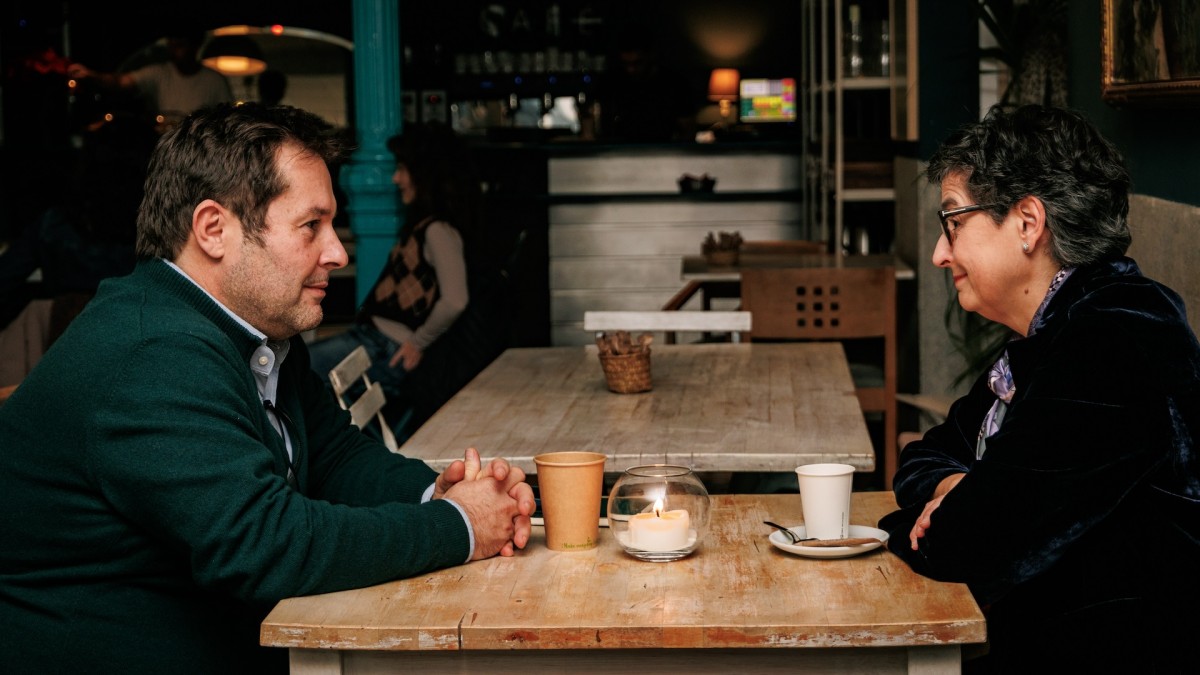
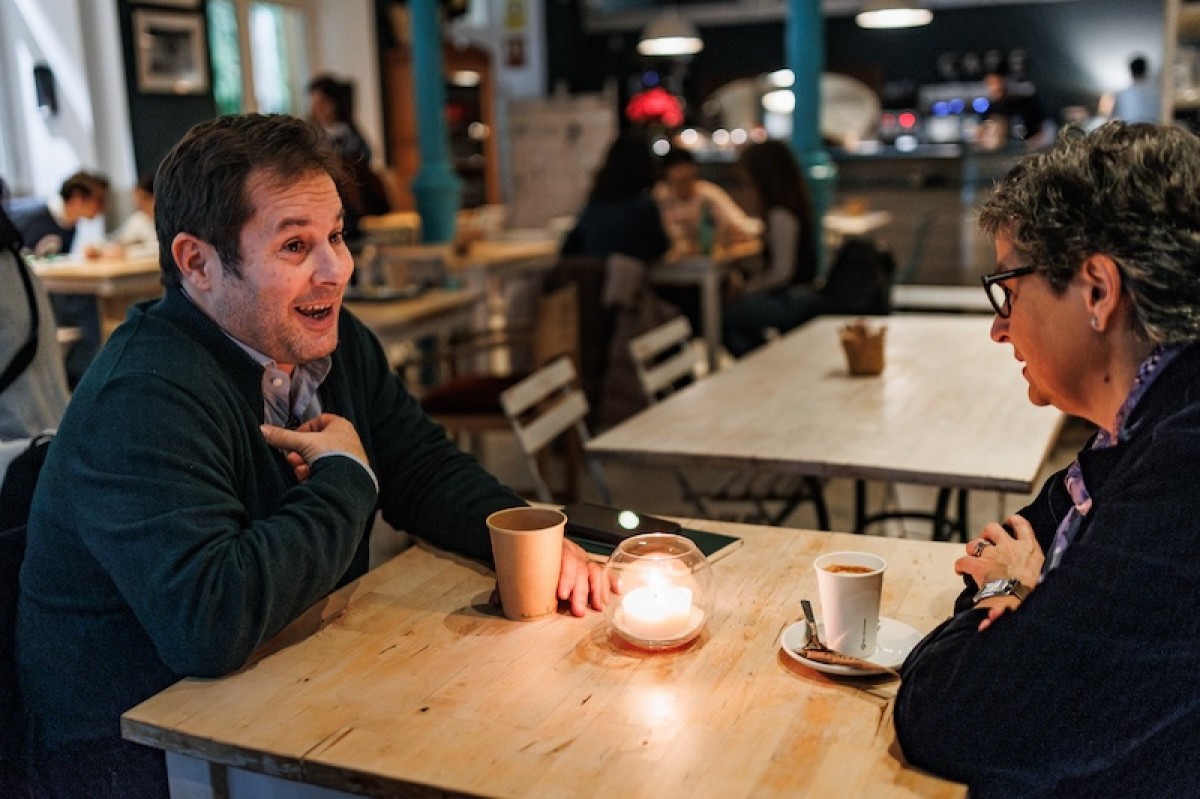
Arancha González Laya talks to our director Marc López Plana in the first 'Conversation' of 2025.Agenda Pública / Tania Sieira
A Spanish woman leading France's premier school of international relations exemplifies the interconnectedness of Europe. This is Arancha González Laya, Dean of the Paris School of International Affairs at Sciences Po and former Minister of Foreign Affairs of Spain (2020–2021). In an in-depth conversation with Agenda Pública, she examines France's institutional crisis, its implications for Spain and Europe, and Spain's pivotal role in shaping the new international order.
"Europe must strengthen its financial capacity and, especially, its capital market. It is essential that we be able to leverage European savings, the result of the work of our companies, pensioners and citizens, and direct them towards common objectives that strengthen the European Union," she argues. Furthermore, "defence and security constitute another priority area" for this new stage.
González Laya, one of the leading Spaniards in international institutions, analyses the role of Giorgia Meloni, Emmanuel Macron or Donald Tusk in the European Union for the coming years and warns: "The Government and the opposition must understand that Spain must be on the front line of this battle." "Spain has an extraordinary moment to lead the integration efforts of the European Union," she adds.
What could Europe be today?
We live in a time when we are not measuring well the strengths and weaknesses of the rest of the countries around the world, including our own. We overestimate the United States and underestimate the European Union. We ignore many countries that have a great role to play on the global stage. Let's look at the case of Türkiye or the case of Vietnam in the field of international trade. We are not measuring the actors on the international scene correctly, and we have to be careful because, if we do not measure them properly, the risk for error is too great.
The strength of the European Union is its humility, it always feels like the underdog. Your strength is your resilience, your ability to resist, your ability to overcome difficulties. Now, what we as Europeans cannot do is rejoice in our ability to overcome difficulties.
What are the priority areas in which you consider Europe must change and strengthen?
First, Europe must strengthen its financial capacity and, especially, its capital market. It is essential that we be able to leverage European savings, the result of the work of our companies, pensioners and citizens, and direct them towards common objectives that strengthen the European Union.
An illustration of Europe's ability to integrate European capital markets is the merger between UniCredit and Commerzbank, which is currently paralysed. If this operation does not materialize, it will send a signal of enormous European weakness in the face of our main problem: the consolidation of the capital market. It is necessary to adopt a medium and long-term perspective, leaving aside political-tactical considerations that may hinder this type of progress. The German elections in February will be a crucial moment. Once they pass, we will see if there really is political will to advance in this area.
What is the second European priority?
Defence and security constitute the other major priority area, which are closely linked to the first. The defence discourse has changed in Europe, and now the discussion is focused on how to mobilize capital for security investments. Besides, it is crucial to address the fragmentation in the internal defence market, standardizing equipment and guaranteeing interoperability. Currently, the lack of integration generates inefficiencies that weaken our defence capacity.
The appointment of a European Commissioner for Defence sends a powerful message, but we need to go further and take greater responsibility in the European pillar of NATO. This effort requires concrete decisions in the short term, especially in terms of standards and collaboration between Member States, to ensure a more effective and cohesive defence.
Let's talk about Ukraine. How do you think Europe can participate in solving the conflict?
There can be no solution for Ukraine without Ukraine, nor a definition of European security without Europeans at the table. To achieve this, we must anticipate the possible movements of the new US Administration and coordinate with it. But if this Administration decides to surprise us, it must find us prepared.
Do not forget that Russia is already attacking us. It is waging a high-intensity war against Ukraine, but also against us. Sabotage of our infrastructure, interference in our electoral processes and disinformation in the public debate are part of its strategy of aggression against the European Union. These actions represent a clear form of hybrid warfare that we must confront with determination.
After the elections to the European Parliament, we see how the parties that were part of the European consensus have lost strength. We have seen a first example of what this diminished power can mean when the European People's Party, in the negotiations for the new Commission, threatened to agree with the extreme right. Can this new political reality set the European political agenda in the new mandate?
There have been personal calculations, such as those by Manfred Weber. Yet, at the same time, The flirtation of European conservatives with ultra-conservatives or right-wing ultras finds a clear limit: Poland, where Donald Tusk governs after having faced the ultranationalists in the elections.
The centre-right must navigate its traditional balancing act within the European Union, reconciling diverse aspirations. Some policies transcend the left-right spectrum, aligning instead along a pro-European versus nationalist axis. While certain policies strengthen the European Union, others aim to undermine it by promoting renationalisation.
This Europeanism-nationalism axis is the fundamental axis within the European Union. And it is the axis, moreover, with which attempts will be made to weaken the European Union from within and with which we are already being attacked from the other side of the Atlantic, from the United States. Elon Musk is glorifying European nationalist forces and scorning Europeanists. They are going to try to influence us in a very decisive way.
As Jeremy Cliffe recently wrote in Public Agenda, there are five countries especially responsible for what happens in the coming years in the European Union: Spain, France, Germany, Poland, and Italy.
It is true that the classic engine of the European Union is the Franco-German engine. And that engine has gone through times when the governments of these countries were of different political colours. But what they had in common was being Europeanists, with greater or lesser nuances.
Would you also include Meloni?
Meloni is not playing a nationalist card, but is seeking to promote Europeanist solutions, unlike his partner in government, Mr Salvini, who is seeking nationalist solutions. That is why he is applauded by Mr Orbán, Mr Wilders and Mr Abascal, who are on the nationalist axis.
The reality today is that these three governments —even though they are at vastly different poles of the political spectrum— understand that only if the European Union is strengthened, and only if the European Union is further integrated, will we be able to resist in a world where geopolitical rivalries are going to test the strength of countries.
Let's talk about France. Le Pen is vocal about her stance on the European Union and has a good chance of being the next president of France.
The German system is a system of compromises, where political forces are used to build political commitments. In France, there is no culture of political commitment, it is a vertical system. The Fifth Republic is a system built on strong majorities. Those majorities no longer exist, simply because the political spectrum has fragmented. The big question for the republican parties in France is whether they will be able to build compromises or not. For now, they are having a hard time.
That is Spain's strength too: the ability to build consensus. At a time when the national political board in all countries has fragmented, those who are capable of building alliances govern.
Do you mean that the Republicans, the Socialists and the Macronists would have to form the majority that would allow Macron to appoint a prime minister with some stability?
There have been four prime ministers in one year, which is a record in the history of the French Fifth Republic. And a record in Europe, which tells you that there is a malaise —a fragility—. For comparison, in Germany, discussions always start with what political program heterogeneous forces can support. In France, the discussion always starts with the person.
There has been a kind of small political recomposition, also on the left because I believe that there is a part of the political forces that understand that negotiations must begin by announcing a program. It is about agreeing on a series of points and from there it will then depend on who is the person who embodies that political program, not the other way around.
Is Macron the problem?
Macron is president and has two more years at the Elysée. In a way, Macron is a guarantee of stability at a time of political turbulence. The question is whether the political forces will be able to build and weave this basic consensus, which is not very difficult to imagine.
What do you expect in Europe in 2025?
I hope for calm, unity, and determination. Calm: let us not allow ourselves to be impressed by all this nonsense that reaches us every day on social media, let us not allow ourselves to be impressed by the bravado. Unity: let us be able to move forward with what gives us strength: standing united. And determination: let us be clear that it is time to make a series of advances in our priorities, to move forward on integration.
We have talked about the European Parliament, we have talked about the Commission. What is the role that Costa has in the European Council so that decisions are made that are in line with your proposal?
António Costa has a fundamental role at the beginning of this legislature. He has to be the patient craftsman of that union. He is the president of the Council, who actually has to help build commitment between European states.
Costa is the right person because, above all, he has great respect from his colleagues, given that he has been sitting at that table. He is a discreet but effective person, as he has proven to be in Portugal, and he is a great pro-European. All this makes him a key person in the European Union.
What do you expect from Spain in the European Union?
Spain has an extraordinary moment to lead the European Union's integration efforts. It can do so with its own signature because today it is one of the pillars of the Union's economic strength. This gives it certain rights, but it also forces it to be on the front line, promoting proposals, weaving together commitments and seeking complicity. It also implies dialogue with those who are not like Spain and do not think like Spain, but who share the need to deepen European integration.
How important is the PP here?
The PP has a fundamental role. Although the Socialist Party and the forces that support it are in Government, the PP is also key, especially in the European Parliament, where it is the second party that contributes the most MEPs to the EPP group. Their responsibility lies in collaborating to weave European commitments, not in weakening the Union. It must contribute to building European consensus.
The active and responsible participation of the PP is essential because Spain, as a country, is represented in different institutions: in Parliament, in the Council and in the European Commission, where it holds a prominent vice-presidency. If all these forces work in a coordinated manner, they will be able to promote policies that are beneficial to Europe and that will also have a positive impact on Spain and the Spanish people.
Thank you.
"Europe must strengthen its financial capacity and, especially, its capital market. It is essential that we be able to leverage European savings, the result of the work of our companies, pensioners and citizens, and direct them towards common objectives that strengthen the European Union," she argues. Furthermore, "defence and security constitute another priority area" for this new stage.
González Laya, one of the leading Spaniards in international institutions, analyses the role of Giorgia Meloni, Emmanuel Macron or Donald Tusk in the European Union for the coming years and warns: "The Government and the opposition must understand that Spain must be on the front line of this battle." "Spain has an extraordinary moment to lead the integration efforts of the European Union," she adds.
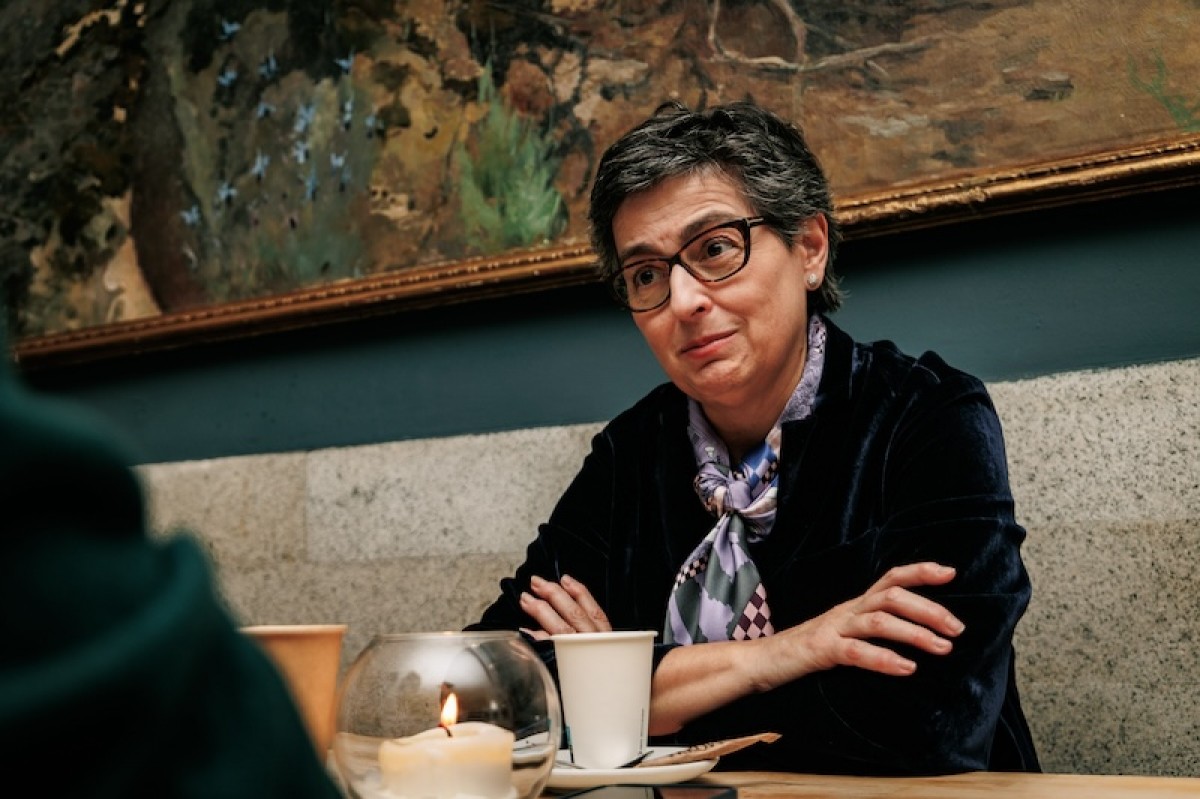
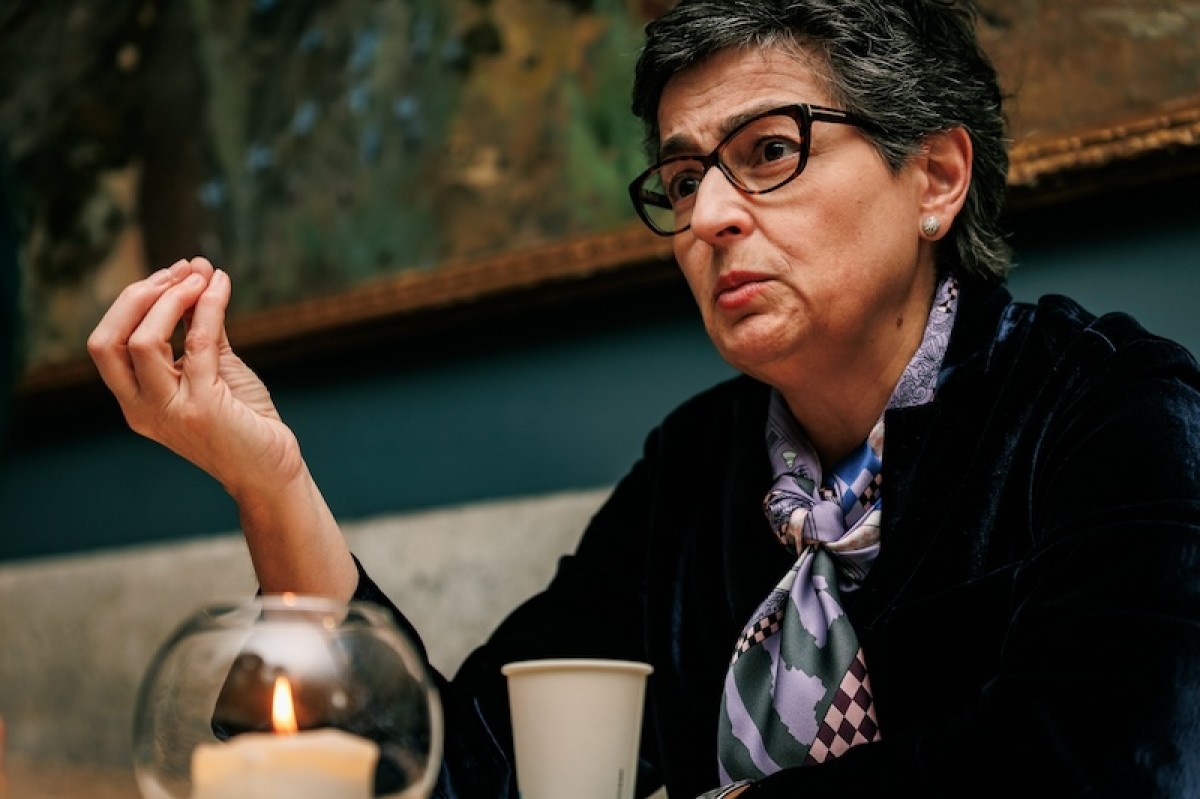
Arancha González Laya, Dean of the Paris School of International Affairs at Sciences Po and former Minister of Foreign Affairs of Spain (2020–2021). Foto: Agenda Pública / Tania Sieira
What could Europe be today?
We live in a time when we are not measuring well the strengths and weaknesses of the rest of the countries around the world, including our own. We overestimate the United States and underestimate the European Union. We ignore many countries that have a great role to play on the global stage. Let's look at the case of Türkiye or the case of Vietnam in the field of international trade. We are not measuring the actors on the international scene correctly, and we have to be careful because, if we do not measure them properly, the risk for error is too great.
"We overestimate the United States and underestimate the European Union"The strength of the European Union sometimes lies precisely in underestimating itself, in being humble in the analysis of its strengths. What is happening with the United States right now is that it suffers from arrogance. And it projects it in such a way towards the rest of the world that we all believe the story of the United States superpower.
The strength of the European Union is its humility, it always feels like the underdog. Your strength is your resilience, your ability to resist, your ability to overcome difficulties. Now, what we as Europeans cannot do is rejoice in our ability to overcome difficulties.
What are the priority areas in which you consider Europe must change and strengthen?
First, Europe must strengthen its financial capacity and, especially, its capital market. It is essential that we be able to leverage European savings, the result of the work of our companies, pensioners and citizens, and direct them towards common objectives that strengthen the European Union.
"We cannot continue to allow this huge flight of capital to the United States, where American investment funds decide how Europeans' money is invested"We cannot continue to allow this huge flight of capital to the United States, where American investment funds decide how Europeans' money is invested. This is undoubtedly our Achilles' heel because many other key areas depend on it: our ability to invest in defence, competitiveness, industrial policy and social policies that reduce inequalities.
An illustration of Europe's ability to integrate European capital markets is the merger between UniCredit and Commerzbank, which is currently paralysed. If this operation does not materialize, it will send a signal of enormous European weakness in the face of our main problem: the consolidation of the capital market. It is necessary to adopt a medium and long-term perspective, leaving aside political-tactical considerations that may hinder this type of progress. The German elections in February will be a crucial moment. Once they pass, we will see if there really is political will to advance in this area.
What is the second European priority?
Defence and security constitute the other major priority area, which are closely linked to the first. The defence discourse has changed in Europe, and now the discussion is focused on how to mobilize capital for security investments. Besides, it is crucial to address the fragmentation in the internal defence market, standardizing equipment and guaranteeing interoperability. Currently, the lack of integration generates inefficiencies that weaken our defence capacity.
The appointment of a European Commissioner for Defence sends a powerful message, but we need to go further and take greater responsibility in the European pillar of NATO. This effort requires concrete decisions in the short term, especially in terms of standards and collaboration between Member States, to ensure a more effective and cohesive defence.
Let's talk about Ukraine. How do you think Europe can participate in solving the conflict?
There can be no solution for Ukraine without Ukraine, nor a definition of European security without Europeans at the table. To achieve this, we must anticipate the possible movements of the new US Administration and coordinate with it. But if this Administration decides to surprise us, it must find us prepared.
"There can be no solution for Ukraine without Ukraine, nor a definition of European security without Europeans at the table"It is vital to understand what the game is regarding Putin. For Ukrainians and Europeans alike, the way in which the high-intensity conflict is brought to a halt is crucial —I am not talking about peace because we are not at that point—. This will be the measure by which Russia will assess our real willingness to defend ourselves against its aggression. If we show hesitation or disunity, we would be virtually sending out an invitation for it to continue its aggression against us.
Do not forget that Russia is already attacking us. It is waging a high-intensity war against Ukraine, but also against us. Sabotage of our infrastructure, interference in our electoral processes and disinformation in the public debate are part of its strategy of aggression against the European Union. These actions represent a clear form of hybrid warfare that we must confront with determination.
After the elections to the European Parliament, we see how the parties that were part of the European consensus have lost strength. We have seen a first example of what this diminished power can mean when the European People's Party, in the negotiations for the new Commission, threatened to agree with the extreme right. Can this new political reality set the European political agenda in the new mandate?
There have been personal calculations, such as those by Manfred Weber. Yet, at the same time, The flirtation of European conservatives with ultra-conservatives or right-wing ultras finds a clear limit: Poland, where Donald Tusk governs after having faced the ultranationalists in the elections.
The centre-right must navigate its traditional balancing act within the European Union, reconciling diverse aspirations. Some policies transcend the left-right spectrum, aligning instead along a pro-European versus nationalist axis. While certain policies strengthen the European Union, others aim to undermine it by promoting renationalisation.
This Europeanism-nationalism axis is the fundamental axis within the European Union. And it is the axis, moreover, with which attempts will be made to weaken the European Union from within and with which we are already being attacked from the other side of the Atlantic, from the United States. Elon Musk is glorifying European nationalist forces and scorning Europeanists. They are going to try to influence us in a very decisive way.
Agenda Pública wants to continue highlighting a global vision from Spain in 2025. Foto: Agenda Pública / Tania Sieira
As Jeremy Cliffe recently wrote in Public Agenda, there are five countries especially responsible for what happens in the coming years in the European Union: Spain, France, Germany, Poland, and Italy.
It is true that the classic engine of the European Union is the Franco-German engine. And that engine has gone through times when the governments of these countries were of different political colours. But what they had in common was being Europeanists, with greater or lesser nuances.
"What Spain, Poland, and Italy have in common, for now, is that their leaders are pro-European"Today, these two countries have obvious internal weaknesses, more so in the French case than in the German case. This means that the other three countries, which are at present also a political or economic engine of the European Union, need to compensate for the lower political capacity that France and Germany have. Although they have very different governments, from inclined left to the far right, what Spain, Poland, and Italy have in common, for now, is that their leaders are pro-European.
Would you also include Meloni?
Meloni is not playing a nationalist card, but is seeking to promote Europeanist solutions, unlike his partner in government, Mr Salvini, who is seeking nationalist solutions. That is why he is applauded by Mr Orbán, Mr Wilders and Mr Abascal, who are on the nationalist axis.
The reality today is that these three governments —even though they are at vastly different poles of the political spectrum— understand that only if the European Union is strengthened, and only if the European Union is further integrated, will we be able to resist in a world where geopolitical rivalries are going to test the strength of countries.
Let's talk about France. Le Pen is vocal about her stance on the European Union and has a good chance of being the next president of France.
The German system is a system of compromises, where political forces are used to build political commitments. In France, there is no culture of political commitment, it is a vertical system. The Fifth Republic is a system built on strong majorities. Those majorities no longer exist, simply because the political spectrum has fragmented. The big question for the republican parties in France is whether they will be able to build compromises or not. For now, they are having a hard time.
"Marine Le Pen's strength will depend on whether the French republican space is capable of building compromises and consensus"Marine Le Pen sees herself as strong, even though she has an enormous weakness. To begin with, he has a judicial process for embezzlement of public funds, which is serious. Actually, Marine Le Pen's strength will depend on whether the French republican space is capable of building compromises and consensus.
That is Spain's strength too: the ability to build consensus. At a time when the national political board in all countries has fragmented, those who are capable of building alliances govern.
Do you mean that the Republicans, the Socialists and the Macronists would have to form the majority that would allow Macron to appoint a prime minister with some stability?
There have been four prime ministers in one year, which is a record in the history of the French Fifth Republic. And a record in Europe, which tells you that there is a malaise —a fragility—. For comparison, in Germany, discussions always start with what political program heterogeneous forces can support. In France, the discussion always starts with the person.
There has been a kind of small political recomposition, also on the left because I believe that there is a part of the political forces that understand that negotiations must begin by announcing a program. It is about agreeing on a series of points and from there it will then depend on who is the person who embodies that political program, not the other way around.
Is Macron the problem?
Macron is president and has two more years at the Elysée. In a way, Macron is a guarantee of stability at a time of political turbulence. The question is whether the political forces will be able to build and weave this basic consensus, which is not very difficult to imagine.
"Macron is a guarantee of stability at a time of political turbulence"It would consist of a social package to improve education and health and, on the other hand, a series of measures to reduce spending because, admittedly, the deficit is skyrocketing. They have to do this not only to meet European requirements, but also to ensure that they do not pass on the burden of their current incompetence to future generations. That is the big discussion.
The Dean believes Europe is poised to take a leap forward in its integration process. Foto: Agenda Pública / Tania Sieira
What do you expect in Europe in 2025?
I hope for calm, unity, and determination. Calm: let us not allow ourselves to be impressed by all this nonsense that reaches us every day on social media, let us not allow ourselves to be impressed by the bravado. Unity: let us be able to move forward with what gives us strength: standing united. And determination: let us be clear that it is time to make a series of advances in our priorities, to move forward on integration.
We have talked about the European Parliament, we have talked about the Commission. What is the role that Costa has in the European Council so that decisions are made that are in line with your proposal?
António Costa has a fundamental role at the beginning of this legislature. He has to be the patient craftsman of that union. He is the president of the Council, who actually has to help build commitment between European states.
"António Costa is the champion of European unity, and that is a task that will be of great importance and greater difficulty in this legislature that begins now"The European Commission has to put on the table the legislative proposals that correspond to European needs. Then, the President of the Council has to be able to lead the twenty-seven Member States to build the unity necessary to approve the legislation that the European Union requires. He is the champion of European unity, and that is a task that will be of great importance and greater difficulty in this legislature that begins now.
Costa is the right person because, above all, he has great respect from his colleagues, given that he has been sitting at that table. He is a discreet but effective person, as he has proven to be in Portugal, and he is a great pro-European. All this makes him a key person in the European Union.
What do you expect from Spain in the European Union?
Spain has an extraordinary moment to lead the European Union's integration efforts. It can do so with its own signature because today it is one of the pillars of the Union's economic strength. This gives it certain rights, but it also forces it to be on the front line, promoting proposals, weaving together commitments and seeking complicity. It also implies dialogue with those who are not like Spain and do not think like Spain, but who share the need to deepen European integration.
"This is not the time to weaken; it is the time to strengthen the pro-European and Spanish ranks to build greater European resilience"The government has shown a clear willingness to occupy this space. Both the Executive and the opposition must understand that Spain must be in the front line of this battle, not elsewhere. This is not the time to weaken; it is the time to strengthen the pro-European and Spanish ranks to build greater European resilience. Indeed, this is crucial at a time when the European Union is facing adversity and great geopolitical complexity. That is the role of Spain, and I am convinced that it can play it successfully.
How important is the PP here?
The PP has a fundamental role. Although the Socialist Party and the forces that support it are in Government, the PP is also key, especially in the European Parliament, where it is the second party that contributes the most MEPs to the EPP group. Their responsibility lies in collaborating to weave European commitments, not in weakening the Union. It must contribute to building European consensus.
The active and responsible participation of the PP is essential because Spain, as a country, is represented in different institutions: in Parliament, in the Council and in the European Commission, where it holds a prominent vice-presidency. If all these forces work in a coordinated manner, they will be able to promote policies that are beneficial to Europe and that will also have a positive impact on Spain and the Spanish people.
Thank you.
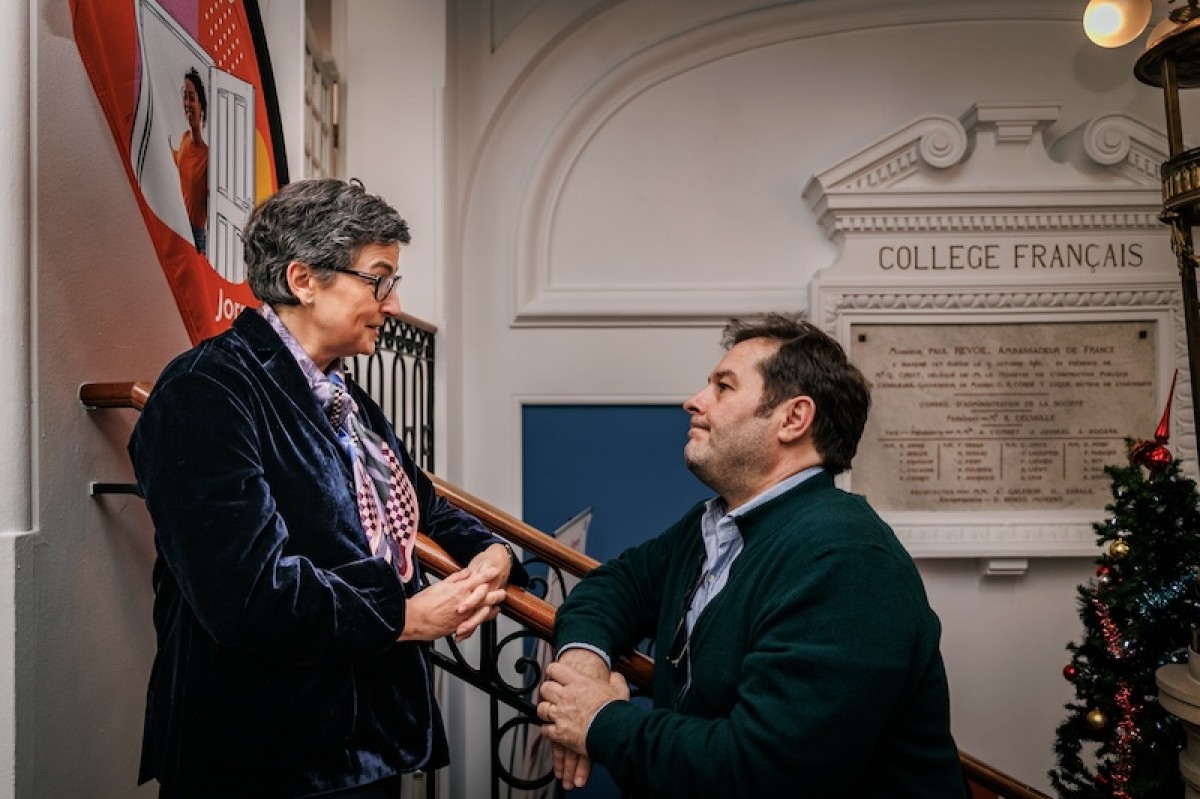
Marc López Plana bids farewell to González Laya after the conversation. Foto: Agenda Pública / Tania Sieira
Ahora en portada
27 de septiembre de 2026
26 de septiembre de 2026
Noticias relacionadas
Hace 90 semanas
Elon Musk and the helplessness of German liberal democratic elites
Hace 90 semanas
Europe needs a new leading bloc: an E5+1 that includes Spain
Hace 92 semanas
Olaf Scholz's Head of the Federal Chancellery in Agenda Pública: The election is a "choice between Scholz and Merz —and the coalition partners they might bring"
Lo más leído