Miércoles, 30 de septiembre de 2026




ANÁLISIS
Elon Musk and the helplessness of German liberal democratic elites
Elon Musk's endorsement of Alternative for Germany less than two months before the general election has generated a lot of noise and uproar among the country's elites. Thorsten Benner, the director of the Global Public Policy Institute (GPPi) in Berlin, points to a political system “with increasingly messy coalition governments making strange bedfellows in an increasingly fragmented party system” as one of the reasons that prevents “better governing and to win back voters.”
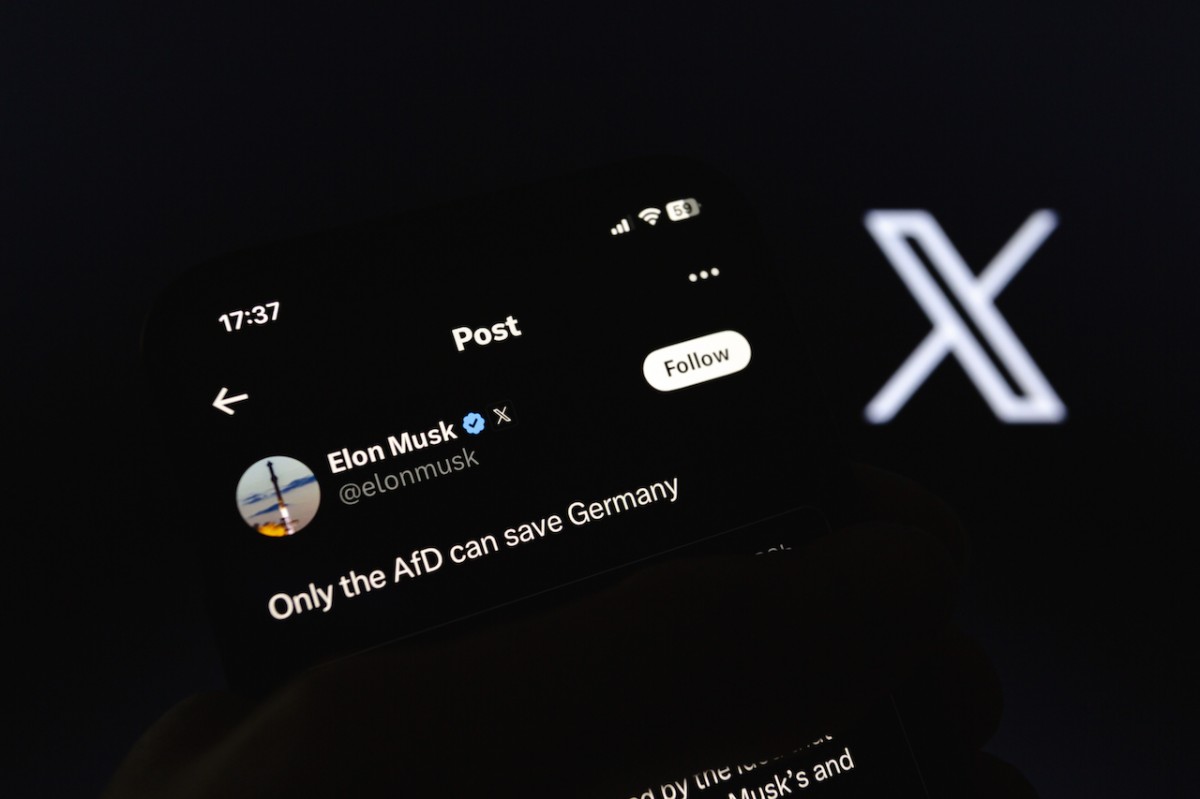
''Only the AfD can save Germany,'' Elon Musk wrote in a post on his social media platform.Andre M. Chang / Zuma Press / ContactoPhoto
"Only the AfD can save Germany", Elon Musk wrote in a post on his social media platform X just before Christmas. A good week later, German newspaper DIE WELT ran an op-ed by the billionaire explaining his endorsement of the extreme-right Alternative for Germany, barely two months ahead of crucial national elections. The piece in German publishing house Axel Springer’s flagship publication triggered a remarkably helpless reaction by liberal democratic elites.
For the rest, the whole affair leaves neither Musk, Axel Springer nor German liberal democratic elites looking particularly good. Musk’s lightweight treatise reads like it was AI-generated, with a prompt such as "expand my tweet in support of the AfD into a flimsy op-ed". It would have been easy for him to hire a scribe ghostwriting a somewhat substantive text. That he chose not to show how little he ultimately cares about the details of the country in which Tesla has one of its biggest investments in Europe, in the form of its gigafactory in Grünheide near Berlin. Musk does not betray any deeper familiarity with the fault lines of German politics or the AfD. For him, AfD co-leader Weidel being a lesbian with a partner born in Sri Lanka is enough to paper over the Nazi language pushed by Björn Höcke, the AfD’s leader in its stronghold Thuringia. Musk claims the "political realism" of the AfD makes it the only force that can push for deregulation, curtailing illegal migration and changing Germany’s energy policy. Musk overlooks that to achieve these goals, he might as well turn to the CDU/CSU or the FDP. He seems blissfully unaware that the AfD’s push for a German exit from the Eurozone and the EU would spell economic disaster – or that it was the AfD that opposed Musk’s gigafactory in Grünheide.
"Musk’s intervention is a clarifying moment for the German centre-right. Some of the leading lights in the CDU and FDP had tried to suck up to the world’s richest man"Let us start with the good news. Musk’s intervention is a clarifying moment for the German centre-right. Some of the leading lights in the CDU and FDP had tried to suck up to the world’s richest man. Leading CDU politician and former health minister Jens Spahn had lionized Musk as "champion for a whole generation of courageous entrepreneurs and scientists. For people who believe in the power of ideas and that progress is possible". FDP leader and former finance minister Christian Lindner had argued that Germany needs to dare to be more inspired by "Milei or Musk". Even when Musk voiced his support for the AfD on X, Lindner’s reaction was sycophantic. "Elon, I've initiated a policy debate inspired by ideas from you and Milei", he tweeted. "Don't rush to conclusions from afar. Let's meet, and I'll show you what the FDP stands for". Musk was not too impressed with the plea of his self-appointed German disciple. He simply went on to share a post by AfD leader Alice Weidel and doubled down on his support for the AfD in his op-ed. That led CDU chairman Friedrich Merz who is the clear favourite to succeed Scholz as chancellor to issue a sharp rebuke: "Elon Musk’s election appeal is intrusive and presumptuous". All the while, the AfD is using Musk’s endorsement to take its case to German voters. The frontlines are now clear. Musk is the AfD’s new patron saint. Fewer centre-right politicians are likely to invoke the billionaire as a source of inspiration in the near future.
For the rest, the whole affair leaves neither Musk, Axel Springer nor German liberal democratic elites looking particularly good. Musk’s lightweight treatise reads like it was AI-generated, with a prompt such as "expand my tweet in support of the AfD into a flimsy op-ed". It would have been easy for him to hire a scribe ghostwriting a somewhat substantive text. That he chose not to show how little he ultimately cares about the details of the country in which Tesla has one of its biggest investments in Europe, in the form of its gigafactory in Grünheide near Berlin. Musk does not betray any deeper familiarity with the fault lines of German politics or the AfD. For him, AfD co-leader Weidel being a lesbian with a partner born in Sri Lanka is enough to paper over the Nazi language pushed by Björn Höcke, the AfD’s leader in its stronghold Thuringia. Musk claims the "political realism" of the AfD makes it the only force that can push for deregulation, curtailing illegal migration and changing Germany’s energy policy. Musk overlooks that to achieve these goals, he might as well turn to the CDU/CSU or the FDP. He seems blissfully unaware that the AfD’s push for a German exit from the Eurozone and the EU would spell economic disaster – or that it was the AfD that opposed Musk’s gigafactory in Grünheide.
"Döpfner’s decision to offer Musk a platform to run his op-ed may have had little to do with German politics and everything with Springer’s business interests in the US"That Germany’s leading publishing house Axel Springer and its CEO Mathias Döpfner decided to run an endorsement of the AfD is a significant step for the extreme right party on its path to normalization. Now, the big question is whether Springer CEO Mathias Döpfner will continue to push in this direction. Hardly any German will vote for the AfD just because Musk provided an endorsement. However, should Springer’s main media outlets decide to pursue a full-fledged normalization of the AfD that would be an important breakthrough for the party. Right now, the scenario of Döpfner going full Hugenberg is not very likely. In fact, Döpfner’s decision to offer Musk a platform to run his op-ed may have had little to do with German politics and everything with Springer’s business interests in the US. Döpfner sees the US as its main market for growth, having acquired Politico. Being on the good side of Musk can’t hurt for your big business dreams in the Musk-Trump era. For Springer, the political damage in Germany from pushing Musk’s AfD endorsement might be a price worth paying to pursue the more important goals in the US. The fact that Springer decided to accompany Musk’s piece with a rebuttal by WELT’s editor-in-chief demonstrates a certain willingness to limit that damage.
"If you want to go after Musk then target his business interests"German liberal democratic elites are right to be concerned by Musk’s activism in favour of the AfD. After all, Musk has formidable resources via his financial clout, control of X, closeness to US president-elect Donald Trump and his formal role in the coming Trump administration. There is a danger of the Trumpist-tech billionaire US right orchestrating a far-right international to take power in key European countries. Musk’s support for Nigel Farage is a case in point. But self-righteous outrage at Musk because of external interference into German politics is not an effective answer. If you want to go after Musk, then target his business interests: pursue effective regulation of X, organize a consumer boycott against Tesla and pursue massive investments to decrease the European dependence on Starlink. For the rest, collective outrage at Musk might increase the cosiness factor around the liberal democratic campfire. But it does nothing to decrease the appeal of the AfD with voters. Liberal democratic elites have every reason to panic about the AfD’s rise, for which there doesn’t seem to be any effective antidote. The "firewall" agreement among all democratic parties vowing not to pursue any cooperation with the AfD only seems to increase the appeal of the AfD as the only alternative. At the same time, there is no agreement among liberal democratic forces on whether to pursue a formal request to ban the AfD (or at least deprive it of public funding) with the constitutional court. And simply governing better to win back voters is much harder, with ever messier coalition governments making for odd bedfellows in an ever more fragmenting party system. But one thing is certain: finger-pointing at Musk or Springer is hardly a winning strategy with voters looking for real solutions to the malaise of the German model and the country’s economic, social and security challenges. Rather, it’s a feel-good distraction.

Thorsten Benner
Cofundador y director del Global Public Policy Institute (GPPi) de Berlín
Etiquetas
Agenda Pública in English, democracia, comunicación, Estados Unidos, Elon Musk, Trump, Merz, elecciones alemania, extrema derecha, CDU, FDP Ahora en portada
30 de septiembre de 2026
30 de septiembre de 2026
30 de septiembre de 2026
Lo más leído