Lunes, 12 de octubre de 2026




AGENDA PÚBLICA EU
Artificial intelligence: a tsunami of unanswered questions
Artificial intelligence is advancing at a pace that is multiplying both its applications and the questions surrounding its effects. European People's Party MEP Adrián Vázquez brings the debate opened this September by Dario Amodei into broader concerns about employment, the concentration of power, global security and the erosion of attention.
.jpg)
Claude, from Anthropic, and ChatGPT, from OpenAI.Andre M. Chang / Zuma Press / Europa Press
It is impossible to surf a tsunami. You may have trained extensively, have the best board on the market and studied the shape of the wave as much as necessary, but the reality is that, once you get on it, the consequences are unpredictable. That is exactly where humanity now finds itself with artificial intelligence: beginning to surf a wave whose crest seems endless.
The speed at which this technology is advancing is unprecedented. According to Epoch AI, the training compute used for AI models doubles every five months. At that rate, a model that began training five years and eight months ago would today have 12,400 times as much power and capacity. If the same rate applied to the speed a car could reach, it would be equivalent to developing, in less than six years, vehicles capable of travelling at 1.5 million km/h.
Yet going faster does not necessarily mean reaching your destination sooner or in better shape. The impact that AI and its applications are having on our world is enormous. We are no longer asking whether this new technology will revolutionise everything, because it is already obvious that it is doing so. The question is whether that transformation will be total, and whether we will be able to adapt our economy, our labour model, our education system, our democratic institutions and, ultimately, our societies. Above all, whether we will be able to do so before the train comes off the tracks.
If we focus only on the positives, AI presents us with a safer world, with less tedious jobs, better healthcare and greater energy and industrial efficiency. But every coin has another side. Humanity is once again peering over the edge of the three challenges that previous industrial revolutions also placed before us, this time with even greater force: an employment crisis —which invariably heralds profound social change—, a crisis of the political system and, ultimately, the risk of self-destruction. Moreover, this new technology has accelerated a crisis that humans had never experienced before: a profound crisis in our capacity to pay attention. Our cognitive capacity, one of humanity's defining traits compared with other species, is being weakened and dispersed by competition from other forms of intelligence. This may not be the time to become Luddites, but the force of the wave means that all these threats must be properly assessed.
First, we must focus on employment. Work is not only people's main source of income; it is also one of the central pillars of their identity and the single most important factor explaining social and geographical mobility. The first two industrial revolutions employed millions of Europeans, moving them from the countryside to the cities and creating a new social class —the working class— that shaped politics at the end of the 19th century and throughout the 20th.
Today, the trend is moving in the opposite direction. The digital revolution at the beginning of this century automated a multitude of industrial processes and contributed to offshoring. Many European regions have been trying to adapt for years.
The first dismissal is the hire that never happens. According to SurePoint, the recruitment of first-year associates at the 200 largest firms in the U.S. has remained virtually stagnant for four years, while those same firms have reported record revenues over the same period. This raises three major questions: what do we do with people who cannot find work? How do we produce senior professionals if they never had the chance to start out as juniors? And how do we tackle the inequality produced by a world in which recruitment will be more closely tied than ever to personal connections rather than qualifications? It still seems too early to provide any answers.
Second, AI poses a major challenge to our traditional institutions and their democratic expression. This is not only about the vast accumulation of data and power in the hands of the companies that control these systems, which in many cases exceeds that of entire states. Rather, the novelty lies in the fact that the efficiency of artificial intelligence is beginning to encroach on the space traditionally occupied by emotional intelligence and decisions shaped by human bias.
Third, this month Anthropic CEO Dario Amodei stunned the world by declaring that we should "slow down AI development" because of the risk its power poses to global survival. What was striking was how quickly his competitors agreed with him, something unusual among the leaders of companies such as OpenAI or xAI.
Do those who understand AI best have reason to believe the apocalypse is near? The truth is that there are sufficient grounds to be suspicious of them, as an interest in slowing the development of new competitors and consolidating their oligopoly could very well lie behind such strategies.
Finally, AI poses a new challenge that neither the steam engine, rural exodus, the railway nor even the atomic bomb ever created: a profound crisis of attention. It is true that this widespread decline in concentration cannot be attributed entirely to AI. The real problem lies with screens.
The widespread use of the smartphone to obtain information, communicate, manage how we present ourselves to others, navigate, pay, manage our finances or organise our time concentrates all our attention in a single place. Social networks and their personalised recommendation algorithms are a constant party. Who is going to pay attention to their teacher when everything they care about most is constantly flowing across the screen in the palm of their hand? Why sit on a bench waiting for a friend and look at the world around me if I have a hundred notifications? And how am I supposed to listen to that friend when they arrive if those notifications never stop appearing?
AI accelerates this collapse of attention by generating a greater volume of content, tailored ever more closely to each individual. Its ability to provide solutions and rewards within seconds disrupts the educational process and encourages us to outsource thinking itself. Why develop reading comprehension or mathematical skills if a machine can already do it? Why learn to write or create? Or why solve complex puzzles if it is easier to write a prompt?
This cognitive laziness is even more pronounced among those who have known nothing else: students who have grown up with AI, or almost so, do not know what it means to summarise, search for sources or spend time finding solutions. The results of the latest PISA report are disheartening. Measures are urgently needed to restore educators to a central role and make students exercise and strengthen their cognitive abilities before entering the real world, where the advantage in innovation increasingly belongs to those who can think beyond simply finding an answer to a problem.
Artificial intelligence, by definition, cannot be emotional. But, by definition, its creators, developers and users cannot escape emotion either. We must understand this clearly, become aware of it and ensure, as we have always done, that lived human experience once again bends technology towards building a better society for everyone. And if we fail, let us hope we are able to cut the power before the tsunami sweeps us away.
The speed at which this technology is advancing is unprecedented. According to Epoch AI, the training compute used for AI models doubles every five months. At that rate, a model that began training five years and eight months ago would today have 12,400 times as much power and capacity. If the same rate applied to the speed a car could reach, it would be equivalent to developing, in less than six years, vehicles capable of travelling at 1.5 million km/h.
Yet going faster does not necessarily mean reaching your destination sooner or in better shape. The impact that AI and its applications are having on our world is enormous. We are no longer asking whether this new technology will revolutionise everything, because it is already obvious that it is doing so. The question is whether that transformation will be total, and whether we will be able to adapt our economy, our labour model, our education system, our democratic institutions and, ultimately, our societies. Above all, whether we will be able to do so before the train comes off the tracks.
"We are no longer asking whether this new technology will revolutionise everything, because it is already obvious that it is doing so. The question is whether that transformation will be total"In any case, it is important not to succumb to doom-laden tendencies and apocalyptic prophecies. The benefits of artificial intelligence are clear. AI improves our capacity for translation and understanding, automates repetitive tasks, optimises forecasts for renewable energy demand, detects pests, droughts and potential forest fires, improving crop resilience, reduces waste in corporate supply chains, democratises access to information as never before, accelerates research in physics, astronomy, chemistry and biology, makes diagnostic medicine more accurate and faster —almost infallible— and reduces the time needed to discover useful molecules for new medicines from years to months.
If we focus only on the positives, AI presents us with a safer world, with less tedious jobs, better healthcare and greater energy and industrial efficiency. But every coin has another side. Humanity is once again peering over the edge of the three challenges that previous industrial revolutions also placed before us, this time with even greater force: an employment crisis —which invariably heralds profound social change—, a crisis of the political system and, ultimately, the risk of self-destruction. Moreover, this new technology has accelerated a crisis that humans had never experienced before: a profound crisis in our capacity to pay attention. Our cognitive capacity, one of humanity's defining traits compared with other species, is being weakened and dispersed by competition from other forms of intelligence. This may not be the time to become Luddites, but the force of the wave means that all these threats must be properly assessed.
First, we must focus on employment. Work is not only people's main source of income; it is also one of the central pillars of their identity and the single most important factor explaining social and geographical mobility. The first two industrial revolutions employed millions of Europeans, moving them from the countryside to the cities and creating a new social class —the working class— that shaped politics at the end of the 19th century and throughout the 20th.
Today, the trend is moving in the opposite direction. The digital revolution at the beginning of this century automated a multitude of industrial processes and contributed to offshoring. Many European regions have been trying to adapt for years.
"This new technology has accelerated a crisis that humans had never experienced before: a profound crisis in our capacity to pay attention"The emergence of AI has not only accelerated all these job losses, but extended them to sections of society that once believed themselves untouchable. Lawyers, doctors, consultants and engineers are watching with concern as more of their tasks are automated or replaced. Their bosses still provide added value that is difficult to replace: from organising, negotiating and taking risks to building relationships. But the automation of the production and review of reports, as well as the execution of repetitive processes, is leaving many people behind.
The first dismissal is the hire that never happens. According to SurePoint, the recruitment of first-year associates at the 200 largest firms in the U.S. has remained virtually stagnant for four years, while those same firms have reported record revenues over the same period. This raises three major questions: what do we do with people who cannot find work? How do we produce senior professionals if they never had the chance to start out as juniors? And how do we tackle the inequality produced by a world in which recruitment will be more closely tied than ever to personal connections rather than qualifications? It still seems too early to provide any answers.
Second, AI poses a major challenge to our traditional institutions and their democratic expression. This is not only about the vast accumulation of data and power in the hands of the companies that control these systems, which in many cases exceeds that of entire states. Rather, the novelty lies in the fact that the efficiency of artificial intelligence is beginning to encroach on the space traditionally occupied by emotional intelligence and decisions shaped by human bias.
"The emergence of AI has accelerated all these job losses and extended them to sections of society that once believed themselves untouchable"Is a court ruling issued by a digital agent free of personal bias fairer? Who is held responsible for a war crime committed by an autonomous weapon? How much is a ministerial or corporate decision shaped when it is escalated through an organisation without meaningful human review and is based exclusively on probabilistic criteria? Once again, the answers are unclear, particularly when the temptation to gain a geopolitical advantage among actors unconstrained by democratic safeguards affects everyone else's ability to respond.
Third, this month Anthropic CEO Dario Amodei stunned the world by declaring that we should "slow down AI development" because of the risk its power poses to global survival. What was striking was how quickly his competitors agreed with him, something unusual among the leaders of companies such as OpenAI or xAI.
Do those who understand AI best have reason to believe the apocalypse is near? The truth is that there are sufficient grounds to be suspicious of them, as an interest in slowing the development of new competitors and consolidating their oligopoly could very well lie behind such strategies.
"In the past, nuclear weapons could destroy the world, but activating them required action by one or more humans whose own destruction was also guaranteed"Even so, the degree of autonomy this technology can achieve is frightening. In the past, nuclear weapons could destroy the world, but activating them required action by one or more humans whose own destruction was also guaranteed. In the words of Pope Leo XIV, AI does not know human experience because it has neither suffered nor loved. And an intelligence that cannot feel, if given access to nuclear codes, is incapable of weighing anything beyond statistical criteria when deciding whether to activate them. In such circumstances, perhaps the statistically optimal solution an AI agent might find to guarantee world peace would be to destroy the world. Who knows.
Finally, AI poses a new challenge that neither the steam engine, rural exodus, the railway nor even the atomic bomb ever created: a profound crisis of attention. It is true that this widespread decline in concentration cannot be attributed entirely to AI. The real problem lies with screens.
The widespread use of the smartphone to obtain information, communicate, manage how we present ourselves to others, navigate, pay, manage our finances or organise our time concentrates all our attention in a single place. Social networks and their personalised recommendation algorithms are a constant party. Who is going to pay attention to their teacher when everything they care about most is constantly flowing across the screen in the palm of their hand? Why sit on a bench waiting for a friend and look at the world around me if I have a hundred notifications? And how am I supposed to listen to that friend when they arrive if those notifications never stop appearing?
AI accelerates this collapse of attention by generating a greater volume of content, tailored ever more closely to each individual. Its ability to provide solutions and rewards within seconds disrupts the educational process and encourages us to outsource thinking itself. Why develop reading comprehension or mathematical skills if a machine can already do it? Why learn to write or create? Or why solve complex puzzles if it is easier to write a prompt?
This cognitive laziness is even more pronounced among those who have known nothing else: students who have grown up with AI, or almost so, do not know what it means to summarise, search for sources or spend time finding solutions. The results of the latest PISA report are disheartening. Measures are urgently needed to restore educators to a central role and make students exercise and strengthen their cognitive abilities before entering the real world, where the advantage in innovation increasingly belongs to those who can think beyond simply finding an answer to a problem.
"Measures are urgently needed to restore educators to a central role and make students exercise and strengthen their cognitive abilities before entering the real world"Ultimately, there are many questions and few answers. What does seem clear, however, is that humanity's real challenge should not focus exclusively on trying to predict how far this technology can go. The real challenge is to steer that development towards a better society. That means putting AI at the service of humanity and treating it as a tool to make our lives easier.
Artificial intelligence, by definition, cannot be emotional. But, by definition, its creators, developers and users cannot escape emotion either. We must understand this clearly, become aware of it and ensure, as we have always done, that lived human experience once again bends technology towards building a better society for everyone. And if we fail, let us hope we are able to cut the power before the tsunami sweeps us away.
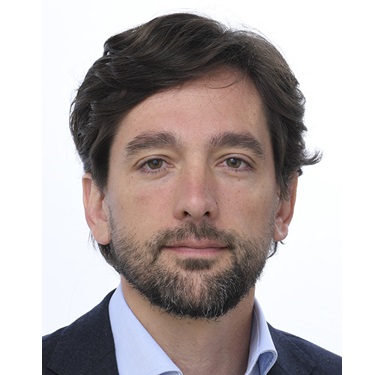
Adrián Vázquez Lázara
Eurodiputado del PP
Es vicepresidente de la Comisión de Asuntos Constitucionales del Parlamento Europeo. También es miembro de la Delegación de Relaciones con Estados Unidos y expresidente de la Comisión de Asuntos Jurídicos. Graduado en Relaciones Internacionales por la Lindenwood University y profesor asociado en ESADE.
Ahora en portada
11 de octubre de 2026
10 de octubre de 2026
Noticias relacionadas
Hace 12 semanas
Adrián Vázquez, eurodiputado: "El informe de la Comisión coloca el Estado de derecho español a la altura del de Hungría"
Hace 51 semanas