Viernes, 16 de octubre de 2026



State Aid and the Geoeconomic Turn of the Internal Market
REUTERS
At the end of 2022, the Inflation Reduction Act (IRA) was passed in the United States (US). This massive package of public subsidies for green businesses threatens to divert investment from the European Union (EU) and other markets towards the US. By contrast, in the EU, the grooming of European green industries by Member States faces significant constitutional obstacles, namely the State aid prohibition, enshrined at the treaty level.
The general prohibition of State aid is one of the fundamental principles of the EU economic constitution. In simple terms, a State aid is a measure adopted by a Member State (not by a third country) that, through public resources, favours selected firms or industries. The most obvious example is the grant of a public subsidy, but other measures, such as tax advantages, may also configure State aid.
The prohibition of State aid leaves room for exceptions. One set of exceptions concerns serious disturbances in the economy of the Member States or exceptional occurrences. When these situations emerge, a debate usually arises between the Member States regarding how to approach the general prohibition of State aid. For instance, during the global financial crisis of 2007 to 2008, then-French president Nicolas Sarkozy famously suggested suspending (no less!) the prohibition of State aid. This was never done.
Instead, in these exceptional circumstances, the Commission communicates to the Member States how it will exercise its policing powers and adopts temporary frameworks, arguably laxer with respect to the State aid prohibition. These interim frameworks allow Member States to adopt State aid measures more easily and were used during the global financial crisis of 2007 to 2008, the outbreak of COVID-19, and, most recently, the Russian invasion of Ukraine.
As some Member States have more financial capacity than others and, thus, adopt more and more significant State aid measures, temporary frameworks have an asymmetrical impact. Each crisis leaves a mark on the competitive playing field of the internal market. Further, on a distributive level, some regions are privileged compared to others. In short, there are winners and losers.
However, unlike the usual 'crisis-management' State aid debate, the ongoing discussion goes beyond the competitive and distributive effects of the episodic relaxation of the State aid prohibition. Indeed, what is on the table is a more permanent transformation of State aid policy driven by an old idea: an industrial policy for the EU.
The creation of the internal market was never accompanied by the development of a comprehensive 'internal industrial policy'. As Jean-Jacques Servan Schreiber wrote in Le Défi Américain (1967) ‘[l]e libre échange est un cadre, ce n’est pas une politique, ce n'est pas une organisation.’ The EU’s economic constitution has, until now, promoted the role of market forces and demoted the State's role in the market. Industrial policy, State intervention par excellence, is, for the most part, foreign to the laissez-faire spirit of EU economic law.
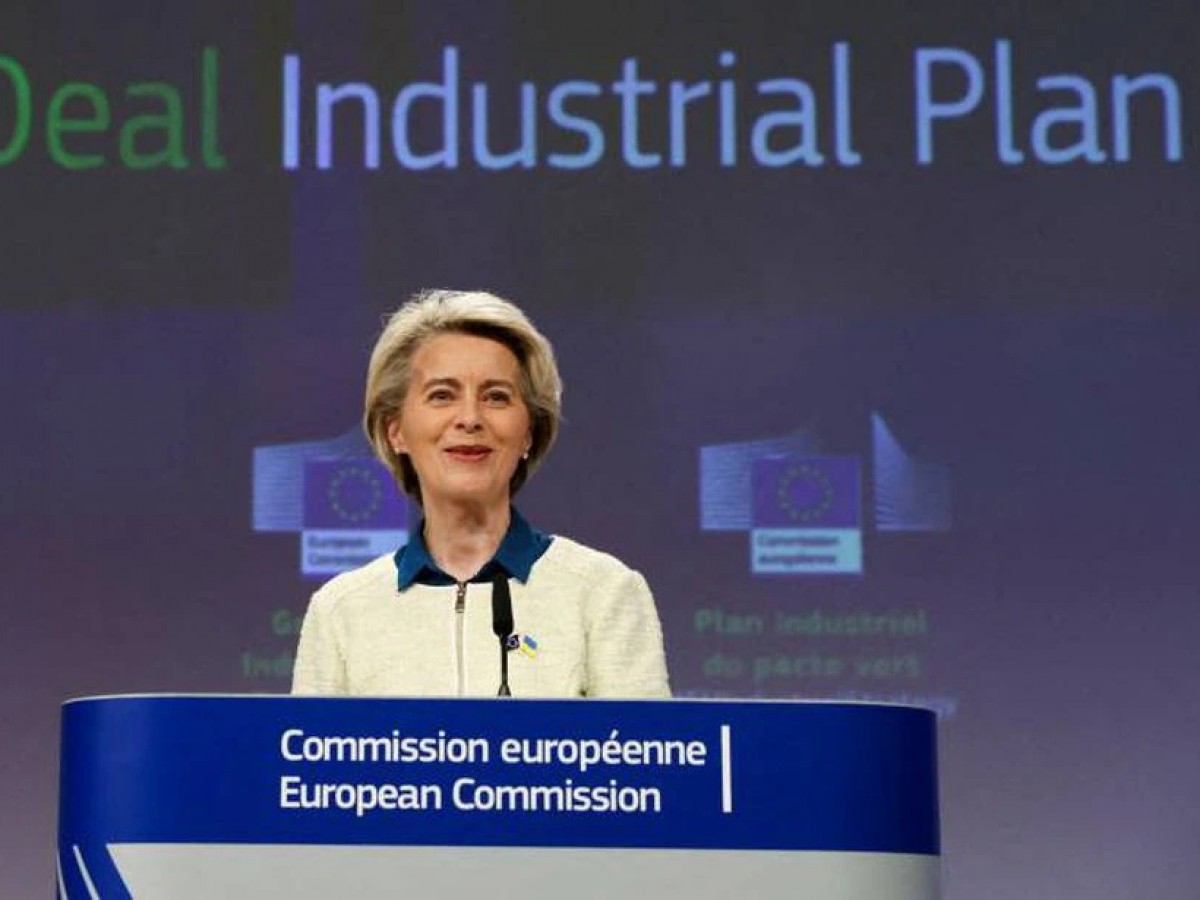
The State aid prohibition is one of several provisions of EU law that give expression to this economic ethos. However, in the immediate aftermath of the passing of the IRA, Commission President Ursula von der Leyen argued for an overhaul of the EU’s State aid policy in response to this 'American challenge'. This approach suggests a broader transformation in the EU economic constitution. On a more permanent basis, European industries could be aided by the Member States, with the Commission's acquiescence or even the EU's support. In typical functionalist fashion, what begins in green industries can easily spill over to other sectors, such as the semiconductor or pharmaceutical industries.
So, what has changed? My interpretation is that some institutional actors in the EU are coming to terms with the need for the block to develop an internal industrial policy for the internal market. This change of heart finds a plausible explanation in the rise of a new international economic order, foresaw by Edward Luttwak in the early 1990s. In Luttwak’s words, we are seeing the emergence of a 'geoeconomic order', defined by ‘the admixture of the logic of conflict with the methods of commerce’.
More than dirigisme, and borrowing from Timo Seidl, the ongoing debate on State aid policy is about 'geo-dirigisme'. Increasing competition between the US, the EU and China, combined with high interdependency, requires resorting to economic policy instruments to achieve strategic objectives. This puts pressure on the integrity of the EU’s economic constitution and can provoke a constitutional mutation in EU economic law.
The geoeconomic imperative can serve as a political justification for developing an internal industrial policy for the EU. However, two categories of actors are likely to resist this transformation. On the one hand, the defenders of the neoliberal status quo in EU economic constitutionalism. Also, smaller Member States will be suspicious of a new economic constitutionalism that could further deepen the competitive chasm between national industries.
Considering this tension, a compromise might lead to another temporary fix of the State aid system instead of a more permanent commitment to an EU industrial policy. However, if we are transitioning from a neoliberal to a geoeconomic international economic order, the EU, and its economic constitution, must adapt.
The general prohibition of State aid is one of the fundamental principles of the EU economic constitution. In simple terms, a State aid is a measure adopted by a Member State (not by a third country) that, through public resources, favours selected firms or industries. The most obvious example is the grant of a public subsidy, but other measures, such as tax advantages, may also configure State aid.
[Recibe los análisis de más actualidad en tu correo electrónico o en tu teléfono a través de nuestro canal de Telegram]
State aid is prohibited because it distorts competition in the internal market. Without this prohibition, the Member States with the deepest pockets could tilt the competitive playing field in favour of their national firms and industries. In turn, this would make the creation of a European internal market politically unfeasible. So, State aid is generally prohibited, and a supranational institution, the European Commission, is primarily entrusted with the power to police the respect for this prohibition.The prohibition of State aid leaves room for exceptions. One set of exceptions concerns serious disturbances in the economy of the Member States or exceptional occurrences. When these situations emerge, a debate usually arises between the Member States regarding how to approach the general prohibition of State aid. For instance, during the global financial crisis of 2007 to 2008, then-French president Nicolas Sarkozy famously suggested suspending (no less!) the prohibition of State aid. This was never done.
Instead, in these exceptional circumstances, the Commission communicates to the Member States how it will exercise its policing powers and adopts temporary frameworks, arguably laxer with respect to the State aid prohibition. These interim frameworks allow Member States to adopt State aid measures more easily and were used during the global financial crisis of 2007 to 2008, the outbreak of COVID-19, and, most recently, the Russian invasion of Ukraine.
As some Member States have more financial capacity than others and, thus, adopt more and more significant State aid measures, temporary frameworks have an asymmetrical impact. Each crisis leaves a mark on the competitive playing field of the internal market. Further, on a distributive level, some regions are privileged compared to others. In short, there are winners and losers.
However, unlike the usual 'crisis-management' State aid debate, the ongoing discussion goes beyond the competitive and distributive effects of the episodic relaxation of the State aid prohibition. Indeed, what is on the table is a more permanent transformation of State aid policy driven by an old idea: an industrial policy for the EU.
The creation of the internal market was never accompanied by the development of a comprehensive 'internal industrial policy'. As Jean-Jacques Servan Schreiber wrote in Le Défi Américain (1967) ‘[l]e libre échange est un cadre, ce n’est pas une politique, ce n'est pas une organisation.’ The EU’s economic constitution has, until now, promoted the role of market forces and demoted the State's role in the market. Industrial policy, State intervention par excellence, is, for the most part, foreign to the laissez-faire spirit of EU economic law.
The State aid prohibition is one of several provisions of EU law that give expression to this economic ethos. However, in the immediate aftermath of the passing of the IRA, Commission President Ursula von der Leyen argued for an overhaul of the EU’s State aid policy in response to this 'American challenge'. This approach suggests a broader transformation in the EU economic constitution. On a more permanent basis, European industries could be aided by the Member States, with the Commission's acquiescence or even the EU's support. In typical functionalist fashion, what begins in green industries can easily spill over to other sectors, such as the semiconductor or pharmaceutical industries.
So, what has changed? My interpretation is that some institutional actors in the EU are coming to terms with the need for the block to develop an internal industrial policy for the internal market. This change of heart finds a plausible explanation in the rise of a new international economic order, foresaw by Edward Luttwak in the early 1990s. In Luttwak’s words, we are seeing the emergence of a 'geoeconomic order', defined by ‘the admixture of the logic of conflict with the methods of commerce’.
More than dirigisme, and borrowing from Timo Seidl, the ongoing debate on State aid policy is about 'geo-dirigisme'. Increasing competition between the US, the EU and China, combined with high interdependency, requires resorting to economic policy instruments to achieve strategic objectives. This puts pressure on the integrity of the EU’s economic constitution and can provoke a constitutional mutation in EU economic law.
The geoeconomic imperative can serve as a political justification for developing an internal industrial policy for the EU. However, two categories of actors are likely to resist this transformation. On the one hand, the defenders of the neoliberal status quo in EU economic constitutionalism. Also, smaller Member States will be suspicious of a new economic constitutionalism that could further deepen the competitive chasm between national industries.
Considering this tension, a compromise might lead to another temporary fix of the State aid system instead of a more permanent commitment to an EU industrial policy. However, if we are transitioning from a neoliberal to a geoeconomic international economic order, the EU, and its economic constitution, must adapt.
ARTÍCULOS RELACIONADOS


Miguel Mota Delgado
Investigador doctoral, European University Institute
Su investigación se centra en la relación entre geopolítica y Derecho de la UE, especialmente en lo que respecta al estudio de la influencia de los objetivos geopolíticos en la política de competencia de la UE. Antes de incorporarse al programa de doctorado del European University Institute, impartió clases de Derecho de la UE, Derecho procesal de la UE y Derecho internacional en la Universidad de Lisboa.
Posee un Máster en Derecho Comparado, Europeo e Internacional por el Instituto Universitario Europeo, un Máster en Derecho Europeo por el Colegio de Europa de Brujas y una Licenciatura en Derecho por la Universidad de Lisboa.
Habla portugués, inglés, francés, español e italiano básico.
Ahora en portada
16 de octubre de 2026
16 de octubre de 2026
16 de octubre de 2026
Noticias relacionadas
Hace 201 semanas
El debate omitido en la revisión de las reglas fiscales
Hace 203 semanas
Reforma de las reglas fiscales: la Comisión Europea mueve ficha
Lo más leído