Domingo, 27 de septiembre de 2026


Temas del momento:
Venezuela Demografía Crisis en Ceuta Hacia 2027 "Ley de nietos" Redes sociales y menores Diane Coyle
LÓPEZ PLANA'S EUROPEAN COMPASS
The Spanish pulse: Will Pedro Sánchez urge a motion of censure against von der Leyen?
The European Union is undergoing a profound identity crisis as the 'rules-based global order' is being threatened by its own allies. Marc López Plana, director and editor of 'Agenda Pública', warns that submission to Washington weakens the continent as a 'normative power'. Given yesterday’s speech by Ursula von der Leyen renouncing a significant part of that rules-based world, 20 social democratic MEPs from Spain have emerged as a counterweight to the European Commission.
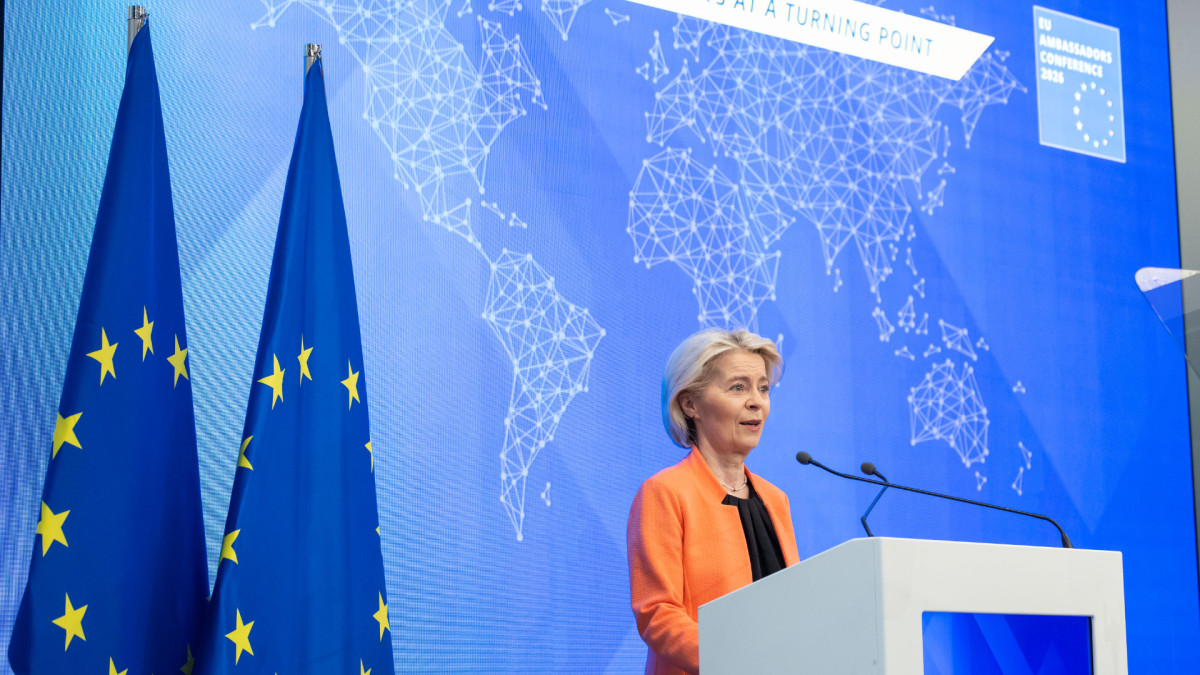
The President of the European Commission, Ursula von der Leyen, during her speech at the Ambassadors’ Conference on 9 March.European Commission Audiovisual Service / Aurore Martignoni
Practically from its founding, the European Union has defined itself as a normative power. Its international influence isn’t so much based on military divisions or coercive capacity; rather, it is sustained through the defense of international law, multilateralism, and a rules-based global order. That narrative has long been a source of legitimacy as well as a form of power.
Today, that vision is facing a moment of severe crisis.
That thesis is correct, but incomplete, because the problem goes far beyond rivals seeking to erode that order. Today, Europe’s own allies are helping to undermine it.
The current U.S. military assault against Iran, driven by the Trump administration, has reopened debate on the limits of international law. The question is legal as well as political: can Europe continue to defend a system of rules while its main historical guarantor interprets those rules according to its own immediate interests?
For the EU, the dilemma is particularly acute, given that its international identity has been built precisely on the defense of those very norms. When Washington acts outside of that framework, Europe is confronted with strategic problem that cannot be solved with declarations alone.
The stance taken by Germany’s conservative leader Friedrich Merz reflects that tension clearly: he supports a greater European role in defense and foreign policy, but he insists that the transatlantic relationship must remain the central pillar of European security.
In practice, strategic autonomy is being reduced to something more modest, a sort of strategy to reduce risks without challenging American primacy.
The problem is that such ambivalence may prove unsustainable. The logic of power politics doesn’t leave much room for ambiguous balances. If Washington continuously and increasingly acts in its own short-term national interests, then the pressure on Europe to remain allied with those interests will only increase. The more Europe relies on the American security umbrella, the lower its ability to credibly defend the rules-based international order.
But that misalignment also opens a strategic possibility. Spain can play a decisive role, less at the geopolitical level than in terms of institutional balance within the EU.
The Commission chaired by von der Leyen has counted on support in the European Parliament from a majority comprised of Socialists, People’s Party members, Liberals, and Greens. That majority constitutes the political core of the European project in the current legislature.
That makes Sánchez something of a political broker in Brussels: an actor capable of conditioning the stability of the Commission as well as the functioning of the traditional pro-European majority.
If support from the Spanish Socialists were to soften, von der Leyen would have to seek alternative backing to consolidate certain initiatives. And in the current European Parliament, such support would principally be found in the forces of the radical right.
That scenario would greatly alter the political equilibrium of the Union.
Not only would it shift the Commission’s center of gravity toward more radical positions, but it would erode the legitimacy of the pro-European majority that has kept the EU working in recent years.
That’s why the role of Spain is especially relevant. Its ability to influence the parliamentary stability of the Commission means Madrid now wields a significant weight at the institutional level that’s often overlooked.
The European Parliament has an instrument designed to respond to such a situation: the motion of censure against the Commission.
Use of that mechanism is exceptional. In fact, the history of European integration has seen only one effective precedent, when the Commission chaired by Jacques Santer resigned in 1999 at the prospect of parliamentary censure.
The alternative for von der Leyen would be to seek support from forces outside the traditional pro-European coalition. But such a move would transform the political nature of the Commission completely.
In that scenario, the bargaining power held by Sánchez would also be transformed. No longer would it simply be useful for influencing decisions; it would remind the Commission that its stability depends on a parliamentary majority. Raising a motion of censure wouldn’t necessarily bring down this Commission, but in European parliamentary politics, the mere possibility of using that instrument is often sufficient to rebalance power relations.
This would also send a clear message that, if the Commission wants to keep governing with its traditional pro-European backing – Socialists, People’s Party, Liberals, Greens – it will have to bear in mind that majorities aren’t automatic, or free.
Europe is today caught between two forces. On the one hand, international power politics, where great powers prioritize security and their immediate strategic interests. On the other, defense of the rules-based international order that has defined European identity for decades.
In a world where international law is being weakened and power politics once again dominate the global stage, such parliamentary power may seem slight. But in Brussels, where majorities are fragile and balances delicate, it could be decisive.
Because when the time comes, those who uphold a majority can also withdraw support. European power isn’t exercised only from Berlaymont – the seat of the Commission – but also from the Parliament that legitimizes its leadership.
Today, that vision is facing a moment of severe crisis.
"The current U.S. military assault against Iran, driven by the Trump administration, has reopened debate on the limits of international law"Ursula von der Leyen’s speech to EU ambassadors on Monday was intended to convey strategic firmness at a time of international turbulence. The central message was clear: the world is entering a new phase of geopolitical rivalry, and the rules-based system is under pressure. Russia’s invasion of Ukraine, escalation in the Middle East, and growing competition between powers all illustrate, according to this narrative, the weakening of the international order.
That thesis is correct, but incomplete, because the problem goes far beyond rivals seeking to erode that order. Today, Europe’s own allies are helping to undermine it.
The current U.S. military assault against Iran, driven by the Trump administration, has reopened debate on the limits of international law. The question is legal as well as political: can Europe continue to defend a system of rules while its main historical guarantor interprets those rules according to its own immediate interests?
For the EU, the dilemma is particularly acute, given that its international identity has been built precisely on the defense of those very norms. When Washington acts outside of that framework, Europe is confronted with strategic problem that cannot be solved with declarations alone.
Strategic autonomy: discourse and reality
Von der Leyen’s speech suggests that Europe is reacting by strengthening its strategic autonomy: increased European defense, a commitment to economic security, and a more assertive foreign policy. However, a reading from inside the Brussels bubble underlines the fear of losing relations with the United States, especially from Berlin."The unpredictability of Washington is increasing pressure from Germany to maintain alignment, even as Europe discusses strategic autonomy"Germany has based its economic and strategic model on a double dependency: access to open global markets, and U.S. military protection through NATO. The war in Ukraine and the energy crisis with Russia both highlighted the fragility of that model. Now, the unpredictability of Washington is increasing pressure from Germany to maintain alignment, even as Europe discusses strategic autonomy.
The stance taken by Germany’s conservative leader Friedrich Merz reflects that tension clearly: he supports a greater European role in defense and foreign policy, but he insists that the transatlantic relationship must remain the central pillar of European security.
In practice, strategic autonomy is being reduced to something more modest, a sort of strategy to reduce risks without challenging American primacy.
The problem is that such ambivalence may prove unsustainable. The logic of power politics doesn’t leave much room for ambiguous balances. If Washington continuously and increasingly acts in its own short-term national interests, then the pressure on Europe to remain allied with those interests will only increase. The more Europe relies on the American security umbrella, the lower its ability to credibly defend the rules-based international order.
Spain out of alignment... yet crucial
In that context, the position taken by Spain seems especially misaligned. Pedro Sánchez’s government has insisted on the importance of international law and demonstrated its opposition to intervention in Iran. That stance clashes with the relatively Washington-aligned tack that the Commission seems to be taking under von der Leyen’s leadership.But that misalignment also opens a strategic possibility. Spain can play a decisive role, less at the geopolitical level than in terms of institutional balance within the EU.
The Commission chaired by von der Leyen has counted on support in the European Parliament from a majority comprised of Socialists, People’s Party members, Liberals, and Greens. That majority constitutes the political core of the European project in the current legislature.
"Spain’s power lies not in its military capacity or even its relative economic weight, but in its parliamentary position within the European Union"However, that architecture isn’t so solid as might be assumed. Spain’s Socialists, with 20 seats, form one of the most important blocs within the Social Democratic group, and without their support, the stability of the current majority would be weakened considerably. It could be said that Spain’s power lies not in its military capacity or even its relative economic weight, but in its parliamentary position within the European Union.
That makes Sánchez something of a political broker in Brussels: an actor capable of conditioning the stability of the Commission as well as the functioning of the traditional pro-European majority.
The European broker
The concept of a ‘broker’ implies the ability to make certain majority configurations possible or impossible. In practice, this means the Commission can’t ignore Spain’s positions without significant political risk.If support from the Spanish Socialists were to soften, von der Leyen would have to seek alternative backing to consolidate certain initiatives. And in the current European Parliament, such support would principally be found in the forces of the radical right.
That scenario would greatly alter the political equilibrium of the Union.
Not only would it shift the Commission’s center of gravity toward more radical positions, but it would erode the legitimacy of the pro-European majority that has kept the EU working in recent years.
That’s why the role of Spain is especially relevant. Its ability to influence the parliamentary stability of the Commission means Madrid now wields a significant weight at the institutional level that’s often overlooked.
Motion of censure?
The logical consequence of questionable parliamentary balance raises a clear question: to what extent can the current majority be sustained if the Commission distances itself from a significant portion of its supporters?The European Parliament has an instrument designed to respond to such a situation: the motion of censure against the Commission.
Use of that mechanism is exceptional. In fact, the history of European integration has seen only one effective precedent, when the Commission chaired by Jacques Santer resigned in 1999 at the prospect of parliamentary censure.
"Should von der Leyen’s Commission move away from the majority that supports it – for example, on sensitive issues such as international law or foreign policy – then that majority might rethink its actions"But its very existence recalls a fundamental institutional reality: the Commission is politically dependent on Parliament. And in the current context, that dependence has acquired a special dimension. Should von der Leyen’s Commission move away from the majority that supports it – for example, on sensitive issues such as international law or foreign policy – then that majority might rethink its actions.
The alternative for von der Leyen would be to seek support from forces outside the traditional pro-European coalition. But such a move would transform the political nature of the Commission completely.
In that scenario, the bargaining power held by Sánchez would also be transformed. No longer would it simply be useful for influencing decisions; it would remind the Commission that its stability depends on a parliamentary majority. Raising a motion of censure wouldn’t necessarily bring down this Commission, but in European parliamentary politics, the mere possibility of using that instrument is often sufficient to rebalance power relations.
This would also send a clear message that, if the Commission wants to keep governing with its traditional pro-European backing – Socialists, People’s Party, Liberals, Greens – it will have to bear in mind that majorities aren’t automatic, or free.
Europe is today caught between two forces. On the one hand, international power politics, where great powers prioritize security and their immediate strategic interests. On the other, defense of the rules-based international order that has defined European identity for decades.
"The Commission’s room for maneuver depends on the political balance in Parliament, in which Spain occupies a unique position"Von der Leyen’s Commission is trying to navigate between two logics. But its room for maneuver also depends on the political balance in Parliament. And in that balance, Spain occupies a unique position. The support of Spain’s Socialists could determine whether the Commission continues to govern with its traditional pro-European support or whether it will have to seek alternative support that would profoundly alter the EU’s political equilibrium.
In a world where international law is being weakened and power politics once again dominate the global stage, such parliamentary power may seem slight. But in Brussels, where majorities are fragile and balances delicate, it could be decisive.
Because when the time comes, those who uphold a majority can also withdraw support. European power isn’t exercised only from Berlaymont – the seat of the Commission – but also from the Parliament that legitimizes its leadership.
Ahora en portada
27 de septiembre de 2026
26 de septiembre de 2026
Lo más leído