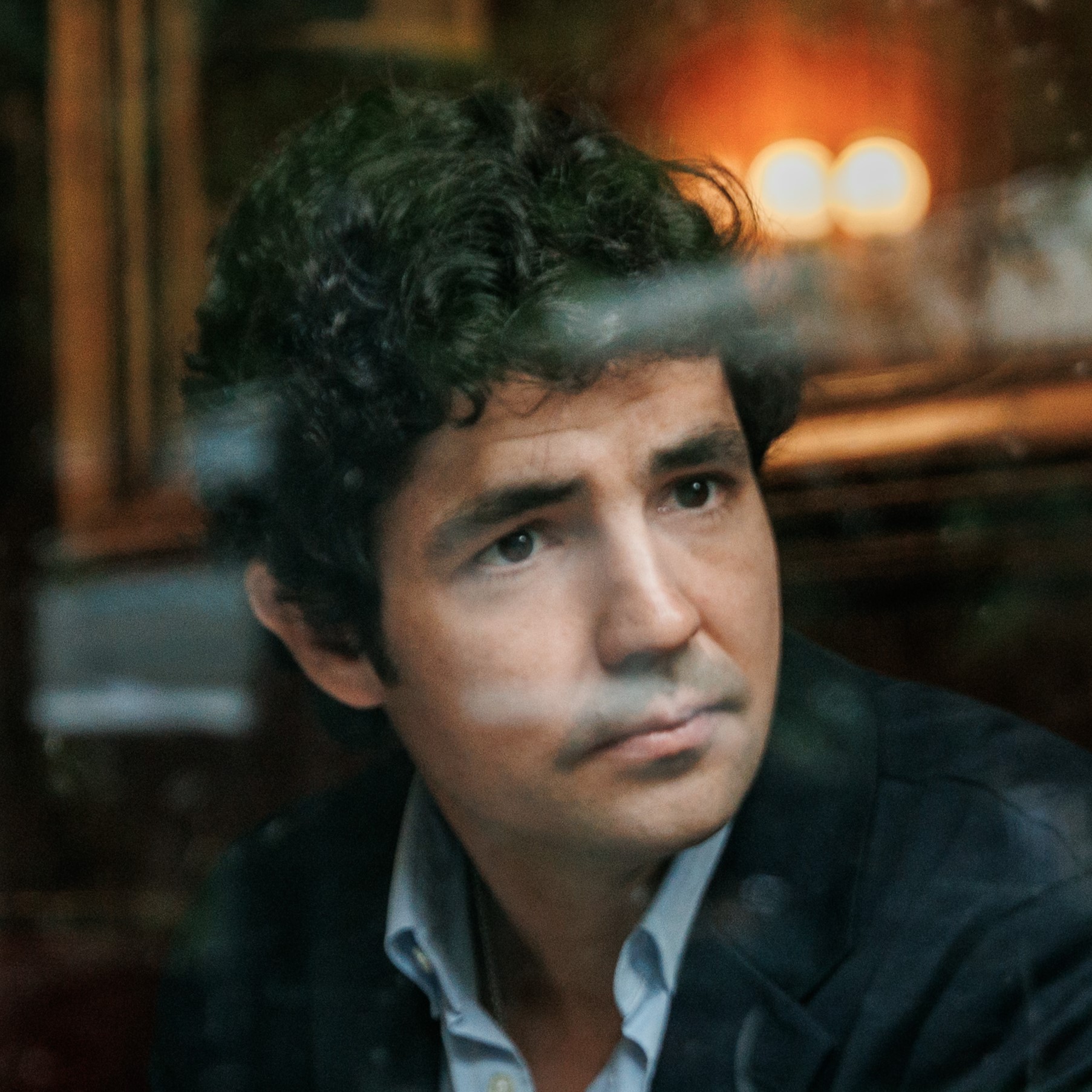

Michael Ignatieff: "The liberal state faces a crisis it cannot resolve and neither can the counter-revolutionary solution"
The writer and academic will be one of the participants in the upcoming edition of the La Toja Forum, which comes at a pivotal moment for atlantic relations. In a context of a "right-wing revolution against the liberal state and its achievements," the former Canadian politician calls for "political will" to address the "gulf" between "social expectations" and the "revenue capacity of the liberal state." And while he does not ask leaders to do "what we do not ask of ourselves", he places his trust in those who have "the courage to take an unpopular path and stick to it till it turns out to be the right path."
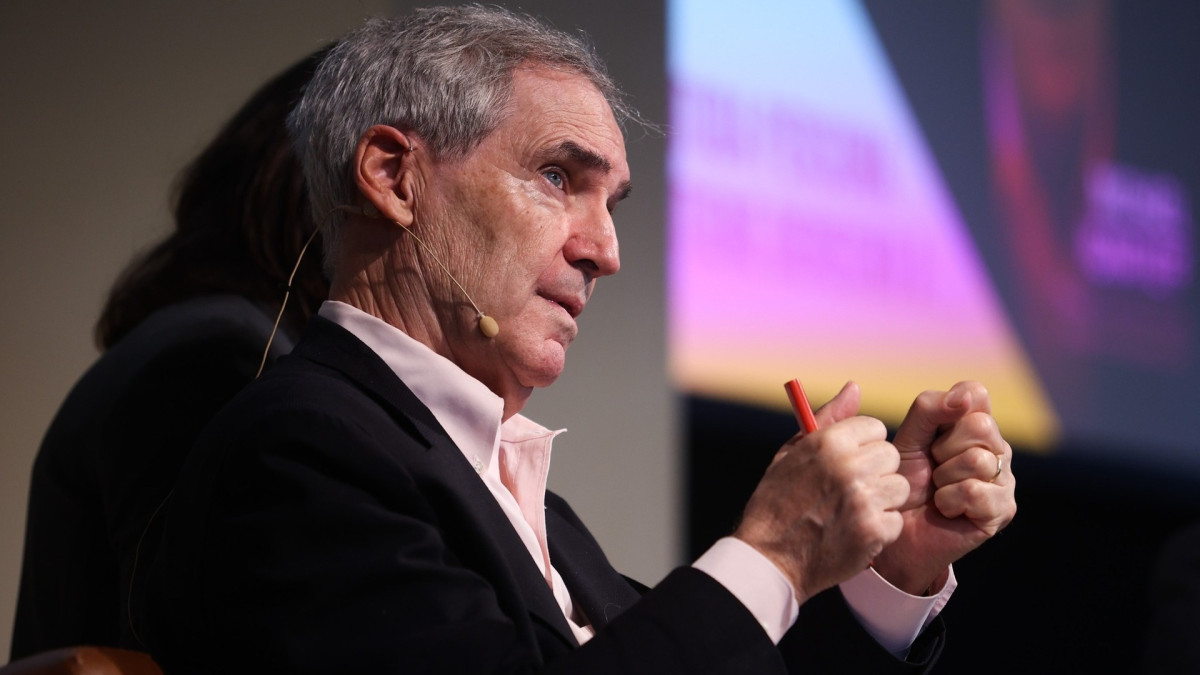
As a Canadian liberal who "believes in a welfare state, social compassion mixed with fiscal conservatism" and rejects nationalism, Ignatieff hopes people will realize they do not want "to jeopardize the achievements" gained during "the longest under uninterrupted period of peace" Europe has ever known. Achieving this, he argues, will also require "political will," and while he "does not ask our leaders to do what we do not ask of ourselves," he imagines leaders with "the courage to take an unpopular path and stick to it till it turns out to be the right path."
Professor Ignatieff, you are going to speak at the La Toja Forum, which works to strengthen the Atlantic bond. As a Canadian and someone that lives in Europe, with your experience leading the Central European University, how do you view the current atlantic relations?
I think we are in a revolutionary moment. It has two main dimensions. The first one is a revolution of the right led against the liberal state and its achievements since the 1960s. And the chief achievement since the 1960s was the revolution of inclusion, that is civil rights, gay rights, feminism… And this was sustained by moderately high tax rates. So it's an attack on the liberal state and what it achieved, stripping it out, attacking the immigration policy on which the liberal state depended, attacking diversity, equity and inclusion.
This is not just a American phenomenon, it is a increasingly a global phenomenon. You have Vox and Hungary has Orban, bur there are other examples such as the Slovakian regime or the Dutch Gert Wilders in Holland. The radical right in Europe is essentially attacking the liberal inclusive state and its promotion of social equality through the use of state power. That is the first element of the revolution.
"It is a revolution by a hegemon who believes that his allies are now strategic competitors. The hegemon is deciding that it's provision of free public goods was either too costly or it was against America's own interest. That helps to explain the tariff debate"The second element, and this is more specific to the United States, is that it is a revolution by a hegemon who believes that his allies are now strategic competitors. The hegemon is deciding that it's provision of free public goods —security, shipping lanes, international agreements or American leadership— was either too costly or it was against America's own interest. That helps to explain the tariff debate. And it also helps to explain the insistence in Europe that countries like Spain shoulder the burden of their own defense. And, for the moment, Spain has been prominent in refusing to do so.
This is a revolution from the right. It is ideological, it is convinced of its rightness. So it is accompanied by all of the emotional and psychological enthusiasm of revolutionaries and true believers. That is what we are facing. This is a real break moment in the history that I have lived in my lifetime.
A couple of days ago we published an article about the lack of opposition among the Republican Party against Trump. Do you think that the problem is not only Trump, but also what he is going to leave behind?
I think it is a revolution as opposed to just a coup because he has already secured control of the entire center right and far right of American politics, and the far right is now pursuing him to be still more radical.
That is, "don't help Ukraine", "don't release all the material about Epstein"... The radical right is pushing him even further and so he will have difficulties. As it is a revolution and not a coup, it seems to me to have very permanent effects. But it is also fraught with contradiction. I mean, the liberal state was having a crisis based on the fact that there is a gulf between the social expectations of Europeans, their expectations in relation to education, healthcare, public goods, leisure, pushing against the revenue capacity of the liberal state. And everywhere you look, that is a contradiction that the liberal state is having enormous difficulty resolving. You see it in France at the moment.
We face the same problem here in Spain…
Yes. The liberal state faced this contradiction and was unable to resolve it. The conservative counter revolution has decided to solve the problem by slashing the liberal state, cutting the bone and hoping that growth will solve the problem of meeting the obligations of the state.
I am not sure that anybody believes that the United States can go on indefinitely paying more to fund its debt. The interest payments that the United States pays on its debt are larger than the defense budget of the United States. This is like something from late imperial Rome. Empires cannot sustain indefinitely debt levels that are in excess of their largest expenditure.
To summarize, the liberal state had a crisis which it cannot resolve. This solution, this counter revolutionary solution, cannot solve it either. And I think sooner or later we are heading to a big market crash. It is the only way it gets resolved in the capitalist system. A permanent market correction may push the counter revolution even further to the right, but it may also force a course correction back towards the center. But even if it forces a course correction back to the center, the liberal state still faces a crisis. It can only be met by pruning the liberal state in ways that make it more efficient and also raising the tax burdens on the middle class. It is the only way to do it. And all societies —Canada, France, Spain— are looking at this problem. They cannot solve it because it requires political will.
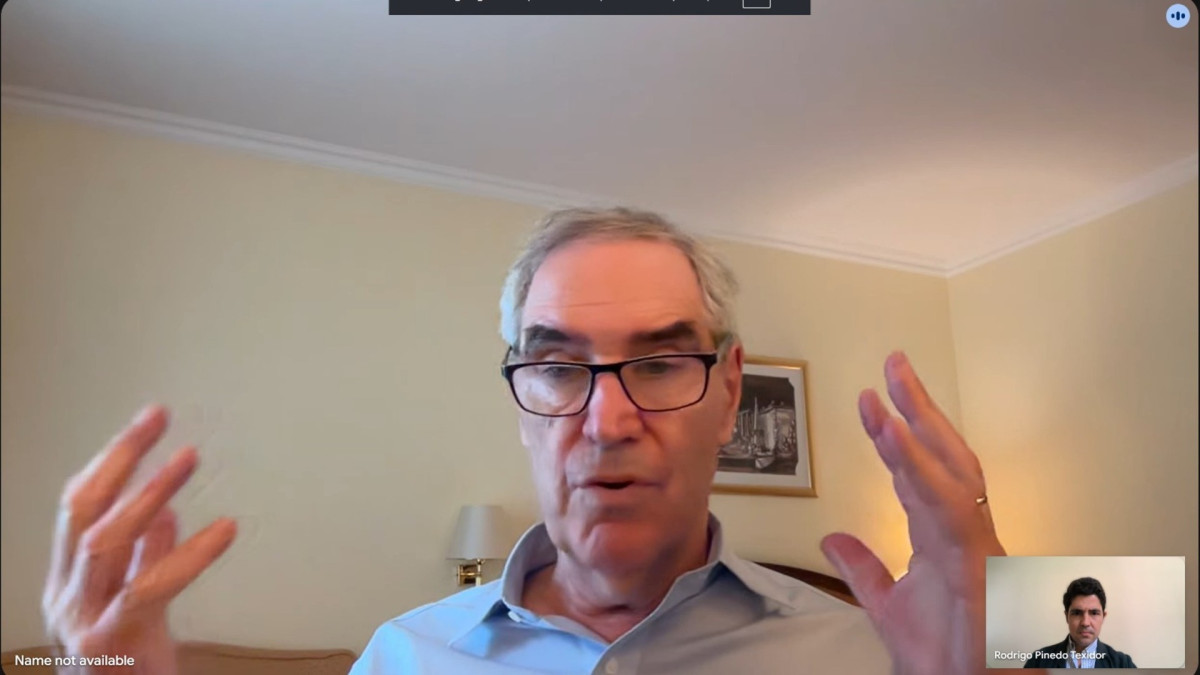
The former politcian during the interview with Rodrigo Pinedo. Foto: Agenda Pública
What response should the European Union give? You have also studied nationalism and experienced it firsthand in Hungary. How do you see this phenomenon?
Nationalism is no escape if you look at Orban. Orban is trying to respond to the increasingly grim economic situation he faces with ever more nationalistic attacks on Europe, attacks on everybody. But that is no solution. He depends desperately on the structural funds from Europe, so attacking the source of his survival does not seem very smart. Ideological solutions of this kind are not going to work. And the problem is our political systems are very poorly configured to deal with this.
In Britain, Labor is locked into its dependence on the trade unions, so it cannot go after the public sector unions and it does not have the margin to act. Spain is an extreme case where it is not just the fiscal crisis of the liberal state, you have also the autonomous and nationalist pressures, the extortion relation that the Catalan movement has in relation to the socialist government. In France, the government will probably fall in the autumn because it does not have a political base strong enough to get its own budget through. And the crisis of the Liberal state is not yesterday's problem: in France they have not balanced the budget since the 1970s.
"The leftists think this is all about solidarity and it is all about controlling capitalism… So they do not deal with the problem of debt. The right thinks the solution to this problem it is to slash away all of the social protections and cut taxes and growth will solve the problem"I don't mean to be pessimistic. I can cite one positive example. You will forgive me: it is a Canadian one. In the 1990's the Liberal government came into power under Mr. Chrétien and our public finances were a mess and the Liberal government just slashed the size of the federal government and raised taxes and got our public finances back. But it did so on the basis of a strong parliamentary majority. It had the political power to do it. My party was in power from 1993 until 2006 because it had solved the problem. So it is not as if the problem cannot be solved. But we have ideologies here that are just not helpful.
The leftists think this is all about solidarity and it is all about controlling capitalism. And we cannot cut the social welfare budget because of the injustice involved… So they do not deal with the problem of debt. The right thinks the solution to this problem it is to slash away all of the social protections that people absolutely need and cut taxes and growth will solve the problem. And that is not a solution either. So we have ideologies that do not solve the problem. This is a very serious matter for Europe.
▶️ ¿Qué significa ser liberal hoy en día? ¿Quedan liberales?
— Agenda Pública (@a_publica) August 5, 2025
📢 Responde el académico y escritor Michael Ignatieff, que participará en la próxima edición del @ForoLaToja.
➡️ Puedes leer la entrevista completa en nuestra web: https://t.co/yvjVufkr4h pic.twitter.com/9fWhH5FhcP
You are comparing right and left… What does it mean to be a liberal these days? Are there still liberals here?
Well, interestingly, I have become more liberal as I get older, not less liberal. It is a funny word in Europe…
Yes, it means different things…
It is associated with hard right, defensive capitalism, red in tooth and claw… I simply do not recognize this. A Canadian Liberal believes in a welfare state, social compassion mixed with fiscal conservatism. That is where we balance to competing alternatives. And the other thing a Canadian Liberal believes in the national unity. We are anti separatist by conviction. So that is one reason why Canadian Liberals often have something to say in Spain because we know that the national unity of Spain is the first obligation of any responsible politician in Spain. And it does not mean that you cannot have all kinds of creative constitutional solutions to acknowledge the legitimate concerns of the nations that constitute the Spanish people. But you do not fool around of the national unity of the country.
"The national unity of Spain is the first obligation of any responsible politician. And it does not mean that you cannot have all kinds of creative constitutional solutions to acknowledge the legitimate concerns of the nations that constitute the Spanish people"Liberals need to understand we are in the middle of a counter revolution against everything that liberalism achieved from the 1960s onwards. I am a child of that revolution. I believe in that revolution and support that revolution. I do not want to go back to a world in which gay people could not be overt about their sexuality, where women were not equal partners in the making of a just society. I do not want to go back to a society in which black people did not have full civil rights. I do not want to go back to a society in which we excluded non white migration. All of these things have been difficult. They have been hard to adjust to. They have caused problems in our families. They have caused problems in our social order, but they have been bloody good things for our countries and liberals need to defend those things proudly and not apologize for them.
You also wrote On consolation. Where do you see hope on the in these dark days?
I am sufficiently conservative to believe that the only hope you can reliably count on is the example of the past, the example of good leadership, courage, wisdom. We are all sitting here complaining about the world as it is, but this is the best world that Europe has ever known, the longest under uninterrupted period of peace, reconciliation between France and Germany and a revolution of equality and inclusion, which has been good for millions of people. So what hope do I have? I have hope that when people think for one minute about whether they want to jeopardize that achievement, they think: "No, we do not want to jeopardize that achievement. I want to hand that achievement on to my children." That is all you can do.
Talking about good examples, do you have any leaders in mind?
My experience of leadership was a failure, so I am not in a position to give lessons.
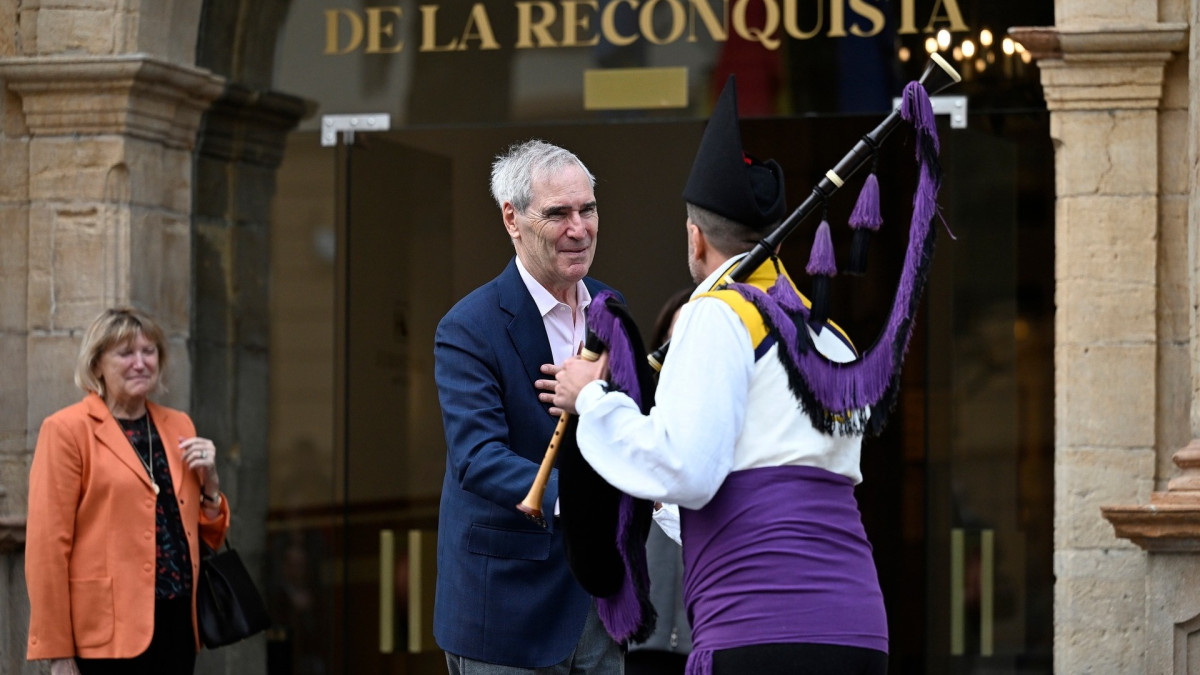
Ignatieff arrives at the Reconquista Hotel in Oviedo for the Princess of Asturias Awards. Foto: © FPA
I remember reading Fire and Ashes. You talk about taking responsibility and we have leaders that they do not take responsibility at all…
You take responsibility for success, but you also take responsibility for failure. I think also the public needs to revise their expectations of leadership. I mean, I do not want to make excuses for anybody, but we are all human beings. And anybody who is been, as I have been, in positions of leadership knows you never stop being a human being. You are as prey to emotion, to misinformation, to bad judgments. We are historical actors and history is moving at an incredibly fast place and we have very poor understanding of where it is going.
"Anybody who is been, as I have been, in positions of leadership knows you never stop being a human being. You are as prey to emotion, to misinformation, to bad judgments. We are historical actors and history is moving at an incredibly fast place"Let's make sure that our expectations of leadership are very human and do not ask of our leaders what we cannot ask of ourselves. Do not ask for wisdom of our leaders that we do not possess ourselves. But there is leadership out there. And the great virtue of leadership, the thing that draws everybody to leadership, is courage. That is the cardinal virtue of a leadership: the courage to take an unpopular path and stick to it till it turns out to be the right path. The ability to say no, the ability to face an angry public and tell them things they do not want to hear. These are very difficult things, but they are essential to leadership.
▶️ ¿Cómo debe ser el liderazgo político? ¿Qué podemos esperar de los líderes hoy?
— Agenda Pública (@a_publica) August 6, 2025
📢 Contesta el académico y escritor Michael Ignatieff, que participará en la próxima edición del @ForoLaToja.
➡️ Puedes leer la conversación completa en nuestra web: https://t.co/yvjVufkr4h pic.twitter.com/6JChpZJo2Z
My wife is Hungarian, and she points out one small example of leadership that I think Europe should watch very carefully. For 15 years, Viktor Orban has been in control of Hungary. But for the last six months or so, he has been running behind a young man named Peter Magyar. Magyar is a young politician in his 40s. He is of the center right. He is not a liberal. He is not in my political family at all. But he is going to every small town and village in Hungary saying: “Have you had enough? Have you had enough corruption, incompetence…?" More and more Hungarians are saying: "Yeah, we have had enough." And if he is able to defeat Orban next spring, this is not a small story. Orban is the most influential center right politician in Europe and, if he is defeated, this will be a small but significant victory that will have effect on the politics in Spain, the politics in the Netherlands, the politics in Slovakia, the politics in Poland… That is an example of a young guy doing what you have to do. Nobody knows whether he can do it, but that is the nature of political coverage. You do stuff when you do not know whether it is going to work.
Thank your, professor. See you at La Toja Forum.