Sábado, 17 de octubre de 2026




OBITUARY
Mario Vargas Llosa, a statesman with no State to govern
The passing of Mario Vargas Llosa, a key figure in 20th century literature and one of the most universal Peruvians, leaves behind a legacy as vast as it is complex, spanning literature, politics, and Latin American social history. This obituary is signed by American researcher J. P. Carroll.
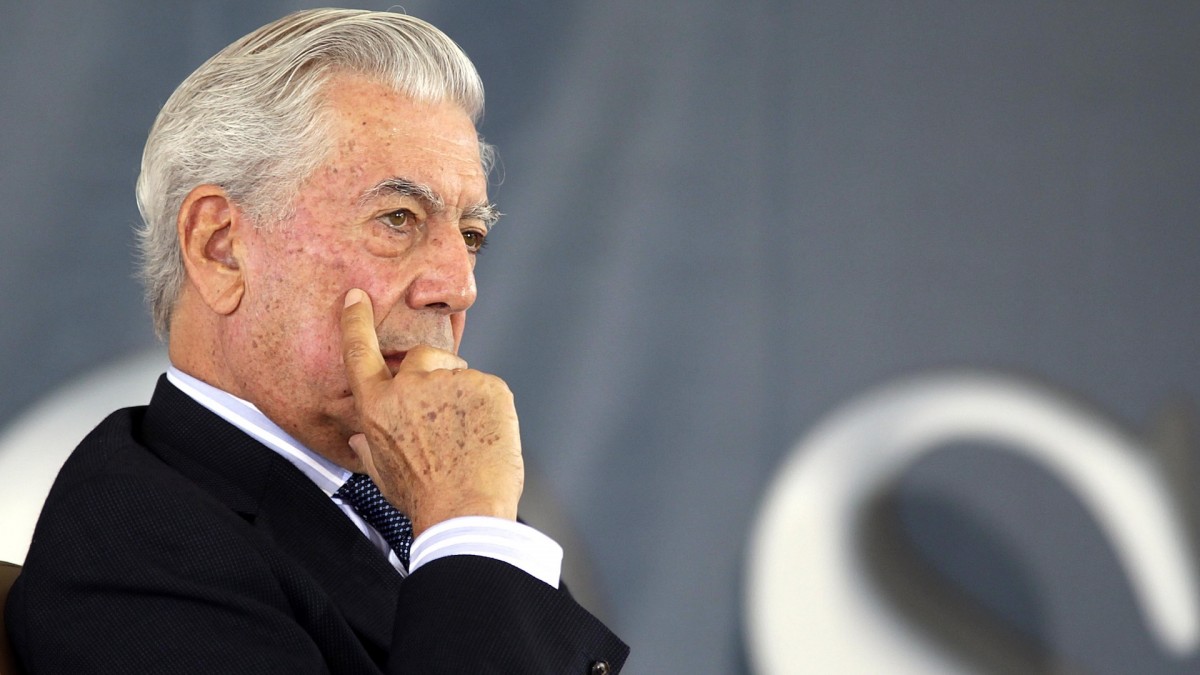
Vargas Llosa received the highest awards for his literary career, including the Novel Prize and the Cervantes Prize.El Universal / Zuma Press / ContactoPhoto
To say Mario Vargas Llosa was a complicated man would be an understatement. He will best be remembered as a Nobel Prize in Literature winner and for his lifelong work as an unofficial literary diplomat. His writing represented the history, hopes, anguish, and ambitions of Peru, and arguably, Latin America more broadly. He was undoubtedly Latin America's voice on the world stage, and therein lies the paradox: he had the respect of a statesman, but no State to govern.
As a commentator, his counsel, criticisms, and repudiations of the region's politicians were often done from afar, frequently from Madrid. And while he did a great deal of good in bringing attention to Peru with his novels, sharing the elegance of his pen with the world, and demonstrating the value of public intellectuals in society, there were unfulfilled ambitions and shortcomings—as is the case with any ambitious and notable figure.
I should preface the following by saying I am an American, but much of my family lives in and is from Peru. Additionally, my favorite Peruvian author is not Vargas Llosa, but actually Jaime Bayly. As far as I am concerned, Bayly's greatest work owes a great deal to Vargas Llosa. In Bayly's novel Los Genios, (The Genuises) he examines the friendship between Mario Vargas Llosa and the Colombian writer Gabriel Gabo Garcia Marquez, which ended with Vargas Llosa punching Garcia Marquez at the Palacio de Bellas Artes in Mexico City—for reasons that remain unclear. Looking beyond Peru, my favorite Latin American author is a different Latin American Boom writer, Mexico's Carlos Fuentes for his works La Silla del Águila (The Eagle's Throne) and Gringo Viejo (Old Gringo). It is worth noting that Vargas Llosa was the inaugural winner of the Carlos Fuentes International Prize for Literary Creation in The Spanish Language (Premio Internacional Carlos Fuentes a la Creación Literaria en Idioma Español) in 2012. Ultimately, I confess to having particular interest in how Vargas Llosa saw and was seen by the United States, as well as his impact on the world more broadly, beyond Peru, and beyond his writing.
On the political front, in his early years Vargas Llosa looked favorably at Fidel Castro's regime in Cuba and viewed the United States as representing an imperialism he inherently opposed. Even years after, he went on to denounce and break with the Castro regime over the imprisonment of the poet Herberto Padilla in what came to be known as the Padilla Affair. It could also be that he viewed the United States as the country that gave employment and opportunity to his father, who abandoned him at birth. Then, he returned later in his life as an abusive figure towards him and his mother. Therefore, he wanted to create distance from this place.
Sticking with politics though, it seems to me that this was the real love of Vargas Llosa's life, hidden in the pages of his many novels and countless essays. Whether it was in excoriating Peruvian military culture and nationalism in his first novel La Ciudad y Los Perros (The Time of the Hero), examining the dictatorship of Manuel A. Odría in Conversación en la Catedral (Conversation in The Cathedral), or analyzing the corrupting nature of political power in the Dominican Republic under Rafael Trujillo in La Fiesta del Chivo (The Feast of The Goat), he seemed to gravitate towards wanting to better understand politics through his writing, and its role in shaping—often corrupting—societies. On a personal note, La Fiesta del Chivo is my favorite of his books.
Vargas Llosa first tested the political waters when in 1983 he was appointed to lead a commission investigating the murder of eight journalists in Peru in the Uchuraccay massacre. The report the commission produced backed the official government narrative that the journalists were murdered by indigenous villagers who thought the journalists were members of the Shining Path terrorist group. The author was met with criticism for the commission report as it solely blamed villagers and was seen by some as not taking a closer look at the possibility of government involvement in this awful event. While Vargas Llosa cultivated a lifelong reputation as a defender of free speech, this episode marked his willingness to endure the scrutiny that comes with public life and the pursuit of power.
What may have been most damning though, was the infamous FREDEMO political ad wherein a monkey dressed as a Peruvian bureaucrat is given money and then urinates, which was meant to portray the corruption and ineptitude of Peruvian bureaucrats. According to the book Alpha Dogs: The Americans Who Turned Political Spin into a Global Business by James Harding, Vargas Llosa "laughed out loud" when he was shown the commercial "and gave it the go-ahead." The ad, however, was met with widespread condemnation when it aired, and deemed to have been in poor taste at best, and racist at worst. The indelible images of the ad dogged the campaign long after it initially aired, and Vargas Llosa went on to lose decisively against Alberto Fujimori.
After it became clear that the presidency was beyond his reach, Vargas Llosa doubled down on his writing and public speaking. In the aftermath of his losing campaign, Vargas Llosa's commentary became more insightful and incisive, shaped by his firsthand campaign experience. However, when it came to Peruvian politics, he always discussed it from that point on with a notable bitterness, forever feeling the sting of his 1990 loss, and seemingly never getting over it.
He spent more time in Madrid after his pursuit of the Peruvian presidency, relishing his role as an ambassador without an embassy in Madrid high society. In Spain, Vargas Llosa won the Premio Cervantes in 1994—and was elected to the Real Academia Española that same year—the most prestigious award specifically for Spanish language writers, and at that point, his highest honor before his 2010 Nobel Prize. A sought-after speaker and commentator, in Madrid he lived a life with the trappings of a cultural authority and as someone with insinuated political power, but without being burdened by the responsibilities of governing.
Vargas Llosa did not achieve literal victories over Gabo or Fujimori, but it could be said that he gained ones arguably of a more metaphorical nature against his former rivals. He outlived the former, his former friend and rival in the realm of letters, who won the Nobel Prize before him in 1982, and passed away in 2014. In outliving Gabo, Vargas Llosa arguably secured his place as the most well-known of the Latin American Boom writers. Then, Vargas Llosa then went on to outlive Fujimori, who beat him at the ballot box in 1990, and passed away in 2024.
The author's global acclaim was perhaps most embodied by his election to the Académie française in 2021, wearing special clothing for the occasion. In many ways, this was him reaching the high-water mark of his unofficial literary diplomatic career, as he was the first writer to have done so without writing in French. There is an interesting parallel here to the fact that for many years, the person to graduate first in their class from the Peruvian Diplomatic Academy was sent to study at what was l’Ecole Nationale d’Administration (ENA), the elite graduate school for France's best and brightest and foreign diplomats of countless countries. In his election to the Académie française, Vargas Llosa made it indisputably clear that he was the most important Peruvian of the 20th century and its most famed cultural ambassador.
Peru deserved to be able to claim Vargas Llosa as one of its own. Vargas Llosa for his part deserved the global acclaim he earned. In their own ways, both Peru and Vargas Llosa got what they were due. Peru had a favorite son, even if he was often away from home, and sadly, oftentimes speaking ill of home. Vargas Llosa, received widespread acclaim far from home, but this was largely—and rightly—thanks to his writings that frequently focused on his home country.
In his 89 years, Vargas Llosa lived many lives: from poverty to wealth, from author to literary authority, from presidential candidate to cultural statesman. He leaves us a rich legacy in his works, which will be read and studied for years to come.
While Vargas Llosa was an agnostic, I hope—and write this with good will—he is resting easy up in Heaven. But if his life on Earth offered us any clues, I suspect that instead of resting, Vargas Llosa is asking St. Peter to provide him with infinite ink to keep on writing.
May he rest in peace.
As a commentator, his counsel, criticisms, and repudiations of the region's politicians were often done from afar, frequently from Madrid. And while he did a great deal of good in bringing attention to Peru with his novels, sharing the elegance of his pen with the world, and demonstrating the value of public intellectuals in society, there were unfulfilled ambitions and shortcomings—as is the case with any ambitious and notable figure.
I should preface the following by saying I am an American, but much of my family lives in and is from Peru. Additionally, my favorite Peruvian author is not Vargas Llosa, but actually Jaime Bayly. As far as I am concerned, Bayly's greatest work owes a great deal to Vargas Llosa. In Bayly's novel Los Genios, (The Genuises) he examines the friendship between Mario Vargas Llosa and the Colombian writer Gabriel Gabo Garcia Marquez, which ended with Vargas Llosa punching Garcia Marquez at the Palacio de Bellas Artes in Mexico City—for reasons that remain unclear. Looking beyond Peru, my favorite Latin American author is a different Latin American Boom writer, Mexico's Carlos Fuentes for his works La Silla del Águila (The Eagle's Throne) and Gringo Viejo (Old Gringo). It is worth noting that Vargas Llosa was the inaugural winner of the Carlos Fuentes International Prize for Literary Creation in The Spanish Language (Premio Internacional Carlos Fuentes a la Creación Literaria en Idioma Español) in 2012. Ultimately, I confess to having particular interest in how Vargas Llosa saw and was seen by the United States, as well as his impact on the world more broadly, beyond Peru, and beyond his writing.
"Despite his many years of affiliations with and awards from multiple prestigious American institutions, he always seemed to have an uneasy relationship with the United States"Vargas Llosa had long been welcomed by American academic circles. In the United States, Vargas Llosa served as a visiting professor of Latin American studies over the course of the 1992-1993 academic year at Harvard University. The Peruvian author and essayist was also the Distinguished Writer in Residence at the oldest Catholic university in the United States, at my beloved Georgetown University—Hoya Saxa!—in the Fall of 2003, having previously taught there as a Visiting Professor in 1994. He actually won the Nobel Prize in Literature while he was teaching at Princeton University in 2010. In 2016, he went on to receive the Living Legend Award from the United States Library of Congress. Despite his many years of affiliations with and awards from multiple prestigious American institutions, he always seemed to have an uneasy relationship with the United States.
On the political front, in his early years Vargas Llosa looked favorably at Fidel Castro's regime in Cuba and viewed the United States as representing an imperialism he inherently opposed. Even years after, he went on to denounce and break with the Castro regime over the imprisonment of the poet Herberto Padilla in what came to be known as the Padilla Affair. It could also be that he viewed the United States as the country that gave employment and opportunity to his father, who abandoned him at birth. Then, he returned later in his life as an abusive figure towards him and his mother. Therefore, he wanted to create distance from this place.
Sticking with politics though, it seems to me that this was the real love of Vargas Llosa's life, hidden in the pages of his many novels and countless essays. Whether it was in excoriating Peruvian military culture and nationalism in his first novel La Ciudad y Los Perros (The Time of the Hero), examining the dictatorship of Manuel A. Odría in Conversación en la Catedral (Conversation in The Cathedral), or analyzing the corrupting nature of political power in the Dominican Republic under Rafael Trujillo in La Fiesta del Chivo (The Feast of The Goat), he seemed to gravitate towards wanting to better understand politics through his writing, and its role in shaping—often corrupting—societies. On a personal note, La Fiesta del Chivo is my favorite of his books.
Vargas Llosa first tested the political waters when in 1983 he was appointed to lead a commission investigating the murder of eight journalists in Peru in the Uchuraccay massacre. The report the commission produced backed the official government narrative that the journalists were murdered by indigenous villagers who thought the journalists were members of the Shining Path terrorist group. The author was met with criticism for the commission report as it solely blamed villagers and was seen by some as not taking a closer look at the possibility of government involvement in this awful event. While Vargas Llosa cultivated a lifelong reputation as a defender of free speech, this episode marked his willingness to endure the scrutiny that comes with public life and the pursuit of power.
"For the man who knew how to write the perfect story, he did not know how to run a competitive campaign"Perhaps it was his lifelong fascination with the political that naturally culminated in his 1990 run for the Peruvian presidency against Alberto Fujimori. For the man who knew how to write the perfect story, he did not know how to run a competitive campaign. Poor campaign strategy choices hobbled Vargas Llosa's ability to make a persuasive case for his election. Furthermore, he seemed to have great unease in dealing with everyday Peruvians, perhaps preferring the comfort of his private study over the glad-handing of professional retail politics. In his 1990 televised debate against Alberto Fujimori—the first time in history Peru had a televised presidential debate—Vargas Llosa came off as a university lecturer—and not an animated one—more interested in being right than in being persuasive, and voters noticed.
What may have been most damning though, was the infamous FREDEMO political ad wherein a monkey dressed as a Peruvian bureaucrat is given money and then urinates, which was meant to portray the corruption and ineptitude of Peruvian bureaucrats. According to the book Alpha Dogs: The Americans Who Turned Political Spin into a Global Business by James Harding, Vargas Llosa "laughed out loud" when he was shown the commercial "and gave it the go-ahead." The ad, however, was met with widespread condemnation when it aired, and deemed to have been in poor taste at best, and racist at worst. The indelible images of the ad dogged the campaign long after it initially aired, and Vargas Llosa went on to lose decisively against Alberto Fujimori.
After it became clear that the presidency was beyond his reach, Vargas Llosa doubled down on his writing and public speaking. In the aftermath of his losing campaign, Vargas Llosa's commentary became more insightful and incisive, shaped by his firsthand campaign experience. However, when it came to Peruvian politics, he always discussed it from that point on with a notable bitterness, forever feeling the sting of his 1990 loss, and seemingly never getting over it.
He spent more time in Madrid after his pursuit of the Peruvian presidency, relishing his role as an ambassador without an embassy in Madrid high society. In Spain, Vargas Llosa won the Premio Cervantes in 1994—and was elected to the Real Academia Española that same year—the most prestigious award specifically for Spanish language writers, and at that point, his highest honor before his 2010 Nobel Prize. A sought-after speaker and commentator, in Madrid he lived a life with the trappings of a cultural authority and as someone with insinuated political power, but without being burdened by the responsibilities of governing.
"Losing the race for the Peruvian presidency may have been the outcome he always wanted: he gained the respect of a political contender, but did not have to live under the limits of victory"While perhaps he never wanted to admit it, losing the race for the Peruvian presidency may have been the outcome he always wanted: he gained the respect of a political contender, but did not have to live under the limits of victory. Ultimately, giving a speech at Casa de América in Madrid may have suited him better than delivering an address from the Palacio de Gobierno del Perú in Lima.
Vargas Llosa did not achieve literal victories over Gabo or Fujimori, but it could be said that he gained ones arguably of a more metaphorical nature against his former rivals. He outlived the former, his former friend and rival in the realm of letters, who won the Nobel Prize before him in 1982, and passed away in 2014. In outliving Gabo, Vargas Llosa arguably secured his place as the most well-known of the Latin American Boom writers. Then, Vargas Llosa then went on to outlive Fujimori, who beat him at the ballot box in 1990, and passed away in 2024.
The author's global acclaim was perhaps most embodied by his election to the Académie française in 2021, wearing special clothing for the occasion. In many ways, this was him reaching the high-water mark of his unofficial literary diplomatic career, as he was the first writer to have done so without writing in French. There is an interesting parallel here to the fact that for many years, the person to graduate first in their class from the Peruvian Diplomatic Academy was sent to study at what was l’Ecole Nationale d’Administration (ENA), the elite graduate school for France's best and brightest and foreign diplomats of countless countries. In his election to the Académie française, Vargas Llosa made it indisputably clear that he was the most important Peruvian of the 20th century and its most famed cultural ambassador.
Peru deserved to be able to claim Vargas Llosa as one of its own. Vargas Llosa for his part deserved the global acclaim he earned. In their own ways, both Peru and Vargas Llosa got what they were due. Peru had a favorite son, even if he was often away from home, and sadly, oftentimes speaking ill of home. Vargas Llosa, received widespread acclaim far from home, but this was largely—and rightly—thanks to his writings that frequently focused on his home country.
In his 89 years, Vargas Llosa lived many lives: from poverty to wealth, from author to literary authority, from presidential candidate to cultural statesman. He leaves us a rich legacy in his works, which will be read and studied for years to come.
"In his 89 years, Vargas Llosa lived many lives: from poverty to wealth, from author to literary authority, from presidential candidate to cultural statesman"Around the same time of Vargas Llosa's death, Peruvian President Dina Boluarte was recently declared legally protected from impeachment for the remainder of her term over the Rolex Case, wherein it is alleged she was bribed not with cash, but with Rolex watches. She could still face charges once she leaves office and loses her presidential immunity. I wonder what Vargas Llosa would say about this news—even though in life he publicly supported Boluarte and received the Orden del Sol del Peru from her—as it seems like the perfect plot line for a novel of his that will sadly never be written.
While Vargas Llosa was an agnostic, I hope—and write this with good will—he is resting easy up in Heaven. But if his life on Earth offered us any clues, I suspect that instead of resting, Vargas Llosa is asking St. Peter to provide him with infinite ink to keep on writing.
May he rest in peace.

J. P. Carroll
Analista en Washington D. C. y columinsta de 'Agenda Pública'
MBA Internacional de IE Business School. Máster en Estudios Profesionales (MPS) en Relaciones Públicas y Comunicaciones Corporativas de la Universidad de Georgetown. Es el exdirector adjunto de Medios Hispanos del Comité Nacional Republicano (RNC). J.P. vive en el área de Washington, D. C.
Ahora en portada
17 de octubre de 2026
16 de octubre de 2026
Noticias relacionadas
Hace 79 semanas
To succeed, the EU's Single Market must deliver on the 'Freedom to stay'
Hace 87 semanas
Climate reality: an inescapable challenge in Trump's second term
Lo más leído