Sábado, 17 de octubre de 2026




CLIMATE EMERGENCY vs. MAGA
Climate reality: an inescapable challenge in Trump's second term
Donald Trump's second term reinforces policies that challenge the fight against climate change, but the reality of its economic and environmental impacts is inescapable. Ana Barreira, lawyer and director of iidma, analyses the risks of this approach.
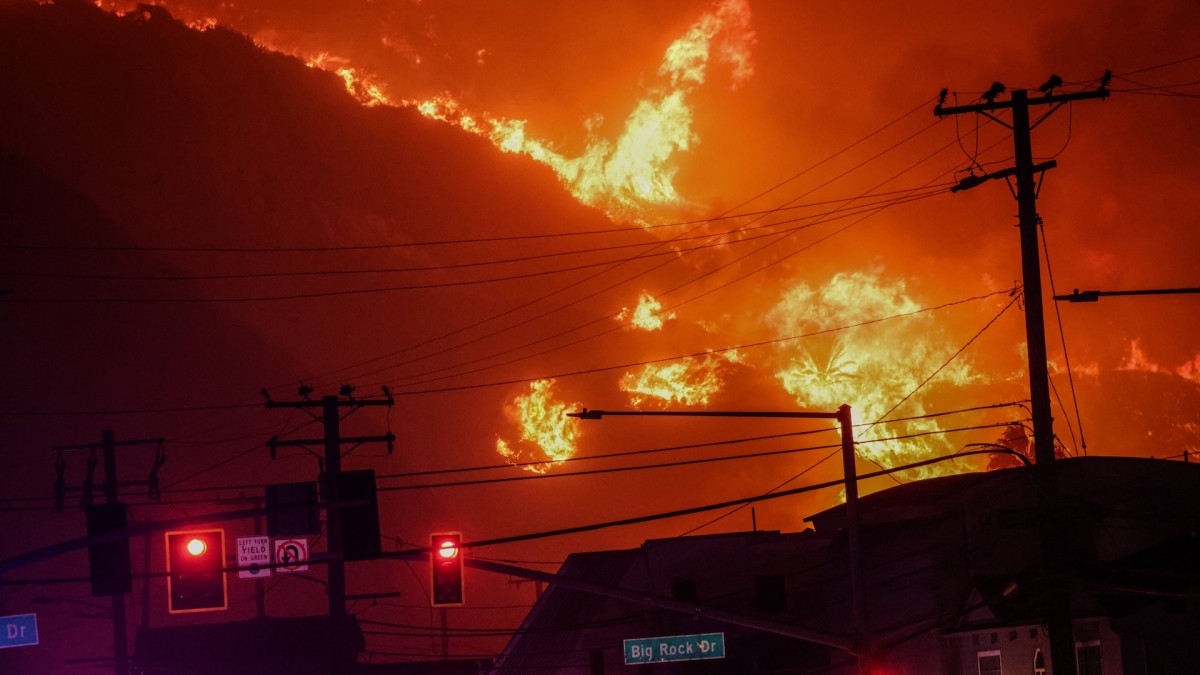
One of the fires that destroyed suburbs and parts of Los Angeles, Pacific Palisades on January 7.Amy Katz / Zuma Press / ContactoPhoto
When President Donald Trump took office, he ran to sign dozens of executive orders that will negatively impact the fight against climate change. This occurred at a time when it was revealed that 2024 was the first calendar year that has reached more than 1.5°C above the pre-industrial level. Those orders ranged from withdrawing the United States from the Paris Agreement to permitting some oil drilling, pausing offshore wind leases and reversing the promotion of EV affecting the entire U.S. energy industry, among other measures.
As early as 2006, the Stern Review on the Economics of Climate Change warned that without action, the overall costs of climate change would equate to losing at least 5% of GDP annually, indefinitely.
Politicians must remember that the Planetary Boundaries Framework consistently warns that humanity is nearing the limits of a safe operating space. We have already crossed six of the nine boundaries: climate change, freshwater balance, land system change, biosphere integrity, nitrogen and phosphorus flows, and novel entities such as microplastics, endocrine disruptors, and organic pollutants.
The impacts of climate change and ecosystem degradation heavily impact the insurance industry and financial sector investments due to physical and transition risks. Physical risks arise from direct damage to assets and infrastructure caused by extreme weather events, leading to increased insurance claims and asset devaluation. Transition risks stem from the shift toward a low-carbon economy, including policy changes, technological advancements, and evolving market sentiments. It is crucial to recognize that physical risks will persist regardless of policy changes induced by executive orders or detachments from alliances.
Over the past five years, the insurance sector has faced escalating losses due to extreme weather events and wildfires, a trend exacerbated by climate change. In 2023, natural catastrophes caused economic losses of USD 280 billion, with insured losses amounting to USD 108 billion (40%), exceeding the previous 10-year average of USD 89 billion. In the first half of 2024, insured losses reached USD 62 billion, approximately 70% above the 10-year average, driven by extreme wildfires, droughts, and floods.
In the USA, insurers are increasingly dropping homeowners, particularly in wildfire-prone areas like Los Angeles, leaving wildfire victims without coverage as firms and regulators struggle to deal with the unpredictable and costly risks of climate disasters. Ironically, many of those homeowners and insurance companies likely supported and donated to Donald Trump's campaign.
Climate change also impacts banks through direct and indirect effects on their activities and asset values of their assets. For example, properties damaged by extreme weather may lose value, reducing collateral for loans. Mortgage-backed securities and real estate investments in high-risk areas may also experience devaluation. In 2024, the Federal Reserve's climate scenario analysis suggested that the largest U.S. banks could face increased loan defaults due to climate change and the transition to a decarbonized economy.
At the 2002 UN World Summit on Sustainable Development, it was recognized that the integrity of ecosystems provides essential resources and services not only for human well-being but also for economic activities.
"As early as 2006 it was calculated that the global costs of climate change would amount to a loss of at least 5% of annual GDP indefinitely"As a climate change denier, Trump believes those measures will positively impact the US economy and will Make America Great Again (MAGA). However, he disregards the force of nature and the systemic nature of anything on Earth. This lack of understanding is also evident in the decisions of some US banks —JPMorgan, Citigroup and Goldman Sachs— that withdrew from the Net-Zero Banking Alliance. Meanwhile, some European banks threatened to pull out of that Alliance. In Davos, Antonio Guterres told those bankers, "you are short-sighted and on the wrong side of history".
As early as 2006, the Stern Review on the Economics of Climate Change warned that without action, the overall costs of climate change would equate to losing at least 5% of GDP annually, indefinitely.
Politicians must remember that the Planetary Boundaries Framework consistently warns that humanity is nearing the limits of a safe operating space. We have already crossed six of the nine boundaries: climate change, freshwater balance, land system change, biosphere integrity, nitrogen and phosphorus flows, and novel entities such as microplastics, endocrine disruptors, and organic pollutants.
"The use of fossil fuels is the primary driver of global warming"In its Sixth Assessment Report (6AR), the Intergovernmental Panel on Climate Change (IPCC) emphasized that fossil fuel use is the primary driver of global warming. It highlighted that climate change is already causing extreme weather events, resulting in adverse impacts, losses, and damages to ecosystems and human societies. Recent years have provided stark examples: catastrophic floods in Pakistan in 2022 and 2023, severe flooding in Europe in 2024, including the cold drop in Valencia, Spain, and widespread droughts affecting both developed and developing countries, with significant economic consequences. Just days before Trump's inauguration, Los Angeles experienced dramatic wildfires, and a study found that such events are increasingly likely due to climate change.
The impacts of climate change and ecosystem degradation heavily impact the insurance industry and financial sector investments due to physical and transition risks. Physical risks arise from direct damage to assets and infrastructure caused by extreme weather events, leading to increased insurance claims and asset devaluation. Transition risks stem from the shift toward a low-carbon economy, including policy changes, technological advancements, and evolving market sentiments. It is crucial to recognize that physical risks will persist regardless of policy changes induced by executive orders or detachments from alliances.
Over the past five years, the insurance sector has faced escalating losses due to extreme weather events and wildfires, a trend exacerbated by climate change. In 2023, natural catastrophes caused economic losses of USD 280 billion, with insured losses amounting to USD 108 billion (40%), exceeding the previous 10-year average of USD 89 billion. In the first half of 2024, insured losses reached USD 62 billion, approximately 70% above the 10-year average, driven by extreme wildfires, droughts, and floods.
In the USA, insurers are increasingly dropping homeowners, particularly in wildfire-prone areas like Los Angeles, leaving wildfire victims without coverage as firms and regulators struggle to deal with the unpredictable and costly risks of climate disasters. Ironically, many of those homeowners and insurance companies likely supported and donated to Donald Trump's campaign.
"A stable climate and healthy ecosystems are fundamental to economic and social stability"According to the European Environment Agency, weather and climate-related extremes caused economic losses estimated at EUR 738 billion between 1980 and 2023 in the European Union, with over EUR 162 billion (22%) occurring between 2021 and 2023. Statistical analyses revealed that economic losses increase over time, and the last three years are all in the top five of years of highest annual economic losses. Similarly, the National Oceanic and Atmospheric Administration (NOAA) reported that in 2024, the United States experienced twenty-seven weather and climate disasters with losses exceeding $1 billion each to affect the United States. These events included one drought event, one flooding event, seventeen severe storm events, fife tropical cyclone events, one wildfire event, and two winter storm events. Overall, these events resulted in the deaths of 568 people and had significant economic effects on the areas impacted. This without including the 2024 Los Angeles wildfires, that alone caused estimated damages between $250 and $275 billion.
Climate change also impacts banks through direct and indirect effects on their activities and asset values of their assets. For example, properties damaged by extreme weather may lose value, reducing collateral for loans. Mortgage-backed securities and real estate investments in high-risk areas may also experience devaluation. In 2024, the Federal Reserve's climate scenario analysis suggested that the largest U.S. banks could face increased loan defaults due to climate change and the transition to a decarbonized economy.
At the 2002 UN World Summit on Sustainable Development, it was recognized that the integrity of ecosystems provides essential resources and services not only for human well-being but also for economic activities.
"Trump's lack of a systemic perspective undermines his goal, as the forces of nature do not recognize political or mental borders"It is paradoxical that Trump aimed to Make America Great Again by signing executive orders that exacerbate climate change and degrade nature. A stable climate and healthy ecosystems are essential for the vitality of economic and social systems. Trump's lack of a systemic perspective undermines his goal, as the forces of nature do not recognize political or mental borders. The European Union should also take heed, especially as the European Commission has published A Competitive Compass in which competitiveness seems to be the aim and not a principle as it says, planning to simplify measures necessary to protect the climate system.

Ana Barreira López
Abogada. Directora del Instituto Internacional de Derecho y Medio Ambiente
LL.M en Derecho Ambiental (London University) y LL.M en Estudios Jurídicos Internacionales (New York University). Co-presidenta de la sección de Medio Ambiente del Ilustre Colegio de Abogados de Madrid.
Ahora en portada
17 de octubre de 2026
16 de octubre de 2026
Noticias relacionadas
Hace 88 semanas
Trump's Triple 'D': Deregulation, Deglobalisation, and Disorder
Lo más leído