Sábado, 17 de octubre de 2026




ANALYSIS
Marine Le Pen nears victory as the V Republic enters crisis mode
The French Prime Minister, Michel Barnier, faces the National Assembly on Wednesday. The vote is likely to end in a no confidence motion against his government. Miguel Ortiz, an economist who developed his research in Sciences Po Paris, analyses the French political situation and the dilemma facing Emmanuel Macron as he tries to save his political legacy: give the government to the left or allow a conservative government that would include Marine Le Pen's ministers.
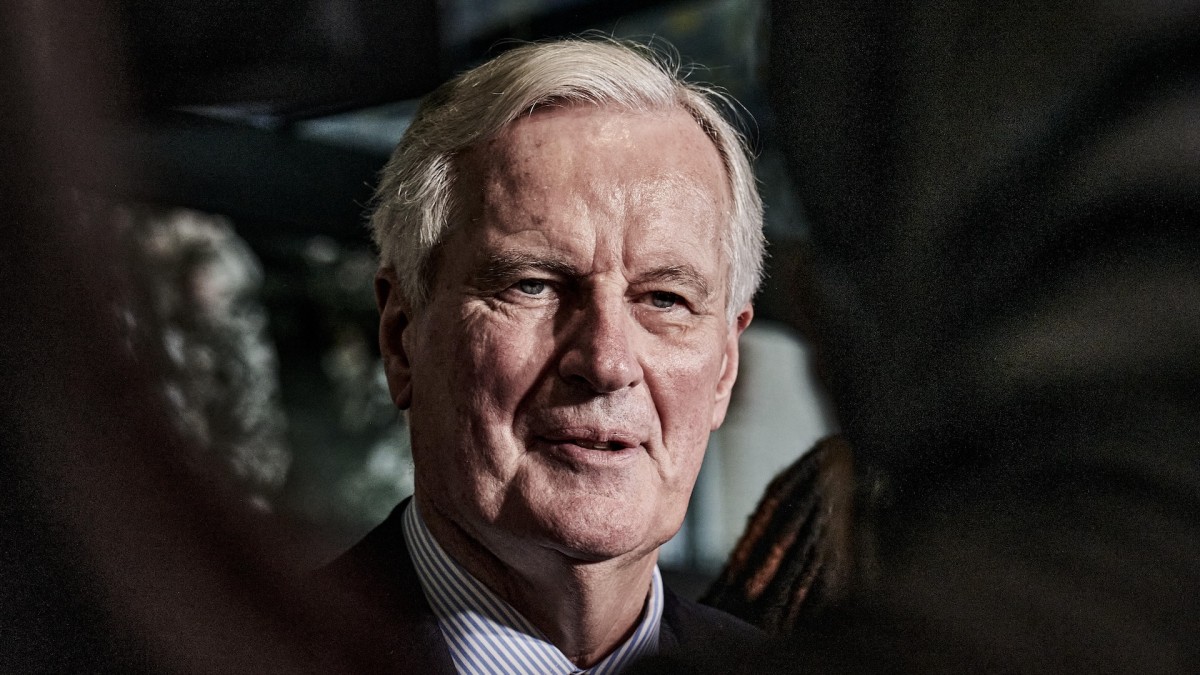
Michel Barnier faces what could be his last vote as prime minister today in the National Assembly.Antonin Burat / Zuma Press / ContactoPhoto
Michel Barnier took over as prime minister just a month and a half ago with the enormous challenge of providing France with a stable government. Barnier's mandate is based on promoting the necessary reforms so that Emmanuel Macron's last term does not destroy his legacy as president. Specifically, Barnier needs to find a path to reduce an ever-growing structural deficit. He also needs to reduce the debt ratio that weighs down the French economy and hinders its financing capacity. As a result of this dire financial situation, the risk premium on French bonds has practically reached ninety basis points, levels not seen since 2012.

As soon as the new French Government took office, it started designing a fiscal adjustment plan to present to the European Commission. In just one month, it developed a credible spending reduction project that includes changes in public administration with the aim of returning the country to the path of stability.
The fiscal plan seeks to reduce the deficit to 3% in 2029 and is articulated in three key laws. The first, public finances, contemplates significant cuts in public spending, eliminating social programs and subsidies considered less priority, although it includes measures to attract the support of left-wing sectors. The second, Social Security, settles accounts in areas such as health and pensions, although it could increase the vulnerability of the most disadvantaged sectors. The third, the annual budget closing, allows final adjustments to be made to the budget to guarantee compliance with financial objectives.
The decision has sparked strong criticism of the Executive for having avoided parliamentary debate and has led the Rassemblement National, Marine Le Pen's party, to support the motion of no confidence promoted by left-wing forces.
Neither the left nor Le Pen's party are willing to assume the social wear and tear that supporting these cuts would imply, especially in the area of Social Security. In particular, Le Pen has worked in recent years to build a more socially oriented image and move away from traditional right-wing economic approaches.
Barnier's fall is not, in fact, his fault. The main person responsible is Macron himself, whose last term in office will be remembered as a real disaster, unless he changes his course soon, something that does not seem foreseeable. The President of the Republic presented himself to the world as the renewer of an ailing system, the man who would restore faith to the French people by uniting the different voices and sensitivities of the country. He was meant to reduce the economic gap through a policy of equal opportunities and to apply the necessary reforms that would see France assume its role as the leading economy of the West.
It soon became clear that this would not be the case, and the French president was quick to disappoint. Although there are redeemable and interesting measures such as the France 2030 plan, which foresees an industrially competitive nation with great independence in energy matters, its political management has resulted in failure.
Macron has not been able to respond to the multiple voices calling for reforms capable of politically unifying a country whose society is increasingly diverse in ethnic, religious and ideological terms.
Macron also presented himself as the person who would solve the migration crisis and the enormous integration problems of minorities in the country. None of this has happened: the president has swung between conservative and ultra-conservative positions, without specifying any measures in practice and going blindly.
Beyond that, his increasing authoritarianism in foreign policy has damaged France's image and harmed national interests. For example, its insistence on prolonging the armed conflict in Ukraine at any cost has deteriorated its relationship with third countries, which now see France as a hostile and interventionist power.
This has led nations traditionally linked to French soft power to seek new alliances in economics and security. An obvious case is that of Françafrique, which has already been plunged into a series of anti-French coups and whose escalation has now been joined by Senegal and Chad, calling for the departure of French troops.
Even so, it must be said that the loss of relevance in Africa and Asia is not something exclusively French, but European. Outside our bubble—or garden, in the words of former High Representative Borrell—, the West is considered as an aggressive entity that applies neocolonial policies that reduce the autonomy of the countries that suffer from them.
China, however, has earned a reputation as a reliable ally for most nations in the global south. Without firing a single shot, it has managed to gain enormous commercial and political influence while acting as the main investor in these countries. Contributing to its development.
If all this were not enough, Macron decided to bring forward the elections "à la Pedro Sánchez", thinking that this strategy would benefit his interests. Yet, he did not realise that the parliamentary majority that supported the Spanish president was based on a complex network of alliances, something difficult to replicate in France, at least for now.
The result was the predictable: a highly fractionated parliament, where governability is practically impossible, as in the times of the Third and Fourth Republics, where truly inoperative cabinets were seen, and whose instability the current system came to correct.
This would also greatly benefit Marine Le Pen, since without having to bear the political burden of government herself (it is very likely that neither she nor her deputy, Jordan Bardella, would enter said cabinet). They would decisively influence the political decisions made in France until the end of the Macron era in 2027. If so, this era would end in a great surrender, a weakened president and with the weight of having failed in his attempt to build a new State in which the French people could trust.
As soon as the new French Government took office, it started designing a fiscal adjustment plan to present to the European Commission. In just one month, it developed a credible spending reduction project that includes changes in public administration with the aim of returning the country to the path of stability.
The fiscal plan seeks to reduce the deficit to 3% in 2029 and is articulated in three key laws. The first, public finances, contemplates significant cuts in public spending, eliminating social programs and subsidies considered less priority, although it includes measures to attract the support of left-wing sectors. The second, Social Security, settles accounts in areas such as health and pensions, although it could increase the vulnerability of the most disadvantaged sectors. The third, the annual budget closing, allows final adjustments to be made to the budget to guarantee compliance with financial objectives.
"Le Pen has worked in recent years to build a more social profile and distance herself from the traditional economic approaches of the right"However, given the lack of political consensus, Barnier has chosen to resort to article 49.3 of the French Constitution to pass the reform of Social Security. This constitutional device allows the Government to approve a law without a vote in the National Assembly, unless a motion of censure is successful. This mechanism, which accelerates legislative processing in situations of parliamentary deadlock, has a high political cost, since if the motion is approved, the Government falls.
The decision has sparked strong criticism of the Executive for having avoided parliamentary debate and has led the Rassemblement National, Marine Le Pen's party, to support the motion of no confidence promoted by left-wing forces.
Neither the left nor Le Pen's party are willing to assume the social wear and tear that supporting these cuts would imply, especially in the area of Social Security. In particular, Le Pen has worked in recent years to build a more socially oriented image and move away from traditional right-wing economic approaches.
Barnier's fall is not, in fact, his fault. The main person responsible is Macron himself, whose last term in office will be remembered as a real disaster, unless he changes his course soon, something that does not seem foreseeable. The President of the Republic presented himself to the world as the renewer of an ailing system, the man who would restore faith to the French people by uniting the different voices and sensitivities of the country. He was meant to reduce the economic gap through a policy of equal opportunities and to apply the necessary reforms that would see France assume its role as the leading economy of the West.
It soon became clear that this would not be the case, and the French president was quick to disappoint. Although there are redeemable and interesting measures such as the France 2030 plan, which foresees an industrially competitive nation with great independence in energy matters, its political management has resulted in failure.
Macron has not been able to respond to the multiple voices calling for reforms capable of politically unifying a country whose society is increasingly diverse in ethnic, religious and ideological terms.
"Macron has not been able to respond to the multiple voices calling for reforms capable of politically unifying a country whose society is increasingly diverse in ethnic, religious and ideological terms"Furthermore, its citizens feel a growing disaffection towards the homogeneous system of the Fifth Republic and its monolithic French identity, which seems little adapted to current times. The insistent support for the State of Israel —despite the country's actions in Gaza and Lebanon— has not helped to calm the waters in a country where a significant part of the population highly empathizes with the Palestinian people, which has contributed to increasing social tensions.
Macron also presented himself as the person who would solve the migration crisis and the enormous integration problems of minorities in the country. None of this has happened: the president has swung between conservative and ultra-conservative positions, without specifying any measures in practice and going blindly.
Beyond that, his increasing authoritarianism in foreign policy has damaged France's image and harmed national interests. For example, its insistence on prolonging the armed conflict in Ukraine at any cost has deteriorated its relationship with third countries, which now see France as a hostile and interventionist power.
This has led nations traditionally linked to French soft power to seek new alliances in economics and security. An obvious case is that of Françafrique, which has already been plunged into a series of anti-French coups and whose escalation has now been joined by Senegal and Chad, calling for the departure of French troops.
Even so, it must be said that the loss of relevance in Africa and Asia is not something exclusively French, but European. Outside our bubble—or garden, in the words of former High Representative Borrell—, the West is considered as an aggressive entity that applies neocolonial policies that reduce the autonomy of the countries that suffer from them.
China, however, has earned a reputation as a reliable ally for most nations in the global south. Without firing a single shot, it has managed to gain enormous commercial and political influence while acting as the main investor in these countries. Contributing to its development.
"The French country lives immersed in a feeling of lost and wasted time, of having gone from being a relevant and respected country to the background, within an inoperative European Union that does not respond to its interests"Internally, France lives immersed in a feeling of lost and wasted time, of having gone from being a relevant and respected country to the background, within an inoperative European Union that does not respond to its interests. This, taken advantage of by Marine Le Pen, has turned Rassemblement National into the great alternative on the right of the political spectrum, only stopped by the union, in the last moment, of the different leftist formations.
If all this were not enough, Macron decided to bring forward the elections "à la Pedro Sánchez", thinking that this strategy would benefit his interests. Yet, he did not realise that the parliamentary majority that supported the Spanish president was based on a complex network of alliances, something difficult to replicate in France, at least for now.
The result was the predictable: a highly fractionated parliament, where governability is practically impossible, as in the times of the Third and Fourth Republics, where truly inoperative cabinets were seen, and whose instability the current system came to correct.
"Macron should choose between giving the responsibility of Government to the left, which has a relative majority, or giving in to the pressures of Rassemblement National and allowing a conservative Government that includes ministers from Le Pen's party"If the Barnier Government finally falls, Macron You would be faced with a complex dilemma. You cannot call elections until one calendar year has passed since the call of the previous ones. Then, he would have to pick between giving the responsibility of Government to the left, which has a relative majority, or give in to pressure from Rassemblement National and allowing a conservative government that includes ministers from Le Pen's party. This would mean that, for the first time in the history of the Fifth Republic, the extreme right would enter the Government.
This would also greatly benefit Marine Le Pen, since without having to bear the political burden of government herself (it is very likely that neither she nor her deputy, Jordan Bardella, would enter said cabinet). They would decisively influence the political decisions made in France until the end of the Macron era in 2027. If so, this era would end in a great surrender, a weakened president and with the weight of having failed in his attempt to build a new State in which the French people could trust.

Miguel Ángel Ortiz-Serrano
Profesor de Historia de la Empresa en CUNEF Universidad.
Es doctor en Historia Económica por la Universidad Carlos III de Madrid y fue profesor de Economía en la Universidad de Sussex (Reino Unido). Ha desarrollado el grueso de su actividad investigadora en Sciences Po Paris, donde se ha especializado en el estudio de los mercados financieros en Francia y Europa a finales del siglo XIX.
Ahora en portada
17 de octubre de 2026
16 de octubre de 2026
Noticias relacionadas
Hace 97 semanas
Merkel is out to defend her legacy, Von der Leyen should be taking notes
Hace 99 semanas
The world after Trump's victory: "Spain must lead the fight against illiberalism"
Lo más leído