Martes, 29 de septiembre de 2026




ANALYSIS
Talgo and the mutual national interest, in Germany, Spain and the EU
In the coming years, European railway systems will have to manage the coexistence of at least three major gauge systems —the international, the Russian, and the Spanish— while working towards harmonising standards by adopting the highest and most efficient ones. Talgo faces huge growth opportunities, but significant investment is needed to ensure the company’s survival and its ability to deliver quality service and products. Talgo needs a strong and reliable international partner. This is a matter of national interest —not just for Spain and Germany, but, given current geopolitics, for the broader interests of the European Union.
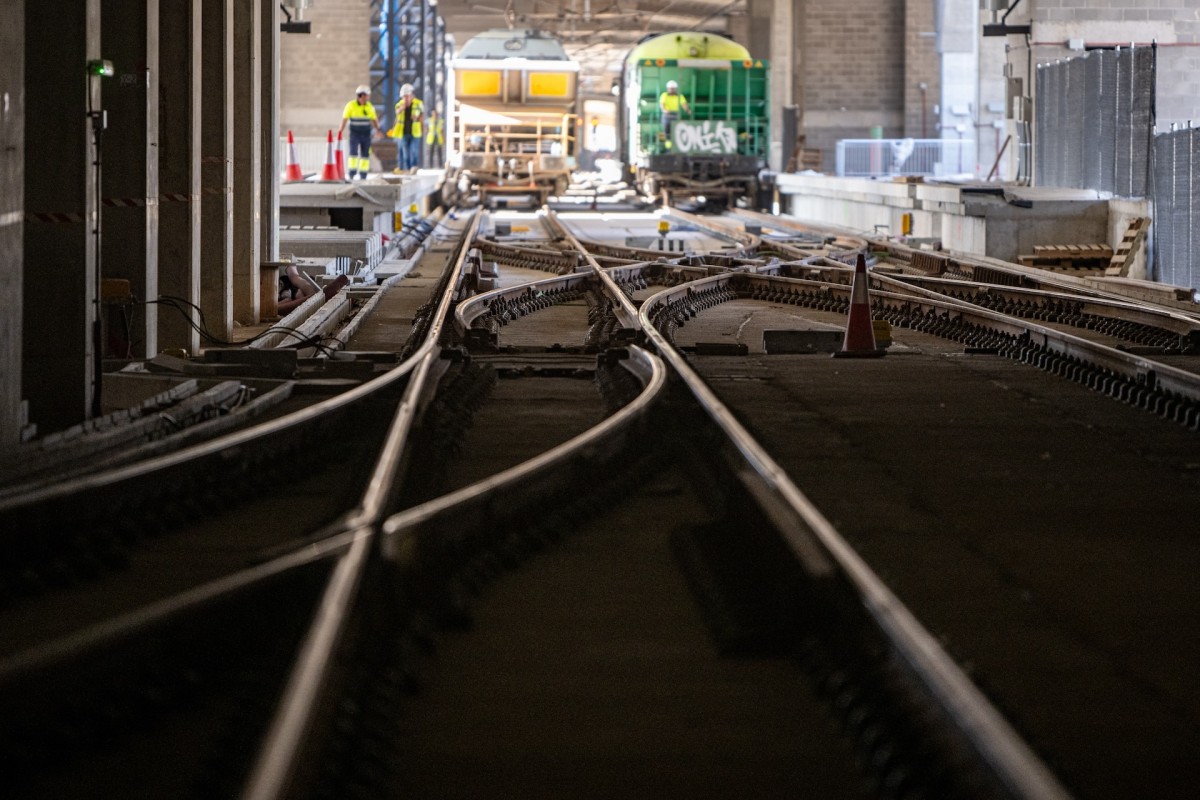
The technology for automatic gauge switching has become a national security issue.Lorena Sopêna / Europa Press / ContactoPhoto
With the end of summer, German trainspotters eagerly pursue convoys of wagons and locomotives, discreetly transported on trucks to the most important trade fair of the European railway industry. In a few weeks, InnoTrans will start in Berlin. This year, the focus of gossip is likely to be on a failed merger between the relatively unknown Ganz-Mávag —formerly a Russian subsidiary and now partially owned by the Hungarian Government, according to Politico Europe— and the Spanish company Talgo. Although small by European standards, Talgo gained significant attention in 2019 after winning a major bid to supply 23 long-distance trains, including locomotives, for Deutsche Bahn’s Eurocity fleet. Last year, the deal was extended, significantly increasing its scope. As reported by Der Tagesspiegel, the Spaniards “are to deliver a further 56 ICE-L trains for long-distance traffic for 1.4 billion euros". A few weeks ago, Manager Magazin expressed concerns that "a dirty takeover battle" surrounding Talgo might jeopardise Deutsche Bahn’s modernisation plans —vital for maintaining German competitiveness after years of underinvestment during the Merkel era—.
This is not the first time a failed merger has sparked discussions in the lobbies and pavilions of InnoTrans. In 2019, the European Commission blocked, much to the disappointment of France and Germany, the proposed merger between Siemens Mobility and Alstom, citing concerns over its potential impact on competition "in the signalling and high-speed rolling stock markets", as reported by the International Railway Journal. The Financial Times defended the EU's decision to "stand firm against Siemens-Alstom", who together would have controlled around 50% of the European railway market, as noted by Handelsblatt. The complaint that led to this decision originated in Spain, following a cartel investigation by the Spanish regulator CNMV. Interestingly, it was Talgo that opposed the merger, arguing it would undermine competition.
Concerns in Germany
Concerns in Germany
In the same year, Politico Europe noted that "calls for a more protectionist European economic model are growing, thanks to the trade war and Eurosceptic populists. Fortress Europe isn’t taboo anymore." The pandemic and the war in Ukraine have since altered many dynamics. These events, along with reminders of past questionable foreign takeovers of German strategic companies, prompted the Federal Government to approve a National Security Strategy in 2023. The 76-page document states that "Germany’s resilience and competitiveness are based on its high level of innovation and on technological and digital sovereignty. Therefore, the Federal Government will specifically promote (..) the innovative strength of companies and will take measures to protect against illegitimate influence and knowledge outflow".
Additionally, "the protection of critical infrastructures, including system-relevant companies, is of crucial importance for the security of our lives and freedom". The strategy also emphasises that while value creation and supply chains are the responsibility of companies, the Federal Government "monitors competitive disadvantages and supply necessities for German companies". It will "analyse critical dependencies and advocate for an EU-wide early warning system and the monitoring of critical supply chains" to ensure security of supply. The transportation sector, as a guarantor of communications and supply security, is a crucial element of this chain. Furthermore, measures "against economic sabotage and espionage" are being "developed and improved".
Additionally, "the protection of critical infrastructures, including system-relevant companies, is of crucial importance for the security of our lives and freedom". The strategy also emphasises that while value creation and supply chains are the responsibility of companies, the Federal Government "monitors competitive disadvantages and supply necessities for German companies". It will "analyse critical dependencies and advocate for an EU-wide early warning system and the monitoring of critical supply chains" to ensure security of supply. The transportation sector, as a guarantor of communications and supply security, is a crucial element of this chain. Furthermore, measures "against economic sabotage and espionage" are being "developed and improved".
" German leadership is convinced that "various security risks endanger German companies and, consequently, Germany as a business and science hub""The Federal Government is further developing the National Economic Protection Strategy and corresponding action plans". The Federal Ministry of the Interior is responsible for the "Economy Protection Initiative", which focuses on protecting the economy from the interest of "some intelligence services in technical know-how or specific products" to gain competitive advantages for their own economies. German leadership is convinced that "various security risks endanger German companies and, consequently, Germany as a business and science hub. Therefore, effective protection of the economy is both in the interest and shared responsibility of politics, security authorities, business, and science".
In August this year, after consulting with the Federal Office for the Protection of the Constitution, the German Federal Minister of the Interior, Nancy Faeser, called for 'the highest sensitivity' due to the "danger of Russian sabotage" and announced "the highest protective measures in all areas". "This applies to institutions as well as companies, especially in the area of critical infrastructure", Faeser told the Handelsblatt. Sensitive areas include transport routes and infrastructure. "Since the attacks on the railway network in France at the beginning of the 2024 Olympic Games, the protection of the German rail network has also been under scrutiny". The protection of critical infrastructure is set to be improved, with the federal government planning a law for hazard prevention.
And in Spain
It is understandable that Spain harbours similar concerns regarding its national security interests. In early 2020, at the onset of the pandemic, the government in Madrid established a ‘protective shield’ against unwanted foreign takeovers. Since then, "foreign companies wishing to acquire more than ten percent of a Spanish company deemed strategic must obtain permission from the Spanish government". Meanwhile, the German financial press has highlighted that "the country continues to pursue the goal of attracting foreign investments, especially in sectors and projects that are important for competitiveness and economic security. However, this goal must align with the protection of strategic interests and national security", according to the Ministry of the Economy.
"They have no proof for this, so this is hardly more than political bluff,” wrote the pro-government daily Vilaggazdasag in Hungary"Regarding Talgo, the Financial Times stated that "the takeover attempt has become the latest conflict between EU member states and the illiberal Hungarian premier [Orban]". At Agenda Pública, Bernardo de Miguel argued that "the fact that a European railway company cannot acquire another European company for reasons of national security shows that the EU is much less cohesive than one might expect after 70 years of the ‘ever closer integration’ proclaimed by the European Treaties". The Spanish Government "did not elaborate on the national security risks" and said the analysis on which the decision was based was "classified". The Economy Ministry stated that "the intervention is in line with national and EU law on foreign investment, the EU internal market, and the free movement of capital". The following day, the European Commission endorsed the Spanish veto, emphasising that "states are not obliged to inform in advance about this type of decisions", according to El País. "Under EU law, member states can block deals on public security grounds in specific circumstances", as noted by FT. According to Spanish media, "the veto was motivated by alleged ties between Ganz-Mávag and Moscow". Politico even speculated about concerns that Talgo’s designs "could be shared" with Russia. "They have no proof for this, so this is hardly more than political bluff," wrote the pro-government daily Vilaggazdasag in Hungary.
The Russian Gauge
Russia, Ukraine, Belarus, Moldova, and the Baltic Republics share among other countries the so-called Russian gauge (1520 mm) as a legacy of the Soviet Union. Finland and, to some extent, Estonia use a 1524 mm gauge, compatible with Russian trains. Mostly used for cargo purposes, some sections of Russian gauge extend into Poland —600 km of track length at the Broad Gauge Metallurgy Line (Linia Hutnicza Szerokotorowa, LHS) in the south, from the east to the Upper Silesian industrial region—, Slovakia —88 km Uzhhorod–Košice broad-gauge track at the Ukraine border—, Hungary —150 km at the Záhony logistics area—or Sweden.
On the other hand, Estonia, Latvia, and Lithuania are building Rail Baltica, an ambitious 870 km high-speed railway using standard international gauge (1435 mm) from Poland to Tallinn (and potentially through a sea connection to Helsinki) that aims to "uncouple the Baltic states from Russia and their Soviet past" in the context of the war in Ukraine, according to Euronews. The project, co-financed by the EU, should be completed by 2030. With this step, the Baltics —and potentially Finland— will introduce a dual-gauge system, following the Spanish example and becoming potential preferred candidates to use Talgo technology.
"In 2024, adopting higher technical standards for the 1435 international gauge in the EU remains a crucial issue. A massive expansion and wider usage of passenger and freight railway transportation is the only viable solution to the climate crisis, achieving CO2 reduction targets, and reducing air pollution"Before the war, the Merkelian doctrine of "Wandel durch Handel" ("transformation through trade") contributed to initiatives like the extension of the Russian gauge towards Central Europe becoming fashionable at successive editions of InnoTrans. In the 2010s, there was competition among cities to host the major logistics terminals at the end of the railway line. In 2018, ÖBB (Austrian Federal Railways) and the Russian Railways co-hosted an International Railway Business Forum at the Palais Hansen in Vienna. European, Russian, Central Asian, and Chinese experts discussed prospects for a Eurasian Corridor and New Silk Road "moving towards each other", within a shift "from national interests to a common strategy". Key topics included sharing "practices and technologies" around railway construction, or "interoperability between 1520 and 1435" gauges to "transcend boundaries". Important issues addressed were "factors to help increase the volume and efficiency of railway transportation" and "how to accelerate the harmonisation of 1520 and 1435 technical standards" for infrastructure and rolling stock.
In 2024, adopting higher technical standards for the 1435 international gauge in the EU remains a crucial issue. A massive expansion and wider usage of passenger and freight railway transportation is the only viable solution to the climate crisis, achieving CO2 reduction targets, and reducing air pollution. Much progress has been made, but interoperability and regulatory problems, along with the variety of different standards between countries, remain largely unresolved. Concerning cargo, Russian standards are simply higher and more efficient, not only in terms of train length but also regarding the maximum weight per axle assembly on the train carriage or the larger loading gauge —which defines the maximum height and width for railway vehicles and their loads—. This means that if a railway section is adapted to Russian standards and/or dual gauge, bridges and tunnels must be rebuilt, and the overhead wire must be raised.
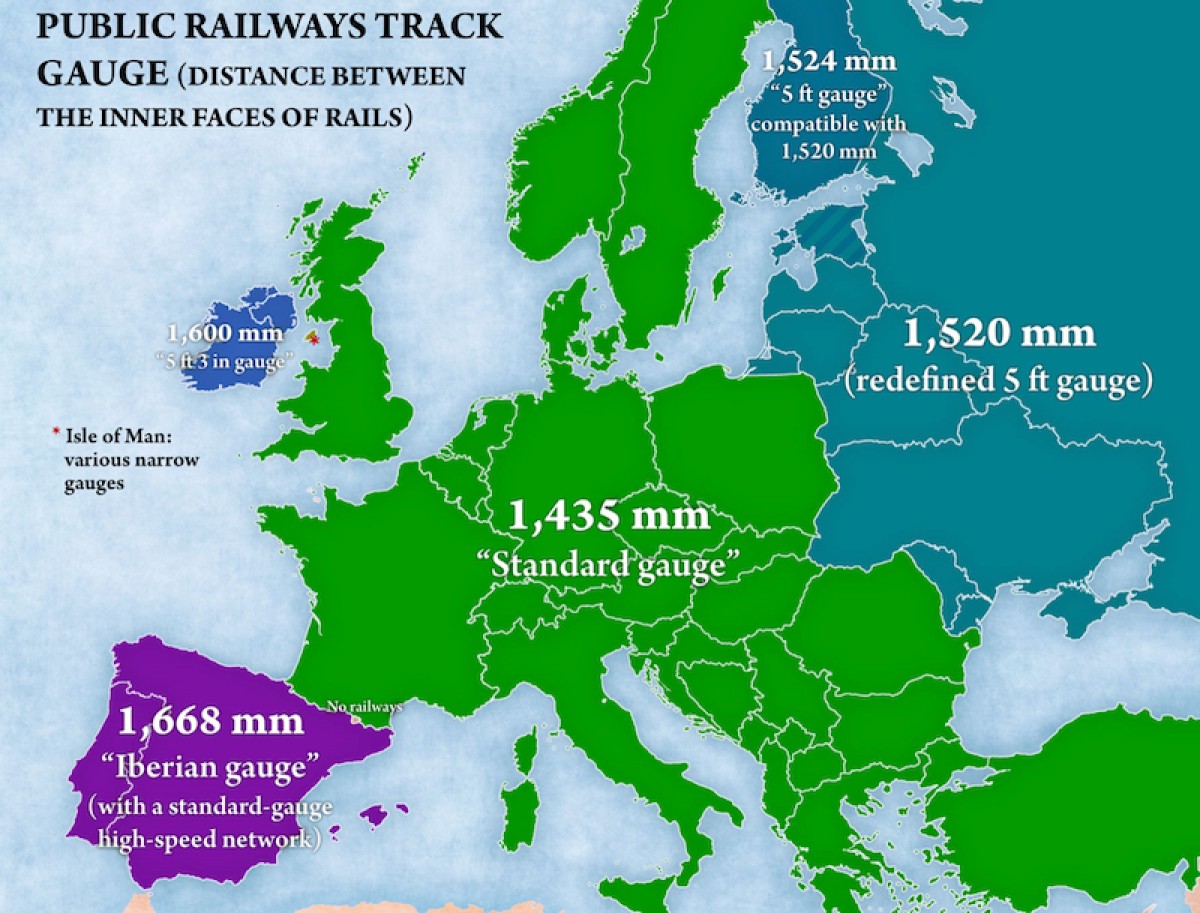
There is a huge potential pan-European market for Talgo trains Foto: Fuente: @JakubMaria
Talgo’s Intellectual Property is Crucial to Spanish National Interests
Recently, Matthew McLaughlan Merelo posed the question in Agenda Pública whether Talgo is a strategic company or a victim of European geopolitics. Founded in 1942, after securing financial backing for the construction of its first prototype, Talgo has developed over the years a "proprietary variable-gauge vehicle system that allows its high-speed trains to automatically adapt to railway tracks with different gauges, permitting quick cross-border travel". Thanks to their design, Talgo’s trains are lighter and offer consistent energy savings in day-to-day operations. In 2019, a Handelsblatt report highlighted Talgo’s successful international strategy, with contracts spanning from the USA to Saudi Arabia to Uzbekistan: "There have been years when 95% of contracts came from abroad".
"In 2019, a Handelsblatt report highlighted Talgo’s successful international strategy, with contracts spanning from the USA to Saudi Arabia to Uzbekistan: "There have been years when 95% of contracts came from abroad"Talgo’s intellectual property (IP) is vital to Spanish national interests, as Spain and Portugal use a different gauge (1668 mm) from that of the standard in bordering France. There is only one connection using the international gauge: the high-speed line between Barcelona and Perpignan. The first Spanish AVE high-speed line began service between Seville and Madrid in 1992. Unlike in most European countries —where long-distance trains frequently switch between high-speed and older sections several times during a single journey — the AVE network is built on entirely separate platforms and tracks from station to station. This is primarily because it runs on an international standard gauge, while the rest of the network uses either the wider Spanish gauge or the smaller metre gauge (1000 mm). Long-distance trains often run on the AVE network where available, before switching to Spanish gauge networks in the province. This can only occur at specific locations with dedicated gauge-changing facilities. Only Talgo convoys can undergo gauge changes without requiring passengers to switch trains. As a result, the company is a leading supplier to Spanish Railways and is critical to Spain’s mobility systems.
The Frankfurter Allgemeine Zeitung (FAZ), concerned about Talgo’s limited production capacity, noted that "a sale of the world’s twelfth-largest train manufacturer, which reported record figures last year, would have made sense from an industrial policy perspective. (..) The Hungarians offered not only money but also the production capacities that Talgo urgently needs to process the many orders, including those from Deutsche Bahn (DB)". However, those production capacities would not be based in Spain, and the delocalisation of a company critical to Spanish interests remained a realistic option. According to Reuters, a spokesperson for Ganz-Mávag in Spain said the consortium would "take legal action, both in Spain and in Europe" against the Spanish government’s decision.
The European Factor
What might surprise some about the events in Spain is the European factor. After the German National Security Strategy was released, the Berlin-based German Institute for International and Security Affairs (SWP) remarked that, concerning economic resilience, "it is important that the security strategy clearly commits to European cooperation. However, the statements on strengthening the European internal market are surprisingly sparse".
On the other hand, a decision made in May by the German Ministry of the Economy shows parallels with the behaviour of the Spanish authorities. When Austrian Raiffeisenbank International (RBI) announced its intention to acquire shares of the Austrian construction company Strabag through its Russian subsidiary, Berlin launched an investigation. Johann Strobl, the CEO of RBI, assured that he was willing to "reverse the share purchase" if there was a discernible risk of sanctions or other adverse reactions, especially from US authorities. This happened a few days later "for reasons of caution", as reported by ORF in Vienna. The Germans acted on the basis that "Strabag has numerous German subsidiaries", and thus the Ministry saw "national security at risk" and considered intervening in the deal, either by "prohibiting it or imposing conditions on the transaction": According to Eulerpool, "RBI’s engagement in Russia has significantly decreased since the outbreak of the war, and the sale of the Russian subsidiary is already on the agenda".
Meanwhile, the summer was marked by quality problems with the newly delivered S106 Avril trains to RENFE and its subsidiary AVLO. The Spanish Minister of Transportation, Óscar Puente, announced possible claims against the manufacturer to "seek compensation for the damages and losses caused by the breakdowns of the new [high-speed] trains".
Future Scenarios of Opportunity for Talgo
Future Scenarios of Opportunity for Talgo
According to Reuters, the financial investor Trilantic holds around 40 per cent of the company. In March, media reports stated that "Trilantic was considering selling its shares to the Swiss rival Stadler Rail", which builds locomotives in Valencia. Later, it was rumoured that the Spanish Government would be interested in buying the Trilantic stake. Škoda Transportation might be a next candidate for a merger. APA explained that the Czech company "belongs to the PPF Group holding, behind which stands the widow of the billionaire Petr Kellner, who died three years ago. The company only shares its roots with the car manufacturer Škoda, which belongs to the Volkswagen Group".
In the coming years, European railway systems will have to manage the coexistence of at least three major gauge systems —the international, the Russian, and the Spanish— while working towards harmonising standards by adopting the highest and most efficient ones. This reality shows parallelisms in other regions globally. Within this environment, Talgo faces significant growth opportunities and what should be a brighter future. While consolidating its position in the fast-developing passenger market, Talgo’s next step might be the development of new IPs for freight transportation. In parallel, the existence of Talgo’s factories in Spain is critical to the sustainability of Spain’s public transportation network and its unique multiple-gauge system.
Significant investment is needed to ensure the company’s survival and its ability to deliver quality service and products, which is crucial to the sustainability of Spain’s public transportation network. This is also essential for Deutsche Bahn, which has awarded major tenders to Talgo amidst a critical service delivery situation, and, most likely, for the Baltics and other Eastern European countries that might potentially move towards standard gauge within a multi-gauge network.
Following past collaborations with Bombardier, it is clear that Talgo needs a strong and reliable international partner. This is a matter of national interest —not just for Spain and Germany, but, given current geopolitics, for the broader interests of the European Union—.
More to follow at the next InnoTrans in Berlin!

Adam Casals
Experto en geoestrategia y asesor en relaciones internacionales
CEO de Casals' Company. Fue delegado de la Generalitat de Catalunya en Austria y Europa Central. Ha publicado recientemente en 'Vozpopuli', 'El Confidencial', 'La Vanguardia', 'ABC', 'Crónica Global/El Español', 'Medium', 'Ara', 'Blockchain Economía', 'Círculo de Economía y El Món de Demà' y 'Política & Prosa' en España, con 'The European' en Alemania, 'Die Presse' en Austria, 'Delo' en Eslovenia y 'Limes, Rivista Italiana di Geopolitica'. Colabora con la 'Cadena SER'.
Ahora en portada
29 de septiembre de 2026
29 de septiembre de 2026
29 de septiembre de 2026
Lo más leído