Viernes, 16 de octubre de 2026




LÓPEZ PLANA'S EUROPEAN COMPASS
A stronger voice means greater scrutiny for Sánchez’s foreign policy
In his weekly column, 'Agenda Pública' editor and director Marc López Plana analyzes Spain’s diplomatic transformation under Pedro Sánchez. Far from its traditional preference for 'passive consensus,' Spain has assumed a leading role in crises like Gaza and Iran. That ambition gives the country unprecedented influence, but it also increases our visibility: at the center of the global stage, every foreign policy decision is subject to stricter scrutiny and intense domestic political debate.
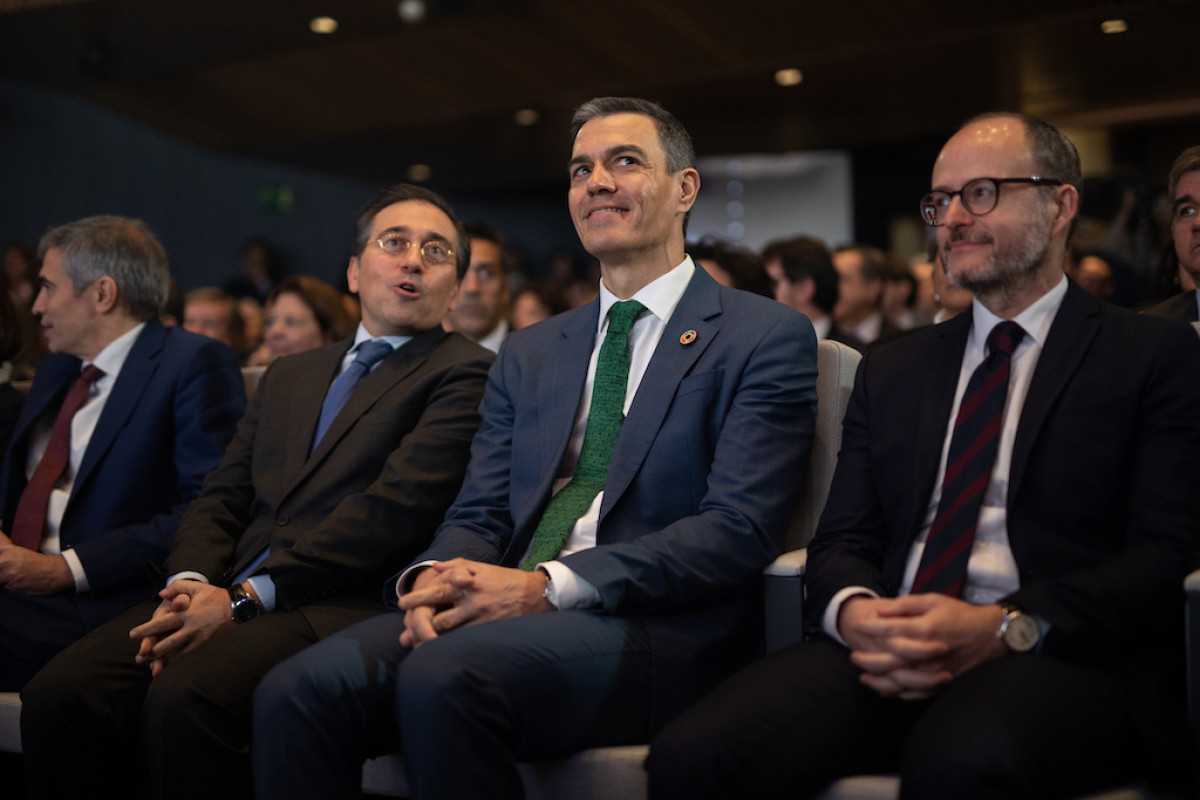
Pedro Sánchez, President of the Government, opens the second day of the IX Conference of Ambassadors.Alejandro Martínez Vélez / Europa Press
Last week, I wrote on the concept of culpa in vigilando or 'fault in supervision' attributed to Pedro Sánchez, given that the legitimacy of his government was defined in 2018 under a premise of ethical regeneration. Lately, that foundational narrative has run into a gray area.
Today, in this weekly column on European politics, I hope to contribute another bit of insight into what’s already Spain’s second-longest presidency after that of Felipe González. I do so because in my opinion, both European and foreign policy are areas in which the mandates of Pedro Sánchez have made a real difference.
Pedro Sánchez isn’t the first Spanish president to have sought to increase the country’s international weight. Nor is he the first to have leveraged diplomatic successes to bolster his domestic political position. José María Aznar did likewise with his Atlantic alignment, while José Luis Rodríguez Zapatero built part of his international profile around the withdrawal from Iraq and opposition to that war.
But the situation with Sánchez and his Foreign Minister, José Manuel Albares, is different. He is probably the first president in Spain’s democracy to promote relatively defined positions in areas where broad 'passive consensus' previously ruled, converting foreign policy into an arena where differences in national politics are also expressed.
Through much of our democracy, Spain sustained a peculiar relationship with international affairs that functioned thanks to that same passive consensus, which in many cases amounted to inaction. Our stance wasn’t always written down, or taken in response to grand and formal agreements; rather, it was part of a shared political culture. Europe provided a common horizon, while relations with the United States were managed with variable nuance, but within known parameters. Spain’s positions on the Middle East, Morocco, and China all evolved gradually, without major ruptures.
During previous administrations, even extraordinary episodes like the Iraq war were perceived as clear exceptions. The intensity of the political conflict provoked by Aznar’s decision could be partly explained by the fact that it broke from a somewhat established tradition of continuity.
One of the first most and obvious cases involved Morocco and Western Sahara. Throughout Spain’s democratic era, the various governments have maintained a difficult balance between Spain’s historical commitments, its relations with Morocco, the stability of Ceuta and Melilla, cooperation on immigration, and ties with Algeria.
Sánchez’s turn toward the autonomy plan defended by Rabat represented a new approach to an issue long defined by the search for diplomatic equilibrium. That decision was interpreted by Sánchez’s critics as a substantial modification of Spain’s historical position. As a result, the issue ceased to be purely diplomatic and appeared on the domestic agenda, generating tensions within the governing coalition, provoking parliamentary clashes, and opening a public debate that remains unresolved.
Something similar has taken place with Gaza and Israel. As regards that conflict, Spain held positions relatively close to most of its European partners. Recognition of the State of Palestine vaulted Spain to a more visible position within European and international debates, but it also had an internal effect. Once again, an issue that was diplomatic in nature escalated into an element of political differentiation. One’s position on Israel was integrated into party identities, parliamentary disputes, and the public conversation in Spain.
However, tensions with the Trump administration and the implications of U.S. policy toward Iran have introduced new lines of division. Transatlantic relations have jumped from the plane of security into discussions of political identity, European sovereignty, and ideological positioning within Spain.
The same goes for China. Decisions about Beijing are causing more and more domestic political debate, because they’re forcing answers to questions that range far beyond trade. Should Europe align itself with Washington? Should it preserve its own strategic autonomy? To what extent can Chinese investments in sensitive sectors be accepted?
All four of these examples point in the same direction. The politicization of Spain’s foreign policy hasn’t developed because international affairs have inevitably invaded national politics, but because certain decisions by the government have replaced a logic based on consensus and sustained balance with one based on more defined and visible stances.
But visibility has a price that we have to pay. When a country adopts more defined positions, it also creates more resistance. Those decisions affect specific interests, movements attract more scrutiny, and adversaries have greater incentive to respond.
Recall 'the Pegasus case' at the beginning of 2022, when the mobile phones of high-ranking Spanish officials (the President of the Government and several ministers, including Margarita Robles, Fernando Grande-Marlaska, and Luis Planas) were illicitly infected, and sensitive information was extracted. The technology employed was Israeli. Read the article we are publishing today on the U.S. view of the Zapatero case. Former CIA officer Bjorn Beam states that "HSI (Homeland Security Investigations) has steadily expanded its global reach, and its priorities have become more political under the Trump administration." He also explains that "regardless of the case at hand, this pattern makes any decision to share evidence with a foreign court subject to additional scrutiny."
International relevance and political conflict tend to grow simultaneously, and when political actors are forced to choose sides, foreign policy is injected into national policy. In Spain, this state of affairs is here to stay; yesterday’s video of Alberto Núñez Feijóo supporting Keiko Fujimori speaks to that point. The leader of the PP recorded that video because he thought it defined his political identity in Spain. Maybe that’s also why he later deleted it.
Today, in this weekly column on European politics, I hope to contribute another bit of insight into what’s already Spain’s second-longest presidency after that of Felipe González. I do so because in my opinion, both European and foreign policy are areas in which the mandates of Pedro Sánchez have made a real difference.
Pedro Sánchez isn’t the first Spanish president to have sought to increase the country’s international weight. Nor is he the first to have leveraged diplomatic successes to bolster his domestic political position. José María Aznar did likewise with his Atlantic alignment, while José Luis Rodríguez Zapatero built part of his international profile around the withdrawal from Iraq and opposition to that war.
But the situation with Sánchez and his Foreign Minister, José Manuel Albares, is different. He is probably the first president in Spain’s democracy to promote relatively defined positions in areas where broad 'passive consensus' previously ruled, converting foreign policy into an arena where differences in national politics are also expressed.
Through much of our democracy, Spain sustained a peculiar relationship with international affairs that functioned thanks to that same passive consensus, which in many cases amounted to inaction. Our stance wasn’t always written down, or taken in response to grand and formal agreements; rather, it was part of a shared political culture. Europe provided a common horizon, while relations with the United States were managed with variable nuance, but within known parameters. Spain’s positions on the Middle East, Morocco, and China all evolved gradually, without major ruptures.
During previous administrations, even extraordinary episodes like the Iraq war were perceived as clear exceptions. The intensity of the political conflict provoked by Aznar’s decision could be partly explained by the fact that it broke from a somewhat established tradition of continuity.
"The novelty of Sánchez’s approach is in the willingness to adopt recognizable and differentiated positions on some of the biggest international debates of our time"Thus the novelty of Sánchez’s approach is in the willingness to adopt recognizable and differentiated positions on some of the biggest international debates of our time, departing from Spain’s traditional preference to remain within broad margins of consensus and diplomatic flexibility.
One of the first most and obvious cases involved Morocco and Western Sahara. Throughout Spain’s democratic era, the various governments have maintained a difficult balance between Spain’s historical commitments, its relations with Morocco, the stability of Ceuta and Melilla, cooperation on immigration, and ties with Algeria.
Sánchez’s turn toward the autonomy plan defended by Rabat represented a new approach to an issue long defined by the search for diplomatic equilibrium. That decision was interpreted by Sánchez’s critics as a substantial modification of Spain’s historical position. As a result, the issue ceased to be purely diplomatic and appeared on the domestic agenda, generating tensions within the governing coalition, provoking parliamentary clashes, and opening a public debate that remains unresolved.
Something similar has taken place with Gaza and Israel. As regards that conflict, Spain held positions relatively close to most of its European partners. Recognition of the State of Palestine vaulted Spain to a more visible position within European and international debates, but it also had an internal effect. Once again, an issue that was diplomatic in nature escalated into an element of political differentiation. One’s position on Israel was integrated into party identities, parliamentary disputes, and the public conversation in Spain.
"Transatlantic relations have jumped from the plane of security into discussions of political identity, European sovereignty, and ideological positioning within Spain"Moving in chronological order, a third example can be found in Spain’s relationship with the United States. Until recently, issues related to NATO, U.S. military bases, or strategic cooperation were all part of a relatively stable consensus. Even when ideological differences were relevant, governments tended to preserve ample spaces of continuity.
However, tensions with the Trump administration and the implications of U.S. policy toward Iran have introduced new lines of division. Transatlantic relations have jumped from the plane of security into discussions of political identity, European sovereignty, and ideological positioning within Spain.
The same goes for China. Decisions about Beijing are causing more and more domestic political debate, because they’re forcing answers to questions that range far beyond trade. Should Europe align itself with Washington? Should it preserve its own strategic autonomy? To what extent can Chinese investments in sensitive sectors be accepted?
All four of these examples point in the same direction. The politicization of Spain’s foreign policy hasn’t developed because international affairs have inevitably invaded national politics, but because certain decisions by the government have replaced a logic based on consensus and sustained balance with one based on more defined and visible stances.
"Spain is more visible today than a decade ago. The positions taken by the country generate attention. Spain’s capacity to influence certain European debates is greater"For a long time, passive consensus kept international conflicts at the margins of political debate. Now, in the absence of that tacit agreement, the parties compete, the media pay sharper attention, citizens take sides, and foreign policy enters the daily political struggle. I believe that this transformation has positive effects. Spain is more visible today than it was a decade ago – the positions taken by the country generate attention. Spain’s capacity to influence certain European debates is greater, and a country that takes clear positions is more likely to be noticed than one that merely moves with a herd.
But visibility has a price that we have to pay. When a country adopts more defined positions, it also creates more resistance. Those decisions affect specific interests, movements attract more scrutiny, and adversaries have greater incentive to respond.
Recall 'the Pegasus case' at the beginning of 2022, when the mobile phones of high-ranking Spanish officials (the President of the Government and several ministers, including Margarita Robles, Fernando Grande-Marlaska, and Luis Planas) were illicitly infected, and sensitive information was extracted. The technology employed was Israeli. Read the article we are publishing today on the U.S. view of the Zapatero case. Former CIA officer Bjorn Beam states that "HSI (Homeland Security Investigations) has steadily expanded its global reach, and its priorities have become more political under the Trump administration." He also explains that "regardless of the case at hand, this pattern makes any decision to share evidence with a foreign court subject to additional scrutiny."
International relevance and political conflict tend to grow simultaneously, and when political actors are forced to choose sides, foreign policy is injected into national policy. In Spain, this state of affairs is here to stay; yesterday’s video of Alberto Núñez Feijóo supporting Keiko Fujimori speaks to that point. The leader of the PP recorded that video because he thought it defined his political identity in Spain. Maybe that’s also why he later deleted it.
Ahora en portada
16 de octubre de 2026
16 de octubre de 2026
16 de octubre de 2026
Lo más leído