Viernes, 16 de octubre de 2026




UNITED KINGDOM
This is Andy Burnham, the "King of the North" who wants to defeat Nigel Farage
Andy Burnham, the Labour candidate who believes he can challenge Prime Minister Keir Starmer for the country’s leadership, wants to "reconnect" the United Kingdom and, in the process, defeat Nigel Farage’s radical right. Journalist Nick Malkoutzis explains Burnham’s proposal, his "unusual popularity" and why Tony Blair rejects his candidacy and calls for a "return to a radical centre".

Andy Burnham has announced he will stand in the Makerfield by-election, with a view to challenging Keir Starmer’s leadership.Ioannis Alexopoulos / Zuma Press / Europa Press
Manchester mayor Andy Burnham’s campaign video for the Makerfield by-election features two anthems by local bands: Some Might Say, by Oasis, evoking post-industrial neglect, and One Day Like This, by Elbow, offering cautious optimism. Together, the two songs frame Burnham’s pitch in a race that is not only about becoming an MP, but also about positioning himself as the next prime minister of the United Kingdom: the country is caught between disillusionment and the hope of something better, and his politics —rooted in place, public control and civic renewal— can bridge that divide.
The June 18 contest in Makerfield, in northwest England, is formally about one parliamentary seat. In reality, it has become a barometer of a much larger question: whether the Labour Party can halt its slide in the polls, reconnect with its fractured electoral coalition and find a leader capable of confronting the rise of Reform UK’s right-wing populism.
Reform won around 50% of the vote across Makerfield’s wards in May’s local elections, compared with Labour’s 23%. The polls gave Labour barely a 5% chance of holding the seat at the next general election. For that reason, a Burnham victory would show that the Labour Party can still win in places like those it has been losing. But a Reform victory would be devastating, as it would indicate that Labour’s problems go beyond Keir Starmer’s confused leadership.
His northern, working-class background —he is the son of a telephone engineer and a receptionist—, as well as his long-standing ties to Makerfield, reinforce an image of authenticity. He is a lifelong Everton supporter, prefers mingling with fans to sitting in private boxes, and his cultural references, such as Manchester music, speak to a politics rooted in place and class.
His political journey has been long: adviser under Tony Blair, MP since 2001, minister under Gordon Brown and twice an unsuccessful Labour leadership candidate. His national profile grew during the covid pandemic, when he clashed with then prime minister Boris Johnson over support for northern England, an episode that earned him the nickname "King of the North".
This fragmentation indicates a deeper collapse of the old political order. In the 2024 general election, Labour and the Conservatives won just 59% of the vote, their lowest combined share in more than a century. The two parties that dominated British politics for decades now command shrinking loyalty, squeezed by insurgent forces on the left —the Greens— and on the right —Reform—.
Starmer’s Government is widely perceived as directionless. His cautious, centralised leadership has created space for internal factions: the party’s right, the soft left and the traditional left.
A hypothetical poll by More in Common suggests that replacing Starmer with Burnham would shift the Labour Party from a seven-point deficit to Reform to a three-point lead: a ten-point swing.
According to a recent YouGov poll, 53% of British voters want to rejoin the EU, including 83% of Labour voters and 23% of those who voted to leave in 2016. But Makerfield voted around 65% in favour of Brexit, and Reform is already using Burnham’s past comments about wanting the United Kingdom to rejoin the EU "in my lifetime" against him.
The Brexit question crystallises the Labour Party’s broader dilemma: lean into the pro-European instincts of its membership or rebuild trust in the towns that voted to leave the EU and that the party has been losing.
Burnham’s most controversial recent intervention was his claim that the United Kingdom is "in hock to the bond markets". He later clarified that he was referring to the state’s loss of control over essential services, not sovereign debt. But the episode underlines the fiscal constraints facing any new prime minister.
The United Kingdom’s growth since 2008 has been very weak. Productivity has stagnated. Debt is close to 100% of GDP. Taxes are at historic highs. Borrowing costs have risen sharply. According to the Policy Landscape 2025 report, the country faces a series of complex problems: weak productivity, planning bottlenecks, trade frictions, tensions in the labour market, deteriorating public services and underfunded health and social care systems.
Blair’s central accusation is that the Labour Party lacks a coherent plan and risks being "sliced to the left and right" by insurgent parties. His prescription is a return to a "radical centre" focused on growth, business confidence and technological transformation.
Burnham rejects that diagnosis. He argues that Blairism’s faith in markets contributed to today’s inequality and political disillusionment. "People don’t think the centre has delivered for them", he said, pointing to the absence of the word "inequality" from Blair’s analysis.
Makerfield will show whether Burnham’s politics of place, authenticity and public control can withstand national pressures. In a broader sense, it will reveal whether the Labour Party can reconnect with the places that once formed its backbone.
Whatever the outcome, the by-election forces the Labour Party —and the country— to confront a more difficult question: what kind of politics can rebuild trust and drive renewal after years of division, confusion and decline.
The June 18 contest in Makerfield, in northwest England, is formally about one parliamentary seat. In reality, it has become a barometer of a much larger question: whether the Labour Party can halt its slide in the polls, reconnect with its fractured electoral coalition and find a leader capable of confronting the rise of Reform UK’s right-wing populism.
"Burnham is the only figure many MPs believe could rebuild the coalition the Labour Party needs"Burnham is the only Labour figure with broad, cross-party appeal, and the only one many MPs believe could rebuild the coalition the Labour Party needs to win the next election. His decision to stand in Makerfield is the first step towards a contest for the Labour leadership. It has turned a routine by-election involving around 75,000 voters into the closest the United Kingdom has come to a primary in the US style.
Reform won around 50% of the vote across Makerfield’s wards in May’s local elections, compared with Labour’s 23%. The polls gave Labour barely a 5% chance of holding the seat at the next general election. For that reason, a Burnham victory would show that the Labour Party can still win in places like those it has been losing. But a Reform victory would be devastating, as it would indicate that Labour’s problems go beyond Keir Starmer’s confused leadership.
"Makerfield is a final line of defence against Nigel Farage’s radical-right politics, fuelled by anti-immigration sentiment"Makerfield is understood as an existential moment for Britain’s social democracy: a final line of defence against Nigel Farage’s radical-right politics, fuelled by anti-immigration sentiment, the capitalism of tech oligarchs and Trump-style political opportunism. It also seems like a rare opportunity for the United Kingdom to begin closing the wound opened by the Brexit referendum.
An unusually popular politician
According to YouGov’s May 2026 favourability tracker, Burnham is the only senior Labour figure with a positive net rating among the public (+4), and the only figure viewed favourably by a majority of 2024 Labour voters (57%). Even among Liberal Democrat and Green voters, he maintains strong positive ratings (+24 and +18, respectively).His northern, working-class background —he is the son of a telephone engineer and a receptionist—, as well as his long-standing ties to Makerfield, reinforce an image of authenticity. He is a lifelong Everton supporter, prefers mingling with fans to sitting in private boxes, and his cultural references, such as Manchester music, speak to a politics rooted in place and class.
His political journey has been long: adviser under Tony Blair, MP since 2001, minister under Gordon Brown and twice an unsuccessful Labour leadership candidate. His national profile grew during the covid pandemic, when he clashed with then prime minister Boris Johnson over support for northern England, an episode that earned him the nickname "King of the North".
'Manchesterism': a local model with national ambitions
As mayor, Burnham has developed a critique of the British state: excessively centralised, too dependent on London and governed through institutions that are fiscally constrained and administratively fragile. According to his diagnosis, government departments set targets and control budgets but lack the capacity to drive meaningful change."His flagship achievement, the Bee Network bus franchising system, exemplifies this model: private operators under public control, with profits used to subsidise essential routes"His alternative, 'Manchesterism', rests on four elements: place-first politics, public control of services, state-enabled investment and a critique of neoliberalism. His flagship achievement, the Bee Network bus franchising system, exemplifies this model: private operators under public control, with profits used to subsidise essential routes. Burnham sees it as a template for utilities.
A political landscape breaking apart
Labour’s results in the May 2026 local elections were dire. The party lost ground to Reform and the Greens across the country.This fragmentation indicates a deeper collapse of the old political order. In the 2024 general election, Labour and the Conservatives won just 59% of the vote, their lowest combined share in more than a century. The two parties that dominated British politics for decades now command shrinking loyalty, squeezed by insurgent forces on the left —the Greens— and on the right —Reform—.
"Burnham’s candidacy is partly a response to that fragmentation and to the growing threat of a Reform victory"Reform has surged by capturing voters who feel economically insecure, culturally displaced and politically ignored. The Greens have grown among younger, urban and socially liberal voters. Burnham’s candidacy is partly a response to that fragmentation and to the growing threat of a Reform victory at the next general election, due, at the latest, by summer 2029.
Starmer’s Government is widely perceived as directionless. His cautious, centralised leadership has created space for internal factions: the party’s right, the soft left and the traditional left.
A hypothetical poll by More in Common suggests that replacing Starmer with Burnham would shift the Labour Party from a seven-point deficit to Reform to a three-point lead: a ten-point swing.
Brexit and bond markets
Brexit has re-emerged as a central dividing line in the leadership contest. Wes Streeting, former health minister and Burnham’s likely rival, has said that the United Kingdom should "one day be back in the European Union", aligning himself with Labour members. Burnham argues that now is not the time to rerun the referendum.According to a recent YouGov poll, 53% of British voters want to rejoin the EU, including 83% of Labour voters and 23% of those who voted to leave in 2016. But Makerfield voted around 65% in favour of Brexit, and Reform is already using Burnham’s past comments about wanting the United Kingdom to rejoin the EU "in my lifetime" against him.
The Brexit question crystallises the Labour Party’s broader dilemma: lean into the pro-European instincts of its membership or rebuild trust in the towns that voted to leave the EU and that the party has been losing.
Burnham’s most controversial recent intervention was his claim that the United Kingdom is "in hock to the bond markets". He later clarified that he was referring to the state’s loss of control over essential services, not sovereign debt. But the episode underlines the fiscal constraints facing any new prime minister.
The United Kingdom’s growth since 2008 has been very weak. Productivity has stagnated. Debt is close to 100% of GDP. Taxes are at historic highs. Borrowing costs have risen sharply. According to the Policy Landscape 2025 report, the country faces a series of complex problems: weak productivity, planning bottlenecks, trade frictions, tensions in the labour market, deteriorating public services and underfunded health and social care systems.
"Investors associate him with a more interventionist economic approach and, therefore, with greater fiscal risk"When Burnham announced his candidacy in Makerfield, gilt yields ticked up slightly. Investors associate him with a more interventionist economic approach and, therefore, with greater fiscal risk. Burnham now says he will stick to the United Kingdom’s fiscal rules, but the shadow of Liz Truss’s brief premiership remains very present. Any hint of fiscal adventurism can trigger market instability.
Burnham against Blair: two diagnoses of Britain’s malaise
Burnham’s rise has drawn criticism from former prime minister Tony Blair, who entered the debate with a 6,000-word essay warning that the Labour Party is "playing with fire". Blair argues that the leadership contest has a "retro 20th-century feel" and that neither Burnham nor Streeting is offering the strategic clarity needed in a world undergoing geopolitical and technological change.Blair’s central accusation is that the Labour Party lacks a coherent plan and risks being "sliced to the left and right" by insurgent parties. His prescription is a return to a "radical centre" focused on growth, business confidence and technological transformation.
Burnham rejects that diagnosis. He argues that Blairism’s faith in markets contributed to today’s inequality and political disillusionment. "People don’t think the centre has delivered for them", he said, pointing to the absence of the word "inequality" from Blair’s analysis.
A turning point?
Burnham offers the Labour Party something it currently lacks: a story about the country, a sense of territorial belonging and a record of delivery. But the constraints are enormous. If he becomes Labour leader, he will have to reconcile his ambitions with the hard realities of government.Makerfield will show whether Burnham’s politics of place, authenticity and public control can withstand national pressures. In a broader sense, it will reveal whether the Labour Party can reconnect with the places that once formed its backbone.
Whatever the outcome, the by-election forces the Labour Party —and the country— to confront a more difficult question: what kind of politics can rebuild trust and drive renewal after years of division, confusion and decline.
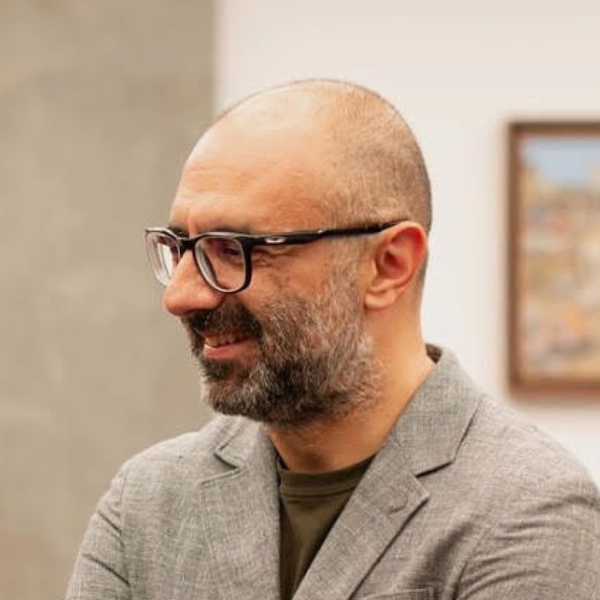
Nick Malkoutzis
Cofundador y editor del medio griego de análisis 'Macropolis'
Fue el subdirector de la edición en inglés del periódico 'Kathimerini', uno de los referentes de Grecia. Ha escrito para 'Bloomberg Businessweek', 'Foreign Policy', 'Newsweek', 'The Guardian' y 'Die Zeit'. Ha comentado eventos en Grecia para una serie de medios internacionales, incluyendo BBC News, Al Jazeera, Bloomberg TV y NPR. Es autor de varios estudios sobre el país heleno para la Friedrich Ebert Foundation. Europeos.
Ahora en portada
16 de octubre de 2026
16 de octubre de 2026
16 de octubre de 2026
Noticias relacionadas
Hace 20 semanas
Así es Andy Burnham, el laborista que quiere derrotar a Nigel Farage
Lo más leído