Sábado, 17 de octubre de 2026




INTERVIEW
John McTernan, former Tony Blair adviser: "If Keir Starmer wants to continue leading, he has to explain why he was wrong"
Labour strategist John McTernan warns that Keir Starmer has lost authority after "the worst election results the Labour Party has had in more than a century." The former director of political operations for Prime Minister Blair argues that the party will only be able to stop Nigel Farage if it rebuilds a progressive coalition with recognisable policies on housing, climate, Europe, defence and immigration.

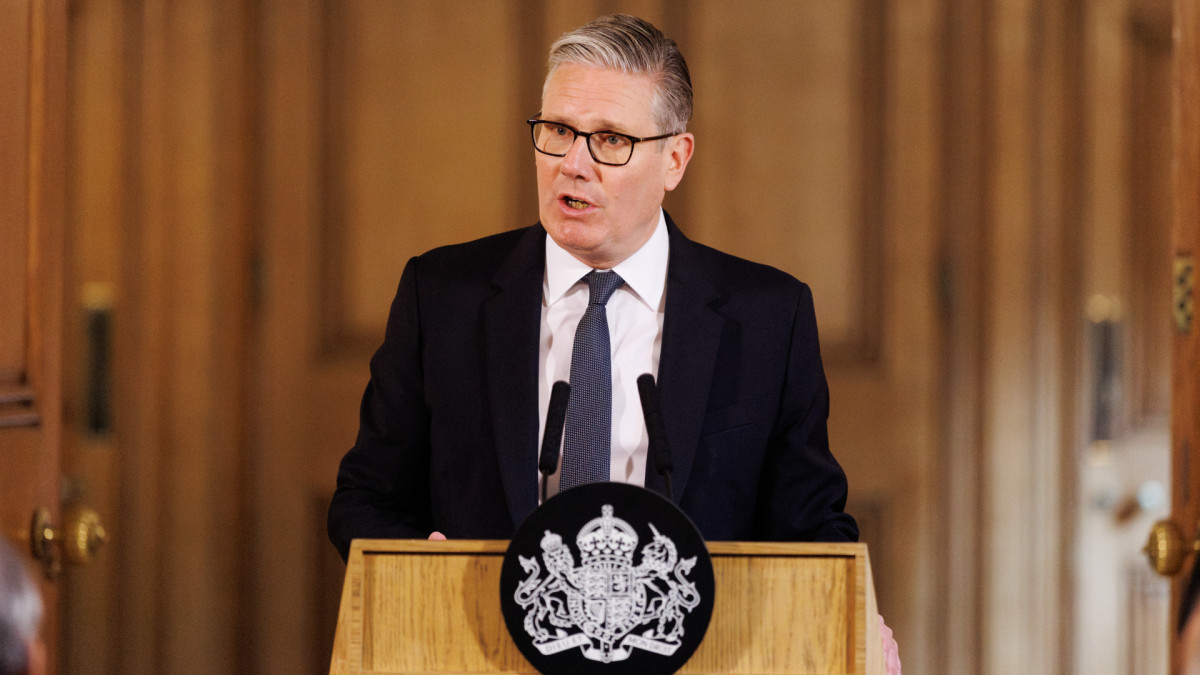
Prime Minister Keir Starmer’s Labour Party has suffered a historic defeat in the local elections.No. 10 Downing Street
John McTernan observes the crisis of the British Labour Party from an unsparing position. Tony Blair's former director of political operations believes that Labour's recent electoral setbacks are not only the result of the usual wear and tear of government, but have to do with "doing very, very un-Labour things for two years."
In conversation with Agenda Pública, McTernan argues that the main risk for the British centre-left does not lie in the radical right of Reform UK. Instead, he argues that a large number of votes can be lost to the Greens, the Liberal Democrats, the nationalists or independent candidates linked to Gaza. On the country's electoral future, he says that, in an increasingly fragmented system such as this one, the right can win with only part of the vote if the centre-left divides.
In short, the former Labour adviser discusses the future of his party, the threat posed by Nigel Farage, the UK's relationship with Europe, defence, energy, immigration and housing before putting forward an alternative: the party must become recognisably Labour again, break with the mistakes of the Starmer Government and offer a positive reason to vote Labour beyond stopping Reform. Because, as he sums it up, the next election could become a choice between "socialism and barbarism".

The pressure on Keir Starmer has intensified after recent electoral setbacks for the Labour Party. Do you see this as a situational backlash, or as a deeper, more structural problem within the party?
It is both. These are the worst election results the Labour Party has had in more than a century, and it is only around a century since Labour became a party of government. So it is unsurprising that there has been a negative response.
What is being raised by people talking about a leadership challenge, or by those calling for one, is a set of arguments about why the government programme has gone wrong. This is not about communications. It is about content.
You have argued that Labour should be more worried about the Greens than about Reform UK. Why do you see the Green Party as the greater challenge?
Reform UK is a threat to the Conservative Party, and it has delivered on that threat. It has destroyed the Tory Party. Reform is a right-wing party, a far-right party, and it has replaced Britain’s dominant right-wing party.
It is not a threat to Labour. It is a threat to the Tories. Only 2% of Reform voters would ever consider voting Labour. It is a waste of time to chase them. Even if you thought there was a way to do it, Reform is a right-wing party. It is a far-right party. It wants to imprison and then deport 2 million people in Britain. So it needs to be beaten.
On our side of politics, on the centre-left, Labour has been the dominant party for a century. But Labour’s support is now split with the Greens, the Liberal Democrats, the nationalists and independent candidates, often people representing the Gaza independents.
In that situation, when the Greens do well, they take votes from Labour. As a consequence, the right wins, even when it only has 27% of the vote. In the UK, because of first-past-the-post, 27% is more than enough to win in four- or five-party politics. And we really do have five-party politics now.
The polling picture in the UK now looks very fragmented. Looking at the long term, is this sustainable for the next election? Do you expect some parties to fall back and others to rise?
The next election is going to be a choice between socialism and barbarism. If you want to unite all the votes on the left, you have to change your behaviour.
We cannot change the electoral system. If this fragmentation continues under the current system, Nigel Farage will become prime minister, and he will detain and deport 2 million people in Britain. That would change our country. In the UK, the powers of a prime minister with a landslide majority are virtually unrestrained. So it is a very important election.
Labour is the only party in a position to beat Farage. We have 400 seats. We are the dominant party. So if you want to vote for someone to beat Farage, you have to vote Labour, because in most places you already have a Labour MP.
However, Labour needs a story, a reason and a set of policies that can speak to someone who is Green, nationalist, a Gaza independent or a Liberal Democrat. It has to say: Labour has understood the fight in these terms. Labour has understood that Keir Starmer has alienated those voters. Labour has removed Keir Starmer, and it has not only removed him; it has adopted a new set of policies.
That means something on housing, something on the environment, something on foreign policy and something on the Middle East.
I do not understand why the UK government is not setting up a Gaza reconstruction board. Ignore Trump's Board of Peace and actually do something. Convene an international donor conference and ask: what does Gaza need? Bring the Palestinian Authority in and ask what the reconstruction board should look like. Hospitals, infrastructure, schools, universities. Describe what is needed and then bring together the funding.
The UK is a permanent member of the United Nations Security Council. We are a major player. Major players should do major things.
The same applies to rebuilding the global order. The rules-based order we had has been destroyed by Trump. It was flawed, and we are never going back to it. So what are we going forward to? That is a whole area of debate.
Again, the United Kingdom could lead that, because we are not small. Diplomatically, we are big. Militarily, we are big. We could lead a new European alliance on defence, including a European army. You cannot have a European army without the UK, and you cannot really have Europe without a European army.
So you have to open up new debates on the progressive front. You have to show the kind of energy that Pedro Sánchez showed in Barcelona at the great meeting of global progressives. But you cannot do that with Keir Starmer. You can see that he cannot do it. He did not even go to that meeting.
Starmer has tried to reset the UK’s relationship with the European Union. If he were to fall, would that EU reset be at risk?
No. Everybody in the Labour Party believes in the reset. We probably need to go further. It is possible that a new leader would say we should rejoin the customs union.
And what if the Greens won the next election?
I think it is impossible. But if there were to be a Green government, it would be a huge threat to Europe. The Greens do not believe in NATO. What they would do to UK defence and security would not just undermine Britain; it would undermine Europe.
That would be one of the critical risks. The second is that, although they are called the Greens, they also oppose housing developments and renewable developments. They do not want the cables, the pylons or the transmission infrastructure that is required to connect new sources of renewable energy to the markets where they are needed.
On top of that, they are still anti-nuclear. They are against the deterrent and against nuclear power. Nuclear power, as Spain knows, is a critical part of the energy mix. You need baseload power, and you need nuclear for baseload. You also need renewables, but you need pylons for those new sources of energy.
The Greens would be enemies of all of those things. You would end up with a very unbalanced and, in fact, very dangerous situation. For those reasons, I do not think they would ever get elected in the UK, because those things would not be acceptable to UK voters.
You say Starmer has already lost authority. Is there a risk that Labour responds by moving closer to Reform UK’s agenda on immigration and national identity, and ends up trapped in domestic culture wars instead of focusing on foreign policy, defence, energy or Europe?
No. There is no chance that the Labour Party will choose a leader who wants to be a little bit more racist, or a little bit more like Reform. Labour Party members and MPs are sick to death of the government trying to get closer to Reform.
In a leadership challenge, I would expect everyone to make some version of the argument that we should rejoin a European framework, even if only on immigration, so that we can be part of one united immigration system.
At the moment, if someone applies for asylum or refugee status in any European country and is turned down, they cannot apply to another country in that system. But they can apply to the UK because we are outside it. So we have become an appeal court for the system. If you cannot get in through France, you come to Britain. If you cannot get in through Italy, you come to Britain. If you cannot get in through Germany, you come to Britain.
You have to stop that. You have to join a Europe-wide agreement. Everything the UK needs to do to deal with its challenges is made easier if it does it with Europe, rather than continuing the fiction that Brexit was a benefit.
You have written that Labour should be real Labour, not "Reform light". In practice, after everything we have discussed —defence, energy, Europe, immigration and the economy— what does it mean for the party to be real Labour?
It means abandoning the racist immigration policies being proposed by the government. That is one thing. It means abandoning attacks on the welfare state. It means devolving power from Westminster to the cities and regions of England.
It means the government taking control of the housebuilding programme that is needed: a social housing programme delivered by the government, not by the market. It means being much clearer that government has a bigger role and markets have a smaller role, because the social needs and the economic needs of the country are tied together.
It also means being less generous to pensioners in terms of pensions, which are a rising part of government spending, and more generous to young people, who do not get a fair deal. So it means tackling intergenerational unfairness, which is absolutely clear. It is clear to grandparents as well as to their grandchildren.
There is a way of bringing the country together around a progressive programme, but you have to be honest about the inequalities you are tackling.
Where this government has been good, it has followed the Labour manifesto. Where it has made mistakes, it has done things we never said we were going to do.
You also have to be honest about the lack of judgement. Appointing Peter Mandelson as ambassador to the United States was a catastrophic decision. Nobody has explained why it happened. Why would you appoint a friend of a convicted sex offender [Jeffrey Epstein] to be your ambassador? Someone who stayed in that man’s house when he was serving a sentence for trafficking girls for prostitution? And that was a plea bargain. The charges were more significant than that.
Someone who stayed in that man’s house while he was serving a jail sentence —after he had gone through the system, confessed and accepted the conviction— should never have been in public office.
That is a failure of judgement. And judgement is fundamental to leadership. If you have bad judgement on this, you will have bad judgement on other things.
If Keir Starmer wants to continue leading, as he clearly does, he has to be able to say what made him do these things, what persuaded him, why he was wrong and why he will never do those things again. At the very least.
There is a hole at the centre of the argument. Labour has made these errors in two years. Labour has halved its vote in two years. Labour cannot win an election having halved its vote. Labour only has a chance of coming back if it has a story. And the only story that says it has broken with those mistakes is replacing the leader.
Thank you very much.
In conversation with Agenda Pública, McTernan argues that the main risk for the British centre-left does not lie in the radical right of Reform UK. Instead, he argues that a large number of votes can be lost to the Greens, the Liberal Democrats, the nationalists or independent candidates linked to Gaza. On the country's electoral future, he says that, in an increasingly fragmented system such as this one, the right can win with only part of the vote if the centre-left divides.
In short, the former Labour adviser discusses the future of his party, the threat posed by Nigel Farage, the UK's relationship with Europe, defence, energy, immigration and housing before putting forward an alternative: the party must become recognisably Labour again, break with the mistakes of the Starmer Government and offer a positive reason to vote Labour beyond stopping Reform. Because, as he sums it up, the next election could become a choice between "socialism and barbarism".
Photo: John McTernan. Image adjusted.
The pressure on Keir Starmer has intensified after recent electoral setbacks for the Labour Party. Do you see this as a situational backlash, or as a deeper, more structural problem within the party?
It is both. These are the worst election results the Labour Party has had in more than a century, and it is only around a century since Labour became a party of government. So it is unsurprising that there has been a negative response.
What is being raised by people talking about a leadership challenge, or by those calling for one, is a set of arguments about why the government programme has gone wrong. This is not about communications. It is about content.
"It was a historic defeat in the local elections, and it was clearly caused by the actions of this government"This was not a normal defeat. It was a historic defeat in the local elections, and it was clearly caused by the actions of this government. It is not about midterm unpopularity or anything like that. It is about doing very, very un-Labour things for two years and then expecting people to vote Labour.
You have argued that Labour should be more worried about the Greens than about Reform UK. Why do you see the Green Party as the greater challenge?
Reform UK is a threat to the Conservative Party, and it has delivered on that threat. It has destroyed the Tory Party. Reform is a right-wing party, a far-right party, and it has replaced Britain’s dominant right-wing party.
It is not a threat to Labour. It is a threat to the Tories. Only 2% of Reform voters would ever consider voting Labour. It is a waste of time to chase them. Even if you thought there was a way to do it, Reform is a right-wing party. It is a far-right party. It wants to imprison and then deport 2 million people in Britain. So it needs to be beaten.
On our side of politics, on the centre-left, Labour has been the dominant party for a century. But Labour’s support is now split with the Greens, the Liberal Democrats, the nationalists and independent candidates, often people representing the Gaza independents.
In that situation, when the Greens do well, they take votes from Labour. As a consequence, the right wins, even when it only has 27% of the vote. In the UK, because of first-past-the-post, 27% is more than enough to win in four- or five-party politics. And we really do have five-party politics now.
"The more right-wing you become to get votes on the right, the more votes you lose on the centre-left"So when you are in difficulty, you have to go where the votes are. The votes are on the left. They are not on the right. The more right-wing you become to get votes on the right, the more votes you lose on the centre-left. It is not just a misguided interpretation. It is a destructive one.
The polling picture in the UK now looks very fragmented. Looking at the long term, is this sustainable for the next election? Do you expect some parties to fall back and others to rise?
The next election is going to be a choice between socialism and barbarism. If you want to unite all the votes on the left, you have to change your behaviour.
We cannot change the electoral system. If this fragmentation continues under the current system, Nigel Farage will become prime minister, and he will detain and deport 2 million people in Britain. That would change our country. In the UK, the powers of a prime minister with a landslide majority are virtually unrestrained. So it is a very important election.
Labour is the only party in a position to beat Farage. We have 400 seats. We are the dominant party. So if you want to vote for someone to beat Farage, you have to vote Labour, because in most places you already have a Labour MP.
However, Labour needs a story, a reason and a set of policies that can speak to someone who is Green, nationalist, a Gaza independent or a Liberal Democrat. It has to say: Labour has understood the fight in these terms. Labour has understood that Keir Starmer has alienated those voters. Labour has removed Keir Starmer, and it has not only removed him; it has adopted a new set of policies.
"Each part of the coalition needs a positive reason to vote Labour, not just the negative reason of stopping Farage"Those policies have to give each part of that coalition something positive. A Green voter needs to be able to say: Labour does not only want to defeat Farage; it also wants us all to have electric vehicles, to decarbonise the grid and to move to renewables. Each part of the coalition needs a positive reason to vote Labour, not just the negative reason of stopping Farage.
That means something on housing, something on the environment, something on foreign policy and something on the Middle East.
I do not understand why the UK government is not setting up a Gaza reconstruction board. Ignore Trump's Board of Peace and actually do something. Convene an international donor conference and ask: what does Gaza need? Bring the Palestinian Authority in and ask what the reconstruction board should look like. Hospitals, infrastructure, schools, universities. Describe what is needed and then bring together the funding.
The UK is a permanent member of the United Nations Security Council. We are a major player. Major players should do major things.
The same applies to rebuilding the global order. The rules-based order we had has been destroyed by Trump. It was flawed, and we are never going back to it. So what are we going forward to? That is a whole area of debate.
Again, the United Kingdom could lead that, because we are not small. Diplomatically, we are big. Militarily, we are big. We could lead a new European alliance on defence, including a European army. You cannot have a European army without the UK, and you cannot really have Europe without a European army.
So you have to open up new debates on the progressive front. You have to show the kind of energy that Pedro Sánchez showed in Barcelona at the great meeting of global progressives. But you cannot do that with Keir Starmer. You can see that he cannot do it. He did not even go to that meeting.
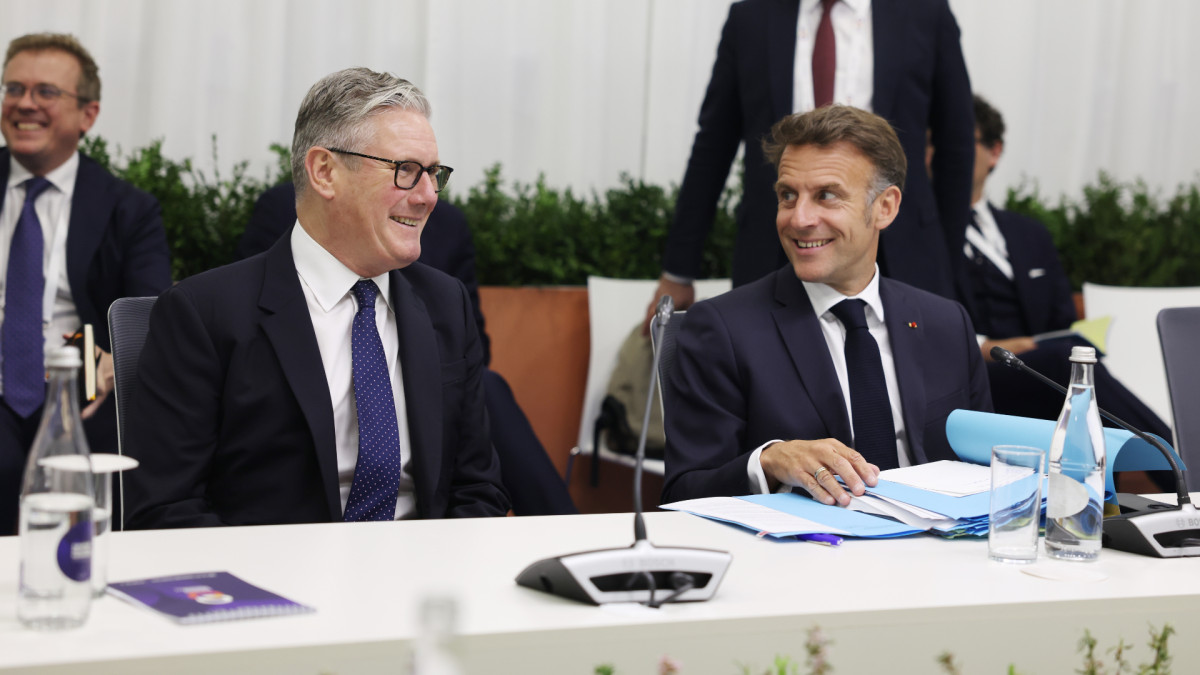
The UK prime minister with French President Emmanuel Macron. Photo: Office of Prime Minister Keir Starmer
Starmer has tried to reset the UK’s relationship with the European Union. If he were to fall, would that EU reset be at risk?
No. Everybody in the Labour Party believes in the reset. We probably need to go further. It is possible that a new leader would say we should rejoin the customs union.
And what if the Greens won the next election?
I think it is impossible. But if there were to be a Green government, it would be a huge threat to Europe. The Greens do not believe in NATO. What they would do to UK defence and security would not just undermine Britain; it would undermine Europe.
"If you destabilise the UK, which the Greens would do, you undermine European security"The UK is a critical part of NATO, particularly in this post-Trump world, where the most reliable partners in NATO are France and the UK. If you destabilise the UK, which the Greens would do, because they are against defence spending, against the nuclear deterrent and do not have a coherent defence policy, you undermine European security. Broadly, they do not believe in defence industries.
That would be one of the critical risks. The second is that, although they are called the Greens, they also oppose housing developments and renewable developments. They do not want the cables, the pylons or the transmission infrastructure that is required to connect new sources of renewable energy to the markets where they are needed.
On top of that, they are still anti-nuclear. They are against the deterrent and against nuclear power. Nuclear power, as Spain knows, is a critical part of the energy mix. You need baseload power, and you need nuclear for baseload. You also need renewables, but you need pylons for those new sources of energy.
The Greens would be enemies of all of those things. You would end up with a very unbalanced and, in fact, very dangerous situation. For those reasons, I do not think they would ever get elected in the UK, because those things would not be acceptable to UK voters.
You say Starmer has already lost authority. Is there a risk that Labour responds by moving closer to Reform UK’s agenda on immigration and national identity, and ends up trapped in domestic culture wars instead of focusing on foreign policy, defence, energy or Europe?
No. There is no chance that the Labour Party will choose a leader who wants to be a little bit more racist, or a little bit more like Reform. Labour Party members and MPs are sick to death of the government trying to get closer to Reform.
"I would expect everyone to make some version of the argument that we should rejoin a European framework, even if only on immigration"I would anticipate that one of the steps Keir Starmer takes before there is a leadership challenge will be to drop, or abandon, some of the immigration reforms that would make our system much more punitive.
In a leadership challenge, I would expect everyone to make some version of the argument that we should rejoin a European framework, even if only on immigration, so that we can be part of one united immigration system.
At the moment, if someone applies for asylum or refugee status in any European country and is turned down, they cannot apply to another country in that system. But they can apply to the UK because we are outside it. So we have become an appeal court for the system. If you cannot get in through France, you come to Britain. If you cannot get in through Italy, you come to Britain. If you cannot get in through Germany, you come to Britain.
You have to stop that. You have to join a Europe-wide agreement. Everything the UK needs to do to deal with its challenges is made easier if it does it with Europe, rather than continuing the fiction that Brexit was a benefit.
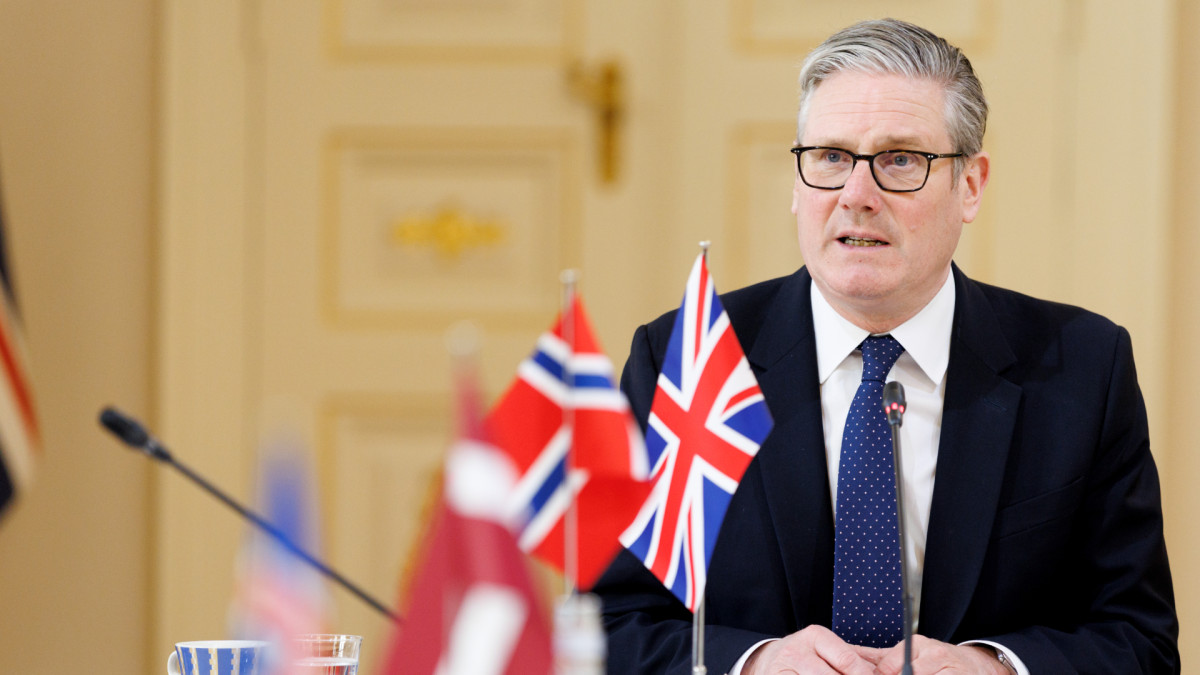
McTernan proposes that Labour adopt more left-wing public policies to emerge from the crisis. Photo: Office of Prime Minister Keir Starmer
You have written that Labour should be real Labour, not "Reform light". In practice, after everything we have discussed —defence, energy, Europe, immigration and the economy— what does it mean for the party to be real Labour?
It means abandoning the racist immigration policies being proposed by the government. That is one thing. It means abandoning attacks on the welfare state. It means devolving power from Westminster to the cities and regions of England.
It means the government taking control of the housebuilding programme that is needed: a social housing programme delivered by the government, not by the market. It means being much clearer that government has a bigger role and markets have a smaller role, because the social needs and the economic needs of the country are tied together.
It also means being less generous to pensioners in terms of pensions, which are a rising part of government spending, and more generous to young people, who do not get a fair deal. So it means tackling intergenerational unfairness, which is absolutely clear. It is clear to grandparents as well as to their grandchildren.
There is a way of bringing the country together around a progressive programme, but you have to be honest about the inequalities you are tackling.
Where this government has been good, it has followed the Labour manifesto. Where it has made mistakes, it has done things we never said we were going to do.
You also have to be honest about the lack of judgement. Appointing Peter Mandelson as ambassador to the United States was a catastrophic decision. Nobody has explained why it happened. Why would you appoint a friend of a convicted sex offender [Jeffrey Epstein] to be your ambassador? Someone who stayed in that man’s house when he was serving a sentence for trafficking girls for prostitution? And that was a plea bargain. The charges were more significant than that.
Someone who stayed in that man’s house while he was serving a jail sentence —after he had gone through the system, confessed and accepted the conviction— should never have been in public office.
That is a failure of judgement. And judgement is fundamental to leadership. If you have bad judgement on this, you will have bad judgement on other things.
If Keir Starmer wants to continue leading, as he clearly does, he has to be able to say what made him do these things, what persuaded him, why he was wrong and why he will never do those things again. At the very least.
"Taking responsibility means saying: this is what I did, this is why I did it, this is why I was wrong and this is why I will never do it again"But if you simply say "I take responsibility" and then walk away, you are not taking responsibility. Taking responsibility means saying: this is what I did, this is why I did it, this is why I was wrong and this is why I will never do it again.
There is a hole at the centre of the argument. Labour has made these errors in two years. Labour has halved its vote in two years. Labour cannot win an election having halved its vote. Labour only has a chance of coming back if it has a story. And the only story that says it has broken with those mistakes is replacing the leader.
Thank you very much.
Ahora en portada
16 de octubre de 2026
16 de octubre de 2026
16 de octubre de 2026
Noticias relacionadas
Hace 22 semanas
John McTernan, exasesor de Tony Blair: "Si Keir Starmer quiere seguir liderando, tiene que explicar por qué se equivocó"
Lo más leído