Sábado, 17 de octubre de 2026




LÓPEZ PLANA'S EUROPEAN COMPASS
"Berlin asked me to do it": the dangerous strategy of some socialists in Brussels
A phone call from Berlin, complaints from German Social Democrats, and the Spanish delegation taking note. In this week’s edition of Brújula Europea, 'Agenda Pública' editor and director Marc López Plana sees cracks in the S&D group after extension of immunity for an MEP from the CDU party. By breaking unwritten rules, the Social Democrats have made a costly sacrifice to prevent Manfred Weber’s EPP from drifting off-center – a strategic game that risks fuelling the discourse of the radical right.

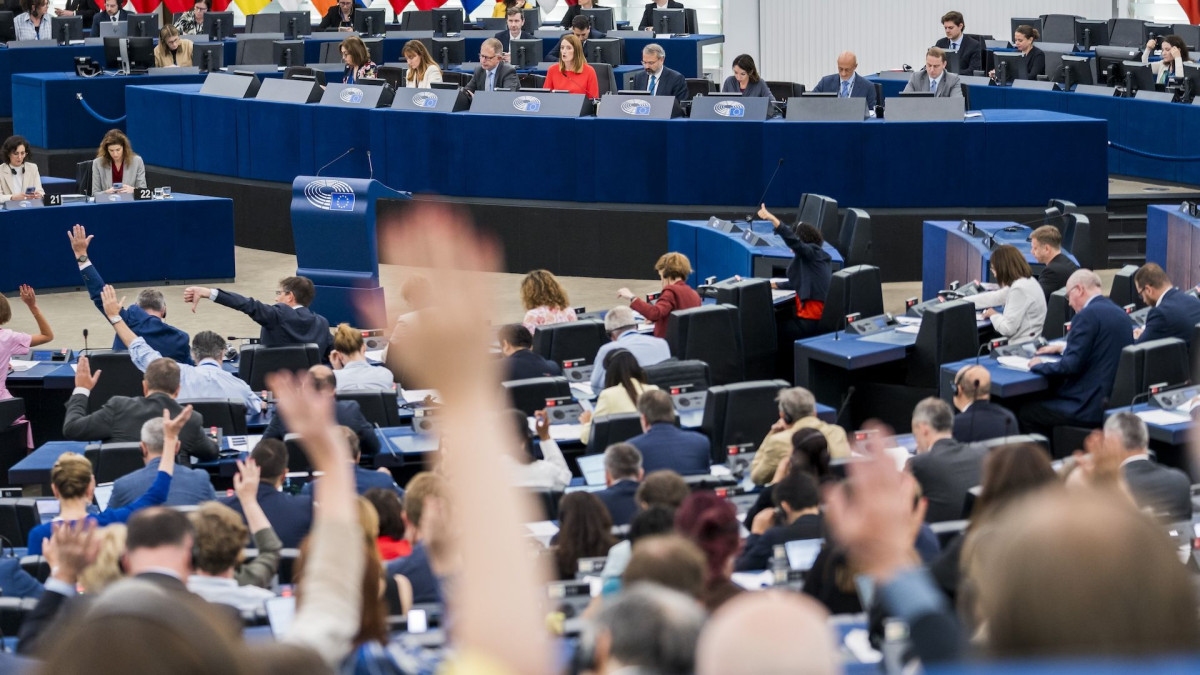
Plenary session of the European Parliament in Strasbourg. European Parliament
Last Monday in Strasbourg, the atmosphere was tense at a group meeting of the Socialists and Democrats (S&D), especially among the German delegation, which is the third largest after the Spanish.
The trigger was a request to remove parliamentary immunity for a certain German MEP from the Christian Democratic Union (CDU) — the main party in Germany’s governing coalition and the flagship of the European People’s Party (EPP). An important note: the S&D group’s unwritten rule is usually to vote in favor of lifting immunity.
Several of Germany’s Social Democratic MEPs rose up against the decision. The protection of a direct rival was, for them, an insult to their electoral bases. How would they explain in their districts that they’d voted to protect the conservatives?
Although much more critical in the corridors, the Spanish delegation maintained a low profile in public, because in the European Parliament, a favor granted to the German delegation is a loan to be reclaimed later, with interest, when Madrid needs shielding in sensitive debates on national policy or financial support for southern European priorities. Even so, many were surprised by Repasi’s failure to discipline his own delegation and to arrive at the meeting without the situation resolved.
In today’s European Parliament, forces of the radical right —the ECR and Patriots for Europe— have increased their legislative influence since the last elections. Thus the current obsession of the S&D group is to halt any structural swings to the right by the EPP. Helping to save an MEP from the CDU was essentially a peace offering — and a message sent by Europe’s S&D parties to its People’s parties.
The problem is that this strategy of appeasement leaves the Social Democrats in the position of "responsible hostage." By willingly assuming the political and ethical costs of protecting a rival as a courtesy to the EPP, they risk paying the price of a loyalty pledge that the center-right often disrespects whenever it needs votes from the hard right to overturn Green Deal initiatives or to tighten immigration policy.
The greatest danger of this recent immunity pact is the discursive gift that it hands to anti-system advocates and the radical right. For parties like the AfD or Vox, such moments are empirical proof of their narrative of transnational "partitocracy" and the political cartel in Brussels, where the two big political families pantomime confrontations for their home audiences but secretly agree and protect one other in committees and at plenary sessions of the European Parliament.
In the plenary, immunity was indeed preserved for the MEP in question, thus preserving an equilibrium in German politics and fuelling some hope of attracting the EPP toward the center — at the cost of blurring the strategy of Social Democrats.
BONUS: Heads up, because in the parliamentary group of Germany’s CDU, some are dreaming of a minority government, dispensing with the SPD altogether. Former Chancellor Olaf Scholz echoed that debate yesterday in a video shared on social media. But careful, because a future where the CDU might form an alliance with the AfD has already been written: "If the Christian Democrats made a pact with the AfD, it would probably break up."
The trigger was a request to remove parliamentary immunity for a certain German MEP from the Christian Democratic Union (CDU) — the main party in Germany’s governing coalition and the flagship of the European People’s Party (EPP). An important note: the S&D group’s unwritten rule is usually to vote in favor of lifting immunity.
"The meeting turned tense when René Repasi, leader of the German Social Democrats in Brussels, argued against withdrawing immunity and thereby saving a conservative MP"Discussed at the S&D meeting was the question of whether a vote already taken at the Legal Affairs Committee (JURI) should be reconsidered. That committee had voted against the removal of immunity for the CDU parliamentarian. That sparked an internal discussion led by the German delegation against its own leader — René Repasi, president of the JURI commission and promoter of the vote against lifting immunity. The meeting turned even more tense when Repasi, leader of the German Social Democrats (SPD) in Brussels, defended his position: the S&Ds should vote "no" on the removal of immunity and thereby save the conservative MP.
A messenger from the Chancellery
Watching Repasi play the role of the CDU’s savior was hard for many to swallow. He’s a professor and doctor of Law and the group’s spokesman at the Legal Affairs Committee.Several of Germany’s Social Democratic MEPs rose up against the decision. The protection of a direct rival was, for them, an insult to their electoral bases. How would they explain in their districts that they’d voted to protect the conservatives?
"The CDU’s federal directorate had phoned the SPD leadership to ask the favor directly"It was then that Repasi revealed his reason: the defense had been requested in a message from Berlin, after the CDU’s federal directorate phoned the SPD leadership to ask a favor directly. In Germany’s fragile political landscape, the stability of alliances and federal governance compels tacit non-aggression from Social Democrats and Christian Democrats, in response to the growth of extreme parties. Reciprocity is therefore a currency of great value; and so Repasi executed the order.
Although much more critical in the corridors, the Spanish delegation maintained a low profile in public, because in the European Parliament, a favor granted to the German delegation is a loan to be reclaimed later, with interest, when Madrid needs shielding in sensitive debates on national policy or financial support for southern European priorities. Even so, many were surprised by Repasi’s failure to discipline his own delegation and to arrive at the meeting without the situation resolved.
The EPP bear-hug as strategic trap
But to reduce that episode to a simple matter of internal debate would be to ignore the plate tectonics that operate beneath the S&D group in the European Parliament. Sources from the Social Democrats justify Repasi’s move from a much broader logic that is vital to preserving Europe’s fragile cordon sanitaire: the imperative need to maintain bridges of trust with Manfred Weber’s EPP.In today’s European Parliament, forces of the radical right —the ECR and Patriots for Europe— have increased their legislative influence since the last elections. Thus the current obsession of the S&D group is to halt any structural swings to the right by the EPP. Helping to save an MEP from the CDU was essentially a peace offering — and a message sent by Europe’s S&D parties to its People’s parties.
The problem is that this strategy of appeasement leaves the Social Democrats in the position of "responsible hostage." By willingly assuming the political and ethical costs of protecting a rival as a courtesy to the EPP, they risk paying the price of a loyalty pledge that the center-right often disrespects whenever it needs votes from the hard right to overturn Green Deal initiatives or to tighten immigration policy.
"Weber and the EPP use their ability to make pacts with radical right groups to strengthen their negotiating position with the S&Ds in larger legislative concerns"However, Manfred Weber and the EPP can smell the structural weakness of the S&D group, which fears being exiled from decision-making. They use their ability to make pacts with radical right groups to strengthen their negotiating position vis-à-vis the S&Ds in larger legislative concerns.
The greatest danger of this recent immunity pact is the discursive gift that it hands to anti-system advocates and the radical right. For parties like the AfD or Vox, such moments are empirical proof of their narrative of transnational "partitocracy" and the political cartel in Brussels, where the two big political families pantomime confrontations for their home audiences but secretly agree and protect one other in committees and at plenary sessions of the European Parliament.
In the plenary, immunity was indeed preserved for the MEP in question, thus preserving an equilibrium in German politics and fuelling some hope of attracting the EPP toward the center — at the cost of blurring the strategy of Social Democrats.
BONUS: Heads up, because in the parliamentary group of Germany’s CDU, some are dreaming of a minority government, dispensing with the SPD altogether. Former Chancellor Olaf Scholz echoed that debate yesterday in a video shared on social media. But careful, because a future where the CDU might form an alliance with the AfD has already been written: "If the Christian Democrats made a pact with the AfD, it would probably break up."
Ahora en portada
17 de octubre de 2026
16 de octubre de 2026
Noticias relacionadas
Hace 20 semanas
"Berlin asked me to do it": the dangerous strategy of some socialists in Brussels
Lo más leído