Viernes, 16 de octubre de 2026




FIRMAS TOP
Trump Detains Maduro: What Two U.S. 'Insiders' Reveal About the Political Impact
Donald Trump says that the United States will "run" Venezuela until a "proper transition" takes place. U.S. analyst J. P. Carroll speaks with Francis Rooney, former Vice Chair of the House Foreign Affairs Committee, and Max Meizlish, researcher at the Foundation for Defense of Democracies, to assess the democratic challenge of Trump’s move, the possibility of Venezuela becoming "a new Iraq," and the complicated situation of the opposition to Maduro.
-1920x1080.jpg)
On the left, the Panamanian military leader Manuel Noriega, detained in 1989 by the U.S. On the right, the Venezuelan politician Nicolás Maduro, also detained by the U.S. in 2026.United States Air Force and DEA
We are just a few days into the year 2026 but it feels a lot like 1990, when the United States captured Panamanian leader Manuel Noriega and flew him to the United States to stand trial on federal drug charges. Nicolás Maduro and his closest advisor – who is also his wife – Cilia Flores, are no longer leading Venezuela after "a large scale strike" by the United States, and will stand trial on various federal charges, including drug trafficking, according to President Trump.
The breaking news this weekend of Maduro and Flores’ capture, as part of Operation Absolute Resolve, has been long in the making, but nevertheless, it shocked the world on Saturday morning. Not long after it was reported that Maduro had been captured, U.S. Attorney General Pam Bondi took to X (formerly known as Twitter) to state, "Nicolás Maduro and his wife, Cilia Flores, have been indicted in the Southern District of New York. Nicolás Maduro has been charged with Narco-Terrorism Conspiracy, Cocaine Importation Conspiracy, Possession of Machineguns and Destructive Devices, and Conspiracy to Possess Machineguns and Destructive Devices against the United States." She went on to write, "They will soon face the full wrath of American justice on American soil in American courts."
As for what happens next, President Trump has stated that the United States will "run the country" until a "proper transition can take place." President Trump went on to note that the U.S. oil industry is ready to make major investments in Venezuela to help repair the country’s infrastructure, saying in part, "We’re going to have our very large United States oil companies, the biggest anywhere in the world, go in, spend billions of dollars, fix the badly broken infrastructure, the oil infrastructure, and start making money for the country."
Rooney – who in 2022 was decorated as Commander of the Order of Queen Isabella I – went on to say, "Hopefully, any governmental structure that is put in place will be equally successful." He concluded that, "The days ahead, and the next steps, will be difficult and risky."
For his part, Max Meizlish, Research Fellow with the Foundation for Defense of Democracies, told Agenda Pública, "The United States should use its significant economic leverage to support democratic actors in Venezuela while keeping corruption and repression networks from reconstituting themselves in the post-Maduro environment. That is especially true in the oil sector where privatization of the country’s state-run oil industry will necessitate clear guardrails so regime-linked officials and their proxies do not emerge from the post-Maduro transition as a new class of politically powerful oligarchs."
It seems clear that President Trump is looking to avoid the situation the United States found itself in after the U.S.-led invasion of Iraq in 2003, when the De-Ba’athification policy of the Coalition Provisional Authority led to chaos and the United States remained in Iraq for years after the invasion. Furthermore, this would explain why this operation was framed as a specific kinetic action in support of a legal matter – the indictments against Maduro and Flores – and not as a war to bring about regime change. Additionally, President Trump spoke of Venezuelan Vice President Delcy Rodríguez needing cooperate with the United States, saying in part, "she really doesn't have a choice."
Later in the day however, Rodríguez struck a defiant tone in a televised address saying, "If there's something that the Venezuelan people and the country know very clearly, we will never return to being slaves." But, Rodríguez went on to say she wants "respectful relations" with the United States, signaling an acknowledgement of the current complex situation.
Ultimately, Maduro leaving office is something that many Venezuelans have been waiting for, for a long time. While I am not Venezuelan myself, three generations of my family happened to have lived in Venezuela, including my Peruvian grandfather – although I am American, half of my family is from Peru – who was born there. In short, I have known and been friends with people from Venezuela throughout my life and it is a country whose politics I have long followed closely and I wish its people well.
I still recall back on May 13th, 2019 seeing firsthand as Venezuelans and Venezuelan-Americans express jubilation at seeing protesters – who were inside the Venezuelan Embassy in Washington, D.C. at the invitation of departing Maduro regime embassy staff – kicked out of the embassy after the Trump administration had recognized the government of Juan Guaidó. Cheers of "¡Se van, se van, se van, se van!," ["They’re going, they’re going, they’re going, they’re going] erupted as the last of the protestors were removed.
And now, it’s Maduro and Flores who "¡Se van!" [are going].
The breaking news this weekend of Maduro and Flores’ capture, as part of Operation Absolute Resolve, has been long in the making, but nevertheless, it shocked the world on Saturday morning. Not long after it was reported that Maduro had been captured, U.S. Attorney General Pam Bondi took to X (formerly known as Twitter) to state, "Nicolás Maduro and his wife, Cilia Flores, have been indicted in the Southern District of New York. Nicolás Maduro has been charged with Narco-Terrorism Conspiracy, Cocaine Importation Conspiracy, Possession of Machineguns and Destructive Devices, and Conspiracy to Possess Machineguns and Destructive Devices against the United States." She went on to write, "They will soon face the full wrath of American justice on American soil in American courts."
"U.S. Attorney General went on to share the unsealed indictment, making clear that the United States viewed Mr. Maduro as a fugitive from justice, and not as a world leader"Bondi went on to share the unsealed indictment, making clear that the United States viewed Mr. Maduro as a fugitive from justice, and not as a world leader. It is worth noting that Maduro, was no longer recognized as the President of Venezuela during the first Trump administration, over the course of the entire Biden administration, and once again under President Trump in his second term. The Biden administration increased the bounty for information leading to the capture of Nicolás Maduro to $25 million, and the second Trump administration subsequently raised it to $50 million.
The relationship between Nicolás Maduro and the United States
Maduro was indicted back in 2020 during the first Trump administration and charged with drug trafficking, narco-terrorism, and corruption, among other charges. At the time, the Department of Justice focused on Maduro what it stated were his ties to the Revolutionary Armed Forces of Colombia (FARC), a designated Foreign Terrorist Organization, as well as his purported leadership of the Cartel of the Suns drug trafficking organization. Therefore, while many observers have been surprised at U.S. strikes on boats – allegedly targeting Tren de Aragua drug trafficking operations in recent months – the link between Maduro and drug trafficking has long been a focus for the Trump administration in his first and second terms.As for what happens next, President Trump has stated that the United States will "run the country" until a "proper transition can take place." President Trump went on to note that the U.S. oil industry is ready to make major investments in Venezuela to help repair the country’s infrastructure, saying in part, "We’re going to have our very large United States oil companies, the biggest anywhere in the world, go in, spend billions of dollars, fix the badly broken infrastructure, the oil infrastructure, and start making money for the country."
"Hopefully, any governmental structure that is put in place will be equally successful. The days ahead, and the next steps, will be difficult and risky"Agenda Pública reached out for comment on these developments to former U.S. Congressman Francis Rooney (FL-19) who served in the U.S. Congress representing Florida’s 19th Congressional District from 2017 to 2021 and was Vice-Chair of the U.S. House Foreign Affairs Committee, in addition to being the Ranking Member on the Western Hemisphere Subcommittee. Rooney told Agenda Pública, "The police action by the United States to apprehend the [Nicolás] Maduro [and Cilia Flores], [who are] linked with extensive criminal activity, appears to have been successful."
Rooney – who in 2022 was decorated as Commander of the Order of Queen Isabella I – went on to say, "Hopefully, any governmental structure that is put in place will be equally successful." He concluded that, "The days ahead, and the next steps, will be difficult and risky."
For his part, Max Meizlish, Research Fellow with the Foundation for Defense of Democracies, told Agenda Pública, "The United States should use its significant economic leverage to support democratic actors in Venezuela while keeping corruption and repression networks from reconstituting themselves in the post-Maduro environment. That is especially true in the oil sector where privatization of the country’s state-run oil industry will necessitate clear guardrails so regime-linked officials and their proxies do not emerge from the post-Maduro transition as a new class of politically powerful oligarchs."
"The United States must promote a rules-based, market-oriented recovery for Venezuela — one that gives the people a path forward of their own transparent and democratic choosing"Meizlish – who was formerly in the U.S. Treasury Department’s Office of Foreign Assets Control, the primary U.S. agency responsible for administering economic sanctions – went on to say that, "At its core, the United States must promote a rules-based, market-oriented recovery for Venezuela — one that gives the people a path forward of their own transparent and democratic choosing."
It seems clear that President Trump is looking to avoid the situation the United States found itself in after the U.S.-led invasion of Iraq in 2003, when the De-Ba’athification policy of the Coalition Provisional Authority led to chaos and the United States remained in Iraq for years after the invasion. Furthermore, this would explain why this operation was framed as a specific kinetic action in support of a legal matter – the indictments against Maduro and Flores – and not as a war to bring about regime change. Additionally, President Trump spoke of Venezuelan Vice President Delcy Rodríguez needing cooperate with the United States, saying in part, "she really doesn't have a choice."
Later in the day however, Rodríguez struck a defiant tone in a televised address saying, "If there's something that the Venezuelan people and the country know very clearly, we will never return to being slaves." But, Rodríguez went on to say she wants "respectful relations" with the United States, signaling an acknowledgement of the current complex situation.
The opposition to Maduro and the future of Venezuela
Many analysts and commentators seemed surprised at President Trump’s remarks that María Corina Machado "doesn’t have the support" to be Venezuela’s leader. However, it is worth recalling that when the Trump administration recognized Venezuelan democratic opposition leader Juan Guaidó as the country’s president in 2019, it did not result in Maduro actually leaving the Venezuelan presidency, even though his government was no longer recognized. President Trump is trying something different this time around as his administration and Rodríguez reportedly communicate, precisely so as to avoid the dangers of a De-Ba’athification type of situation. It is clear though from statements made by both President Trump and Rodríguez that the situation is tense. In short, this does not seem to be an abandonment of the Venezuelan democratic opposition, but rather it appears the Trump administration is taking a cautious and diplomatic approach after this Operation so as to ensure that democracy is lasting in Venezuela after this transition period.Ultimately, Maduro leaving office is something that many Venezuelans have been waiting for, for a long time. While I am not Venezuelan myself, three generations of my family happened to have lived in Venezuela, including my Peruvian grandfather – although I am American, half of my family is from Peru – who was born there. In short, I have known and been friends with people from Venezuela throughout my life and it is a country whose politics I have long followed closely and I wish its people well.
"Venezuela has faced economic difficulties for many years under Maduro. In October 2025, annual inflation in Venezuela was at approximately 270 percent"Venezuela has faced economic difficulties for many years under Maduro. In October 2025, annual inflation in Venezuela was at approximately 270 percent. Additionally, food insecurity has long been a key issue facing Venezuelans, with 80 percent of people in the country living in poverty.
I still recall back on May 13th, 2019 seeing firsthand as Venezuelans and Venezuelan-Americans express jubilation at seeing protesters – who were inside the Venezuelan Embassy in Washington, D.C. at the invitation of departing Maduro regime embassy staff – kicked out of the embassy after the Trump administration had recognized the government of Juan Guaidó. Cheers of "¡Se van, se van, se van, se van!," ["They’re going, they’re going, they’re going, they’re going] erupted as the last of the protestors were removed.
And now, it’s Maduro and Flores who "¡Se van!" [are going].
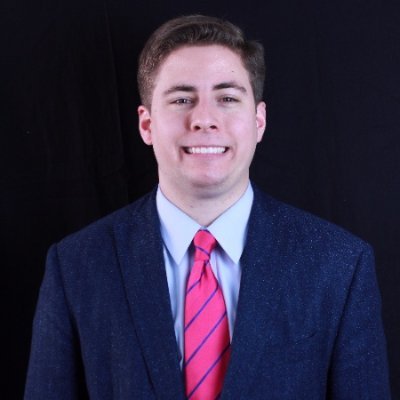
J. P. Carroll
Analista en Washington D. C. y columinsta de 'Agenda Pública'
MBA Internacional de IE Business School. Máster en Estudios Profesionales (MPS) en Relaciones Públicas y Comunicaciones Corporativas de la Universidad de Georgetown. Es el exdirector adjunto de Medios Hispanos del Comité Nacional Republicano (RNC). J.P. vive en el área de Washington, D. C.
Ahora en portada
16 de octubre de 2026
16 de octubre de 2026
16 de octubre de 2026
Noticias relacionadas
Hace 40 semanas
Trump detiene a Maduro: lo que dos 'insiders' estadounidenses revelan sobre su impacto político
Hace 40 semanas
¿Podría Venezuela ser el Irak de Trump?
Hace 40 semanas
Trump captura a Maduro: el 2026 en Venezuela y América Latina
Lo más leído