Viernes, 16 de octubre de 2026




LÓPEZ PLANA'S EUROPEAN COMPASS
An end to Spain’s peaceful illusions
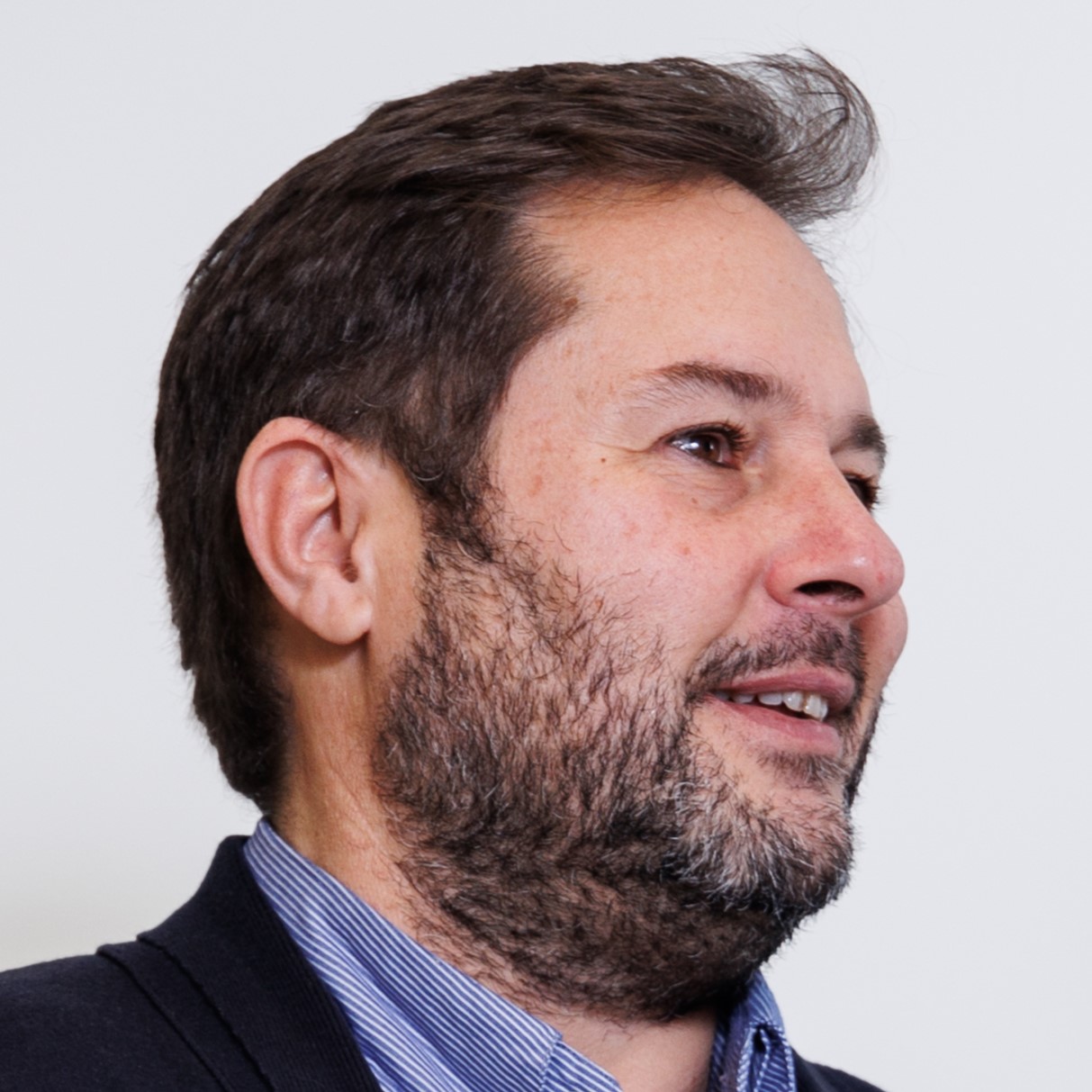
Marc López Plana, editor and director of 'Agenda Pública', recounts a recent trip to Warsaw that coincided with incursions into Polish airspace by Russian attack drones; later that same week, German Chancellor Friedrich Merz met with Pedro Sánchez in Spain. "I was given to understand that we Spaniards believe that Russian missiles will never reach Madrid," López Plana recalls. "But if we fail to open and lead the debate on Spain’s defense, then others in Europe will do it for us."
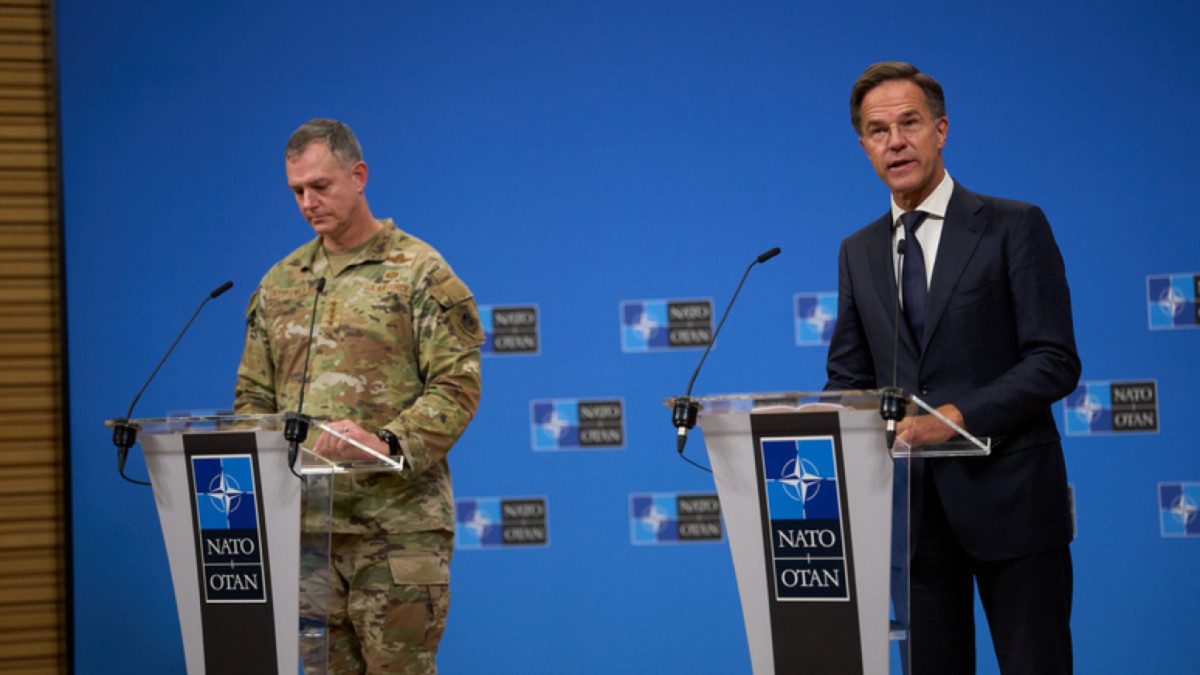
NATO launches “Eastern Sentry” to strengthen its posture on the eastern flank.NATO
Last week I visited Warsaw at the invitation of Visegrad Insight, the Polish counterpart to Agenda Pública, to participate in the Europe Future Forum, an annual gathering at which senior officials from that nation’s Foreign Ministry are joined by European diplomats, academics, and journalists to discuss Poland’s perspective on the EU.
Following the entry into Poland by 19 Russian attack drones—complemented by the appearance last Friday of Russian MiG-31s over the Gulf of Finland, in Estonian airspace, and by Russian fighter jets flying over Polish oil platforms in the Baltic Sea—many questions were raised around NATO’s capability to respond to such scenarios.
"Spain is situated on the front lines of European security, and serious debate must be had on matters of security spending and the EU’s dependence on the United States"When Spain entered the discussion, one explanation as to why we need not boost defense expenditure was that Spaniards believe "a Russian missile will never reach Madrid." More than anecdotal, that comment faithfully reflects the attitude of certain Spaniards vis-à-vis Europe’s distant eastern borders. In reality, however, due in part to its proximity to Morocco, Spain is situated on the front lines of European security, and serious debate must be had on matters of security spending and the EU’s dependence on the United States.
Spain: from reluctant partner to reliable ally
Since early in its democracy, Spain has been committed to Europe’s security, including along its eastern flank. This was verified in 1989 by the decisive support of Felipe González for German reunification, even as other European leaders voiced reluctance. Nonetheless, our relationship with NATO had previously been fraught by internal divisions. Spain’s entry into NATO in 1982 compelled a reactive referendum in 1986—which González won, with the help of three commitments: non-integration by Spain into NATO’s military structure; a reduction of U.S. presence; and the promotion of international détente. Thus, Spain entered the organization as a conditional and somewhat uncomfortable partner, and defense policy became an early and divisive issue of foreign policy for the budding democracy, with the Alianza Popular calling for abstention in the referendum.Some four decades later, that picture is markedly different. Spain has been a participant in NATO’s integrated military structure since 1999, also assuming high-level responsibilities within the alliance. Spain leads contingents in Latvia as part of the "reinforced forward presence" against Russia; Spain’s navy is a permanent contributor to NATO’s maritime forces; and Spanish fighters are attached to the Baltic Air Police on a rotating basis. In short, we have evolved from a reluctant partner to a reliable presence.
Tension between ‘insiders’ and ‘the governed’
Defense policy in Spain has always been subject to an underlying tension between the ‘game of insiders’ (diplomats, military commanders, governments that negotiate and decide) and the consent of the governed, required to legitimate policy decisions within a democracy.Nearly 40 years after having joined the NATO alliance, this tension between ‘insiders’ and ‘the governed’ has persisted and shifted to the realm of budgetary concerns. A succession of governments has agreed on spending targets, in Brussels and at NATO, but discussions have scarcely been heard in Congress or in public opinion. Democratic Spain has been ramping up considerable military investments without engaging in political or social debates proportional to the magnitude of change.
"Defense throughout Europe has been managed by insiders, with the tacit understanding that the U.S. would guarantee maintenance of the strategic umbrella"In practice, defense throughout Europe has been managed by insiders, with the tacit understanding that the U.S. would guarantee maintenance of the strategic umbrella. The result has been double-dependence: technological dependence on Washington, and democratic dependence on a citizenry that has never had to confront the true costs of its own security. Today, with Putin testing the EU’s borders and Trump calling NATO into question, that traditional balance has been disrupted.
In other words, security for Europe can no longer be determined in the offices of government, because potential consequences are now becoming visible to the average voter. This is the essence of the current debate, both in Spain and (to some extent) across Europe: how to reconcile the defense commitments made by insiders with the consent of the citizenry.
Budgetary changes
Military engagement will inevitably pose budgetary challenges. Taking advantage of the flexibility offered by an extended budget, Pedro Sánchez quickly agreed to the target of 2% of GDP in military spending. Spain’s Budget Law of 2023 allows for the shifting of expenditures so long as the ceiling is not exceeded, permitting the Executive to strengthen the defense allotment without the approval of Congress."Spain allocated 0.93% of GDP to defense, or around €22.6 billion. By 2024 this had risen to 1.28%, and in 2025 to an unprecedented 2%, exceeding €33 billion"The evolution is clear: in 2014, Spain allocated 0.93% of GDP to defense, or around €22.6 billion. By 2024 this had risen to 1.28%, and in 2025 to an unprecedented 2%, exceeding €33 billion (according to NATO). This represents an increase of over 40% within a single decade.
Considering the data at the European level, we find that Germany spent a similar proportion in 2020 (between 1 and 1.5% of GDP), while Poland’s rise in security expenditure began to pick up after 2022. All European nations can be said to have neglected our defense for decades, delegating military responsibilities to the United States.
Dependency on Washington
That delegation of responsibility carries certain costs. European security continues to depend on U.S. strategic systems: early warning, nuclear defense, transoceanic logistics, interoperability, and capabilities for projection. Nor is Europe equipped with comparable naval or air forces, or with its own critical technologies in terms of satellites, missile defense, or precision weaponry.As economist Alberto Alesina warned in 2006, the European model has its social virtues but also serious costs in competitiveness, potential for growth, and the ability for self-defense. Meanwhile, U.S. voters have been making it clear that they no longer intend to carry the burden of Europe’s security. The advent of Trump and his criticisms of NATO raised the signal that Europe must learn to fend for itself.
The urgency of the debate
In late August, according to Reuters, Pentagon officials met with European diplomats to convey that the United States was planning to reduce certain aspects of security aid to Latvia, Lithuania, and Estonia, all of which are NATO member states bordering Russia. Since that meeting, Russia has escalated its campaign of incursions into NATO airspace, prompting only moderate responses from Washington and the White House. "Trump’s actions effectively make him a Russian asset," retired U.S. general Ben Hodges recently told me."According to Reuters, Pentagon officials met with European diplomats to convey that the United States was planning to reduce certain aspects of security aid to Latvia, Lithuania, and Estonia"The urgency of the situation is far from theoretical. NATO has activated its Eastern Sentinel operation to reinforce the eastern flank, and Spain has announced its intention to provide air assets. In other words, should a Russian drone again cross the Polish border tomorrow, a Spanish plane might be directed to shoot it down.
The stakes
In some regards, Spain now finds itself on the front lines of European security. Accordingly, the current debate on military spending, the democratic legitimacy of Spain’s decisions in NATO, and the scope of our strategic autonomy can no longer be dismissed as marginal topics.In closing, I return to Poland (and to the recent meeting between German Chancellor Merz and Spanish President Sánchez). At the Europe Future Forum, I had the opportunity to speak with Wojciech Przybylski and Goran Buldioski, authors of the report ‘From Soft to Hard Power’. European security can no longer be outsourced, and two salient facts pertain. First, Europeans remain unprepared for aggression: only one in three citizens would be willing to fight for their country, and in Spain that figure is at 29%. Second, defense spending must henceforth be presented not as a sacrifice but as an investment that marries security with industry and employment. The report concludes that what is really at stake is not the commitment to spending a certain percentage of GDP, but rather the defense of European democracy.
BONUS: If we fail to open and lead the debate on Spain’s defense, others in Europe will do it for us. This past summer, during a speech in Osnabrück, while everyone else was talking about Draghi, Chancellor Merz cut straight to the point: "The (current) welfare state is no longer financially sustainable." One can hope that in Madrid last Thursday, President Sánchez and the Chancellor launched substantive discussions around this crucial state of affairs.
Ahora en portada
16 de octubre de 2026
16 de octubre de 2026
16 de octubre de 2026
Lo más leído