



France and the eternal budget debate: heading toward a dead end?
France faces historic fiscal adjustments amid economic resilience and pending a vote of confidence in Bayrou's government on September 8. "The government is aware that far-reaching reforms will be required to tackle the treasury's serious problem with tax collection," warns Miguel Ortiz Serrano, PhD in Economic History. Despite this, French society has "low tolerance for rising social inequality."
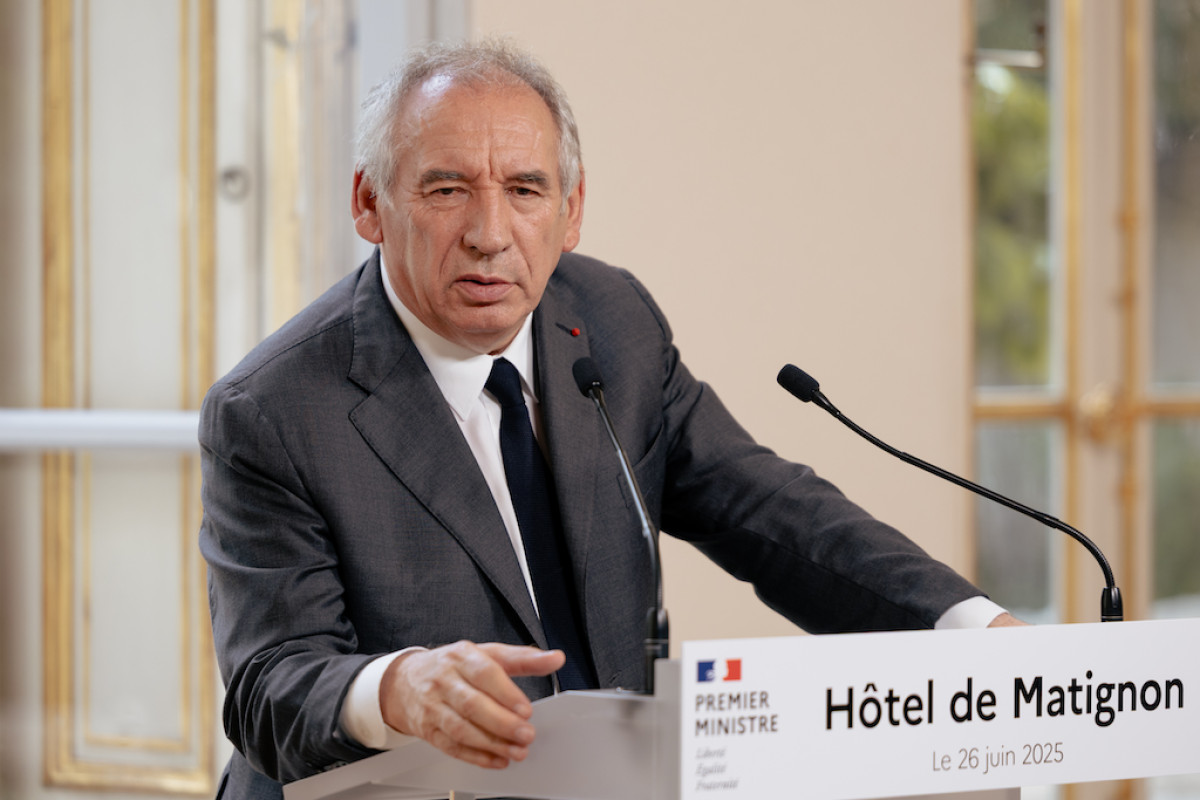
The new plan for fiscal adjustment presented by the Bayrou cabinet on 15 July surprised nobody but a clueless few. This was the umpteenth attempt at a laying out a roadmap to moderate the rising public deficit and reduce the debt (with respective targets of 3% and around 60%), meanwhile embarking on a path delineated by the European Commission’s country recommendations. This is clearly a gargantuan task, given that the current deficit is near 5.5% of GDP, which the latest plan proposes to lower to 4.6% in 2026 and 2.8% in 2029 – less-than-credible goals in the context of contemporary France.
"The government is aware that far-reaching reforms will be required to tackle the treasury’s serious problem with tax collection"Some concessions have been made in the present term to political parties that supported the 2025 budget, including a review of the previous cabinet’s pension reforms and a commitment to seeking broad parliamentary consensus when drafting laws that directly affect the population’s standard of living. But the plans for 2026 are different, in two ways that are not necessarily mutually exclusive. On the one hand, the government is aware that far-reaching reforms will be required to tackle the treasury’s serious problem with tax collection. On the other hand, the population must be informed of the situation through careful messaging. In other words, by anticipating outright parliamentary rejection of the motion of confidence slated for 8 September, the government is laying the groundwork to deliver a message on the need for tough adjustments over the medium term, under the argument that the delicate fiscal situation could conceivably compromise economic growth and job creation. In this way, and redolent of the Shock doctrine described by Naomi Klein, the government is taking advantage of the confluence of political crisis, polarization, and loss of institutional credibility to implement measures that could not be otherwise considered.
But how difficult is all this for France? Its economy is highly resilient in the face of fluctuations, largely thanks to the dynamism of its enormous national industry. Companies like Saint Gobain, Schneider Electric, Dassault Systèmes, and Airbus –– backed and even pampered for decades by the all-powerful State –– are global benchmarks in innovation and productivity in their respective sectors. In addition, France’s private banking system (historically known as the ‘Haute Banque’) enjoys notable international influence, providing credit and liquidity at crucial moments. Moreover, France’s advanced networks for transport and interconnection range well beyond the national borders. In terms of energy, despite ongoing critiques of nuclear reactors, France has managed to maintain a stable and competitive supply for its entire industrial landscape thanks precisely to this source. Indeed, both the public and private sectors are investing heavily in nuclear optimization, as proven through the France 2030 campaign and the plan to develop microreactor systems. The aim here is not only to decarbonize the nation’s industries over the long term but to guarantee autonomous supplies of heating and electricity to its cities. Also, significant advances have been made in the use of hydrogen as an alternative to fossil fuels and conventional renewables alike.
"France remains a leading economy in sectors such as chemical, transport, energy, telecommunications, and moreIt comes as no surprise, therefore, that the country has an unemployment under 8%, or that the State has managed without much difficulty to contain the inflationary pressures of 2022; even so, France’s cost of living is generally high compared to median wages. Also not surprising is that Paris always takes the side of strategic autonomy in European debates, promoting self-sufficiency, minimal dependency on the EU, and the prioritization of intra-European dealings by producers. France remains a leading economy in sectors such as chemical, transport, energy, telecommunications, and more. And yet certain details of France’s development deserve closer analysis, like the fact that its industrial conversion of the late 20th century favored Paris and environs, leaving many previously working-class regions demobilized and depressed and providing a perfect breeding-ground for the rise of the Rassemblement National (RN).
So why should they expend so much effort on reducing the deficit if the economy is quite capable of absorbing future shocks? One argument put forward by the government is that the deficit is merely an indicator, and while it does indeed matter to a certain extent, the real problem lies in the debt-to-GDP ratio, which has increased since 2008, as shown in the graph below:
Paradoxically, while the debt has increased and exceeded the 60% limit, even as successive governments (Sarkozy, Hollande, Macron) have openly opted for austerity and control of social spending, it stayed relatively low through the 1980s (at the height of Mitterrand’s French dirigisme) and during the immobility of the 1990s (under Chirac). In the absence of reforms, the debt is projected to rise to 119% within about two years. Again the question arises: Why should a drop in this indicator be regarded as essential? First of all, the level of indebtedness will be hard to reduce if the mechanisms driving the deficit are not corrected. That is to say, if expenditures continue to exceed revenues, then the debt can only increase.
But again, is this really a problem? Countries like the U.S. and China carry debt levels of about 120% and 100%, respectively, and yet they encounter no major difficulties when financing themselves in international markets, or when undertaking projects requiring public funds. Since Maastricht, the EU has sought to impose German Ordoliberalism on the European economies without consideration of the vast heterogeneity among Member States; a return to 60% seems all but impossible in a context of protectionist reindustrialization and rearmament. And this is key to everything. France needs liquidity to continue boosting investments to its own industry while creating a defense framework that is self-sufficient –– truly non-dependent on the U.S. and third parties –– which would make France the EU’s preeminent military power. This will require sizeable public investments and (regardless of costs) a wide margin for maneuver, which France currently lacks. Coupled with severe damages to the French economy from external events like Covid-19 and heightened tensions from the war in Ukraine, the government now feels compelled to declare war on high indebtedness and to advocate austerity, contrary to tendencies across the past 80 years.
"Savings of around €40 billion are envisioned via cuts to vital social categories"In very mild terms, and given the idiosyncrasies of France’s working class, the reforms being proposed by Bayrou might be described as ‘generous’. Savings of around €40 billion are envisioned via cuts to vital social categories: the elimination of some 3000 public jobs; non-replacement of a third of retirees from civil service; freezing of pensions for the next year; increases in co-payments for medicines; privatization of the public productive apparatus; flexibility around worker dismissals; and the rather striking suppression of two public holidays. Bayrou has also folded to pressure from the Presidency of the Republic and is proposing to increase defense spending, at the same time insisting that the budget is unrelated to this new course of action promoted by Macron. Instead, Bayrou asserted in April that quick maneuvers and "making joint efforts" will be required to avoid collapse.
If we assume the first thesis to be true –that the government sees the fiscal situation as unsustainable, with fears that economic growth will be affected in the long term then this move by Bayrou is more than risky. Even assuming the unlikely scenario that he survives the motion of confidence on September 8, parliamentary support for this package of reforms will be minimal, with a priori favorable votes from only Macron’s party and perhaps Les Républicains. The latter group advocate for toughening the fight against tax fraud and irregular immigration by prioritizing national workers, and their support for Bayrou could be withdrawn if they felt that the association might damage their electoral outlook. On the other hand, if the second proposition is taken as probable –– wherein Bayrou believes it impossible to approve a budget under current circumstances –– then one might suppose that his cabinet has chosen to send a clear message on the perilous state of France’s accounts, thereby forcing a fairly predictable rejection by parliament and leaving much to be done by a hypothetical incoming government. It must be recalled that François Bayrou was appointed PM with the aim of building bridges in an extremely polarized environment. The (now divided) left still holds a relative majority, but the parliament is governed by a center-right minority with the support of the far-right RN, who have effective control over what can or cannot be approved. This is a government with a very limited margin for maneuver, as illustrated in the image below.
In the case of wholesale rejection by parliament, it would come as no surprise if the Prime Minister were to call for another election, given his inability to pursue normal activity. But he won’t be afforded that option. Until now, the far-right RN have declined to vote in favor of the motions of censure proposed from the left. But currently, because the government itself has opted for a vote of confidence, the RN announced that it will very likely vote against Bayrou unless a compromise is reached at the 1 September meeting between Bayrou and Bardella, which could extend a lifeline to the PM. Nonetheless, and quite frankly, would either the Parti Socialiste or the Rassemblement National really want to support a budget that promises majority social rejection, diminishing their electoral chances in the 2027 presidential race? And is such a restrictive budget proposal even logical in an economy characterized by high dynamism and productivity?
French society, which might be called ideologically conservative in many respects, has shown a low tolerance for rising social inequality and a forceful opposition to favoring the interests of society’s most privileged and powerful strata at any price. But this is the direction toward which recent budgets have been pointing. New proposals target the well-being of the most disadvantaged, on whom the ‘evils’ affecting France are blamed; at the same time, large fortunes and vast business networks are exempt from austerity, despite decades of State support and public resources that allowed them to consolidate a dominant and hegemonic position. The outcome to all these uncertainties should be evident by the Ides of September, which will arrive on a wind of change and with sharp weapons drawn.
