Sábado, 17 de octubre de 2026




INCENDIOS FORESTALES
A Spanish proposal: towards a European Emergency Unit
Security expert Alberto Bueno proposes the creation of a European Emergency Unit as a public policy measure to strengthen citizen security and European integration. With permanent brigades and its own resources, it would enable "the consolidation of the promise of European protection." The analyst stresses that "Spain is in a position to promote it and place itself at the forefront of the EU agenda."
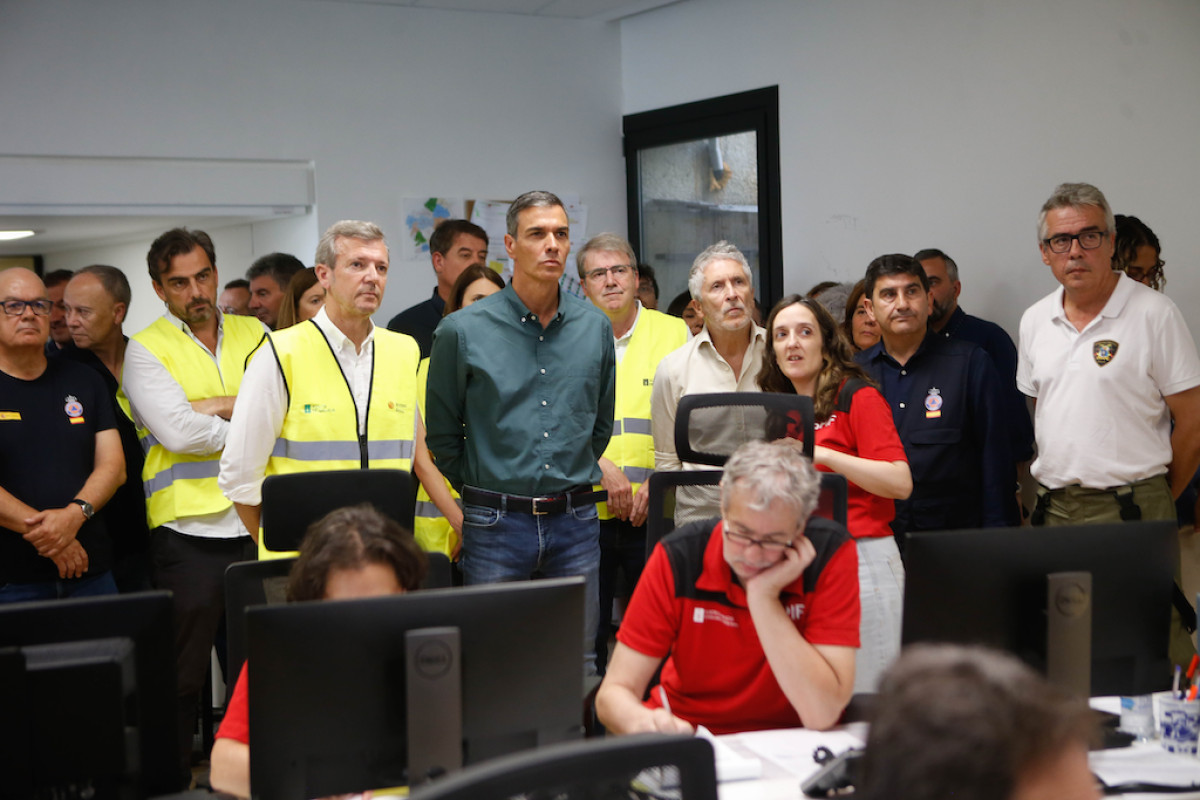
Pedro Sánchez visits the Firefighting Coordination Center in Ourense.Carlos Castro / Europa Press / ContactoPhoto
In Europe, the risks associated with natural disasters have become a dependable constant, intensified by social and territorial shifts and by changing trends in climate. Moreover, these have been compounded by risks related to technologies, and by potential hybrid threats, even as the security and defence of the European Union remains a topic of intense discussion. Responses to wildfires, floods, earthquakes, extreme storms, and other catastrophic events depend on the availability and capacities of both national and joint forces. Given this reality, the EU and its Member States now have a unique opportunity to strengthen Europe’s prowess through the ways in which civil emergencies are confronted, at the same time addressing the need to construct a security system that is truly European. In short, and in its own interests, the EU must develop a European Emergency Unit.
The EU already employs effective instruments known to have improved coordination and response in critical situations. These include the European Civil Protection Mechanism and the rescEU strategic reserve, alongside more focused instruments like the Copernicus program and its satellite observations, key for warning and monitoring systems, or assessments of 'good governance' like the recent report from the European Court of Auditors on financing forest fire responses (which drew worrying conclusions). Since 2001, the European Civil Protection Mechanism and its Emergency Response Coordination Centre (ERCC) have been activated on numerous occasions, successfully directing requests for assistance. Spain has both participated in and benefited from these resources.
Furthermore, since 2019, Europe has been financing its own material resources through the rescEU strategic reserve, situated across a dozen Member States and managed by the EU. Reserve assets range from aerial firefighting assets, specialized equipment, and field hospitals to logistical support and CBRN reserves, as well as firefighters and other specialists 'loaned out' among countries. The usefulness of this fairly recent program has already been proven, as through firefighting deployments in the Balkans, reinforcements against CBRN risks during the Paris Olympic Games, responses to earthquakes in Turkey, and the provision of energy and medical support to Ukraine following the invasion by Russia.
These instruments are being framed as part of the European Commission’s EU Preparedness Union Strategy, published recently and informed by an "all-risk, whole-government, whole-society" approach. This strategy’s 30 measures include the promotion of common European risk assessments, strategic reserves, standards for critical infrastructure, civil-military cooperation, public-private collaboration, more integrated coordination between Member States and the EU, and citizen preparation – the latter having inspired the notion of making basic self-supply kits available. This strategy for preparedness, with a 2028 horizon, represents a vital advance that both supports and extends already effective mechanisms.
As a thought exercise, and to provide a rough outline, the proposed European Emergency Unit might ostensibly be structured into three complementary components (under the auspices of the European Commission). The first would relate to human resources, including rapid deployment brigades specialized in fighting forest fires, flood response, urban search and rescue, technological emergencies, or CBRN incidents.
These would be professional European teams, dedicated to the task and operating under common protocols, and capable of mobilizing to any zone that requests support through the ERCC; the Unit would be a permanent European body not dependent on availability at the national level. This component of the Emergency Unit could combine staffing for legal and labour protection (offering attractive careers with intra-European mobility, like other official EU posts) with European reserves and a rapid-activation regime of qualified personnel kept ready during seasonal peaks or prolonged crises. That is to say, the rescEU instrument currently under development would become a permanent reserve.
Third, the disciplines of doctrine and training would be conducted through a European emergency 'school' that sets common standards, certifies qualifications, organizes multinational exercises, and generally develops lines of action for the EU Preparedness Union Strategy. Currently, a coordination network operates through the European Civil Protection Mechanism, so this would again be a matter of expanding upon an existing structure. In addition, NATO centres of excellence can offer models to be emulated within the area of civil protection. In short, this would mean the Mechanism and its ERCC would grow beyond strategic coordination to include operational command, with capacities for planning, deployment, and upkeep.
A supranational Unit granted these characteristics would bring real strategic benefits. In the short term, by bringing procurement to a European scale, it would require inter-operability and foster conducive industrial policies, with returns in both employment and technology, as might be expected from any new industrial security and defence plan. It would therefore align with current EU guidelines and be interwoven with European policies on research, climate, space operations, and early warning systems, to name but a few. In the medium term, a European Emergency Unit would strengthen programs already underway, at the same time nurturing the standards, methodologies, and doctrines applied at the national and local levels. Finally, over the long term, it would promote a particular organizational culture, common across borders. By strengthening European solidarity through stable capacity, the Unit would serve the EU’s overall interests and aspire to the highest levels of community ambition.
All of which prompts the thought that the creation of a European Emergency Unit could generate spill-over effects in terms of security and defence policy. 'Battlegroups' and Rapid Deployment Capability projects have either failed or provoked skepticism, surpassed only by the skepticism of defense experts around the idea of a 'European army'. On the other hand, the notion of civil protection encounters less political resistance than strictly military projects, for obvious reasons, as it doesn’t conflict with the essential sovereignty of States. In fact, within the States themselves (and especially in federations), responsibility for matters of civil protection is typically delegated to the regional level. Also, as regards deterrence and defence at the national level, policies around civil protection are diverse in their functions – in Spain, for example, the UME (‘Military Emergencies Unit’) is not a defence corps, although its nature is military.
Nonetheless, civil protection can be quite visible and intensive while remaining very close to the citizen, and its social benefits are immediately perceived. An effective civil protection policy can nurture the political and social legitimacy of European integration within the field of defence: when citizens see that cooperation at the European level saves lives and reduces harm, then common standards, joint procurements, and shared doctrines will likely become more accepted, despite other areas where misgivings currently prevail. Finally, potential deployments and lessons learned from activation of an Emergency Unit could help identify the need for other projects of a more military nature.
The decisive push for unity must emanate from the Member States, in every instance. As relates to the present proposal, Spain is in a good position to launch or to lead such a project. Spain’s constant exposure to disasters – forest fires, heavy storms and floods, heat waves and drought, even seismic risk in certain areas – has meant accumulated experience in international cooperation, and its highly specialized units like the aforementioned UME offer solid credentials. Above all, at a time when Spain has lost international traction in defence terms, issues of civil protection are less polarizing than military concepts and more accepted by institutional and social actors. Also, in political terms, this initiative would fly a genuinely pro-European flag.
The technical and financial viability of the design outlined here must of course be subjected to expert appraisal, but its justification as a pro-European instrument and a policy for public security should be clear. Conceivably, it could serve as a catalyst for advances in Europe’s common defence policy and for resilience in the 'rear-guard'. Converting solidarity into permanent capability is the next logical step towards consolidating, through measurable actions, the promise of mutual protection that undergirds the European project.
The EU already employs effective instruments known to have improved coordination and response in critical situations. These include the European Civil Protection Mechanism and the rescEU strategic reserve, alongside more focused instruments like the Copernicus program and its satellite observations, key for warning and monitoring systems, or assessments of 'good governance' like the recent report from the European Court of Auditors on financing forest fire responses (which drew worrying conclusions). Since 2001, the European Civil Protection Mechanism and its Emergency Response Coordination Centre (ERCC) have been activated on numerous occasions, successfully directing requests for assistance. Spain has both participated in and benefited from these resources.
Furthermore, since 2019, Europe has been financing its own material resources through the rescEU strategic reserve, situated across a dozen Member States and managed by the EU. Reserve assets range from aerial firefighting assets, specialized equipment, and field hospitals to logistical support and CBRN reserves, as well as firefighters and other specialists 'loaned out' among countries. The usefulness of this fairly recent program has already been proven, as through firefighting deployments in the Balkans, reinforcements against CBRN risks during the Paris Olympic Games, responses to earthquakes in Turkey, and the provision of energy and medical support to Ukraine following the invasion by Russia.
These instruments are being framed as part of the European Commission’s EU Preparedness Union Strategy, published recently and informed by an "all-risk, whole-government, whole-society" approach. This strategy’s 30 measures include the promotion of common European risk assessments, strategic reserves, standards for critical infrastructure, civil-military cooperation, public-private collaboration, more integrated coordination between Member States and the EU, and citizen preparation – the latter having inspired the notion of making basic self-supply kits available. This strategy for preparedness, with a 2028 horizon, represents a vital advance that both supports and extends already effective mechanisms.
"General awareness of exposure to disasters and the need to catalyze a Europe-wide policy for critical response serve to justify the following proposal: that Europe must equip itself with an Emergency Unit endowed with permanent capacities, a professionalized staff, and its own resources"Nonetheless, this strategy is intended as a reinforcement, not a comprehensive capability, which underlines inherent limits to availability, long-term sustainability, and location of resources (all still modest, but expanding ambitiously). General awareness of exposure to disasters and the need to catalyze a Europe-wide policy for critical response serve to justify the following proposal: that Europe must equip itself with an Emergency Unit endowed with permanent capacities, a professionalized staff, and its own resources. This would entail the creation of an additional supranational echelon to be activated and rapidly deployed whenever national capacities prove insufficient or overwhelmed. This approach follows the path of rescEU by combining subsidiarity (action by the closest and best-situated responder) with additionality (where Europe provides what no Member State can efficiently maintain on its own). This would multiply Europe’s civilian forces, in the same way that certain NATO systems and mechanisms bolster military capabilities.
As a thought exercise, and to provide a rough outline, the proposed European Emergency Unit might ostensibly be structured into three complementary components (under the auspices of the European Commission). The first would relate to human resources, including rapid deployment brigades specialized in fighting forest fires, flood response, urban search and rescue, technological emergencies, or CBRN incidents.
These would be professional European teams, dedicated to the task and operating under common protocols, and capable of mobilizing to any zone that requests support through the ERCC; the Unit would be a permanent European body not dependent on availability at the national level. This component of the Emergency Unit could combine staffing for legal and labour protection (offering attractive careers with intra-European mobility, like other official EU posts) with European reserves and a rapid-activation regime of qualified personnel kept ready during seasonal peaks or prolonged crises. That is to say, the rescEU instrument currently under development would become a permanent reserve.
"An outline of this European Emergency Unit under the authority of the European Commission could be structured around three complementary components: rapid deployment brigades, a fleet and pool of vehicles under the European flag, and a European emergency training center."Second, as regards materials, organization, and infrastructure, fleets of necessary equipment would be assembled under the European flag: amphibious aircraft, firefighting choppers, modular field hospitals, mobile water treatment plants, drone forces, emergency telecommunications systems, and logistical bridges would reinforce the road already mapped by the rescEU reserves. Direct responsibility for reserves would facilitate planning, maintenance, replacement, and training under common criteria and multi-year cycles – in line with the EU budget covering investment, maintenance, and operating costs. A logistics network featuring regional pre-positioning and centres for strategic storage (fuel, PPE, shelters, critical medicines, energy generators) could be situated to optimize deployment times and seasonal coverage (fires around the Mediterranean, floods in central Europe, Atlantic storms, etc.).
Third, the disciplines of doctrine and training would be conducted through a European emergency 'school' that sets common standards, certifies qualifications, organizes multinational exercises, and generally develops lines of action for the EU Preparedness Union Strategy. Currently, a coordination network operates through the European Civil Protection Mechanism, so this would again be a matter of expanding upon an existing structure. In addition, NATO centres of excellence can offer models to be emulated within the area of civil protection. In short, this would mean the Mechanism and its ERCC would grow beyond strategic coordination to include operational command, with capacities for planning, deployment, and upkeep.
A supranational Unit granted these characteristics would bring real strategic benefits. In the short term, by bringing procurement to a European scale, it would require inter-operability and foster conducive industrial policies, with returns in both employment and technology, as might be expected from any new industrial security and defence plan. It would therefore align with current EU guidelines and be interwoven with European policies on research, climate, space operations, and early warning systems, to name but a few. In the medium term, a European Emergency Unit would strengthen programs already underway, at the same time nurturing the standards, methodologies, and doctrines applied at the national and local levels. Finally, over the long term, it would promote a particular organizational culture, common across borders. By strengthening European solidarity through stable capacity, the Unit would serve the EU’s overall interests and aspire to the highest levels of community ambition.
"Given the difficulty of making progress on European military and defense issues due to national obstacles, the decision would be to strengthen the civilian pillar of European security."Other incentives equally vital to the EU project have been suggesting a move in this direction. Naturally, the current debate around the launch of Europe-wide defences calls for societies to be resilient, and factors such as civil protection, essential services, and quick recovery after a disaster remain at the heart of civil defence. The proposed Emergency Unit – genuinely European as well as supranational – would be a concrete tool for developing civil defence. Moreover, it would be consistent with the principle of open strategic autonomy, and compatible with alliance frameworks; recent contributions from rescEU in Paris and Ukraine already point in that direction. Given the difficulties surrounding EU defence and a European military force – due to national obstacles – strengthening the civilian pillar of European security would constitute a significant advance.
All of which prompts the thought that the creation of a European Emergency Unit could generate spill-over effects in terms of security and defence policy. 'Battlegroups' and Rapid Deployment Capability projects have either failed or provoked skepticism, surpassed only by the skepticism of defense experts around the idea of a 'European army'. On the other hand, the notion of civil protection encounters less political resistance than strictly military projects, for obvious reasons, as it doesn’t conflict with the essential sovereignty of States. In fact, within the States themselves (and especially in federations), responsibility for matters of civil protection is typically delegated to the regional level. Also, as regards deterrence and defence at the national level, policies around civil protection are diverse in their functions – in Spain, for example, the UME (‘Military Emergencies Unit’) is not a defence corps, although its nature is military.
Nonetheless, civil protection can be quite visible and intensive while remaining very close to the citizen, and its social benefits are immediately perceived. An effective civil protection policy can nurture the political and social legitimacy of European integration within the field of defence: when citizens see that cooperation at the European level saves lives and reduces harm, then common standards, joint procurements, and shared doctrines will likely become more accepted, despite other areas where misgivings currently prevail. Finally, potential deployments and lessons learned from activation of an Emergency Unit could help identify the need for other projects of a more military nature.
"When citizens perceive that European cooperation saves lives and reduces harm, acceptance of common standards, joint procurement, and shared doctrines would increase, which could extend this reasoning to other areas where there is currently mistrust."The cost incentive of such a Unit is also clear and aligned with the benefits mentioned above. Several Member States have made commitments to increase their spending thresholds on security to above 1% of GDP. A portion of this effort could be channeled to civilian ‘resilience’ through direct national investments and, in parallel, through the EU budget. The funding of firefighting aircraft, medical capabilities, shelters, emergency power grids, and early warning systems does indeed inspire broader social consensus than items strictly related to security and defense. In many cases, these technological investments have alternate uses, fitting them nicely into current EU industrial policy and, again, contributing indirectly to Europe’s (industrial) defence posture. This could also represent a win-win situation by helping to fulfill the commitment signed by NATO’s European partners in The Hague.
The decisive push for unity must emanate from the Member States, in every instance. As relates to the present proposal, Spain is in a good position to launch or to lead such a project. Spain’s constant exposure to disasters – forest fires, heavy storms and floods, heat waves and drought, even seismic risk in certain areas – has meant accumulated experience in international cooperation, and its highly specialized units like the aforementioned UME offer solid credentials. Above all, at a time when Spain has lost international traction in defence terms, issues of civil protection are less polarizing than military concepts and more accepted by institutional and social actors. Also, in political terms, this initiative would fly a genuinely pro-European flag.
"Spain is in a position to launch the proposal to create a European Emergency Unit. Its exposure to disasters, its accumulated experience in international cooperation, and the existence of highly specialized units—the UME—provide solid credentials."In conclusion, the proposed European Emergency Unit would neither replace existing national services nor shift primary responsibility from the administrative levels closest to the citizen. Its added value lies in ensuring continuity, standardization, and critical mass in scenarios where local and national efforts, while always essential, may prove insufficient. In view of climate trends, exposure to natural disasters, an abundance of technological risks, and the interdependence of Europe’s economies, the question is not whether Europe should strengthen its civil protection but rather how to do so in a stable, inter-operative, and expeditious manner.
The technical and financial viability of the design outlined here must of course be subjected to expert appraisal, but its justification as a pro-European instrument and a policy for public security should be clear. Conceivably, it could serve as a catalyst for advances in Europe’s common defence policy and for resilience in the 'rear-guard'. Converting solidarity into permanent capability is the next logical step towards consolidating, through measurable actions, the promise of mutual protection that undergirds the European project.

Alberto Bueno
Profesor del Departamento de Ciencia Política y de la Administración en la UGR
Es profesor del Departamento de Ciencia Política y de la Administración de la Universidad de Granada y miembro del Spanish Research Group on Defence, Armed Forces, and Society (RODAS). También es profesor adjunto en la Universidad de Leipzig (Alemania) y 'non-resident fellow' del UTSYN - Centre for Security and Total Defence (Noruega).
Etiquetas
Agenda Pública in English Ahora en portada
17 de octubre de 2026
16 de octubre de 2026
Lo más leído