
Trading makes us free: a roadmap for European awakening
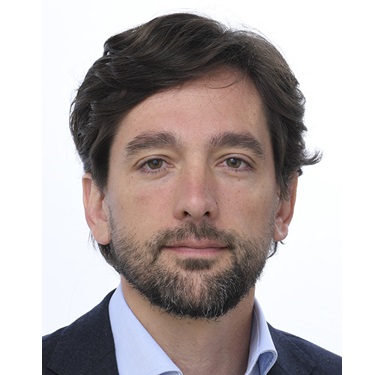
The PP MEP Adrián Vázquez Lázara stresses that international trade has been "the real engine that has allowed us to achieve the longest period of peace, stability, and prosperity in our history". He praises the single market as "one of the greatest achievements" of the EU. Aware that the Russian invasion of Ukraine, the Trump administration and "dependence on third countries" have brought to light "fissures", he calls for "more integration, more strategic investment and recovering the self-esteem of the founding spirit".
_(1).jpg)
It's well known that the European Union was born from a commitment to secure peace in a Europe scarred by two world wars. That horror, which cost nearly sixty million European lives, gave rise to a new continental imperative: better together than apart. This was the wager of a Europe exhausted by endless conflict and totalitarian nationalism. A Europe determined to maintain its belief in international leadership, knowing that to achieve this, it needed only to embrace one principle: what unites us as Europeans is stronger than what divides us as French, Spanish, Germans, or Slovenians.
Yet the architecture of this peace we now take for granted was anything but straightforward. Beyond political will, diplomatic savvy and legal ingenuity, what was needed was an adhesive strong enough to overcome centuries of conflict. That adhesive already existed; it simply required applying. And it was nothing other than trade. For trade —pure and simple— has been the real driving force behind the longest period of peace, stability, and prosperity in our history.
Economic interaction between nations provides the most reliable safeguard against potential conflicts. When countries trade, they become interdependent and prosper through mutual cooperation; the incentives for confrontation —and the impoverishment it brings— diminish considerably. Economist Thomas Friedman articulated this in his celebrated golden arches theory —named after McDonald's iconic arches— demonstrating with evidence that two countries hosting this multinational's franchises are less likely to wage war against each other. The underlying argument is that commercial networks create flows of wealth, stability, and openness towards others. And with these, inevitably, come peace and stability.
"President Trump's government-by-tweet approach and Russia's recent invasion of Ukraine have fractured the world order and cast doubt on the liberal policies that have shaped global progress"That said, it's true that President Trump's government-by-tweet approach and Russia's recent invasion of Ukraine have fractured the world order and cast doubt on the liberal policies that have shaped global progress over recent decades. But it's equally true that, in line with Friedman's theory, whilst the famous franchise was operating in both Moscow and Kyiv when the aggression began, McDonald's pulled out of the Russian Federation within months. Beyond depriving Russians of their Big Macs, this company's departure from Russian soil exemplifies the corporate exodus and economic decoupling from the West that Russia has endured since Putin chose to invade Ukraine. And whilst we may not see it yet, the economic fallout from this aggression will devastate Russia and its people sooner rather than later. Peace is always a bargain and trade always pays dividends: Putin has gambled away the future of 144 million Russians with this senseless war.
The single market: the jewel in the Union's crown
Following this logic, the single market stands as one of the European Union's crowning achievements and a cornerstone in cementing peace among Europeans. Without it, the cars built in Vigo, Valladolid, or Zaragoza would face far more limited market competition. Our agricultural produce would remain unknown beyond the Pyrenees. Our multinationals would be considerably smaller and our industry far less advanced. Without the single market, European citizens wouldn't have enjoyed such tangible benefits as the end of roaming charges, budget air travel, freedom of movement for work, or standardised consumer protections.
"Spain has been among the greatest beneficiaries of European harmonisation, having increased its nominal GDP more than sixfold since joining the EU in 1986"As the European Economic and Social Committee points out, these benefits are concrete and amount to roughly 8.5% of EU GDP. Spain has been among the greatest beneficiaries of European harmonisation, having increased its nominal GDP more than sixfold since joining the EU in 1986. Looking back even further, the advantages for the Spanish economy of embracing open trade become starker still. Since 1959, when the Franco regime abandoned its autarkic obsession, Spanish GDP has grown more than 60-fold in real terms. In six decades, Spain has transformed from an agrarian economy into one of the world's fifteen largest. This remarkable growth, alongside the welfare state expansion it has enabled, would be unthinkable without our integration into European and international markets and the vigour of our businesses.
Europe at a crossroads: wake up or witness the end of our way of life
Yet 75 years on, this seemingly unshakeable architecture of peace and prosperity is showing cracks, and with them comes the urgent need to reimagine our model. An increasingly fraught global landscape with a world order in tatters, characterised by international instability and trade wars, compounds our dependence on raw materials within global supply chains. Offshoring has allowed us to shift tedious, demanding and poorly paid work away from our labour markets, but has left us dependent on third countries and created employment challenges for large swathes of the population.
"The Union's economic clout has declined steadily since the nineties, when it accounted for over 20% of global GDP. Today it barely reaches 15% and continues to slide"The Union's economic clout has declined steadily since the nineties, when it accounted for over 20% of global GDP. Today it barely reaches 15% and continues to slide. The United States and China have left us in their wake, whilst emerging powers like India are gaining ground. This waning influence directly undermines our capacity to shape events, negotiate effectively and safeguard our interests on the world stage. Most crucially, it jeopardises our welfare state.
Given all this, Europe must reclaim its strategic autonomy through forward-looking investment. We cannot allow a despot beyond the Urals to hold our energy supply hostage at his whim. We cannot accept that our defence capabilities should hinge on election results across the Atlantic. Europe must have faith in itself, which means accepting that our destiny lies in our hands alone.
We need to rediscover our competitive edge. To innovate again, to produce once more, and to recognise that we remain an economic powerhouse —albeit one bogged down in red tape and compliance requirements— but a powerhouse nonetheless. We need to stand firm against tariff bullying. We need clarity on immigration: properly managed, it's a wellspring of economic vitality, productivity and demographic renewal; when handled childishly, it breeds only frustration, exclusion, and ghettoisation. Not only that, but we must grasp that our Union is genuinely a haven of rights and wellbeing. But unless we sharpen up and accept that all we have depends on productivity and world-class enterprises, coming generations will be left to preside over the decline of our way of life.
And naturally, we must press ahead with a common defence policy. Because if we're not prepared to defend our way of life —and shoulder the costs— then our welfare state counts for nothing. We must acquire military strength not to wield carelessly, but to deter aggression. This isn't an ideological choice; it's a strategic imperative. With everything we stand for as a society at stake, there's no room for half-measures.
Strategic autonomy: seeing the bigger picture
That said, the geopolitical landscape and our need to regain autonomy mustn't lead us to abandon our values. Whilst the invasion of Ukraine has laid bare the fragility of global supply chains, and Trump's election has revealed our defence vulnerabilities, we Europeans mustn't forget that international trade, openness and liberal policies are what brought us this far.
We can't remain stuck in the cul-de-sac of dependence, but neither should we retreat into the false comfort of autarky. This isn't about shutting borders or buying into the tariff myth, but rather about striking a balance between openness and building our own capabilities.
"Without genuine integration of energy, financial and telecommunications markets, and without competing internationally, any hope of remaining a global beacon of peace and prosperity is pure fantasy"Free trade remains the most effective instrument for building peace through shared prosperity. A world with more international trade is a safer, more prosperous world. The EU has been history's most successful peace project, not through rhetoric, but through its interdependent framework. Today, that framework needs updating: deeper integration, more strategic investment, and a renewal of the founding spirit's confidence.
We must collaborate both within and beyond our borders. Without strategic autonomy, Europe's prospects for global competitiveness are bleak. But without genuine integration of energy, financial and telecommunications markets, and without a firm commitment to competing internationally, any hope of remaining a global beacon of peace and prosperity is, quite simply, pure fantasy.