Viernes, 16 de octubre de 2026




FIRMAS TOP
America turns 250: A letter from Washington on what brings Spain and the United States together
The United States marks 250 years of an idea that has never fully matched its own reality. From the Founding Fathers to the struggle for civil rights, J. P. Carroll, analyst in Washington, D.C., explores the contradictions of that promise and asks what the anniversary means for Spain. His answer shifts the focus away from governments and diplomats towards a relationship also built by citizens, students, businesses, writers, and artists.
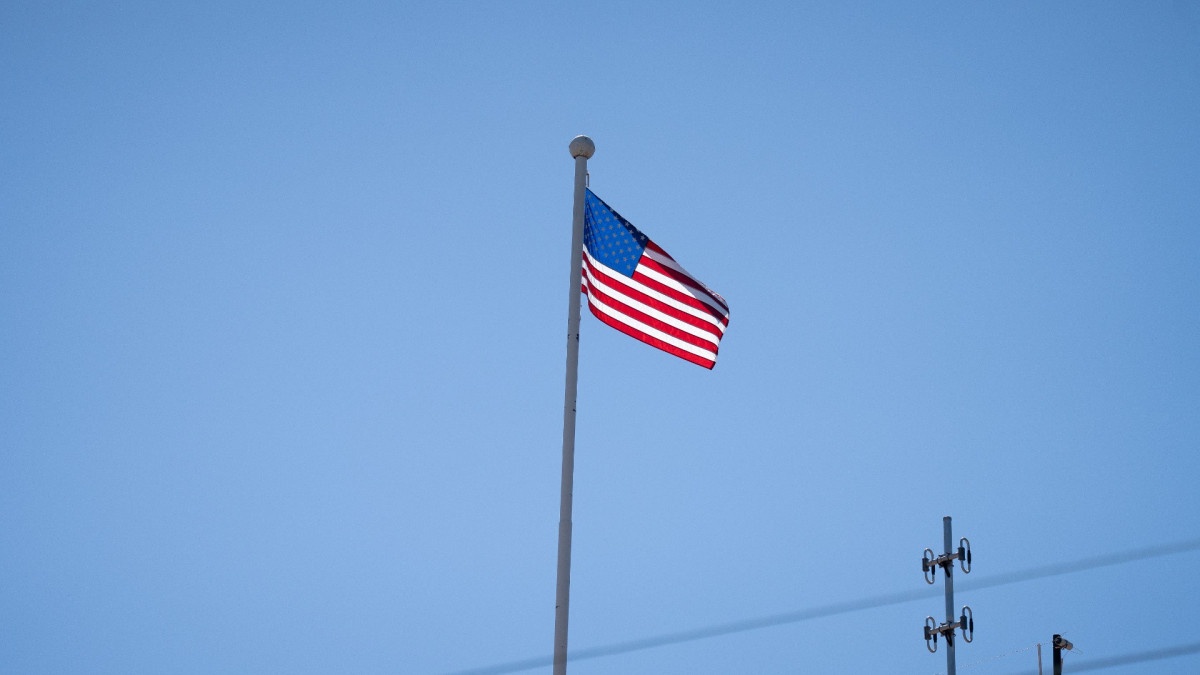
U.S. flag at the U.S. Consulate in Barcelona.David Zorrakino / Europa Press
To my dear readers,
My editor asked me to write a reflection on 250 years of the American experience and somehow put that in the context of the U.S.-Spain relationship or the broader transatlantic relationship. All in 800 — or 1,200 — words. A tall order I’ll surely fall short of in some way or another, but, after a lot of thinking and not a whole lot of writing, I’m a month overdue here, so let’s give it a go.
Let’s be clear: the United States of America is an idea that came to life through the courage, creativity, and conviction of our Founding Fathers. Proof that this country is an idea is what we celebrated on the Fourth of July. You see, the American Revolutionary War actually began in 1775 with the Battles of Lexington and Concord. The military conflict itself ended in 1781 with the Battle of Yorktown, and the war officially ended in 1783 with the Treaty of Paris.
This is the country of George Washington, Thomas Jefferson, and Benjamin Franklin, among the other Founding Fathers. But it is also the country of Crispus Attucks, a former slave and a sailor of Native American and African descent, who was the first American to die in the Boston Massacre of 1770. The poet John Boyle O'Reilly remembered him as "the first to defy, the first to die." Our independence also came about thanks to other courageous figures such as James Armistead Lafayette, a slave who spied for George Washington’s Continental Army and who served as a volunteer under the Marquis de Lafayette. There are others such as Abigail Adams, the wife of Founding Father John Adams, whose letters to him while he was in the Continental Congress and serving as an ambassador abroad were hugely influential on his thinking. Adams’ counsel to her husband is a reminder that when someone serves in a war, their family is also making a great sacrifice.
The Founders were complex figures. Thomas Jefferson condemned slavery in an early draft of the Declaration of Independence, but this was ultimately cut from the final text. Jefferson himself infamously owned slaves. Slavery undoubtedly was America’s original sin.
It took a group of new Founding Fathers and Mothers to grapple with this over the years, most notably President Abraham Lincoln, President Ulysses S. Grant, and the famed abolitionist and orator Frederick Douglass. Many Americans have had to fight for their civil rights over time, whether through peaceful protest or through the courts and advocacy before Congress.
Whether it was at the Seneca Falls Convention in 1848 in New York; Bloody Sunday on March 7, 1965, in Selma, Alabama; the Delano Grape Strike in 1965 or the East Los Angeles walkouts in 1968; the Stonewall riots on June 28, 1969; or the Longest Walk in 1978, Americans have long organized and advocated for their rights. The courage of generations past and the continued vigilance of Americans today have led to key legislative and judicial advances.
Perhaps what’s most important at this moment
in the U.S.-Spain relationship are the efforts of individual citizens of both countries to relate to one another. It’s great that there are dedicated government officials and diplomats working to strengthen the relationship between the two countries, but it is also important to recognize the efforts of students, business leaders, writers, and artists who have made the bilateral relationship what it is today.
Furthermore, around 13 percent of people in the United States speak Spanish, and the U.S. dollar drew its inspiration from the Spanish milled dollar. And just a month ago, soccer fans — Americans and Spaniards alike — came together in restaurants, cafes, bars, and community centers across the United States to watch Spain win the World Cup final, which was co-hosted by the United States. Ultimately, the stories of the United States and Spain are inherently intertwined.
The greatest strength of the U.S.-Spain relationship is its people. It is no secret that relations between the governments of both countries are going through a challenging time. However, as someone who lived in Spain just last year and knows many Spaniards living here in the Washington, D.C., area, I remain hopeful that the best is yet to come for relations between our two countries.
My editor asked me to write a reflection on 250 years of the American experience and somehow put that in the context of the U.S.-Spain relationship or the broader transatlantic relationship. All in 800 — or 1,200 — words. A tall order I’ll surely fall short of in some way or another, but, after a lot of thinking and not a whole lot of writing, I’m a month overdue here, so let’s give it a go.
Let’s be clear: the United States of America is an idea that came to life through the courage, creativity, and conviction of our Founding Fathers. Proof that this country is an idea is what we celebrated on the Fourth of July. You see, the American Revolutionary War actually began in 1775 with the Battles of Lexington and Concord. The military conflict itself ended in 1781 with the Battle of Yorktown, and the war officially ended in 1783 with the Treaty of Paris.
"Our founding document was built upon hope for the future more than it was grounded in reality"The Second Continental Congress adopted the Declaration of Independence on July 4, 1776. Ultimately, our founding document was built upon hope for the future more than it was grounded in reality. That’s the thing about this country: its greatest visionaries have always been dreamers looking forward to building a future that exceeds their own dreams.
This is the country of George Washington, Thomas Jefferson, and Benjamin Franklin, among the other Founding Fathers. But it is also the country of Crispus Attucks, a former slave and a sailor of Native American and African descent, who was the first American to die in the Boston Massacre of 1770. The poet John Boyle O'Reilly remembered him as "the first to defy, the first to die." Our independence also came about thanks to other courageous figures such as James Armistead Lafayette, a slave who spied for George Washington’s Continental Army and who served as a volunteer under the Marquis de Lafayette. There are others such as Abigail Adams, the wife of Founding Father John Adams, whose letters to him while he was in the Continental Congress and serving as an ambassador abroad were hugely influential on his thinking. Adams’ counsel to her husband is a reminder that when someone serves in a war, their family is also making a great sacrifice.
The Founders were complex figures. Thomas Jefferson condemned slavery in an early draft of the Declaration of Independence, but this was ultimately cut from the final text. Jefferson himself infamously owned slaves. Slavery undoubtedly was America’s original sin.
It took a group of new Founding Fathers and Mothers to grapple with this over the years, most notably President Abraham Lincoln, President Ulysses S. Grant, and the famed abolitionist and orator Frederick Douglass. Many Americans have had to fight for their civil rights over time, whether through peaceful protest or through the courts and advocacy before Congress.
Whether it was at the Seneca Falls Convention in 1848 in New York; Bloody Sunday on March 7, 1965, in Selma, Alabama; the Delano Grape Strike in 1965 or the East Los Angeles walkouts in 1968; the Stonewall riots on June 28, 1969; or the Longest Walk in 1978, Americans have long organized and advocated for their rights. The courage of generations past and the continued vigilance of Americans today have led to key legislative and judicial advances.
"The courage of generations past and the continued vigilance of Americans today have led to key legislative and judicial advances"At its core, the United States’ identity comes down to being a country where individuals are empowered to live the lives they seek and where their freedoms are protected by law. It has taken time for the United States to live up to its founding promise because this country is not perfect. If no one person is perfect, how can an entire country be perfect? It can’t. But what is perfect are this country’s founding ideals, and what is inspiring is how so many people have fought over 250 years to ensure those ideals, dreams, and rights apply to all.
Beyond diplomacy
What does the U.S. 250th anniversary mean for Spain? To be honest, I’m not sure. But I do know that we have shared a lot over time. The contributions of Bernardo de Gálvez have been written about ad nauseam by others and flagged by the likes of the Spanish Embassy here in Washington, D.C., across social media. His contributions mattered, yes, but so do those of others whose names we don’t know, including those of Americans and Spaniards today.Perhaps what’s most important at this moment
in the U.S.-Spain relationship are the efforts of individual citizens of both countries to relate to one another. It’s great that there are dedicated government officials and diplomats working to strengthen the relationship between the two countries, but it is also important to recognize the efforts of students, business leaders, writers, and artists who have made the bilateral relationship what it is today.
"It is important to recognize the efforts of students, business leaders, writers, and artists who have made the bilateral relationship what it is today"Programs such as Fulbright and NALCAP in the United States and Spain, respectively, have done a great deal to advance understanding between the two countries. Foreign direct investment and trade between the two countries have helped to create jobs and prosperity for people on both sides of the Atlantic. Millions across the world have found inspiration in reading the works of both Miguel de Cervantes and Ernest Hemingway. And King Felipe VI of Spain is a proud Georgetown University graduate.
Furthermore, around 13 percent of people in the United States speak Spanish, and the U.S. dollar drew its inspiration from the Spanish milled dollar. And just a month ago, soccer fans — Americans and Spaniards alike — came together in restaurants, cafes, bars, and community centers across the United States to watch Spain win the World Cup final, which was co-hosted by the United States. Ultimately, the stories of the United States and Spain are inherently intertwined.
The greatest strength of the U.S.-Spain relationship is its people. It is no secret that relations between the governments of both countries are going through a challenging time. However, as someone who lived in Spain just last year and knows many Spaniards living here in the Washington, D.C., area, I remain hopeful that the best is yet to come for relations between our two countries.

J. P. Carroll
Analista en Washington D. C. y columinsta de 'Agenda Pública'
MBA Internacional de IE Business School. Máster en Estudios Profesionales (MPS) en Relaciones Públicas y Comunicaciones Corporativas de la Universidad de Georgetown. Es el exdirector adjunto de Medios Hispanos del Comité Nacional Republicano (RNC). J.P. vive en el área de Washington, D. C.
Ahora en portada
16 de octubre de 2026
16 de octubre de 2026
16 de octubre de 2026
Noticias relacionadas
Hace 14 semanas
Los 250 años de EE. UU.: de prócer de la libertad a guardián de sus propias sombras
Hace 10 semanas
La doble amenaza geopolítica de Trump: Ucrania y Groenlandia
Hace 12 semanas
Spain at its best takes the ball from Trump
Lo más leído