Viernes, 16 de octubre de 2026




ANALYSIS
Why Andalusia does not point to a clear majority for Feijóo
The Andalusian elections pave the way for the general election and invite a reading that goes beyond the number of seats: the PP maintains its territorial strength, but it has not shown that it has expanded the conservative bloc compared with 2023. At the same time, the PSOE avoids an image of collapse and confirms that its electoral floor still depends on mobilization.

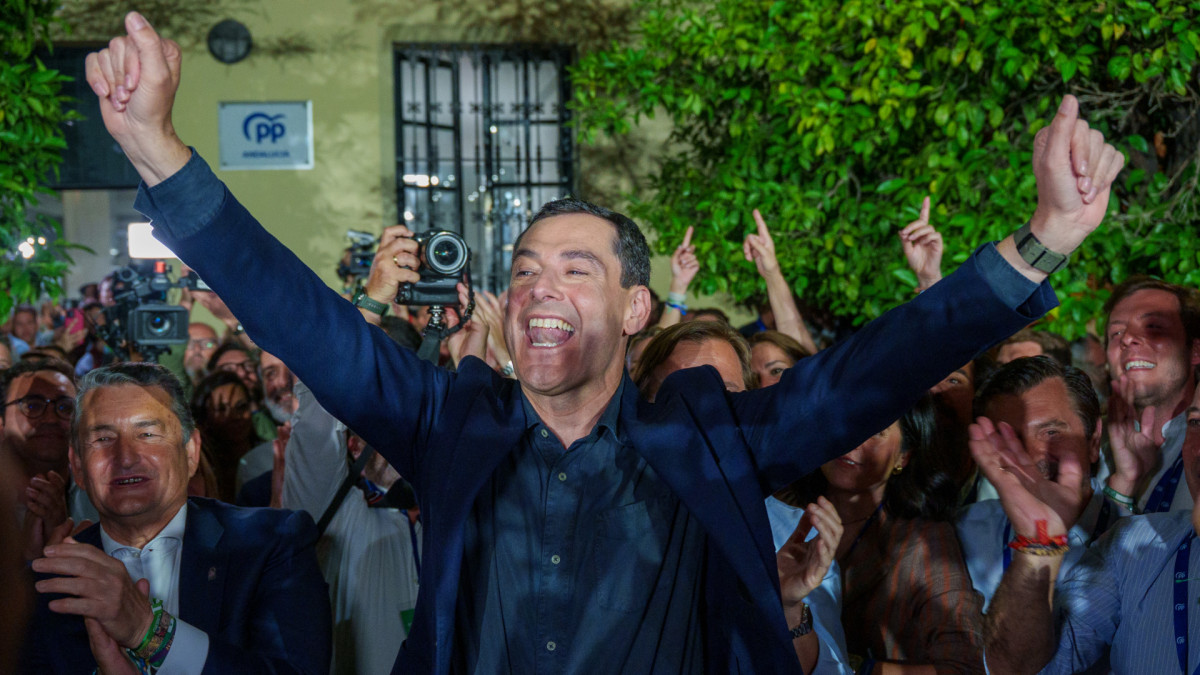
The President of Andalusia, Juanma Moreno Bonilla, celebrates his victory on election night.Francisco J. Olmo / Europa Press
The regional elections in Andalusia bring to an end the cycle that began last December in Extremadura and reinforce the narrative that the conservative bloc remains strong, but they do not show that a new, broader social majority has emerged compared with the 2023 general election. At the same time, they also suggest that the PSOE has avoided a collapse scenario caused by the accumulated wear on Pedro Sánchez’s government.
A superficial reading of the results —focused on seats, institutional dominance and the PP’s territorial leadership— may lead one to think that Andalusia is consolidating an irreversible wave in favor of Alberto Núñez Feijóo and, more broadly, an expansion of the right. However, if the evolution of the vote is considered, a different picture emerges: the Andalusian regional elections reaffirm dynamics that had already appeared in Extremadura, Aragon and Castilla y León, and point to a much more competitive scenario in a future general election.
The PP matches the historic vote ceiling reached by Javier Arenas in 2008, standing slightly above 1.7 million votes. Therefore, even in an extremely favorable context —with the PSOE territorially weakened, Ciudadanos having disappeared and Moreno benefiting from high personal approval—, the PP still has not shown that it has built a structurally larger majority than the one it already had almost two decades ago.
Part of the PP’s growth comes, in fact, from a more defensive than expansive phenomenon: the final absorption of the Ciudadanos electorate. The political cycle that began in 2015 had fragmented the center-right space; the 2026 Andalusian elections seem to have definitively closed that process. The PP has recovered a large share of those lost voters, consolidating the reunification of the liberal-conservative space. However, that does not necessarily amount to an expansion of the right’s electoral coalition.
There are, however, some signs of additional growth compared with the 2023 general election. The PP and Vox together gained around 56,000 votes over that result, a figure that probably combines newly mobilized voters and former Socialist voters who had become demobilized in previous cycles. The 105,000 votes for Se Acabó la Fiesta could also be added to that figure. Even so, the increase remains relatively modest for an election that the conservative media ecosystem itself had presented as an early plebiscite on Sánchez.
The second major conclusion directly affects the PSOE. Contrary to the narrative of territorial collapse, the Socialists show signs of stabilization. The main difference is that, rather than speaking of a full recovery, it is more accurate to speak of "resistance".
For the first time since 2004, the PSOE has broken its downward trend in an Andalusian regional election. The simple fact of recovering votes compared with the previous election carries considerable symbolic relevance in a territory that for decades was the electoral heartland of Spanish socialism and that in recent years had become the main symbol of its decline.
This explains why measuring the evolution only in terms of seats can lead to misleading interpretations. Regional electoral systems magnify small variations and turn relatively solid resistance into apparent severe defeats. In strictly electoral terms, the Andalusian PSOE has resisted much better than much of the media coverage will suggest. In fact, it is probably the best Socialist election of the 2026 regional cycle.
There is also a third relevant element: the slight recovery of the space to the left of the PSOE. Although limited, it reinforces a hypothesis that Spanish politics has been showing since 2015: this electorate responds above all to dynamics of national competition. When it perceives that there is a relevant statewide contest —whether to stop the right or to influence a progressive government—, its mobilization increases considerably.
The first is that the regional PSOE is not in a debacle. Andalusia confirms a stabilization of the Socialist electoral floor that is closer to the 2022-2023 pattern than to a prolonged collapse. The party’s capacity for resistance remains greater than many analyses based exclusively on the logic of government wear assume.
The second is that Pedro Sánchez continues to depend on an extraordinarily high level of mobilization in order to compete. In other words, the prime minister needs to reactivate a volume of votes similar to the one he achieved in 2023, when he turned the general election into an existential contest for the progressive bloc. Andalusia shows that this electorate has not disappeared, but it also does not mobilize automatically in regional contexts where the expectation of real change is low.
This means that the PP’s additional room for growth in a general election could be smaller than regional victories suggest, because the conservative bloc may already be operating close to its maximum mobilization capacity. By contrast, the PSOE still has a potential reserve of voters that is only fully activated under conditions of extreme national polarization.
That is why Andalusia does not necessarily anticipate an uncontestable majority for Feijóo. What it does anticipate, in any case, is a politically blocked and extremely polarized Spain, in which future general elections will once again be decided above all by each bloc’s capacity to mobilize its most intermittent voters.
A superficial reading of the results —focused on seats, institutional dominance and the PP’s territorial leadership— may lead one to think that Andalusia is consolidating an irreversible wave in favor of Alberto Núñez Feijóo and, more broadly, an expansion of the right. However, if the evolution of the vote is considered, a different picture emerges: the Andalusian regional elections reaffirm dynamics that had already appeared in Extremadura, Aragon and Castilla y León, and point to a much more competitive scenario in a future general election.
Andalusia and the best possible scenario for the PP
The key difference is that Andalusia was probably the most favorable possible territory for the PP. Unlike other regional governments exposed to political wear or dependence on Vox, Juanma Moreno started from a position of exceptional strength: an absolute majority, no internal conflicts, consolidated leadership and a moderate image capable of attracting centrist voters. Precisely for that reason, the fact that the PP has not managed to expand the conservative bloc beyond its 2023 levels is significant and symptomatic."The PP and Vox are capable of mobilizing, even in a regional context, practically the same volume of voters that they mobilized together in the 2023 general election"The first major trend that emerges is the nationalization of the anti-Sánchez vote in a regional election. Andalusia shows that the PP and Vox are capable of mobilizing, even in a regional context, practically the same volume of voters that they mobilized together in the 2023 general election. This phenomenon has a double reading. On the one hand, it confirms the enormous capacity for political activation within the conservative space when competition revolves around Pedro Sánchez and national polarization. On the other, it also reveals a limit: the bloc is not substantially expanding its social base.
The PP matches the historic vote ceiling reached by Javier Arenas in 2008, standing slightly above 1.7 million votes. Therefore, even in an extremely favorable context —with the PSOE territorially weakened, Ciudadanos having disappeared and Moreno benefiting from high personal approval—, the PP still has not shown that it has built a structurally larger majority than the one it already had almost two decades ago.
Part of the PP’s growth comes, in fact, from a more defensive than expansive phenomenon: the final absorption of the Ciudadanos electorate. The political cycle that began in 2015 had fragmented the center-right space; the 2026 Andalusian elections seem to have definitively closed that process. The PP has recovered a large share of those lost voters, consolidating the reunification of the liberal-conservative space. However, that does not necessarily amount to an expansion of the right’s electoral coalition.
There are, however, some signs of additional growth compared with the 2023 general election. The PP and Vox together gained around 56,000 votes over that result, a figure that probably combines newly mobilized voters and former Socialist voters who had become demobilized in previous cycles. The 105,000 votes for Se Acabó la Fiesta could also be added to that figure. Even so, the increase remains relatively modest for an election that the conservative media ecosystem itself had presented as an early plebiscite on Sánchez.
"Vox retains a relevant capacity for electoral retention, preventing Moreno from reproducing the model of hegemonic concentration that Isabel Díaz Ayuso did partially achieve in Madrid"From this same perspective, the PP has managed to withstand competition from Vox, but not to neutralize it completely. Santiago Abascal’s party retains a relevant capacity for electoral retention, preventing Moreno from reproducing the model of hegemonic concentration that Isabel Díaz Ayuso did partially achieve in Madrid —although it remains to be seen what results she would obtain today. Andalusia thus confirms that the total reunification of the conservative vote around the PP is still far from complete.
The second major conclusion directly affects the PSOE. Contrary to the narrative of territorial collapse, the Socialists show signs of stabilization. The main difference is that, rather than speaking of a full recovery, it is more accurate to speak of "resistance".
For the first time since 2004, the PSOE has broken its downward trend in an Andalusian regional election. The simple fact of recovering votes compared with the previous election carries considerable symbolic relevance in a territory that for decades was the electoral heartland of Spanish socialism and that in recent years had become the main symbol of its decline.
"The behavior of Socialist voters seems to depend more on contextual incentives than on an irreparable disagreement with the party"At the same time, the evolution of Pedro Sánchez’s party in Andalusia also requires a better contextualization of the results of the 2026 regional cycle. Socialist demobilization is not only the result of homogeneous national wear; it is also explained by specific territorial factors. In Extremadura, the PSOE suffered the impact of a deeply weakened leadership. In Aragon, internal divisions shaped the campaign. In Andalusia, the limited expectations of victory restricted the party’s ability to mobilize. The behavior of Socialist voters, and specifically their final mobilization, seems to depend more on contextual incentives than on an irreparable disagreement with the party.
This explains why measuring the evolution only in terms of seats can lead to misleading interpretations. Regional electoral systems magnify small variations and turn relatively solid resistance into apparent severe defeats. In strictly electoral terms, the Andalusian PSOE has resisted much better than much of the media coverage will suggest. In fact, it is probably the best Socialist election of the 2026 regional cycle.
There is also a third relevant element: the slight recovery of the space to the left of the PSOE. Although limited, it reinforces a hypothesis that Spanish politics has been showing since 2015: this electorate responds above all to dynamics of national competition. When it perceives that there is a relevant statewide contest —whether to stop the right or to influence a progressive government—, its mobilization increases considerably.
What the Andalusian elections imply for a future general election
Overall, Andalusia leaves a political picture that is less clear than it appears. The PP retains institutional dominance and territorial leadership, but it has not yet demonstrated an unequivocal capacity to build a broader social majority than in 2023. The PSOE remains far from its great historical results, but the current situation is similar to others in which it has managed to compete for a majority in general elections. In this respect, several implications emerge from the Andalusian ballot boxes.The first is that the regional PSOE is not in a debacle. Andalusia confirms a stabilization of the Socialist electoral floor that is closer to the 2022-2023 pattern than to a prolonged collapse. The party’s capacity for resistance remains greater than many analyses based exclusively on the logic of government wear assume.
The second is that Pedro Sánchez continues to depend on an extraordinarily high level of mobilization in order to compete. In other words, the prime minister needs to reactivate a volume of votes similar to the one he achieved in 2023, when he turned the general election into an existential contest for the progressive bloc. Andalusia shows that this electorate has not disappeared, but it also does not mobilize automatically in regional contexts where the expectation of real change is low.
"The strength of the PP and Vox in regional elections cannot be mechanically extrapolated to a general election"The third —and perhaps most important— is that the strength of the PP and Vox in regional elections cannot be mechanically extrapolated to a general election. Precisely because the right has nationalized these regional elections, a large part of its electorate is already voting in national terms. In other words, the conservative bloc is bringing into a regional election many voters who would normally only turn out in a general election. The effect partly recalls Isabel Díaz Ayuso’s strategy in Madrid in 2021, when she turned a regional election into a permanent national confrontation.
This means that the PP’s additional room for growth in a general election could be smaller than regional victories suggest, because the conservative bloc may already be operating close to its maximum mobilization capacity. By contrast, the PSOE still has a potential reserve of voters that is only fully activated under conditions of extreme national polarization.
That is why Andalusia does not necessarily anticipate an uncontestable majority for Feijóo. What it does anticipate, in any case, is a politically blocked and extremely polarized Spain, in which future general elections will once again be decided above all by each bloc’s capacity to mobilize its most intermittent voters.
Ahora en portada
16 de octubre de 2026
16 de octubre de 2026
16 de octubre de 2026
Noticias relacionadas
Hace 23 semanas
El Parlamento de Andalucía alcanza su mínimo histórico de acuerdo legislativo medio
Lo más leído