Domingo, 18 de octubre de 2026




THE DECISION
Will Giorgia Meloni call for snap elections?
The turmoil in Italian politics points toward the polls. Prime Minister Giorgia Meloni, who until now had enjoyed a level of stability unusual for an Italian government, has lost the important constitutional referendum she herself spearheaded, and there are now doubts about the government’s future. Cesáreo Rodríguez-Aguilera de Prat, professor emeritus of political science, analyzes the scenarios facing the country, including an "unlikely" but "not impossible" early election.
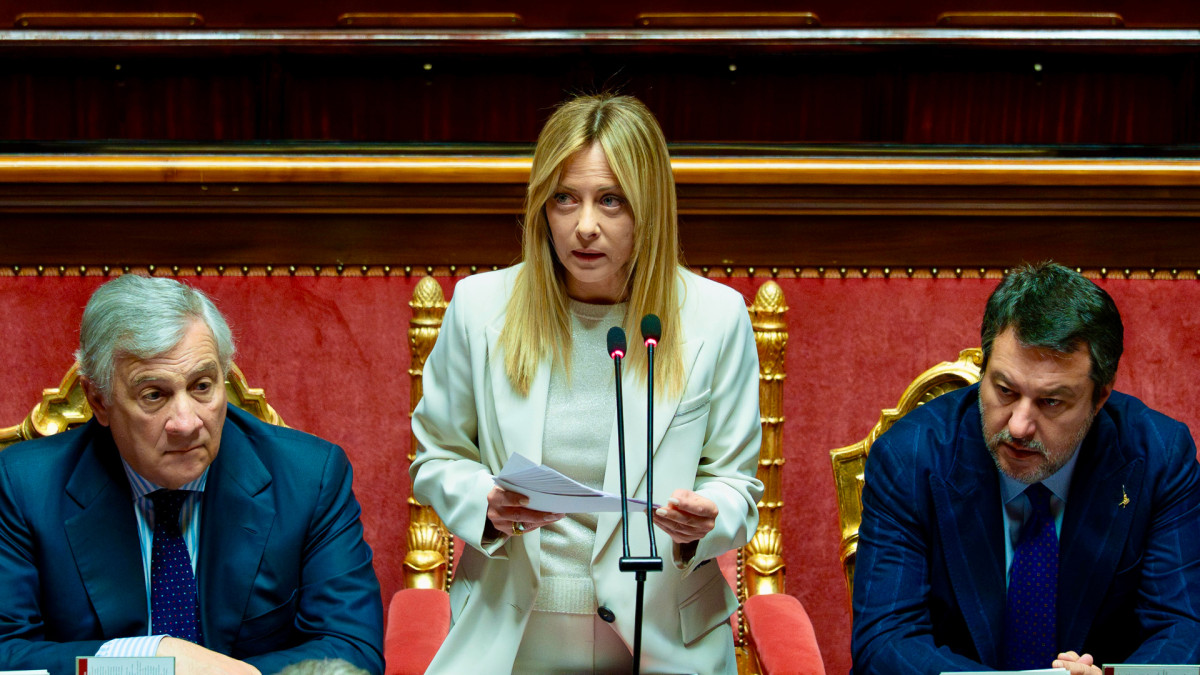
Italian Prime Minister Giorgia Meloni in the Senate.Government of Italy
Giorgia Meloni’s defeat in the justice referendum held on March 22 and 23 has triggered debate over whether early general elections should be called. Legally, losing a constitutional reform referendum does not oblige the government to resign or force new elections: of the five referendums held, Silvio Berlusconi — who lost the 2006 referendum — neither resigned nor proposed calling new elections, while Matteo Renzi, defeated in the 2016 referendum, did resign, but there was no early election. Meloni had already announced before her referendum that she had no intention of resigning under any circumstances, and she also ruled out asking the President of the Republic, Sergio Mattarella, to dissolve Parliament.
In any case, the defeat in the referendum has intensified a number of underlying internal contradictions within Meloni’s government, which has been somewhat dissatisfied with the performance of the current team. On the one hand, the ruling coalition is showing signs of strain; on the other, the Lega is uneasy about competition from Roberto Vannacci, while in Forza Italia, Marina Berlusconi wants a thorough overhaul of the party. The biggest clash has involved Daniela Santanchè, the tourism minister, whose resignation, demanded by Meloni, did not come easily given her resistance. In the end, Giusi Bartolozzi, chief of staff at the Ministry of Justice, and Andrea Delmastro, undersecretary at the same ministry, also left their posts, while Maurizio Gasparri, Forza Italia’s Senate spokesperson, tendered his resignation. All of this suggests that the justice minister, Carlo Nordio, may have only limited time left in office, since most of the blame for the referendum failure has fallen on the ministry’s team.
Officially, Fratelli d’Italia says through agriculture minister Francesco Lollobrigida that the prospect of an early election non mi risulta, which in politichese — the jargon of politicians — can mean everything or nothing. The Lega also has little interest in such a move, although an early election could complicate Vannacci’s ambitions, with whom it plans to compete by pushing its message even further to the right. Antonio Tajani of Forza Italia regards the early-election hypothesis as mere speculation with little basis, given that his party is immersed in a process of internal restructuring. The problems would be no smaller for the opposition parties (Partito Democratico, Movimento 5 Stelle, Alleanza Verdi Sinistra and Italia Viva), because they lack a common line, an agreed program and a clear leader (given the rivalry between Elly Schlein and Giuseppe Conte), and, moreover, it is unclear how such a leader would be chosen (through primaries? through a leadership deal?).
Polling averages do not guarantee Meloni a particularly favorable outcome either: Fratelli d’Italia 26.7% (27% in 2022), Lega 8.3% (8.8% in 2022), Forza Italia 9.5% (8.2% in 2022). On the opposition side: Partito Democratico 22% (19% in 2022), Movimento 5 Stelle 14.2% (15.5% in 2022) (YouTrend polls of March 26 and IPSOS, analyzed by Nando Pagnoncelli in Corriere della Sera on March 29). In short, the right-wing bloc would be hovering around 46% and the opposition bloc around 43%. Another relevant figure is personal trust in the leaders: Meloni falls from 44% to 40%, Tajani remains steady at 32%, Conte remains steady at 30%, Schlein rises from 23% to 26%, and Salvini falls from 24% to 22%.
In short, an early election would not be impossible, but it does seem unlikely, while what is almost certain is a change in government through a rimpasto (reshuffle) more or less extensive and affecting several ministers — something that is not straightforward either, since the internal balances within the parties and the distribution of portfolios are always a source of intense disputes.
In any case, the defeat in the referendum has intensified a number of underlying internal contradictions within Meloni’s government, which has been somewhat dissatisfied with the performance of the current team. On the one hand, the ruling coalition is showing signs of strain; on the other, the Lega is uneasy about competition from Roberto Vannacci, while in Forza Italia, Marina Berlusconi wants a thorough overhaul of the party. The biggest clash has involved Daniela Santanchè, the tourism minister, whose resignation, demanded by Meloni, did not come easily given her resistance. In the end, Giusi Bartolozzi, chief of staff at the Ministry of Justice, and Andrea Delmastro, undersecretary at the same ministry, also left their posts, while Maurizio Gasparri, Forza Italia’s Senate spokesperson, tendered his resignation. All of this suggests that the justice minister, Carlo Nordio, may have only limited time left in office, since most of the blame for the referendum failure has fallen on the ministry’s team.
"Trying to force an early election looks like a headlong rush, and it is far from clear that, after the referendum defeat, it would be the best scenario"Under these circumstances, the possibility of going to an early election appears to be under consideration. It is an option that carries risks, although, if it were to happen and Meloni renewed her majority, she would emerge much stronger. There are also doubts about the timing of any early dissolution: in June, so that the budget could later be presented? In October, under a new electoral law? In short, trying to force an early election looks like a headlong rush, and it is far from clear that, after the referendum defeat, it would be the best scenario, while keeping the current government team in place until 2027 could bring heavy political wear. It is true that an early election would make life harder for the center-left alternative, which for the moment lacks both a common program and a clear leader, but European circumstances cannot be ignored (the risk that Italy could be warned by the EU authorities over an excessive deficit) nor international ones (the right’s support for Donald Trump is becoming increasingly awkward in light of his erratic conduct during the Iran war).
What political and electoral risks would an early election entail for Meloni?
Accordingly, raising the prospect of an early election has pros and cons: it would catch the opposition off guard, but there are many more drawbacks. To begin with, the economic situation is delicate, as there are signs of recession in Italy (a 0.6% drop in industrial production), inflation is rising, fuel prices are increasing, Confindustria has rejected a government fiscal decree-law, and the new budget remains up in the air. In addition, calling an early election would mean breaking one of Meloni’s promises to serve out the full term (if she remains in office, on September 4 she will surpass the record of Berlusconi II). Moreover, under Italy’s constitutional system, the power to dissolve Parliament early lies with the President of the Republic, and Mattarella does not appear inclined to do so: such a move would not be justified because there is already a clear parliamentary majority supporting the government, and, in any event, the delicate and complex international context does not favor such a step. Finally — and this is no minor issue — it would be very risky for Meloni to go to the polls under the current electoral law (the Rosatellum), as various simulations show that Meloni’s coalition might fail to renew its current majority. Meloni is therefore in a hurry to secure approval of her electoral reform (the Stabilicum) as soon as possible, among other reasons because she has the majority to do so, although it remains to be seen whether she can achieve it in the very short term, as she intends.Officially, Fratelli d’Italia says through agriculture minister Francesco Lollobrigida that the prospect of an early election non mi risulta, which in politichese — the jargon of politicians — can mean everything or nothing. The Lega also has little interest in such a move, although an early election could complicate Vannacci’s ambitions, with whom it plans to compete by pushing its message even further to the right. Antonio Tajani of Forza Italia regards the early-election hypothesis as mere speculation with little basis, given that his party is immersed in a process of internal restructuring. The problems would be no smaller for the opposition parties (Partito Democratico, Movimento 5 Stelle, Alleanza Verdi Sinistra and Italia Viva), because they lack a common line, an agreed program and a clear leader (given the rivalry between Elly Schlein and Giuseppe Conte), and, moreover, it is unclear how such a leader would be chosen (through primaries? through a leadership deal?).
Polling averages do not guarantee Meloni a particularly favorable outcome either: Fratelli d’Italia 26.7% (27% in 2022), Lega 8.3% (8.8% in 2022), Forza Italia 9.5% (8.2% in 2022). On the opposition side: Partito Democratico 22% (19% in 2022), Movimento 5 Stelle 14.2% (15.5% in 2022) (YouTrend polls of March 26 and IPSOS, analyzed by Nando Pagnoncelli in Corriere della Sera on March 29). In short, the right-wing bloc would be hovering around 46% and the opposition bloc around 43%. Another relevant figure is personal trust in the leaders: Meloni falls from 44% to 40%, Tajani remains steady at 32%, Conte remains steady at 30%, Schlein rises from 23% to 26%, and Salvini falls from 24% to 22%.
In short, an early election would not be impossible, but it does seem unlikely, while what is almost certain is a change in government through a rimpasto (reshuffle) more or less extensive and affecting several ministers — something that is not straightforward either, since the internal balances within the parties and the distribution of portfolios are always a source of intense disputes.

Cesáreo Rodríguez-Aguilera de Prat
Catedrático de Ciencia Política de la Universidad de Barcelona
Ahora en portada
18 de octubre de 2026
18 de octubre de 2026
17 de octubre de 2026
Noticias relacionadas
Hace 30 semanas
El referéndum judicial de Giorgia Meloni: ¿qué se vota y qué dicen las encuestas?
Hace 31 semanas
¿Por qué Giorgia Meloni está intentando cambiar el sistema electoral a su favor?
Lo más leído