Miércoles, 21 de octubre de 2026




LÓPEZ PLANA'S EUROPEAN COMPASS
Geopolitics in 280 characters is colonizing national elections throughout the West
"Foreign policy often requires complex decisions and international commitments that aren’t always easily translated into simple political messaging," says Marc López Plana, "but electoral politics rewards clarity and simplicity. Managing that tension is now one of the challenges of democratic politics." This week, the editor and director of 'Agenda Pública' examines how global instability and the return of war to the continent have made foreign policy a determining factor in electoral competitions.

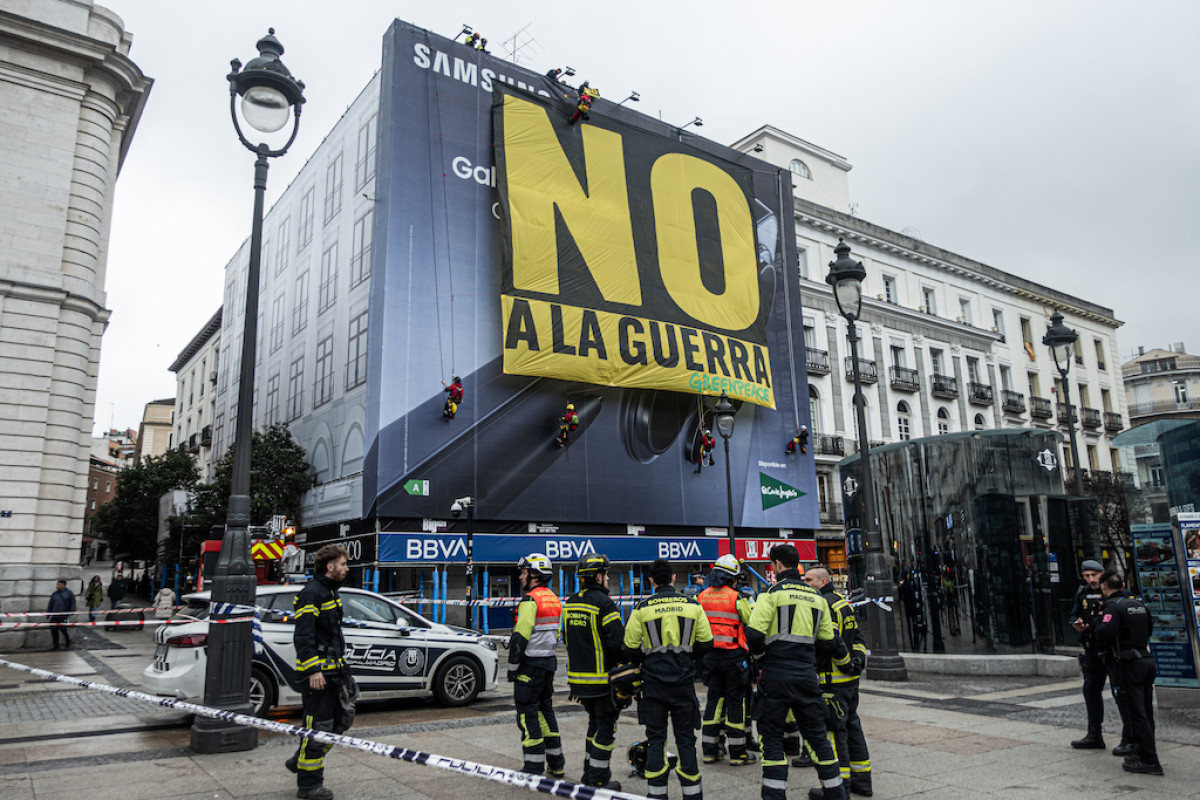
Greenpeace takes down a huge banner in Sol featuring the slogan 'No to war'.César Vallejo Rodríguez / Europa Press / ContactoPhoto
Through much of the past half-century, democratic politics in Western Europe have operated under a tacit division of labor. Governments have managed international politics – alliances, diplomacy, conflicts – and voters have made their decisions mainly on the basis of domestic issues: the economy, public services, or political leadership. Elections used to be about jobs and welfare, while external policy was a matter for foreign ministries and experts.
That balance is starting to break down. The growing instability of the international system, the return of war to Europe, and transformations to the information ecosystem are all injecting international issues into electoral politics in a way that once seemed unlikely. Voters don’t just have an opinion about international issues; increasingly, those issues are influencing how they evaluate their governments and, ultimately, how they vote.
Spain offers a particularly interesting example of that change. Across recent weeks, President Pedro Sánchez has reiterated a clear message: "No to war." At first glance, that might seem a generic statement, or a moral position that happens to be widely shared. In reality, it’s also a political signal aimed at an electorate with a very specific historical memory.
Even so, there have been some exceptions. The first was the referendum on remaining in NATO in 1986; that consultation was one of few moments when foreign policy issues became politicized in Spain. The decision to remain in the Atlantic alliance consolidated the country’s strategic anchorage in the Western bloc, but it also revealed that public opinion was sensitive to discussion of war and security.
The second exception was the invasion of Iraq in 2003. The government’s decision to support that U.S.-led intervention sparked one of the largest social mobilizations in Spain’s recent history. Massive demonstrations against the war reflected a profound rejection of Spanish participation in a conflict widely perceived as unjustified.
More importantly, that episode demonstrated an aspect which many analysts had considered unlikely: that an international conflict might have direct electoral consequences. The Iraq war wasn’t just a foreign policy issue – it became a central focus of domestic political competition.
Today, the context is different. Russia’s invasion of Ukraine ushered war back into the heart of European politics. The consequences of conflict were no longer limited to the battlefield but began to affect energy security, inflation, supply chains, and defense spending across the continent.
In other words, war has ceased to be a faraway event and has become an influential factor in the daily lives of voters. For that reason, political leaders are increasingly attentive to the electoral side of international politics. Decisions around sanctions, alliances, and military spending are no longer viewed as solely strategic. They’re also seen as choices that can generate domestic costs and benefits in political terms.
Sánchez’s message of ‘no to war’ must be understood in that context. It doesn’t necessarily imply a break with Spain’s international commitments, or a radical revision of its foreign policy. But it does reflect a growing sensitivity to public perceptions vis-à-vis international conflict.
Social networks have radically altered that balance. Now global conflicts are discussed in real time on digital platforms where images, testimonies, and opinions circulate very quickly. The boundaries between information, opinion, and political mobilization are increasingly blurred. An international event can enter into the domestic debate in a matter of hours.
This new information ecosystem brings numerous consequences. For one thing, citizens are more exposed than ever to international events. Those events are frequently interpreted through a national political framework. And political leaders need to respond more rapidly to the public perceptions being constructed within that environment.
The result is an increasingly intense interaction between global politics and electoral politics. Spain is not the only country where this is happening. In many Western democracies, geopolitical issues have started to influence electoral behavior in ways that would have seemed unlikely two decades ago.
What’s changing isn’t just the content of global politics but its place in democratic politics. For decades, political scientists championed the notion that foreign policy rarely exerted significant influence on voters. Elections were decided mainly by the state of the economy, or by evaluation of the government’s performance on the domestic front.
That assumption is now being challenged. International conflicts can influence the decisions of voters in various ways. They can affect the way political leadership is perceived, especially in times of crisis. They can have economic consequences that alter the well-being of citizens. And they can activate political identities related to a country’s position in the world.
Spain presents an interesting case because, historically, it’s been among the European countries where foreign policy carried the least weight in electoral contests. Spanish campaigns have traditionally revolved around internal issues: economic growth, inequality, institutional reforms, and territorial matters.
The message of "No to war" reflects precisely that change. It’s not simply a moral or strategic stance. It is also a response to an electorate anxious about an increasingly conflict-ridden world, looking to its leaders for clear signals on the role their country should be playing.
For democratic governments, this emerging scenario poses a delicate dilemma. Foreign policy often requires complex decisions and international commitments that can’t easily be translated into simple messaging. But electoral politics rewards precisely clarity and simplicity.
Managing that tension will remain a central challenge for democratic politics in the years to come. War has returned to Europe. And with it, global politics has returned to a place that it had long since abandoned: electoral competition.
That balance is starting to break down. The growing instability of the international system, the return of war to Europe, and transformations to the information ecosystem are all injecting international issues into electoral politics in a way that once seemed unlikely. Voters don’t just have an opinion about international issues; increasingly, those issues are influencing how they evaluate their governments and, ultimately, how they vote.
Spain offers a particularly interesting example of that change. Across recent weeks, President Pedro Sánchez has reiterated a clear message: "No to war." At first glance, that might seem a generic statement, or a moral position that happens to be widely shared. In reality, it’s also a political signal aimed at an electorate with a very specific historical memory.
"The slogan 'No to war' functions as a political signal aimed at an electorate with a very specific historical memory"Spanish politics has a peculiar relationship with war. For decades, international conflicts rarely played a central role in electoral debates. Spain participated in international alliances, contributed to military missions, and maintained a foreign policy in relative alignment with its Western partners. But those issues didn’t often serve to structure electoral campaigns.
Even so, there have been some exceptions. The first was the referendum on remaining in NATO in 1986; that consultation was one of few moments when foreign policy issues became politicized in Spain. The decision to remain in the Atlantic alliance consolidated the country’s strategic anchorage in the Western bloc, but it also revealed that public opinion was sensitive to discussion of war and security.
The second exception was the invasion of Iraq in 2003. The government’s decision to support that U.S.-led intervention sparked one of the largest social mobilizations in Spain’s recent history. Massive demonstrations against the war reflected a profound rejection of Spanish participation in a conflict widely perceived as unjustified.
More importantly, that episode demonstrated an aspect which many analysts had considered unlikely: that an international conflict might have direct electoral consequences. The Iraq war wasn’t just a foreign policy issue – it became a central focus of domestic political competition.
"The Iraq war wasn’t just a foreign policy issue – it became a central focus of domestic political competition"In the years that followed, that phenomenon seemed to have proven an exception to the rule rather than the start of a new trend. Spanish politics returned its focus to domestic issues: the financial crisis, unemployment, territorial concerns, and management of the welfare state.
Today, the context is different. Russia’s invasion of Ukraine ushered war back into the heart of European politics. The consequences of conflict were no longer limited to the battlefield but began to affect energy security, inflation, supply chains, and defense spending across the continent.
In other words, war has ceased to be a faraway event and has become an influential factor in the daily lives of voters. For that reason, political leaders are increasingly attentive to the electoral side of international politics. Decisions around sanctions, alliances, and military spending are no longer viewed as solely strategic. They’re also seen as choices that can generate domestic costs and benefits in political terms.
Sánchez’s message of ‘no to war’ must be understood in that context. It doesn’t necessarily imply a break with Spain’s international commitments, or a radical revision of its foreign policy. But it does reflect a growing sensitivity to public perceptions vis-à-vis international conflict.
"Decisions around sanctions, alliances, and military spending are no longer viewed as solely strategic. They’re also seen as choices that can generate domestic costs and benefits in political terms"In part, that sensitivity responds to structural changes in the way information spreads in contemporary democracies. For much of the 20th century, international politics reached the public only through a limited number of channels: the traditional press, television, and official statements. Coverage was somewhat mediated, and narratives tended to build up slowly.
Social networks have radically altered that balance. Now global conflicts are discussed in real time on digital platforms where images, testimonies, and opinions circulate very quickly. The boundaries between information, opinion, and political mobilization are increasingly blurred. An international event can enter into the domestic debate in a matter of hours.
This new information ecosystem brings numerous consequences. For one thing, citizens are more exposed than ever to international events. Those events are frequently interpreted through a national political framework. And political leaders need to respond more rapidly to the public perceptions being constructed within that environment.
The result is an increasingly intense interaction between global politics and electoral politics. Spain is not the only country where this is happening. In many Western democracies, geopolitical issues have started to influence electoral behavior in ways that would have seemed unlikely two decades ago.
"An international event can enter into the domestic debate in a matter of hours"In the United States, the relationship with China is today a rare issue that can generate bipartisan consensus – as well as an arena where political factions compete, each seeking to take a firmer stance against the Asian power. With the war in Iran, one of Trump’s fears is how that aggression will affect the midterm elections in November. In several European countries, debates over support for Ukraine and increased defense spending have started to divide parties as well as voters.
What’s changing isn’t just the content of global politics but its place in democratic politics. For decades, political scientists championed the notion that foreign policy rarely exerted significant influence on voters. Elections were decided mainly by the state of the economy, or by evaluation of the government’s performance on the domestic front.
That assumption is now being challenged. International conflicts can influence the decisions of voters in various ways. They can affect the way political leadership is perceived, especially in times of crisis. They can have economic consequences that alter the well-being of citizens. And they can activate political identities related to a country’s position in the world.
Spain presents an interesting case because, historically, it’s been among the European countries where foreign policy carried the least weight in electoral contests. Spanish campaigns have traditionally revolved around internal issues: economic growth, inequality, institutional reforms, and territorial matters.
"Electoral politics rewards clarity and simplicity, while foreign policy often requires complex decisions and international commitments that can’t easily be translated into simple messaging"However, the confluence of a more volatile international context and a more fragmented information ecosystem might be changing that dynamic.
The message of "No to war" reflects precisely that change. It’s not simply a moral or strategic stance. It is also a response to an electorate anxious about an increasingly conflict-ridden world, looking to its leaders for clear signals on the role their country should be playing.
For democratic governments, this emerging scenario poses a delicate dilemma. Foreign policy often requires complex decisions and international commitments that can’t easily be translated into simple messaging. But electoral politics rewards precisely clarity and simplicity.
Managing that tension will remain a central challenge for democratic politics in the years to come. War has returned to Europe. And with it, global politics has returned to a place that it had long since abandoned: electoral competition.
Ahora en portada
21 de octubre de 2026
20 de octubre de 2026
21 de octubre de 2026
Noticias relacionadas
Hace 31 semanas
La geopolítica en 280 caracteres coloniza las elecciones nacionales en Occidente
Hace 33 semanas
El "no" de España a Trump protege la soberanía española y a la OTAN
Hace 32 semanas