Sábado, 17 de octubre de 2026




SPANISH DEFENSE
The Indra-Escribano merger: the conditions to create an Iberian defence champion
French financial analyst Faÿçal Hafied, a specialist in industrial policies, deep tech technologies, and the defense sector, provides his insights for 'Agenda Pública' on "Indra’s planned acquisition of Escribano Mechanical & Engineering (EM&E)". He sheds light on both "the sovereign interest and the industrial synergies of the deal, sharing his own calculations, and proposes several financial structuring options aimed at mitigating the risks of independence, governance, and execution" surrounding this strategic operation.

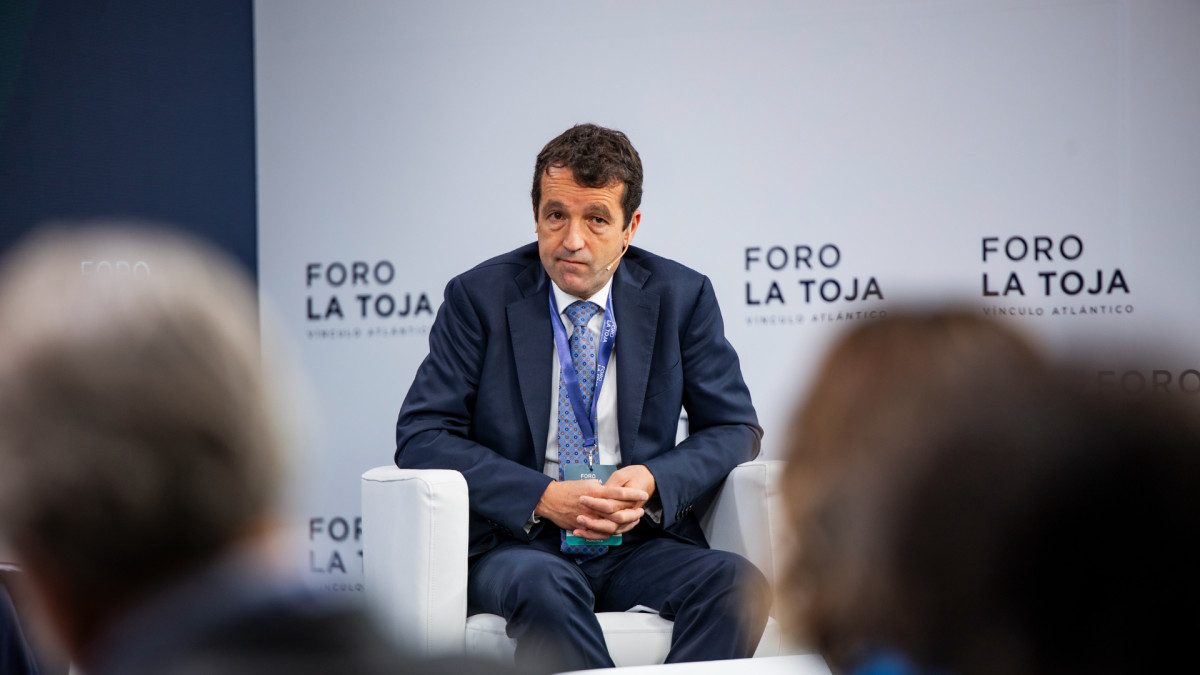
Ángel Escribano is co-founder of EM&E and chairman at Indra Group.Agenda Pública / Yanka Soto
Europe is rearming at full speed. Driven by the war in Ukraine, the deterioration of the strategic environment, and U.S. pressure on allies, the valuations of defense prime contractors are soaring. Spain, long frugal, has unveiled 31 Special Modernization Programs (PEM) worth around €3.8 billion, directly benefiting Indra, the national leader in the defense sector. The company, with DNA still very much rooted in IT, now aims to absorb Escribano Mechanical & Engineering (EM&E) to move up the value chain and establish a leading land systems player headquartered in Madrid. While the operation makes industrial sense, it also brings governance, execution, market approval, and European regulatory challenges.
These countries have invested massively in modernizing their armed forces, anticipating a prolonged confrontation with Moscow. In the West, however, trajectories are more hesitant: Spain allocated only 1.4% of its GDP to defense in 2024, Belgium 1.3%, and Italy 1.6%, all well below NATO’s 2% target.
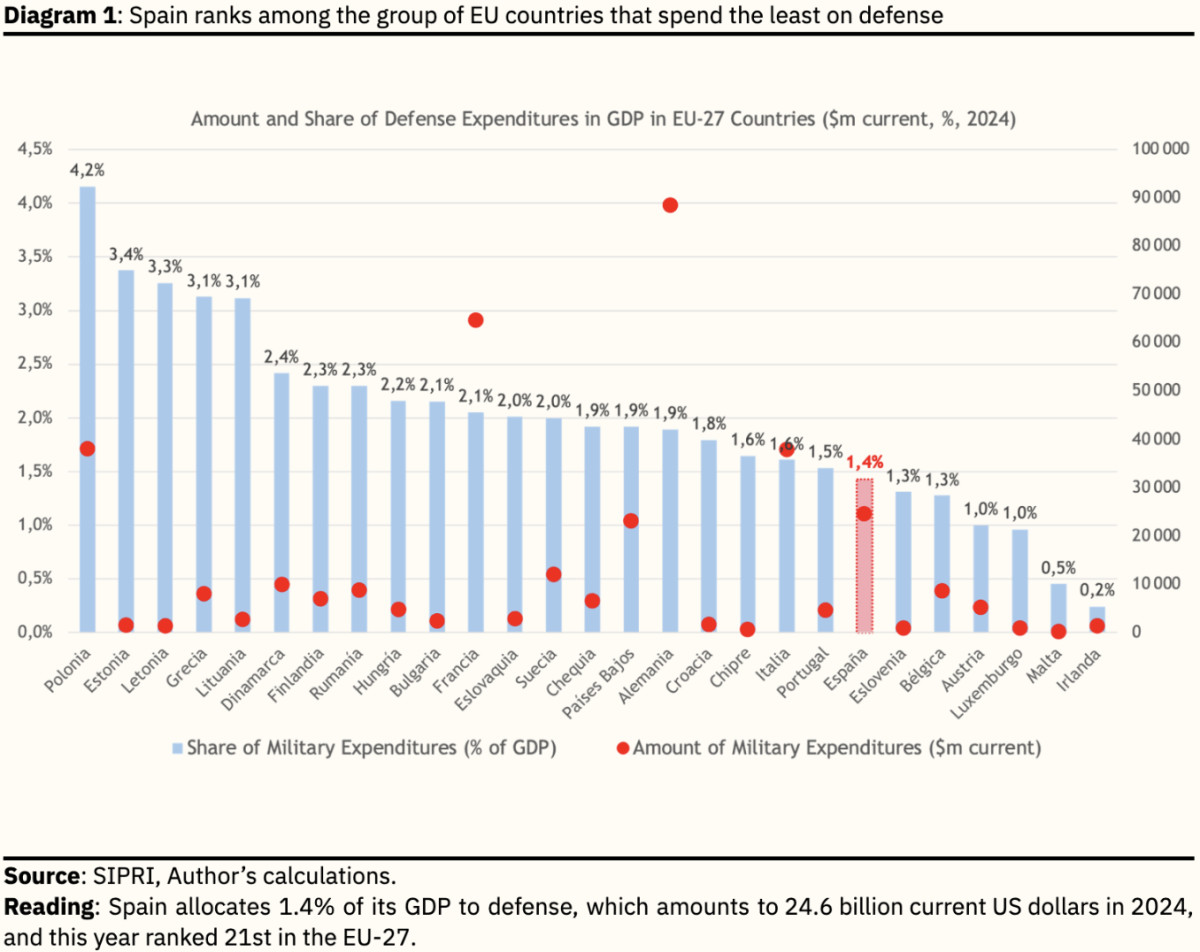
Even though Paris and Berlin have increased their budgets (+$32.3 billion for Germany, +$9.9 billion for France between 2022 and 2024), the efforts remain belated and sometimes fragmented (six countries account for 75% of the EU’s rearmament effort over the 2022–2024 period).
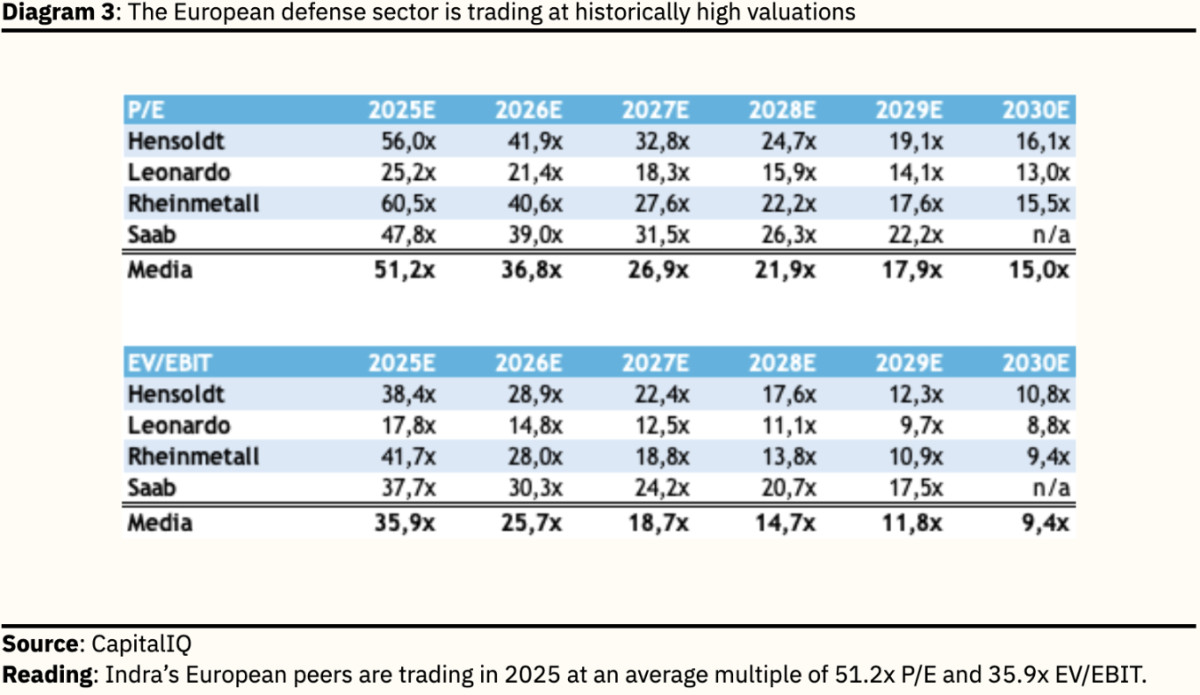
A similar trend can be seen in EV/EBIT multiples: 41.7x for Rheinmetall or 38.4x for Hensoldt in 2025, against an average of 35.9x, before a gradual decline toward more "normal" levels by 2030.
This surge reflects a dual phenomenon: on the one hand, markets’ conviction that high-intensity warfare has returned as a structuring horizon for European security; on the other hand, the relative scarcity of assets purely exposed to defense on the continent, which concentrates investment flows.
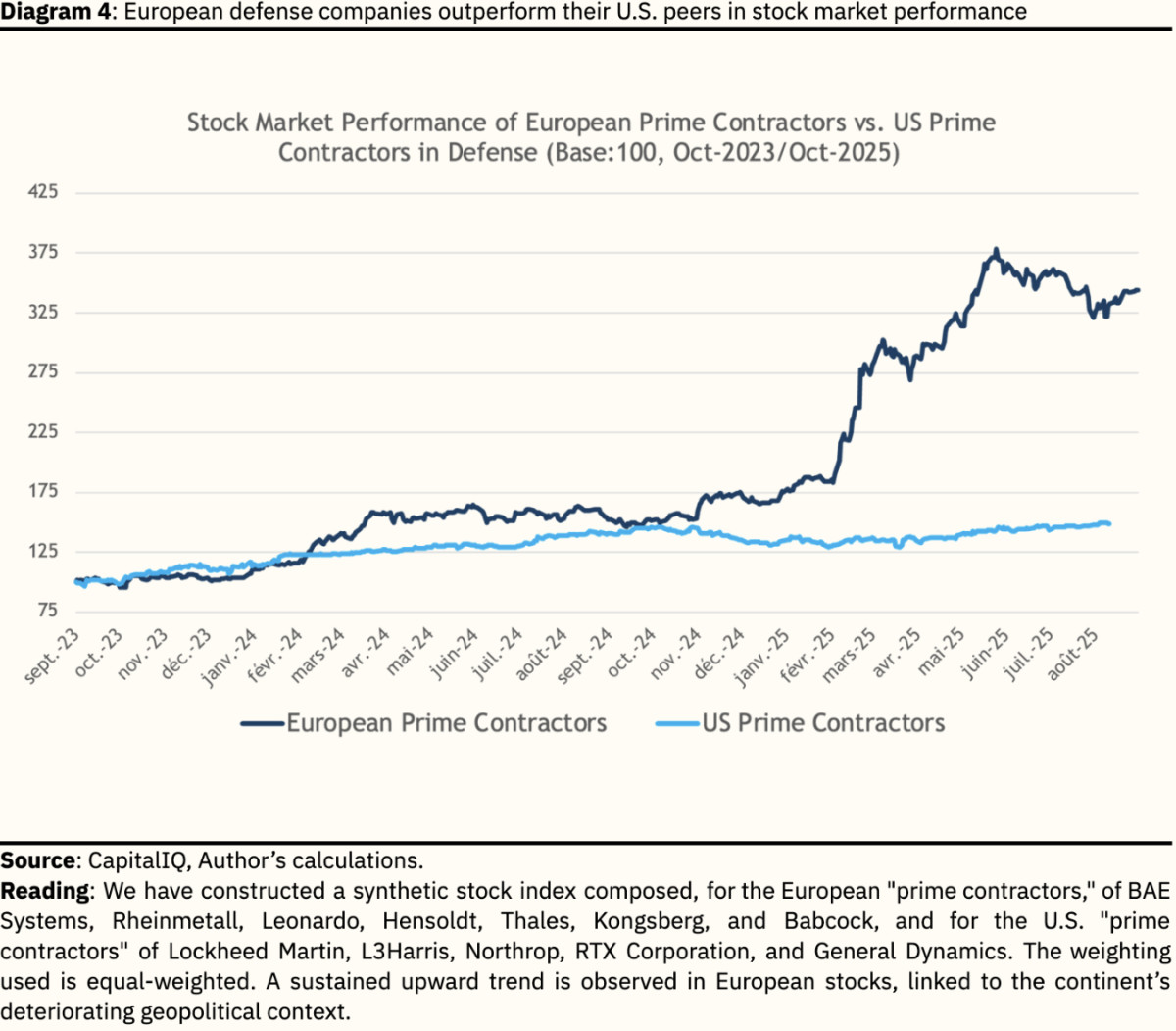
The rise in European defense contractors’ share prices is therefore significantly stronger than that of their American peers, whose multiples remain more moderate, reflecting a broader investor base and already massive order books. In Europe, by contrast, the catch-up effect and the prospect of continuously rising budgets through the 2030s are fueling a genuine valuation premium.
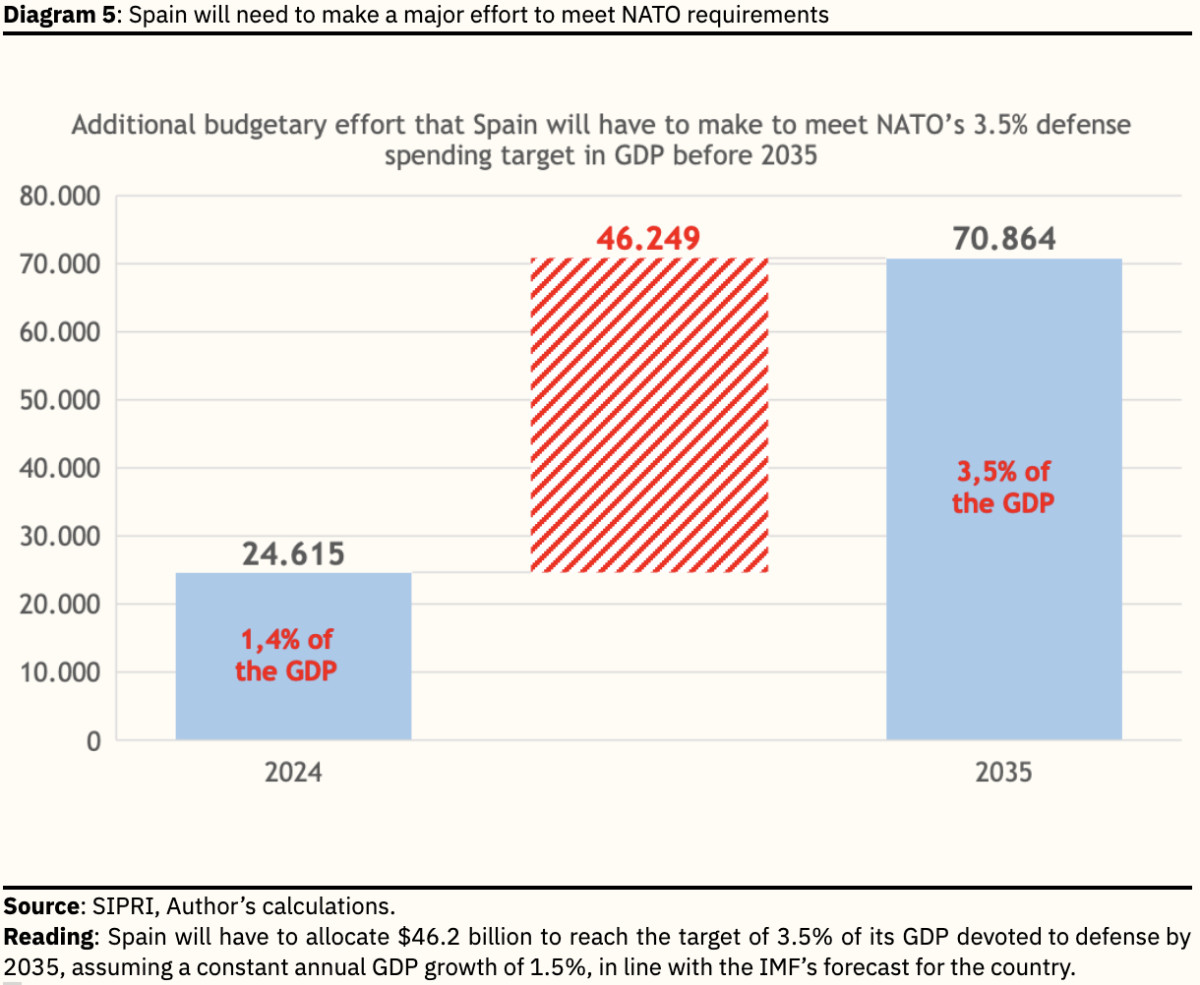
While the Sánchez government has voiced reservations about the ambitious goal of raising defense spending to 3.5% of GDP by 2035, it nevertheless took a decisive step by drafting a military spending program in the spring. According to our analysis, reaching the 3.5% threshold would represent a cumulative effort of about $46.4 billion for the country by that date, assuming moderate annual growth of 1.5% in line with IMF projections.
In April 2025, an unprecedented plan was presented in line with these efforts: it provides for €10.5 billion in investments, structured around five main pillars: increasing troop numbers and improving soldiers’ living conditions (€3.7 billion), cybersecurity and electronic technologies (€3.3 billion), equipment renewal (€2 billion), crisis management and relief capabilities (€1.8 billion), and the financing of external missions (€0.3 billion).
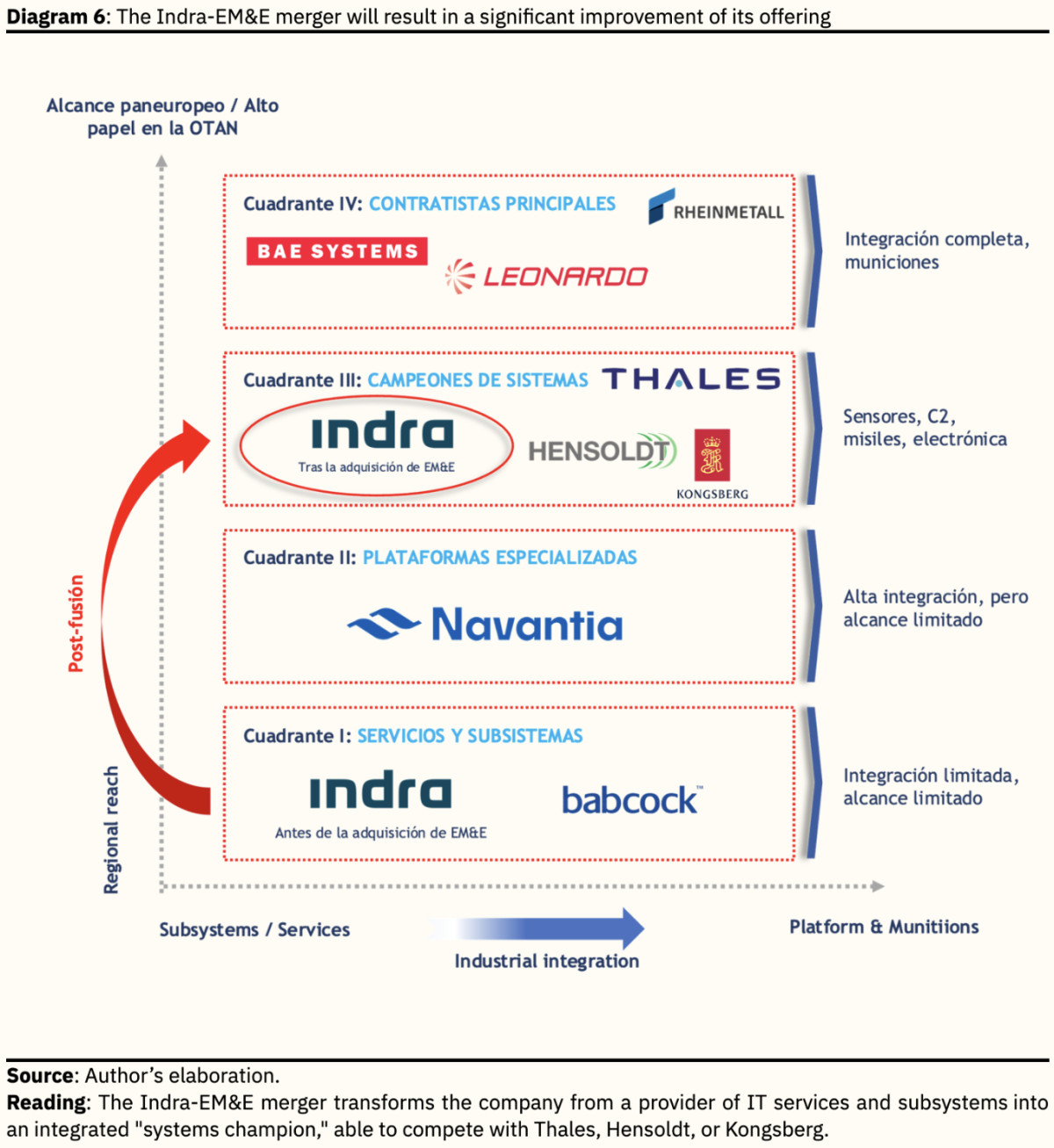
n other words, a post-merger Indra would no longer be merely the invisible architect of electronic systems, but a player capable of covering the entire spectrum, from networks and software to conventional weaponry and platforms. A transformation that fully justifies Madrid’s ambition to build a "Rheinmetall Ibérico."
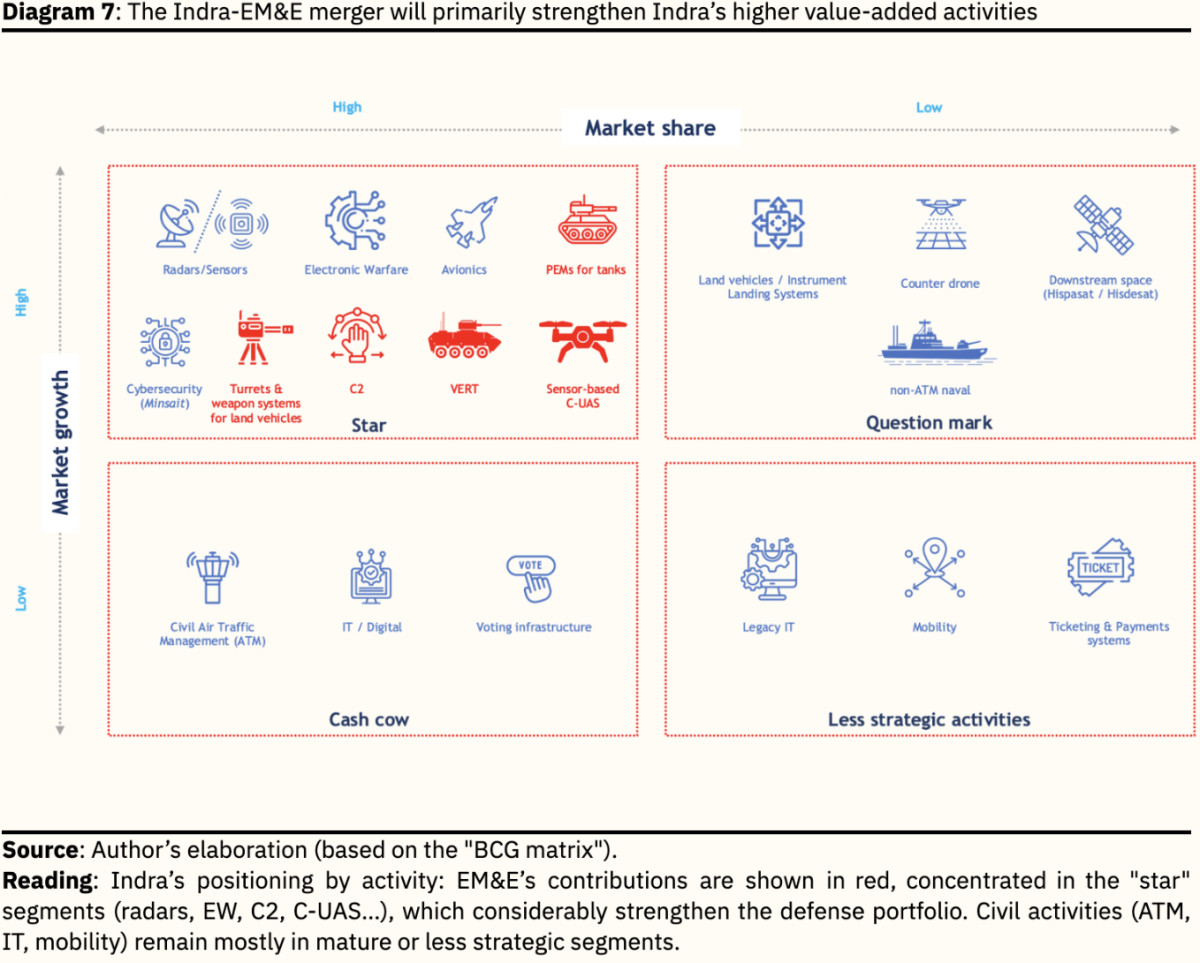
If the merger is studied through the lens of Indra’s business portfolio, the consolidated entity would be enriched with additional "star" activities (BCG matrix), mechanically reinforcing the strategic appeal of the deal. To the already established "stars": radars, EW, avionics, cybersecurity; EM&E adds high-growth segments: turrets and armaments for armored vehicles, MBT PEM, VERT, C-UAS systems integrating sensors and effectors.
This scale-up is not mere diversification but a genuine repositioning in the value chain: the combined Indra-EM&E entity would secure activities ensuring a future flow of recurring revenues and high margins.
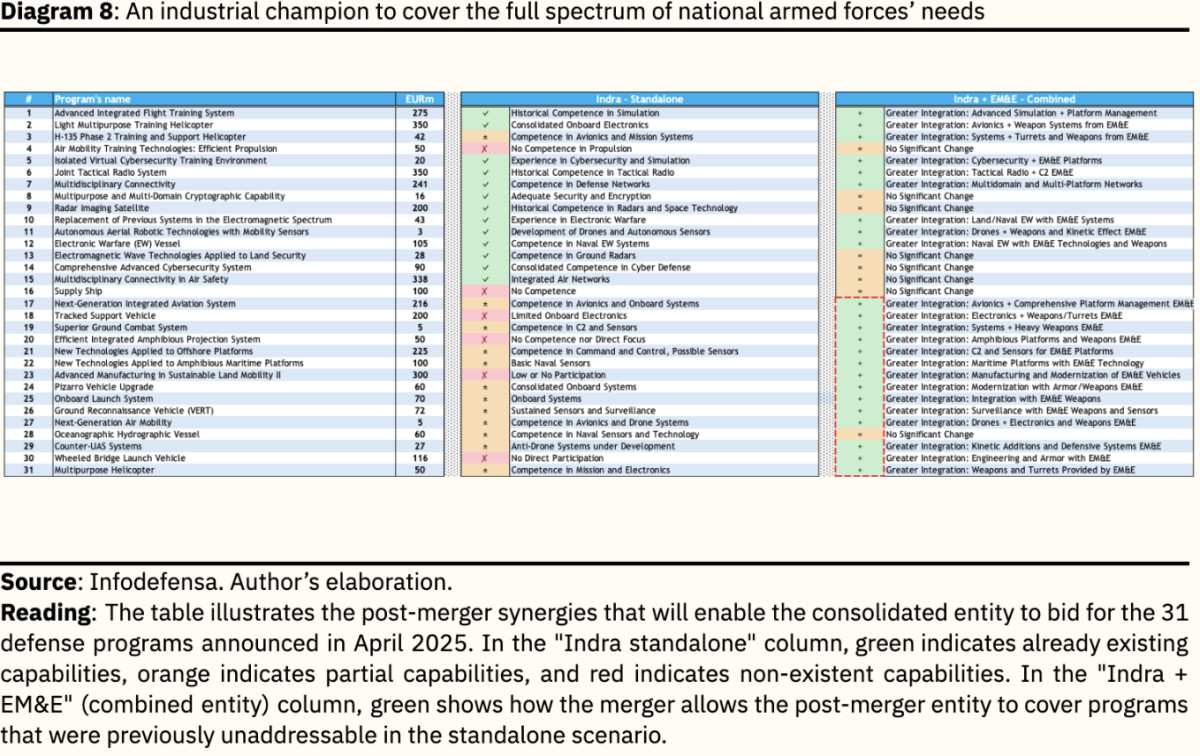
This repositioning would immediately translate into greater capacity to respond to new Spanish programs. In April 2025, Madrid announced 31 defense projects, worth €3.8 billion, aimed at addressing the most critical gaps in its armed forces.
On its own, Indra could only have met part of these needs: simulation, cybersecurity, embedded electronics. With EM&E, the spectrum broadens: combat vehicles, Pizarro modernization, kinetic anti-drone systems, amphibious platforms, and integration of heavy weapons on new helicopters.
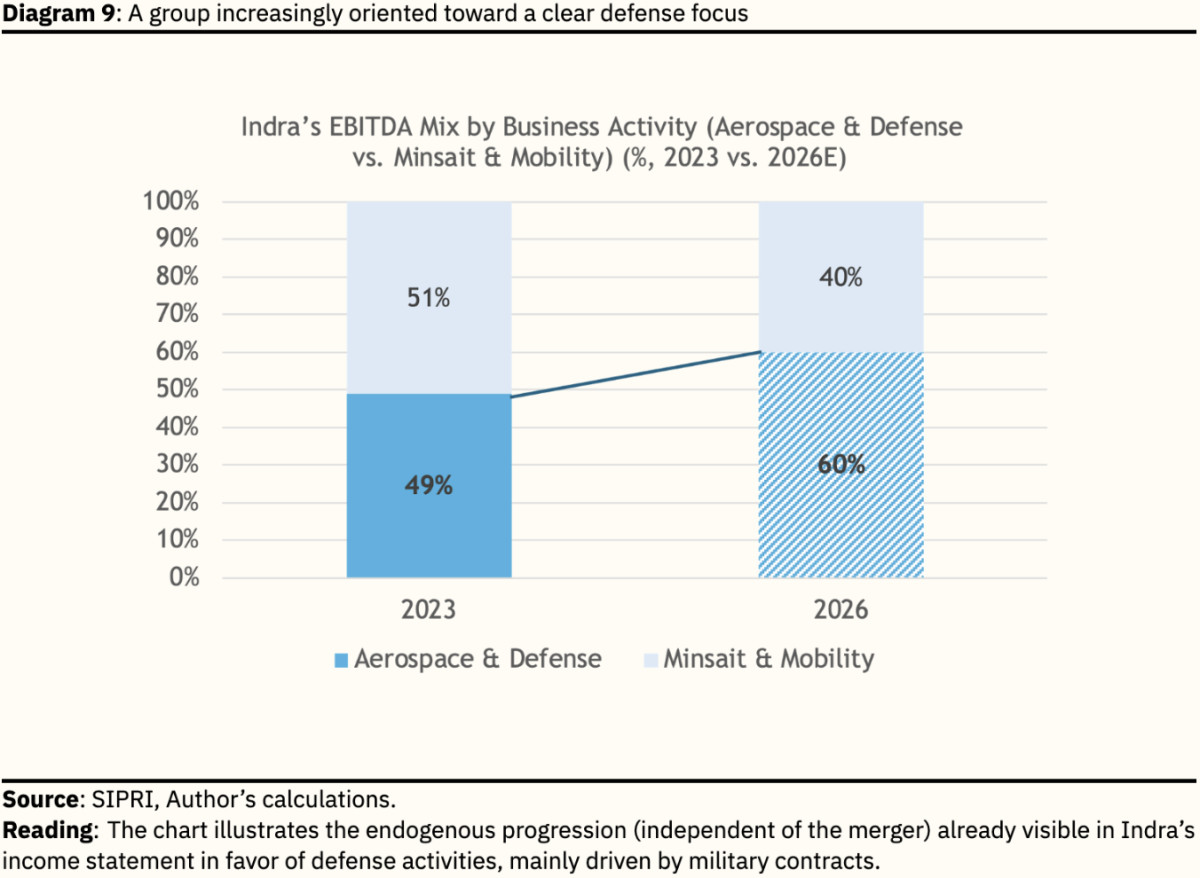
In practice, military orders are already sufficient to reorient the group’s financial profile, accentuating the prevalence of its A&D division. In 2023, Minsait and mobility activities still accounted for 51% of revenues, compared with 49% for A&D. By 2026, the trend is expected to reverse, with 60% for defense and only 40% for digital, reflecting a deliberate strategic pivot.
This shift accelerated in 2025 with a series of targeted acquisitions. In July, Indra finalized the purchase of Aertec Defence & Aerial Systems, an Andalusian company specializing in medium-sized unmanned aerial systems (UAS), including the TARSIS family, already tested by the Spanish armed forces. This deal strengthens its Weapons and Ammunition division, which focuses on counter-drone systems, precision-guided weapons, directed-energy systems, and unmanned vehicles. At the same time, Indra acquired a majority stake in TESS Defence, a leading player in electronics and land defense.
Above all, Indra remains Spain’s spearhead in the FCAS (Future Combat Air System) program, conducted jointly with France and Germany. Considered the most ambitious initiative of Europe’s defense industry, FCAS is about to enter its Phase II. But its future remains uncertain: persistent disputes between Airbus (Germany) and Dassault (France) over technological leadership threaten to slow down a project meant to embody the continent’s strategic autonomy.
Minority shareholders, for their part, are concerned about the dilutive effect of this capital increase and fear the emergence of a state-Escribano family duopoly. The risk is of establishing governance less attentive to financial discipline and more marked by the dangers of "crony capitalism," where industrial and political logics prevail over profitability imperatives.
On the industrial front, the rationale for the merger is solid: Indra contributes its expertise in electronic systems, radars, and C2, while EM&E brings its know-how in armaments, turrets, and armored vehicles. But operational integration is far from automatic. The cultural gap, digital and IT for Indra, heavy engineering for EM&E; could generate friction at the very moment when the Spanish armed forces are demanding rapid deliveries.
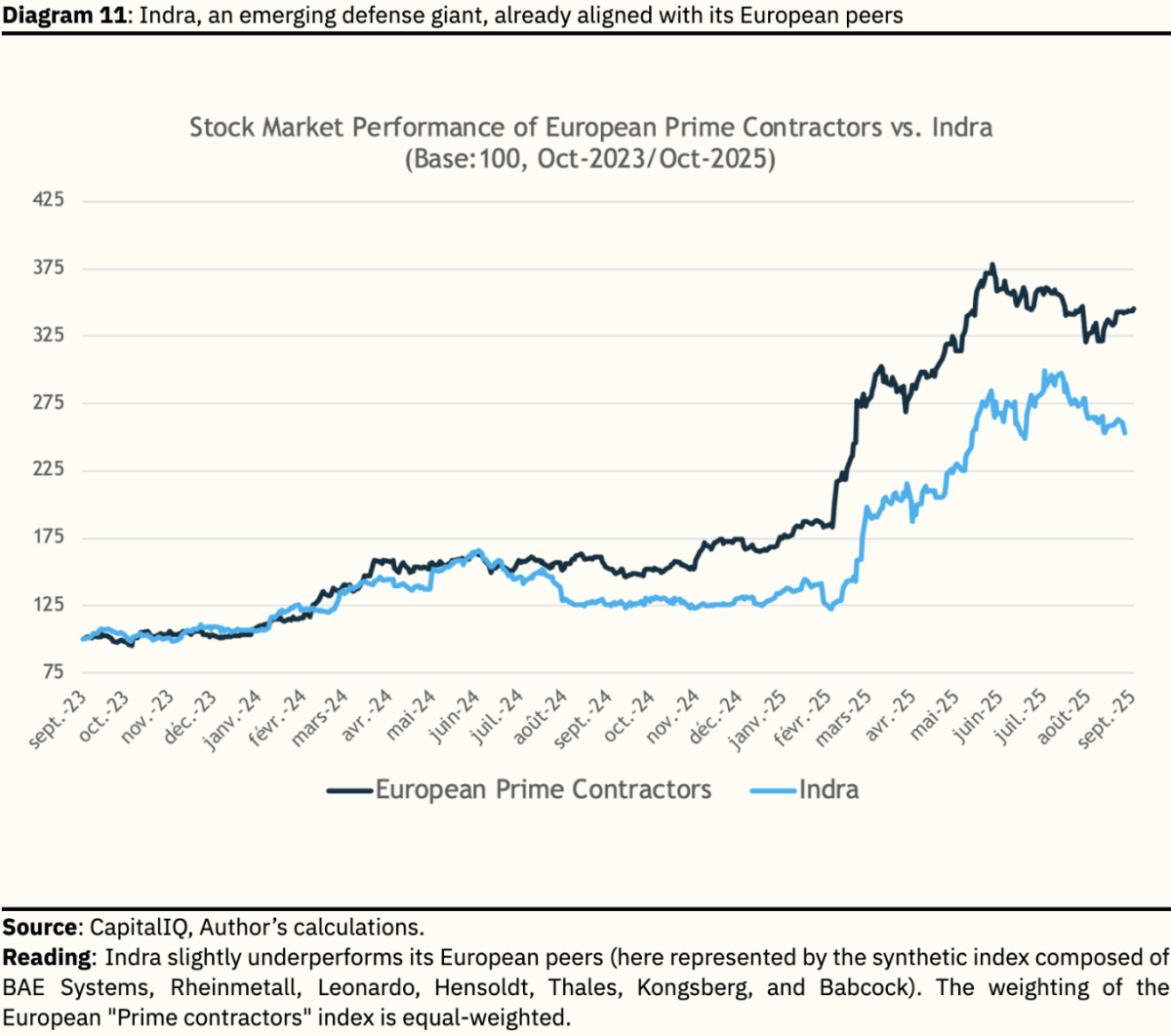
Ultimately, once the merger is completed, Madrid would have a true integrated champion, capable of leveraging economies of scale and standing on equal footing with the major European "prime contractors".
The Twilight of the Post–Cold War Unipolar World
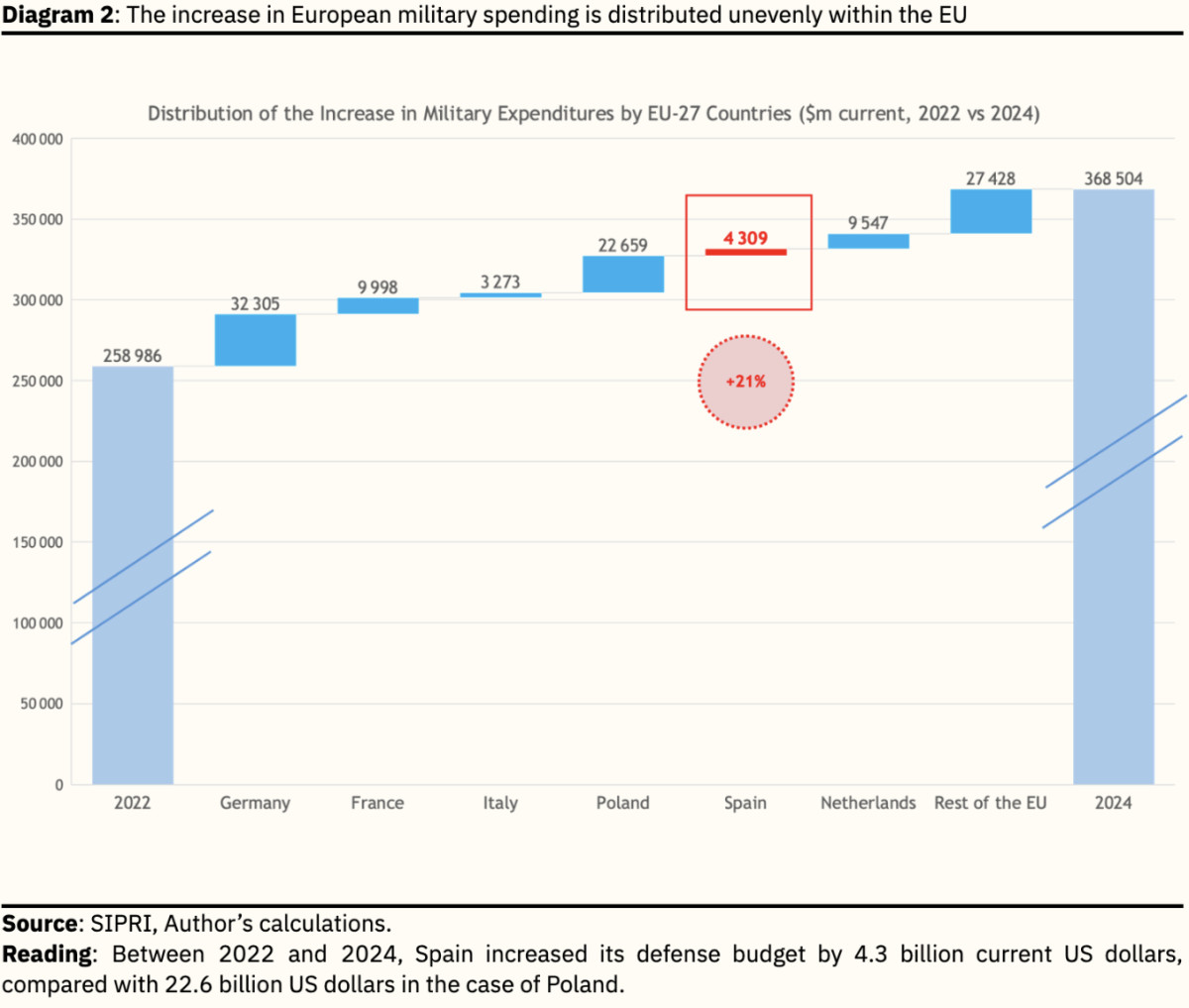
The high-intensity war unfolding in Ukraine since February 2022 has shattered several dogmas inherited from the "post–Cold War" era. European armies are rediscovering the importance of "conventional mass," logistics, and equipment ruggedness after three decades of lean professionalization and expeditionary operations. Since the invasion of Ukraine, Europe has been waking up from its strategic torpor. In 2024, the Twenty-Seven devoted $368.5 billion to defense, or 1.9% of their GDP, while the United States spent $997.3 billion (3.4% of GDP). The gap is staggering: Washington invests 2.7 times more than the entire Union and is rapidly approaching the symbolic threshold of $1 trillion annually, which it expects to surpass as early as 2026. These resources finance not only a massive conventional rearmament effort, but also large-scale forward-looking programs such as the "Golden Dome" project, conceived as a multi-layer shield integrating advanced radars, satellites, and interceptors to protect U.S. territory against ballistic or hypersonic attacks."This lag now translates into worrying obsolescence: half of land systems date back to before 1990 and 80% of surface-to-air defenses still rely on Cold War technologies"By comparison, Europe suffers from a historic capability gap: the budget cuts of the 1990s-2010s, underpinned by rhetoric on the "end of history" (Fukuyama) and faith in a perpetual Pax Americana, generated an investment shortfall estimated at more than $8 trillion compared to pre-1992 effort levels, and $1.6 trillion with respect to NATO’s minimum 2% of GDP threshold alone. This lag now translates into worrying obsolescence: half of land systems date back to before 1990, 80% of surface-to-air defenses still rely on Cold War technologies, and nearly half of combat ships and aircraft are more than thirty years old. Yet behind this defense budget catch-up lies a two-speed Europe. In the East, the war is perceived as an existential threat: Poland devotes 4.2% of its GDP to defense, the Baltic states between 3.1% and 3.4%, and Estonia has pushed its spending to record levels.
These countries have invested massively in modernizing their armed forces, anticipating a prolonged confrontation with Moscow. In the West, however, trajectories are more hesitant: Spain allocated only 1.4% of its GDP to defense in 2024, Belgium 1.3%, and Italy 1.6%, all well below NATO’s 2% target.
Even though Paris and Berlin have increased their budgets (+$32.3 billion for Germany, +$9.9 billion for France between 2022 and 2024), the efforts remain belated and sometimes fragmented (six countries account for 75% of the EU’s rearmament effort over the 2022–2024 period).
A Booming European Defense Sector
The rush toward conventional rearmament is not only visible in European arsenals: it is also reflected in the stock market performance of major defense manufacturers. The continent’s prime contractors (Hensoldt, Leonardo, Rheinmetall, Saab) are now trading at multiples that reflect expectations of a long cycle of military spending. The 2025 P/E ratios range from 25x for Leonardo to 60x for Rheinmetall, with an average of 51x, levels far removed from those of traditional industrial stocks.A similar trend can be seen in EV/EBIT multiples: 41.7x for Rheinmetall or 38.4x for Hensoldt in 2025, against an average of 35.9x, before a gradual decline toward more "normal" levels by 2030.
This surge reflects a dual phenomenon: on the one hand, markets’ conviction that high-intensity warfare has returned as a structuring horizon for European security; on the other hand, the relative scarcity of assets purely exposed to defense on the continent, which concentrates investment flows.
The rise in European defense contractors’ share prices is therefore significantly stronger than that of their American peers, whose multiples remain more moderate, reflecting a broader investor base and already massive order books. In Europe, by contrast, the catch-up effect and the prospect of continuously rising budgets through the 2030s are fueling a genuine valuation premium.
Spain Joins the Race for Conventional Rearmament
Spain, long lagging behind in military investment, is now forced to revise its priorities under pressure from its allies and its own strategic vulnerabilities. Despite a heated dispute with the Trump administration, which had led to the cancellation of F-35 orders, Madrid eventually accepted NATO’s required effort.While the Sánchez government has voiced reservations about the ambitious goal of raising defense spending to 3.5% of GDP by 2035, it nevertheless took a decisive step by drafting a military spending program in the spring. According to our analysis, reaching the 3.5% threshold would represent a cumulative effort of about $46.4 billion for the country by that date, assuming moderate annual growth of 1.5% in line with IMF projections.
In April 2025, an unprecedented plan was presented in line with these efforts: it provides for €10.5 billion in investments, structured around five main pillars: increasing troop numbers and improving soldiers’ living conditions (€3.7 billion), cybersecurity and electronic technologies (€3.3 billion), equipment renewal (€2 billion), crisis management and relief capabilities (€1.8 billion), and the financing of external missions (€0.3 billion).
"Spain, which for a long time had limited itself to a posture of 'security consumer', now aspires to build an industrial base capable of influencing the European defense reshaping"Beyond the figures, this signal marks a turning point: Spain, which for a long time had limited itself to a posture of "security consumer," protected by its very western geographical position, the French nuclear "projected shadow" (Michel Debré) and the American umbrella, now aspires to build an industrial base capable of influencing the European defense reshaping.
Momentum for a "Rheinmetall Ibérico"
Spain indeed intends to use Indra as a consolidation platform for a "national defense champion" capable of competing with Europe’s heavyweights in the sector. Indra, heir to a unique capital history, has long been shaped by a technological and IT-driven DNA rather than by the production of heavy weaponry. Its strength has resided in electronic systems, cybersecurity, air traffic control, and the management of complex missions. But in the new era marked by the return of high-intensity warfare, these competencies, while strategic, must be reinforced. Ruggedness, conventional mass, and the ability to equip armed forces quickly have once again become priorities, forcing Madrid to rethink its industrial model."A consolidated Indra with EM&E could be able to generate the necessary economies of scale and position Spain as a central player in the European rearmament race"In this context, the rapprochement with Escribano Mechanical & Engineering (EM&E) offers a coherent response. Specializing in turrets, weapons, and onboard systems, EM&E brings precisely the tangible dimension Indra was lacking. The synergies are evident: integrating Indra’s sensors and command (C2) with EM&E’s weaponry and platforms would make it possible to cover the entire capability spectrum, from detection to kinetic effect. A consolidated Indra with EM&E could thus give rise to a "Rheinmetall Ibérico," able to generate the necessary economies of scale and position Spain as a central player in the European rearmament race.
Clear Industrial Synergies Between Indra and EM&E
The Indra-EM&E merger would represent less an opportunistic diversification than a strategic move up the European defense industrial value chain. Until now, Indra has been confined to the role of integrator of radars, sensors, avionics, and C2 networks, in other words, the software and electronic backbone of defense. The acquisition of EM&E would enable it to cross a decisive threshold: that of industrial integration, by adding a tangible layer of heavy equipment (turrets, armor, land vehicles) that has become indispensable with the return of high-intensity warfare in Europe. In other words, a post-merger Indra would no longer be merely the invisible architect of electronic systems, but a player capable of covering the entire spectrum, from networks and software to conventional weaponry and platforms. A transformation that fully justifies Madrid’s ambition to build a "Rheinmetall Ibérico."
If the merger is studied through the lens of Indra’s business portfolio, the consolidated entity would be enriched with additional "star" activities (BCG matrix), mechanically reinforcing the strategic appeal of the deal. To the already established "stars": radars, EW, avionics, cybersecurity; EM&E adds high-growth segments: turrets and armaments for armored vehicles, MBT PEM, VERT, C-UAS systems integrating sensors and effectors.
This scale-up is not mere diversification but a genuine repositioning in the value chain: the combined Indra-EM&E entity would secure activities ensuring a future flow of recurring revenues and high margins.
This repositioning would immediately translate into greater capacity to respond to new Spanish programs. In April 2025, Madrid announced 31 defense projects, worth €3.8 billion, aimed at addressing the most critical gaps in its armed forces.
On its own, Indra could only have met part of these needs: simulation, cybersecurity, embedded electronics. With EM&E, the spectrum broadens: combat vehicles, Pizarro modernization, kinetic anti-drone systems, amphibious platforms, and integration of heavy weapons on new helicopters.
A Stronger Prevalence of Indra’s "Defense"
Profile Already Underway For several years, Indra had already initiated a slow but irreversible shift toward defense. The Aerospace & Defense (A&D) division is structurally more profitable than Minsait, the IT branch, and is gradually coming to dominate its income statement.In practice, military orders are already sufficient to reorient the group’s financial profile, accentuating the prevalence of its A&D division. In 2023, Minsait and mobility activities still accounted for 51% of revenues, compared with 49% for A&D. By 2026, the trend is expected to reverse, with 60% for defense and only 40% for digital, reflecting a deliberate strategic pivot.
This shift accelerated in 2025 with a series of targeted acquisitions. In July, Indra finalized the purchase of Aertec Defence & Aerial Systems, an Andalusian company specializing in medium-sized unmanned aerial systems (UAS), including the TARSIS family, already tested by the Spanish armed forces. This deal strengthens its Weapons and Ammunition division, which focuses on counter-drone systems, precision-guided weapons, directed-energy systems, and unmanned vehicles. At the same time, Indra acquired a majority stake in TESS Defence, a leading player in electronics and land defense.
"These moves reflect a clear ambition: to broaden the capability spectrum of Spanish defense and position Indra as the national consolidator in a sector where Europe"The group is also engaged in strategic talks to further expand its capabilities, with satellite operator Hispasat (potentially Hisdesat) and aerospace firm ITP Aero in its sights, although some industrial battles have ended in setbacks, such as the failed acquisition of Santa Bárbara Sistemas. These moves reflect a clear ambition: to broaden the capability spectrum of Spanish defense and position Indra as the national consolidator in a sector where Europe is striving to build credible strategic autonomy, notably through the "ReArm Europe" program, which will unlock €800 billion over 2025–2029 to support rearmament efforts in various forms (a derogatory clause facilitating member states’ borrowing, joint loans and purchases, mobilization of EIB funds, and reallocation of certain NextGenEU resources).
Above all, Indra remains Spain’s spearhead in the FCAS (Future Combat Air System) program, conducted jointly with France and Germany. Considered the most ambitious initiative of Europe’s defense industry, FCAS is about to enter its Phase II. But its future remains uncertain: persistent disputes between Airbus (Germany) and Dassault (France) over technological leadership threaten to slow down a project meant to embody the continent’s strategic autonomy.
The EM&E Acquisition Project Still Faces Several Uncertainties
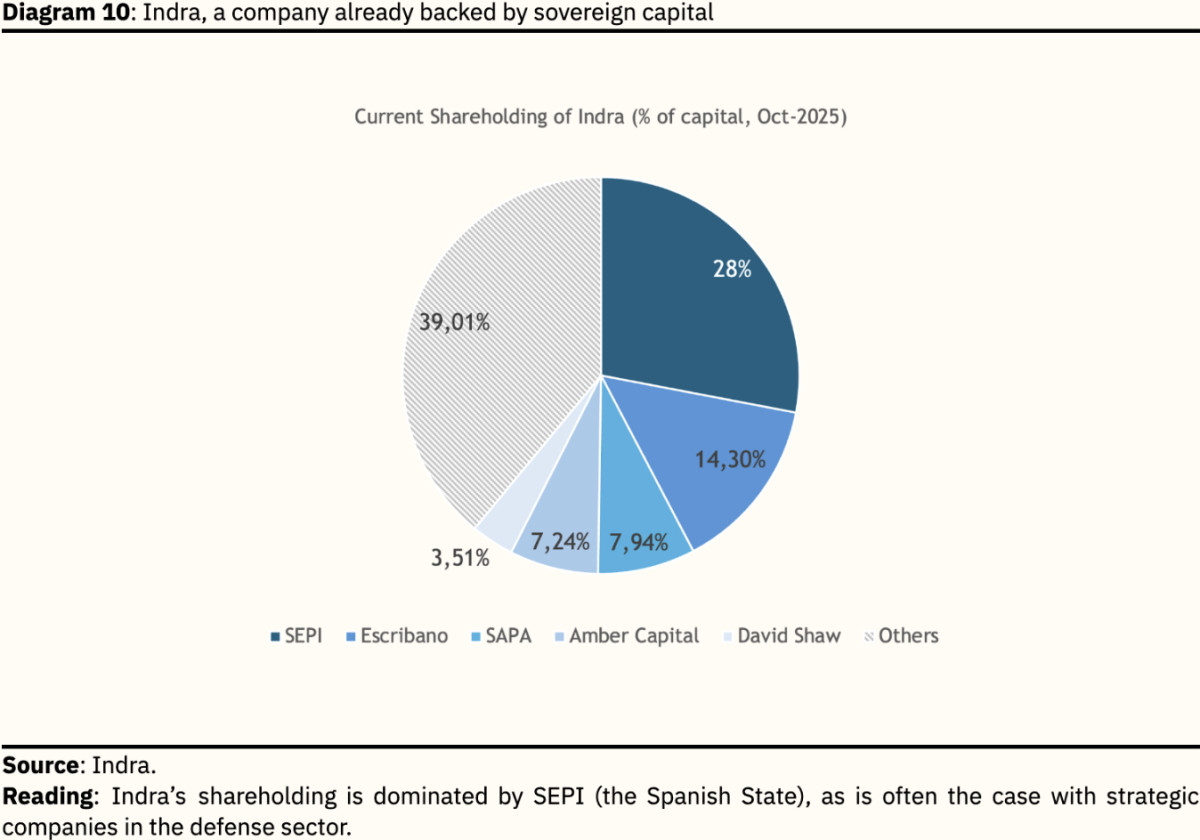
The acquisition of Escribano Mechanical & Engineering, however strategic, remains burdened with several uncertainties. The first concerns governance. Indra, whose main shareholder remains the state via SEPI (28%), is considering a €1 billion capital increase to finance the deal. Yet, since the Escribano family is both seller and buyer, it would subscribe to the bulk of this capital raise, taking its stake above 20%. The specter of "self-dealing" therefore hangs over the transaction. The deal has thus been referred to an independent commission tasked with producing a valuation report, with estimates ranging between €1 and €1.5 billion. Any overvaluation would fuel suspicions of undue enrichment.Minority shareholders, for their part, are concerned about the dilutive effect of this capital increase and fear the emergence of a state-Escribano family duopoly. The risk is of establishing governance less attentive to financial discipline and more marked by the dangers of "crony capitalism," where industrial and political logics prevail over profitability imperatives.
On the industrial front, the rationale for the merger is solid: Indra contributes its expertise in electronic systems, radars, and C2, while EM&E brings its know-how in armaments, turrets, and armored vehicles. But operational integration is far from automatic. The cultural gap, digital and IT for Indra, heavy engineering for EM&E; could generate friction at the very moment when the Spanish armed forces are demanding rapid deliveries.
"The deal risks stoking hostility among rival contractors, particularly French and German, who see the merger as a way of locking up the Spanish market"At the European level, the deal could be perceived as disguised state aid, combining private asset contributions and public capital. It also risks stoking hostility among rival contractors, particularly French and German, who see the merger as a way of locking up the Spanish market. But this risk remains limited: in defense matters, states retain full latitude to invoke Article 346 of the Treaty on the Functioning of the European Union, which allows them to set aside internal market rules in the name of national security. The consolidated Indra-EM&E entity will thus be able to rely on this exception, as most European capitals already do to protect their own national defense champions.
Sophisticated Financial Engineering Will Be Needed to Ensure the Deal’s Success
The merger between Indra and EM&E, however appealing from an industrial standpoint, still hinges on delicate financial and governance trade-offs. An independent commission was set up this summer to oversee the merger’s valuation, and recent moves within the board of directors seem to align the stars for it to finally move forward. Nevertheless, its structuring will be decisive. The key challenge will be to strike a balance between preserving the independence of the transaction, protecting minority shareholders against the state-Escribano family duopoly, and ensuring industrial integration without efficiency losses. Securing the structuring remains essential. Several levers could be considered:- The introduction of "earn-outs" (a mechanism tying part of the acquisition price to the future achievement of operational targets) to avoid the risk of overpaying EM&E; A partial monetization of assets through a "carve-out" (partial divestment) of non-strategic segments (BCG matrix), to limit dilution; or alternatively, resorting to acquisition debt, given Indra’s very modest net debt position (only €4 million)
- A balanced financing mix, combining capital increase, vendor loan (loan granted by the seller to the buyer, often at a preferential rate, allowing deferred payment), and possibly an escrow account (blocked to guarantee certain seller obligations), in order to preserve financial flexibility
- The drafting of representations and warranties covering in detail the typical risks of a family-owned target, such as commercial litigation, unprovisioned social liabilities, or off-balance sheet commitments; combined with dedicated hedging mechanisms;
- Finally, the prevention of cash leakage by prohibiting the seller from withdrawing cash, paying exceptional dividends, or contracting unusual debts between signing and closing (locked-box, no-leakage clause).
Ultimately, once the merger is completed, Madrid would have a true integrated champion, capable of leveraging economies of scale and standing on equal footing with the major European "prime contractors".
Ahora en portada
17 de octubre de 2026
16 de octubre de 2026
Noticias relacionadas
Hace 53 semanas
La fusión Indra-Escribano: las condiciones para crear un campeón ibérico en defensa
Lo más leído