Sábado, 17 de octubre de 2026




TRUMP'S FOREIGN POLICY
What Trump's return means for the war in Ukraine
Donald Trump's second arrival in the presidency marks a turning point for Ukraine's defence. Ihor Petrenko, director of the United Ukraine think tank, analyses the impact of the Republican's foreign policy on the country's future.
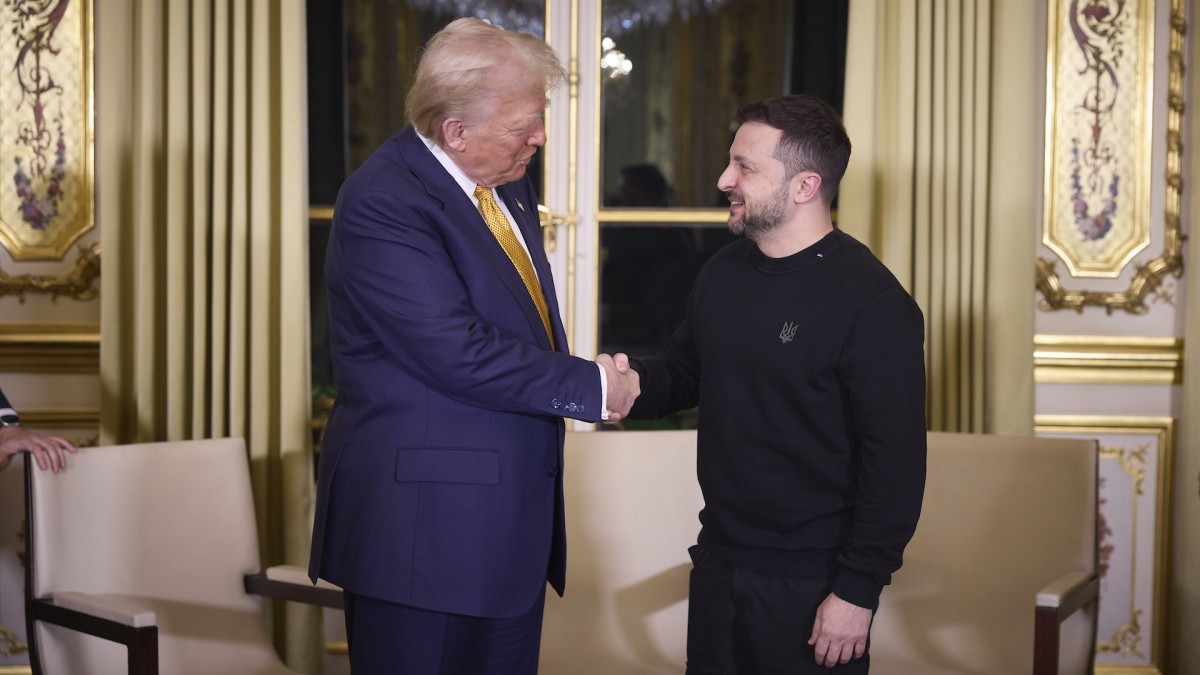
Volodymyr Zelenskyy met with Donald Trump in Paris ahead of the US president's inauguration.Ukraine Presidency/Ukrainian Pre / Zuma Press / ContactoPhoto
When Donald Trump declares that he will "end the war in 24 hours," the world is waiting for details. For Ukraine, his return to the White House is not just a change of administration, but a potential tectonic shift in the dynamics of the war and US support. What conclusions can be drawn from his past presidency? How will his relationship with Putin affect the future? And is Trump really ready to become a guarantor of a stable peace, not just a temporary truce? We look for answers to these questions in the history of his relations with Ukraine and in his current political rhetoric.
Trump and Ukraine: a History of Relations
When Donald Trump became President of the United States in 2016, relations between Washington and Kyiv were developing unsteadily. On the one hand, his administration provided Ukraine with lethal weapons, including the Javelin, which was a breakthrough in military cooperation. On the other hand, Trump did not demonstrate consistent support for Ukraine at the level of political statements and general rhetoric.
Trump and Putin: Strategic Play or Dangerous Flirtation?
One of the most controversial aspects of Trump's first term was his relationship with Vladimir Putin. The US president repeatedly praised the Russian leader, claiming that he "gets along well with him." At the same time, amid attempts to improve relations, he suffered a serious political blow in the United States after meeting with Putin in Helsinki in 2018. He agreed with the Kremlin's position on election interference, contrary to the conclusions of the US intelligence services.
Election 2024: Trump's Position and Zelenskyy's Strategy
Trump's latest presidential campaign demonstrates his traditional unpredictability. He stated that he wanted to "end the war" but avoided details. At the same time, his rhetoric contained hints of a reduction in American support for Ukraine, especially in the financial aspect.
For Ukraine, Zelenskyy's strategy of not becoming part of the US election race was critical. While in 2020 Kyiv found itself at the centre of intra-American battles, this time Ukraine managed to maintain a balance in its relations with both Biden and Trump. This is a strategic success that allows us to establish contacts with any administration. Yes, there was an unpleasant incident at a factory in the key swing state of Pennsylvania, but even against this background, Zelenskyy managed to meet with Trump and have a good and productive dialogue with him.
The reaction of Ukrainian society to Trump's potential return during the campaign was mixed. Opinions were split roughly 50-50: some believed he would reduce support for Ukraine, while others hoped he would be resolute.
The key question is whether Trump can really end the war. During the campaign, he promised to do so "in 24 hours," and after his election, he spoke of "100 days to develop a plan." This shows a certain evolution of his position and a more thoughtful and probably more balanced approach.
Trump knows his first step —the start of negotiations. However, his further strategy remains unclear. He acknowledges that he understands Russia's concerns about Ukraine joining NATO, but at the same time he threatens the Kremlin with sanctions if Moscow does not agree to a peace deal.
Ukraine expects Trump to take more decisive action than Biden, who pursued a strategy of "managed escalation." However, there is a risk that Trump will quickly lose interest and opt for a temporary truce that will not solve the problem. That is why Kyiv is trying to convey a simple truth to him: without real security guarantees, Putin will resume aggression. As the current Secretary of State Marco Rubio has already said, "a stable peace is only possible when Russia has no chance to return to war."
Putting pressure on Russia through energy sanctions and active arms sales are key elements that can guarantee peace. The United States also has an economic interest in reducing Russia's presence on the energy market, and this factor could become an additional leverage.
Ukraine understands that building relations with Trump should be based primarily on pragmatic terms. This is also understood by Volodymyr Zelenskyy, who in his peace plan has included not only military support, but also the extraction of strategic minerals necessary for the modern economy. As well as the potential replacement of American troops in Europe by Ukrainian troops. Such an approach could make Ukraine not only a recipient of aid but also an active player in the West's security architecture.
Trump is a politician who loves a good deal. Unless Ukraine and European partners demonstrate to him that real peace is possible only through increased pressure on Russia, he may rely on a short-term truce that will only open the door to new aggression.
Trump and Ukraine: a History of Relations
When Donald Trump became President of the United States in 2016, relations between Washington and Kyiv were developing unsteadily. On the one hand, his administration provided Ukraine with lethal weapons, including the Javelin, which was a breakthrough in military cooperation. On the other hand, Trump did not demonstrate consistent support for Ukraine at the level of political statements and general rhetoric.
"Trump did not demonstrate consistent support for Ukraine at the level of political statements and general rhetoric"The most resonant moment was his phone conversation with Volodymyr Zelenskyy in July 2019, which later resulted in the impeachment scandal. Trump, in his typical manner, tried to use Ukraine for his own political interests, actually demanding an investigation into Hunter Biden's activities in exchange for help. This situation was a turning point. The 2020 elections only exacerbated this tension, as Trump and Biden and their entourage actively used Ukrainian issues in their internal struggle.
Trump and Putin: Strategic Play or Dangerous Flirtation?
One of the most controversial aspects of Trump's first term was his relationship with Vladimir Putin. The US president repeatedly praised the Russian leader, claiming that he "gets along well with him." At the same time, amid attempts to improve relations, he suffered a serious political blow in the United States after meeting with Putin in Helsinki in 2018. He agreed with the Kremlin's position on election interference, contrary to the conclusions of the US intelligence services.
"The attitudes of Trump the businessman and Trump the president toward Russia have a distinctly different logic and nature"Another important factor is his possible business ties to Russia. Although there is no official evidence of Trump's financial dependence on Russian entities, numerous investigations have proven that he has had longstanding business contacts. These connections continue to raise doubts about his future policy toward Russia. But Trump is primarily a profit-oriented individual, and his previous relations with Russia were likely based solely on opportunities for business benefits. Therefore, the attitudes of Trump the businessman and Trump the president toward Russia have a distinctly different logic and nature.
Election 2024: Trump's Position and Zelenskyy's Strategy
Trump's latest presidential campaign demonstrates his traditional unpredictability. He stated that he wanted to "end the war" but avoided details. At the same time, his rhetoric contained hints of a reduction in American support for Ukraine, especially in the financial aspect.
For Ukraine, Zelenskyy's strategy of not becoming part of the US election race was critical. While in 2020 Kyiv found itself at the centre of intra-American battles, this time Ukraine managed to maintain a balance in its relations with both Biden and Trump. This is a strategic success that allows us to establish contacts with any administration. Yes, there was an unpleasant incident at a factory in the key swing state of Pennsylvania, but even against this background, Zelenskyy managed to meet with Trump and have a good and productive dialogue with him.
Ukrainians' Expectations from Trump on Ending the War
The reaction of Ukrainian society to Trump's potential return during the campaign was mixed. Opinions were split roughly 50-50: some believed he would reduce support for Ukraine, while others hoped he would be resolute.
"Russia was actively spreading disinformation that Trump would 'give up' Ukraine, but the reality is more complicated"Russia was actively spreading disinformation that Trump would give up Ukraine, but the reality is more complicated. The Biden administration and Trump, even before Trump's inauguration, most likely cooperated on military support for Ukraine: they authorized strikes deep into Russian territory and imposed serious sanctions on the Kremlin's shadow fleet. This is evidence of a general American consensus supporting Kyiv.
The key question is whether Trump can really end the war. During the campaign, he promised to do so "in 24 hours," and after his election, he spoke of "100 days to develop a plan." This shows a certain evolution of his position and a more thoughtful and probably more balanced approach.
Trump knows his first step —the start of negotiations. However, his further strategy remains unclear. He acknowledges that he understands Russia's concerns about Ukraine joining NATO, but at the same time he threatens the Kremlin with sanctions if Moscow does not agree to a peace deal.
"Ukraine is taking a constructive position: it is ready for negotiations and certain compromises, but the main thing is a just and stable peace with clear security guarantees"Ukraine is taking a constructive position: it is ready for negotiations and certain compromises, but the main thing is a just and stable peace with clear security guarantees. Russia, on the other hand, continues to insist on Ukraine's de facto surrender, which is neither in line with the real balance of power nor with the interests of the West.
Ukraine expects Trump to take more decisive action than Biden, who pursued a strategy of "managed escalation." However, there is a risk that Trump will quickly lose interest and opt for a temporary truce that will not solve the problem. That is why Kyiv is trying to convey a simple truth to him: without real security guarantees, Putin will resume aggression. As the current Secretary of State Marco Rubio has already said, "a stable peace is only possible when Russia has no chance to return to war."
Putting pressure on Russia through energy sanctions and active arms sales are key elements that can guarantee peace. The United States also has an economic interest in reducing Russia's presence on the energy market, and this factor could become an additional leverage.
Ukraine understands that building relations with Trump should be based primarily on pragmatic terms. This is also understood by Volodymyr Zelenskyy, who in his peace plan has included not only military support, but also the extraction of strategic minerals necessary for the modern economy. As well as the potential replacement of American troops in Europe by Ukrainian troops. Such an approach could make Ukraine not only a recipient of aid but also an active player in the West's security architecture.
Trump is a politician who loves a good deal. Unless Ukraine and European partners demonstrate to him that real peace is possible only through increased pressure on Russia, he may rely on a short-term truce that will only open the door to new aggression.
"It is important that both Europe and the United States insist on a tough stance against the Kremlin"Ukraine wants not just an end to the war, but a stable peace. Therefore, it is important that both Europe and the United States insist on a tough stance against the Kremlin, rather than compromises that will only postpone the conflict. Trump can be effective in this process, but only if he has the right strategy for putting pressure on Russia.

Ihor Petrenko
Director del think tank United Ukraine
Doctor of Political Sciences, Associate Professor, Taras Shevchenko National University of Kyiv, Associate Professor of Political Science Department of the Faculty of Philosophy, city of Kyiv, Ukraine.
Etiquetas
Agenda Pública in English, ucrania, Rusia, guerra, Zelenski, putin, Estados Unidos, Donald Trump, Política Exterior Ahora en portada
16 de octubre de 2026
16 de octubre de 2026
16 de octubre de 2026
Noticias relacionadas
Hace 88 semanas
Trump's Triple 'D': Deregulation, Deglobalisation, and Disorder
Lo más leído