Viernes, 16 de octubre de 2026




GEOPOLITICS
Trump's Triple 'D': Deregulation, Deglobalisation, and Disorder
According to Juan Luis Manfredi, former Prince of Asturias Chair at Georgetown University, Trump's intervention at the Davos Forum reflects "a world of non-market risks, state-backed capitalism, and 'reliable' energy."
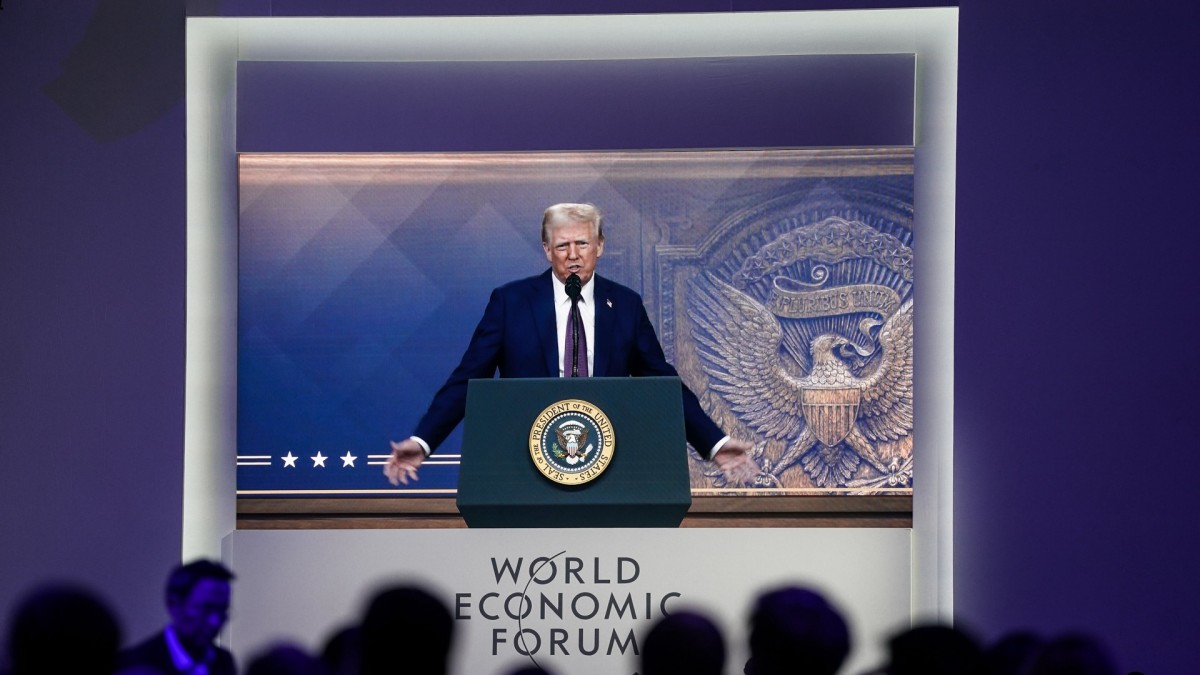
In his speech at the Davos Forum, Trump promised the lowest taxes in the world for those operating in the US but warned of tariffs for those who did not.Peng Ziyang / Xinhua News / ContactoPhoto
From the 2016–2020 administration, we learned that the three Ps of populism work: provocation (rallies and fiery speeches), polarisation (identity as politics and the opponent as the enemy), and protest (the fateful 6 January in DC and 7 January in Brasília). These are the hallmarks of a social movement that transcends the framework of liberal democracy. The legacy of this strategy is a decade of a poisoned public sphere, ubiquitous falsehoods, and the disintegration of the liberal international order.
Trump's Davos speech marks the beginning of a new phase. We are no longer in the realm of campaign rhetoric and street agitation but in governance and administration. Here, the key tenets of the new Trumpism operate under a triple D: deregulation, deglobalisation, and disorder.
Deglobalisation is defined as the weakening of international relations under a unified system of governance, economic integration, norms, and values. It could also be called decoupling or derisking —newly coined vocabulary for the grammar of power. Interdependence becomes a strategic tool for exerting pressure through currency wars, artificial trade barriers, protectionism, or identity-driven rhetoric. This phenomenon puts an end to the ambitious aspiration of global leadership, as the new Trump administration will not champion free trade, democratic expansion, connectivity, or human rights. That world has vanished: the Paris Agreement is all but abandoned, and NATO is reduced to a mere security service provider, far from being an alliance based on shared values.
All of this unfolds at the World Economic Forum in Davos—the same venue that, since 1971, has brought together elites from business, politics, journalism, and diplomacy. It was here in 2024 that Javier Milei grasped the meaning of global popularity, and in 2017, Xi Jinping defended globalisation and free trade. That Davos Man has now faded from the scene. He is no longer the embodiment of cosmopolitanism and global business. His successors are now witnesses and actors in the nationalist and conservative movement that champions border control, trade restrictions, and confrontation. In short, Trump's new rhetoric aligns with the farewell to a world concerned with governance and climate change, plunging instead into a world of non-market risks, state-backed capitalism, and reliable energy. Brace yourselves. This Davos is the new mainstream.
Trump's Davos speech marks the beginning of a new phase. We are no longer in the realm of campaign rhetoric and street agitation but in governance and administration. Here, the key tenets of the new Trumpism operate under a triple D: deregulation, deglobalisation, and disorder.
"Provocation, polarisation, and protest are the hallmarks of a social movement that transcends the framework of liberal democracy"Deregulation is the promise Trump made to Elon Musk, Peter Thiel, Bill Ackmann, and other major donors. It is a discourse against the green transition and privacy, advocating for a digital world without regulations. Artificial intelligence and cloud computing embody this vision of an open and innovative market that cannot be constrained by outdated mechanisms of liberal democracy. This ideology of technological solutionism requires cheap energy—meaning a surge in oil and gas production—and cold environments for data storage, whether in Argentina's Patagonia or Greenland. The paradox lies in a deregulated digital world but with tariffs and duties for industrial economies. Factory production, in contrast, does require regulations, quotas, and restrictions—especially against China.
Deglobalisation is defined as the weakening of international relations under a unified system of governance, economic integration, norms, and values. It could also be called decoupling or derisking —newly coined vocabulary for the grammar of power. Interdependence becomes a strategic tool for exerting pressure through currency wars, artificial trade barriers, protectionism, or identity-driven rhetoric. This phenomenon puts an end to the ambitious aspiration of global leadership, as the new Trump administration will not champion free trade, democratic expansion, connectivity, or human rights. That world has vanished: the Paris Agreement is all but abandoned, and NATO is reduced to a mere security service provider, far from being an alliance based on shared values.
"Deglobalisation is defined as the weakening of international relations under a unified system of governance, economic integration, norms, and values"Disorder is the defining feature of the presidency to come. The notion of spheres of influence —reminiscent of the pre-1945 Yalta Conference era— is openly discussed, as is the inviolability of borders, undermining the principles of the 1975 Helsinki Accords. Direct threats to the control of the Panama Canal or Greenland's sovereignty are unprecedented, distinct from the Persian Gulf wars. Disorder, however, has a clear objective: control over access to ports, markets, and infrastructure. This is where Latin America regains prominence in US foreign policy. The European Union is striving to construct its own narrative, but change is slow. Without political leadership and funding, it lacks capacity. Meanwhile, in Asia and Africa, elites have recognised disorder as an opportunity to capitalise on strategic rivalries. It will be China and the United States that compete for their resources.
All of this unfolds at the World Economic Forum in Davos—the same venue that, since 1971, has brought together elites from business, politics, journalism, and diplomacy. It was here in 2024 that Javier Milei grasped the meaning of global popularity, and in 2017, Xi Jinping defended globalisation and free trade. That Davos Man has now faded from the scene. He is no longer the embodiment of cosmopolitanism and global business. His successors are now witnesses and actors in the nationalist and conservative movement that champions border control, trade restrictions, and confrontation. In short, Trump's new rhetoric aligns with the farewell to a world concerned with governance and climate change, plunging instead into a world of non-market risks, state-backed capitalism, and reliable energy. Brace yourselves. This Davos is the new mainstream.
Juan Luis Manfredi
Catedrático de Estudios Internacionales en la Universidad de Castilla-La Mancha.
Antiguo catedrático Príncipe de Asturias en Georgetown University. Autor de 'Urban Diplomacy. A Cosmopolitan Outlook' (Brill, 2021) y de 'Diplomacia corporativa: la nueva inteligencia directiva' (UOC Editorial, 2018).
Ahora en portada
16 de octubre de 2026
16 de octubre de 2026
16 de octubre de 2026
Noticias relacionadas
Hace 88 semanas
Trump's trade wars: how much they threaten Germany and Europe and how we can protect ourselves
Hace 92 semanas
What can the EU do against the challenge of the US cybertycoons?
Lo más leído