Lunes, 19 de octubre de 2026




Industrial Policy: Will we figure out how to move from words to deeds?
MARAVILLAS DELGADO
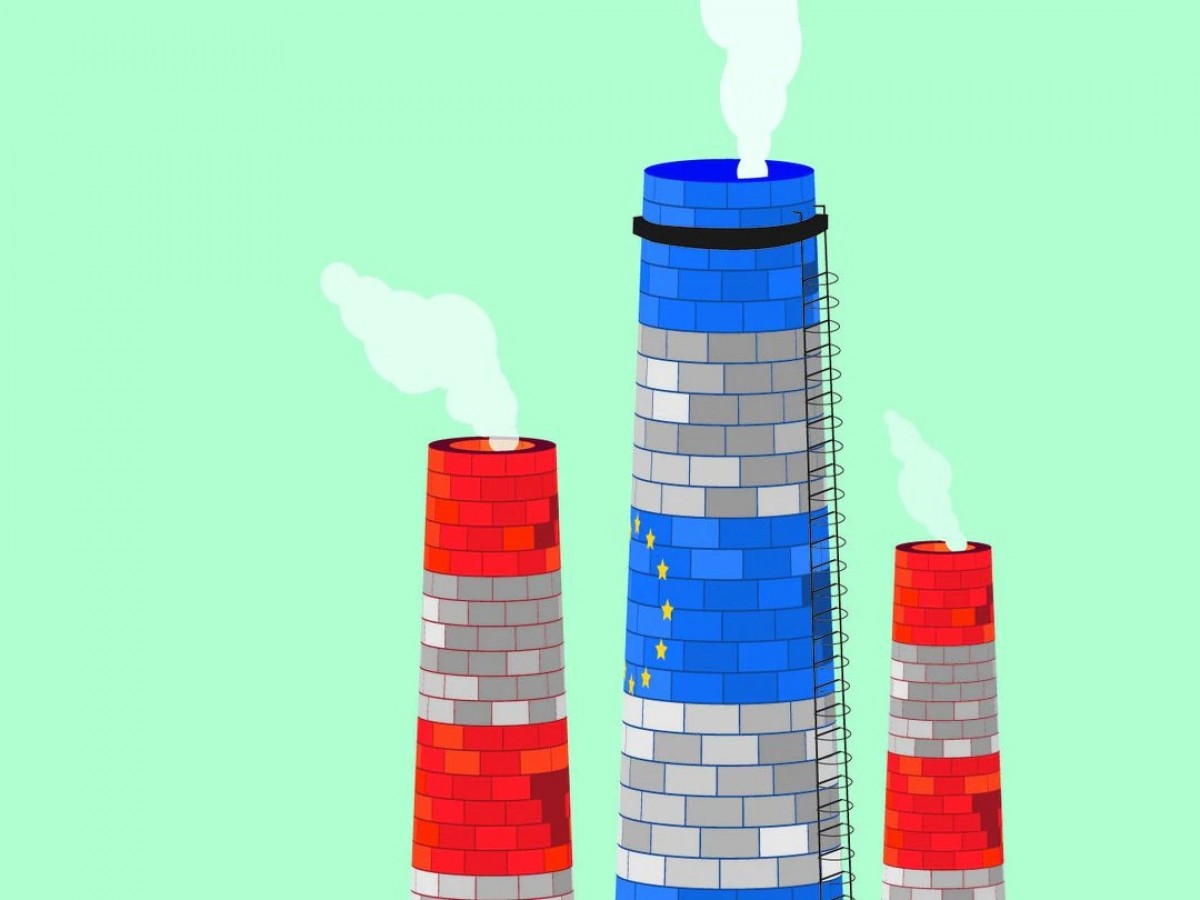
After pandemic and war, industrial policy has returned to Europe. The IRA has accelerated the EU’s legislative agenda (with the European Chips Act, the proposals on key raw materials, the reform of the electricity market, the Net Zero Industry Act...) and has convinced even the most reluctant that in the face of new economic, social, and environmental challenges it is necessary pursue planned, coordinated stimulation of strategic sectors. However, not all countries will take advantage of this paradigm shift in the same way. In countries like ours, where the saying ‘the best industrial policy is the one that does not exist’ has triumphed, it will not be easy to move from words to deeds.
After the long political and academic marginalisation of industrial policy, the Recovery, Transformation, and Resilience Plan (PRTR) and the Strategic Projects for Recovery and Transformation (PERTE) are major steps forward. Both seem to want to go beyond the logic of market failures and cross-cutting policies that intended not to discriminate between sectors or technologies. But both are criticised, focusing on the government’s difficulties in spending the money received from the EU. Among these cases, the PERTE is perhaps the most striking: in more than a year, barely a quarter of the initially planned investments has been made.
First, we need to establish concrete and explicit criteria that are also reflected in measurable performance indicators in both the short and long term. The Recovery, Transformation, and Resilience Plan (PRTR), as well as the Preliminary Draft Industry Bill, point to sustainability, digitalisation, or competitiveness targets. These general goals may be a starting point, but they are far from being criteria that discriminate between specific activities. The sectoral vagueness and lack of definition are partly corrected by the PERTEs, but what are the criteria that justify plans for certain sectors and not for others? The EU’s Net Zero Industry Act helps to specify sectors, but even within the value chains identified in this Act, our country will have to focus on one or varying elements within these chains. What will these criteria be? To achieve what measurable production targets?
The second C is policy coherence. Industrial policy is not just about one particular law. It requires a package of mutually coherent measures; different measures that have a continuous impact on different resources and markets, all necessary for (and all aiming at) the desired productive transformation: innovation, training, financing, affordable inputs, access to services and intangibles, networks and infrastructures, public demand, external markets, and so on. Their development cannot consist of a collection of interventions without a defined objective, nor be limited to simply a technology policy, nor be confused with conventional policies to support internationalisation or vocational training, which, although never superfluous, are no substitute for industrial policy, as they typically lack directionality.
The third C refers to the most important and complex aspect: an institutionalised system of governance for the coordination of all actors involved in decision-making. Improved governance is a key demand in some reactions to the Draft Industry Bill. It is not a question of centralising productive decisions, but of pluralising and aligning them, so that public administrations, companies, workers, and investors jointly set productive horizons. As in the German or Finnish cases, it is expected that the different economic agents, coordinated by governments and state agencies, will set shared economic and socio-environmental goals, identify the most desirable and feasible priority sectors to achieve them, design policy packages, resolve conflicts, and compensate the industries and workers affected.
To this end, the public administration must be provided with greater and better resources, but also with mechanisms to ensure better coordination between different bodies. The creation of a Delegate Commission for productive development could be a good point of departure. Likewise, mechanisms to facilitate public-private coordination are essential, based on the key quid pro quo of industrial policy: public support in exchange for private performance. Finally, the state can even favour coordination between private actors, with mechanisms for technological exchange, peer pressure for SMEs, and inclusion of workers in key decision making.
What would be the first tasks of all of the above? To help address and overcome the threefold shortage of information, financing, and advanced services necessary for the development of the productive fabric. To move forward, we propose, among other measures, an Industrial Data Office to identify problems and opportunities for economic agents, a Promotion Fund to prioritise the recovery of productive capacities, and an Industrial Services Platform to facilitate access for SMEs. These are just a few proposals, to which others will have to be added over time until we institutionalise a way of enshrining an industrial policy that allows us to continuously orientate our productive model towards a better one in economic, social, and environmental terms.
After the long political and academic marginalisation of industrial policy, the Recovery, Transformation, and Resilience Plan (PRTR) and the Strategic Projects for Recovery and Transformation (PERTE) are major steps forward. Both seem to want to go beyond the logic of market failures and cross-cutting policies that intended not to discriminate between sectors or technologies. But both are criticised, focusing on the government’s difficulties in spending the money received from the EU. Among these cases, the PERTE is perhaps the most striking: in more than a year, barely a quarter of the initially planned investments has been made.
[Recibe los análisis de más actualidad en tu correo electrónico o en tu teléfono a través de nuestro canal de Telegram]
Notwithstanding, we would be wrong to think that the main problem facing the government is to spend this money as soon as possible. Indeed, European funds must be put to good use, but the real challenge is to design and implement a consistent and sustained strategy that will push the transformation of the production model in a direction that will help us face the pressing economic and socio-environmental challenges. The experience of leading countries in industrial policy, such as South Korea or Germany, can be summarised with three Cs: measurable productive criteria to select sectors, coherent policy packages, and coordination between all the actors involved. Explaining these three Cs and making specific proposals for Spain is the objective of The Return of Industrial Policy, our report with Future Policy Lab.First, we need to establish concrete and explicit criteria that are also reflected in measurable performance indicators in both the short and long term. The Recovery, Transformation, and Resilience Plan (PRTR), as well as the Preliminary Draft Industry Bill, point to sustainability, digitalisation, or competitiveness targets. These general goals may be a starting point, but they are far from being criteria that discriminate between specific activities. The sectoral vagueness and lack of definition are partly corrected by the PERTEs, but what are the criteria that justify plans for certain sectors and not for others? The EU’s Net Zero Industry Act helps to specify sectors, but even within the value chains identified in this Act, our country will have to focus on one or varying elements within these chains. What will these criteria be? To achieve what measurable production targets?
The second C is policy coherence. Industrial policy is not just about one particular law. It requires a package of mutually coherent measures; different measures that have a continuous impact on different resources and markets, all necessary for (and all aiming at) the desired productive transformation: innovation, training, financing, affordable inputs, access to services and intangibles, networks and infrastructures, public demand, external markets, and so on. Their development cannot consist of a collection of interventions without a defined objective, nor be limited to simply a technology policy, nor be confused with conventional policies to support internationalisation or vocational training, which, although never superfluous, are no substitute for industrial policy, as they typically lack directionality.
The third C refers to the most important and complex aspect: an institutionalised system of governance for the coordination of all actors involved in decision-making. Improved governance is a key demand in some reactions to the Draft Industry Bill. It is not a question of centralising productive decisions, but of pluralising and aligning them, so that public administrations, companies, workers, and investors jointly set productive horizons. As in the German or Finnish cases, it is expected that the different economic agents, coordinated by governments and state agencies, will set shared economic and socio-environmental goals, identify the most desirable and feasible priority sectors to achieve them, design policy packages, resolve conflicts, and compensate the industries and workers affected.
To this end, the public administration must be provided with greater and better resources, but also with mechanisms to ensure better coordination between different bodies. The creation of a Delegate Commission for productive development could be a good point of departure. Likewise, mechanisms to facilitate public-private coordination are essential, based on the key quid pro quo of industrial policy: public support in exchange for private performance. Finally, the state can even favour coordination between private actors, with mechanisms for technological exchange, peer pressure for SMEs, and inclusion of workers in key decision making.
What would be the first tasks of all of the above? To help address and overcome the threefold shortage of information, financing, and advanced services necessary for the development of the productive fabric. To move forward, we propose, among other measures, an Industrial Data Office to identify problems and opportunities for economic agents, a Promotion Fund to prioritise the recovery of productive capacities, and an Industrial Services Platform to facilitate access for SMEs. These are just a few proposals, to which others will have to be added over time until we institutionalise a way of enshrining an industrial policy that allows us to continuously orientate our productive model towards a better one in economic, social, and environmental terms.
Se puede leer el artículo en español en Cinco Días
ARTÍCULOS RELACIONADOS


Roy William Cobby
Investigador King's College London (Reino Unido) y Fellow del Future Policy Lab
Máster en Políticas Globales en la London School of Economics (Reino Unido), Grado en Relaciones Internacionales en la Universidad de Bath (Reino Unido). Actualmente, es beneficiario de la Beca de la Caixa para estudios en Europa.
Además de colaborar en varias publicaciones digitales, sus actividades de investigación van dirigidas a esclarecer el impacto de la economía de plataformas en los países del sur global. En el sector privado, ha trabajado cinco años en asuntos públicos, consultorías medioambientales, mercadotecnia y redacción. Ha presentado artículos en la Millennium Conference 2019 (LSE) y en el Congreso Internacional 68/50 (Universidad Complutense). Esta última intervención aparecerá publicada como capítulo en un monográfico sobre Mayo del 68.

Clara García
Profesora Titular de Economía Aplicada en la UCM
Cuenta con tres tramos de investigación reconocidos por la Comisión Nacional Evaluadora de la Actividad Investigadora (CNEAI). Su trayectoria investigadora se enmarca en cuestiones de desarrollo productivo, variedades de sistemas financieros e industria energética. Todo ello frecuentemente con un enfoque de economía política y con una doble especialización geográfica, habiendo realizado trabajo empírico sobre Asia Oriental, y China en particular, y más recientemente sobre economía española. Imparte regularmente docencia sobre Economía Mundial (grupo en inglés, Grado en Economía) y Las Economías de Asia Oriental (Máster en Economía Internacional y Desarrollo) en la UCM. Ha ocupado desde 2005 diversos cargos de gestión de títulos (Grado en Economía, Máster en Economía Internacional y Desarrollo, y Doctorado en Economía). Actualmente, se encuentra con dedicación a tiempo parcial y es consejera independiente de Enagás, S.A.

Rafael Fernández Sánchez
Profesor titular de Economía en la Universidad Complutense de Madrid (UCM) e investigador adscrito al Instituto Complutense de Estudios Internacionales (Icei)
Asimismo, es director del grupo de investigación 'Economía Política de la Mundialización'. Es licenciado y doctor en Economía y licenciado en Ciencias Políticas. Como docente, imparte las asignaturas de Economía de Rusia y Economía Política de la Energía en el Máster de Economía Internacional y Desarrollo de la UCM.En su tesis doctoral analizó la crisis industrial de Ucrania durante su periodo post-soviético y es co-autor del libro 'La decadencia económica de Rusia'. Actualmente, estudia los procesos de desindustrialización y las políticas industriales de las economías europeas.
Etiquetas
Agenda Pública in English, Estados Unidos, España, Industria, Gobierno, Alemania, Corea del Sur, Europa Ahora en portada
19 de octubre de 2026
19 de octubre de 2026
Noticias relacionadas
Hace 182 semanas
Europe Caught Between the US and China: Massive aid and new trade war
Hace 183 semanas