


Europe's moment of uncertainty: "The overall speech and the ideas are good, but they have to be backed up with money and political will"
Jorge de Diego, a staff writer at 'Agenda Pública', speaks in Strasbourg with EPP MEP Adrián Vázquez and S&D MEPs Hana Jalloul, Javi López and Jonás Fernández about Ursula von der Leyen's State of the Union address and the future of the European parliamentary term. Representatives of the European Parliament's two largest political groups highlight the importance of the EU's next budget and analyse the Ceuta crisis.
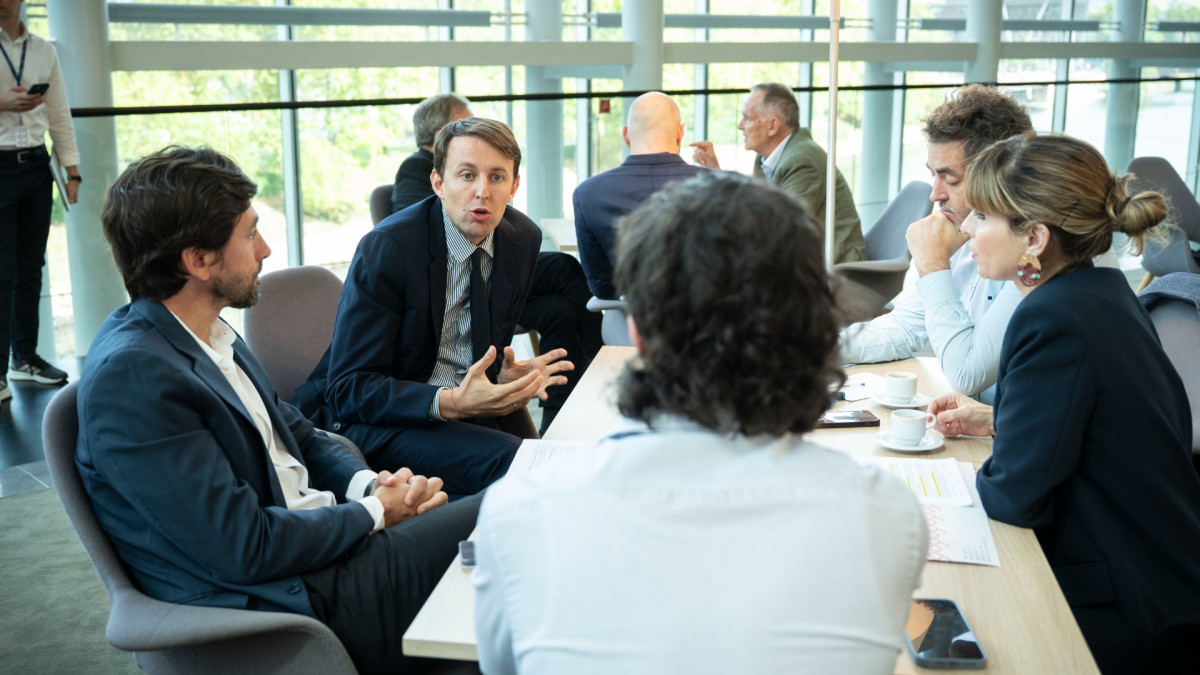
Although they see a lack of ambition in some areas, they are also aware that commitments must be adapted both to the political realities of Parliament and to the resources available. As representatives of the two political families that have shaped European Parliament majorities for decades, they find common ground when they believe it is necessary, but do not conceal their differences over the budget, migration or the response to the Ceuta crisis.
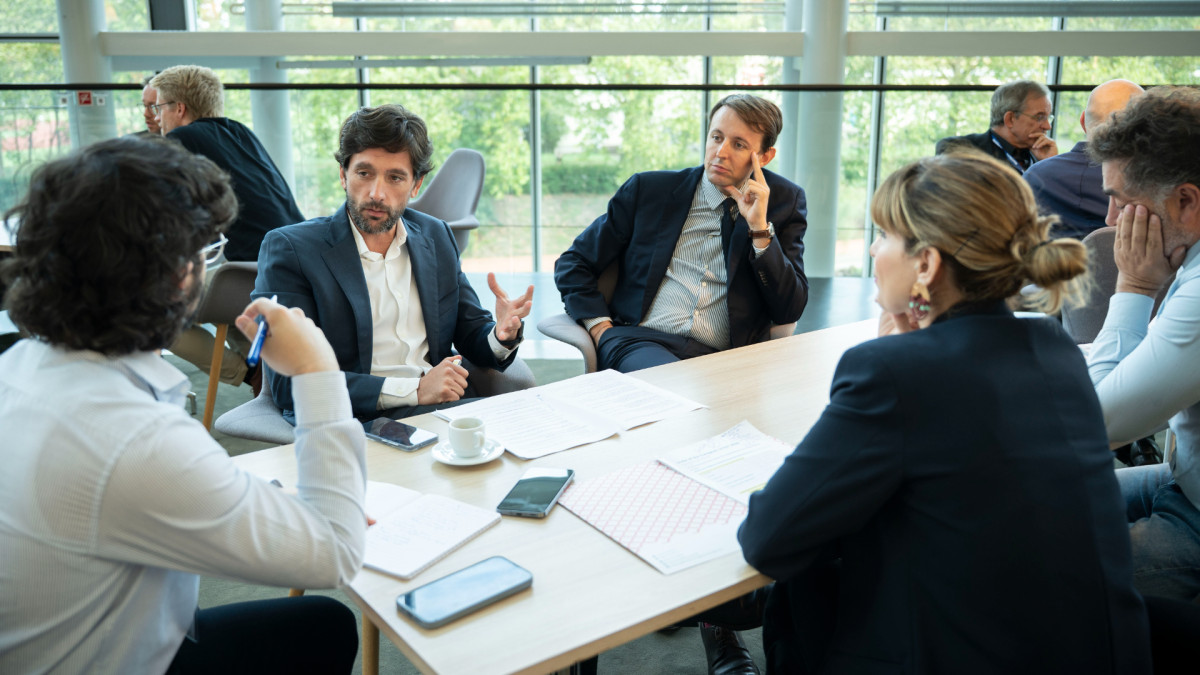
The four MEPs speak with Agenda Pública at the European Parliament in Strasbourg. Photo: Agenda Pública / Dorothée Parent
How were you feeling going into this week and Ursula von der Leyen's speech? There seems to be a somewhat pessimistic mood.
Hana Jalloul (H. J.): Our attitude has to be positive, especially given everything happening around us. Today's speech was too general and did not contain many concrete measures. We would have liked more specificity on certain issues. For example, on Israel and Palestine, she should have spoken about adding the Houthis to the list of terrorist organisations. We have been pushing for this within S&D, and there is already some movement in the Council. That is what we understood yesterday from High Representative Kaja Kallas. Given the Houthis' activity in Bab el-Mandeb and its implications for terrorism, I thought it was something that needed to be addressed.
"The speech was too general and did not contain many concrete measures. We would have liked more specificity on certain issues"It is important that she spoke about critical raw materials and the need for a permanent agenda in this area, although it is true that no funding has been allocated. We certainly cannot allow ourselves to be overwhelmed by pessimism. What she said about Canada was very positive as well.
I also found what she said about China very significant. It matters in a Parliament that sometimes tends to adopt a very confrontational position towards Beijing, because she spoke about dialogue. She also mentioned one of the major achievements we have put on the table: trade policy and all the trade agreements we have reached. She listed them one by one, including the agreement with India, one of the largest.
She closed the speech by expressing full support for Spain in the face of the Ceuta crisis.
Adrián Vázquez (A. V.): We are practically halfway through the parliamentary term. This is the speech where nothing can really be hidden anymore, because by now we know how the legislative process works and that a problem cannot be tackled overnight through a new regulatory framework. I am more optimistic today than I was yesterday, but I still think the speech lacked ambition. Probably not so much —and I do not want to defend Ursula either— because she is unable to put forward more direct proposals, but because of the institutional architecture and the situation among the Member States. That also limits her ability to reach the level of ambition we are asking for. Still, she addressed the major challenges ahead of us and was specific on a couple of issues that I do consider a very good starting point. On security, she was specific: she is going to launch something we in the People's Party have been calling for for years, this new European Security Council. She was also very clear on Ukraine, a position we cannot afford to abandon.
"She is going to launch something we in the People's Party have been calling for for years, this new European Security Council"The presence of the Canadian prime minister and the proposal for Canada to become an associate member still need to be fleshed out and go through the Member States, which I do not think has happened yet. I support it. On protecting minors in the digital sphere, with this package on the protection of minors, I think she was very specific and that the new proposals she put forward were the right ones. We will then have to examine them in detail. On migration, which is probably one of the issues having the greatest impact on our societies today, I am waiting for her to be more specific about that European emergency response framework. I think we are still missing something there.
I would highlight two other points. I welcome the focus on electrification, but the problem we face is more about infrastructure than production; we will see how we deal with that. And then there is competitiveness, which she did put on the table. The omnibus packages are already moving forward and will generate savings of almost €17 billion a year. Ultimately, she touched on a little bit of everything. I would have liked more ambition, but, as I said at the beginning, I am more optimistic today than I was yesterday.
Jonás Fernández (J. F.): I do not think the right word is pessimism so much as uncertainty. None of the challenges we faced last year has been resolved, and there are more and more challenges where, broadly speaking, even though there is a broad sense of the direction policies should take, those policies never quite materialise. As for the speech, I think it was more of a lecture than a political address of the kind you would expect in a State of the Union debate. We have already heard several of these speeches, as Adrián was saying, and perhaps, after repeatedly promising plans and programmes that have failed to materialise or of which very little has actually been delivered, what we heard today was more reflection than concrete policy answers.
"None of the challenges we faced last year has been resolved, and there are more and more challenges"There is little to object to in the measures she did announce: they are reasonably sound, although we will have to see what they actually amount to. Some of them leave me somewhat sceptical. What exactly is the corporation she proposed for securing supplies of critical raw materials? Many other proposals stem from an underlying problem that she rightly referred to: with the budget we have, there is not much more we will be able to do. The Hanseatic League is trying to cut the budget even further, while the debate on own resources remains unresolved. Everyone in this House talks about it; [Manfred] Weber did so in his speech, and of course Iratxe [García] did too. But it remains outstanding. Without a clearer overall framework in which the Commission can carry out its work, we are once again having a debate full of announcements whose outcome remains to be seen.
Javi López (J. L.): This is a moment of enormous uncertainty. Everyone is very aware that this is probably the most dangerous moment for Europe and European integration since the project began. There are external risks arising from a geopolitical environment that is very hostile to the Union: a very direct threat from Russia, but also a profound shift in transatlantic relations and a geopolitical and economic environment that is hostile to our interests. Internally, the situation is also extremely precarious and weak, particularly because of electoral gains by the far right, which are weakening the European project as we have known it. That is the context we are in, and this uncertainty and these risks now cut across every discussion about Europe's future.
"This is probably the most dangerous moment for Europe and European integration since the project began"Von der Leyen's analysis, diagnosis and the vision she sets out in the speech are correct. I am satisfied with the vision expressed in the speech; broadly speaking, it is a diagnosis shared by pro-European forces. The problem is that it is not accompanied by the measures, resources and decisions needed to turn that vision into concrete action, nor by the ambition required to make it a reality. That is probably the result of the internal balance of power, because this speech is not delivered in a vacuum: it is being made in a Union where governments in both Berlin and Paris are currently very weak, for different reasons, and which is also approaching a major electoral cycle in Europe in 2027.
I agree with the issues and with the vision she presented: European strategic autonomy, European sovereignty, taking full and autonomous responsibility for our security, the industrialisation and reindustrialisation of Europe, climate action, diversifying our alliances and building alliances with democracies, electrification and the regulation of artificial intelligence. I share that agenda, but it is incompatible with building majorities with those who want to divide or weaken the Union. That is another major elephant in the room.
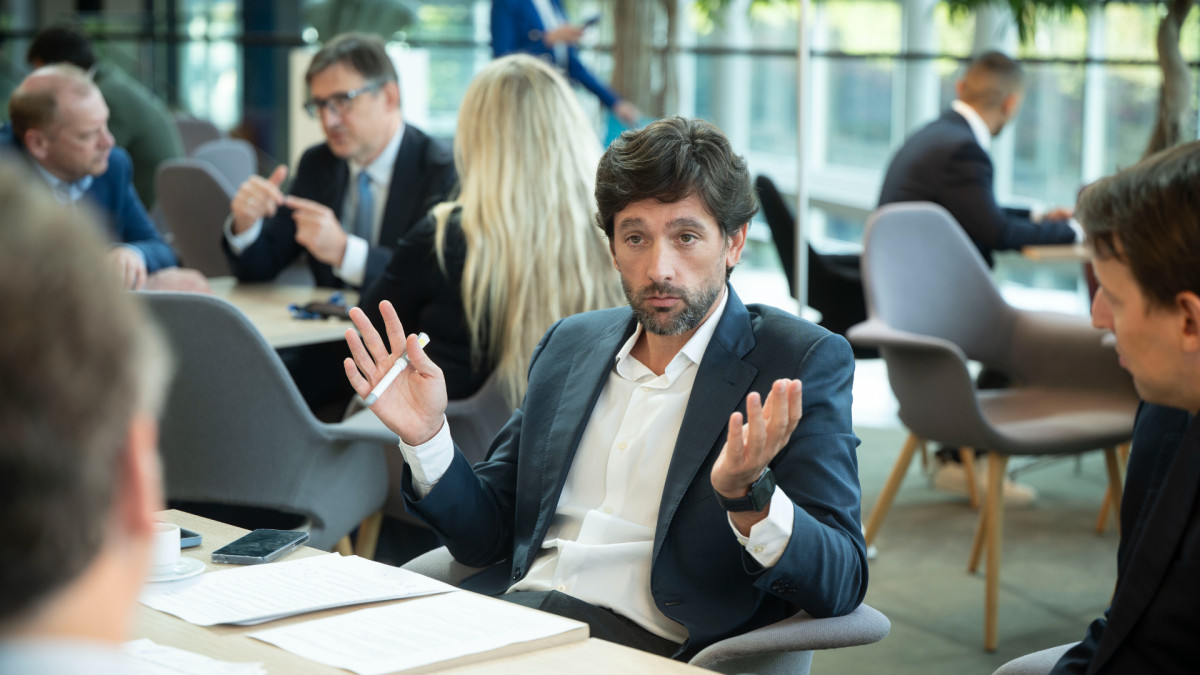
The MEPs discuss pro-European majorities and the political direction of the second half of the parliamentary term. Photo: Agenda Pública / Dorothée Parent
What is the relationship between the European People's Party and the Progressive Alliance of Socialists and Democrats like at the moment? The mid-term reshuffle of positions is still pending, and there are just over two and a half years left in the parliamentary term.
H. J.: Those negotiations are handled much more by the heads of delegation and by the people within our political groups who negotiate specific positions: vice-presidencies, committees and so on. It is very important that there is negotiation and that everyone can defend what best serves their political group. But I also think we need to separate somewhat what we want to achieve in Parliament from certain personal agendas. We have made major commitments. We have Javi here, for example, who is our vice-president, and we are delighted. I think he is doing, and has done, a great job. He is reliable and good at building consensus.
Our leader gave a great speech, and the main pro-European forces that have helped build this Parliament since 1948 have to reach agreement. I do not think there is any general problem. Everything will be fine.
A. V.: European and Spanish citizens are not interested in who holds which position in this debate. Our responsibility is to try to provide solutions, within our powers, to the demands and challenges we face as a society, regardless of who holds each post. Democracy works as it works and majorities are built as they are built. You have to work to ensure that your political agenda becomes laws and legislative proposals.
This Parliament forces legislators to deal with the practical realities of politics, especially those of us who come from countries where party lists or majorities are usually constructed differently. Here, ultimately, you have to reach agreements and sit around the table, as we are doing today, with people who think differently in order to find common ground. That requires fewer red lines. What we need to do is build majorities that allow us to address these challenges. And, if you ask me, those of us who have Europe in our heads and in our hearts should try to do so with pro-European forces.
"In the European Parliament, you have to reach agreements and sit around the table, as we are doing today, with people who think differently in order to find common ground"But we should not deceive ourselves either: there are issues we consider vital for Europe's continued survival, such as competitiveness and the ability to maintain a productive base, that can sometimes be extremely difficult to advance with other pro-European forces. From that point onwards, you also have to be flexible.
J. L.: The mid-term point should serve as an opportunity to think about Europe's overall political direction. This is not a debate about responsibilities or positions, but about which majorities will shape Europe and what political direction it will take during the second half of the term. It is clearly an opportunity to revitalise a pro-European majority that is now more fragile than it was at the beginning of the term. If the discussion, reflection and negotiation surrounding the mid-term point serve to revitalise that pro-European majority and provide continuity to the European Commission's mandate, then they are welcome, because that is also the only way to guarantee institutional stability for the remainder of the term.
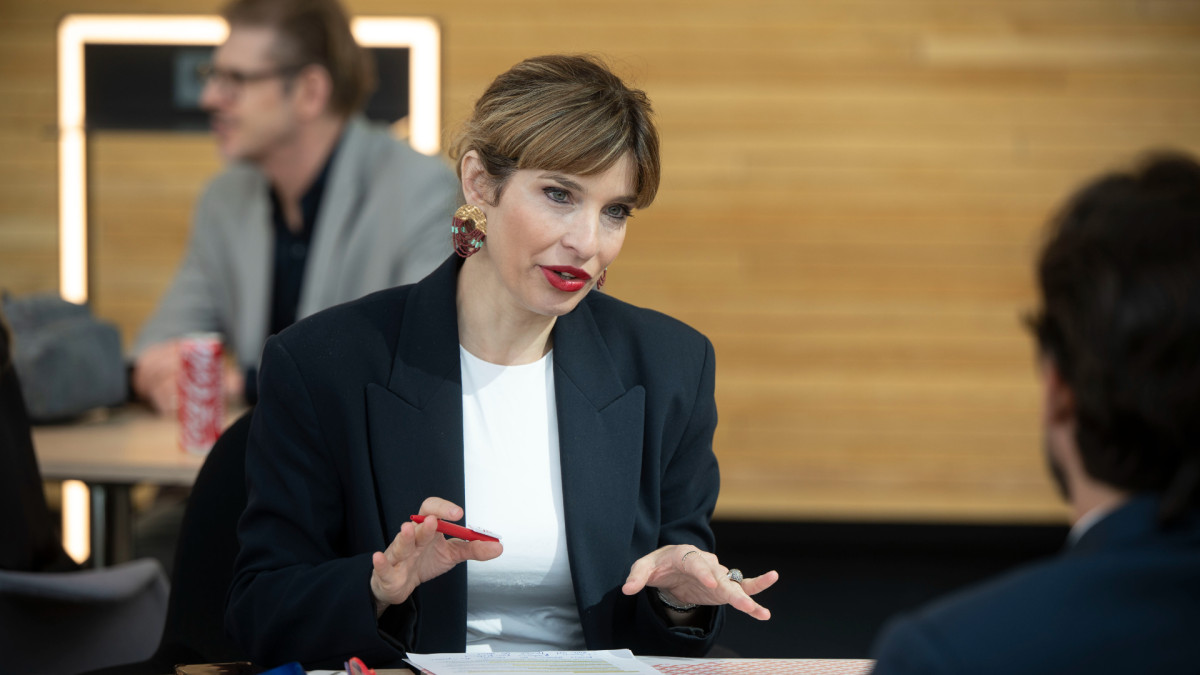
The discussion addresses the need to support Europe's new priorities with political will and sufficient resources. Photo: Agenda Pública / Dorothée Parent
Each of you specialises in different areas. Within those fields, what are your priorities?
H. J.: First of all, commitments have to be honoured. Today the Commission president once again referred to commitments, much less forcefully than in her previous speech, despite the objectives not having been met. I am referring, for example, to Israel and Palestine.
She sent a message to the major groups in the Chamber: you have to reach agreement, because failing to reach agreement on issues such as the Middle East solves nothing. We have been unable to agree on central questions, particularly Parliament's position on Israel and Palestine. That was a clear message. But it is also true that last year she spoke about sanctions and the EU-Israel Association Agreement, and this time she said absolutely nothing. If, in a speech at the beginning of the term or in last year's speech, she sets out certain commitments and does not fulfil them, the first thing she has to do is deliver on what she said.
Then you need political will. For example, there is a proposal to create a European corporation responsible for securing supplies and building reserves of critical raw materials. You can announce a body that has already been proposed and that is meant to be launched before the end of the year, but if you do not give it a budget, it will be very difficult.
The same applies to electrification. It is an issue on which nobody is going to disagree. We also need to talk about electricity grids and remember what happened in France. Spain has put a great deal of regulation in place at national level, unlike some other countries, but European regulation also needs to be examined. If that happens, we will all support it. This Commission needs greater political will and more funding for many of the projects currently on the table. The overall speech and the ideas are good, but they have to be backed up with money and political will.
J. F.: I return to what I said at the beginning about the Union budget and own resources. One of the structural problems in these debates, or in Brussels conversations more generally, particularly since we began reviving industrial policy and certain sectoral ambitions —artificial intelligence, data centres, the digital agenda or the automotive industry—, is that you see a governing agenda built around policies that absolutely require funding, and the fundamental problem is that the funding is not there. In many cases, these promises end up becoming plans or strategies that may be sound or open to debate, but that are not implemented by the European Commission. Each Member State applies them as it sees fit, and their financial capacities vary enormously. That creates further fragmentation in the single market, because some countries are able to pursue those strategies much more forcefully than others. I therefore take some distance from this rhetoric, repeated year after year, about a multitude of sectoral policies, not because I disagree with the objective —I do agree with it—, but because I am aware of the difficulties the Commission will face in actually doing anything, even if it manages to design a plan.
The budget negotiations for the period beginning in 2028 are proving quite difficult. A large group of countries, led by Germany, is demanding further cuts to a budget that, in nominal terms, is similar to that of the parliamentary term now ending, but which has €750 billion less because the Next Generation funding is no longer there. The Union's overall financial capacity, including Next Generation, is almost 40% lower than in the period ending in 2027. At the same time, there is a proliferation of proposals justified by urgency and necessity, but without the funding to implement them. Calls to reduce the budget come on top of the difficulties involved in creating own resources, which are also needed to repay the Next Generation debt.
"The Union's overall financial capacity, including Next Generation, is almost 40% lower than in the period ending in 2027"Until someone takes this seriously —and I think they are taking it seriously, although we still do not have results—, it will be difficult to move forward. I want to highlight the work António Costa has done over the summer and in recent months, travelling to every capital and trying to reach an agreement. He is making a very significant effort from the presidency of the European Council. Until this is resolved, we can talk about many strategies and plans; I hope they are delivered, but there is a proliferation of proposals linked to genuine needs with no real financial backing.
A. V.: While I partly agree with what Jonás is saying, I think any transfer of sovereignty has to be accompanied by a transfer of budgetary resources. I do not think this is the moment to open the debate over own resources, for one very simple reason: we are at a point where we could end up derailing the whole agreement and, a year from now, the budget might be negotiated by Bardella or Alternative for Germany. We need to secure at least a minimum agreement on the budget as soon as possible. I agree with him that we do not have the capacity to implement many of the Commission's proposals, but if we demand too much and drag out or complicate the negotiations, what happens next year could be infinitely worse.
J. F.: I am not talking in terms of demands, but simply acknowledging reality. The Commission's proposal for the financial framework is roughly the same as in the previous parliamentary term, which amounts to a cut of almost 40% once Next Generation is removed. Those are the figures. At the same time, we have Next Generation debt that we need to start repaying. If we have almost the same budget and must begin repaying that debt, I think some debates should be left for another time. We are telling the public that we are going to respond to their needs and, in many cases, we will not be able to do so. So I think it is better not to promise things that are beyond our reach.
J. L.: The budget represents the tools Europe has at its disposal to act. If we want Europe to take responsibility for its own security and have a genuine industrial policy, we cannot continue with a meagre budget. If we adjust those ambitions to the resources currently available, at the very least we will end up dismantling the Common Agricultural Policy and cohesion policy. That would cause enormous political damage, because these are highly sensitive budget lines that we want to protect. If we want to protect them, we can forget about new resources for the other two priorities, which we also share: industrial policy and security. It was said during today's debate: you cannot do more with less. Europe now has greater needs because it faces more risks and threats, yet it is being asked to act with fewer resources. That will only generate frustration and contradictions.
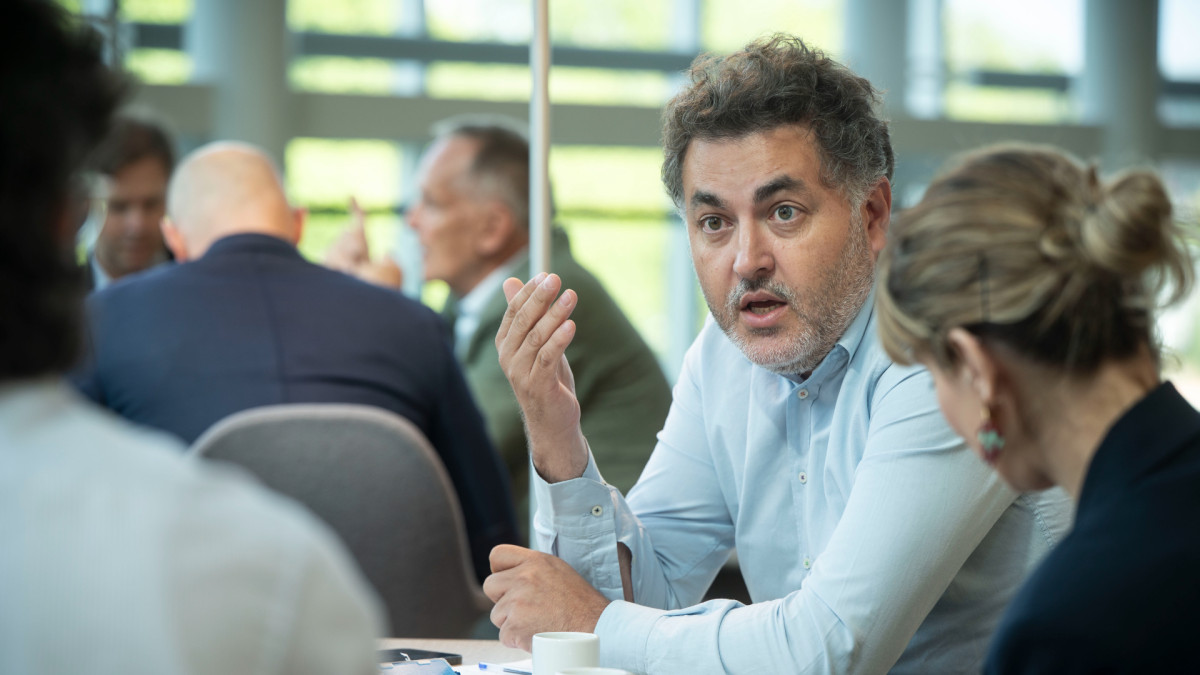
The debate over the European budget pits the Union's new ambitions against resources that the MEPs consider insufficient. Photo: Agenda Pública / Dorothée Parent
To what extent has the Ceuta crisis affected the European agenda? It touches on many sensitive issues: immigration, hybrid threats, foreign relations, minors...
H. J.: We have suffered a crisis that affected our sovereignty. Seventy thousand people entered and around 95% returned to Morocco in less than seventy-two hours. You cannot achieve that if you do not have a good relationship with Morocco. We have readmission agreements with Morocco that work well, as well as cooperation in other areas that tend not to be mentioned, such as terrorism and crime. In addition, irregular immigration fell by 42% between 2024 and 2025. It is true that what happened has happened, but a very high percentage of those who entered returned to Morocco in record time.
The prime minister has always been clear: there is no conclusive evidence that Morocco had anything to do with all this. Police reports indicate that, before 30 July and the mass arrival of people in Spain, around 180,000 people were communicating through social media. That does not prove beyond doubt that Morocco was behind it. It is also a country with which we need to maintain a good relationship, although both sides need to strengthen their borders. Otherwise, Commissioner Magnus Brunner would not have taken that same line yesterday, nor would the Commission president have said today that more resources need to be allocated, which is what we have been demanding for a long time. Ceuta is the Union's southern border, it affects migration and asylum, and it is a European problem. That does not mean there have not been individual actors who have benefited from what happened. We have already seen messages from Donald Trump and Elon Musk. But, as far as we are concerned, Morocco is our neighbour and we are obliged to maintain a good relationship.
"Ceuta is the Union's southern border, it affects migration and asylum, and it is a European problem"We have already experienced other crises, such as those of 2020 and 2021, which we also resolved. We work together not only on migration policy, but also on security, intelligence and terrorism. Morocco is a country that also faces migratory pressure and helps contain migratory pressure towards the rest of Europe. What we need to do is cooperate economically and understand that the externalisation of borders is not a solution and that migration cannot be stopped. It needs to be managed through a comprehensive policy. We also need to understand that we need economic migrants and legal, safe and orderly migration, while also working with countries of origin and transit. Many actors will try to instrumentalise migration. We already saw that in Belarus. It is part of hybrid warfare and one of the major problems we face.
A. V.: Generally speaking, when someone is in a hole and, instead of climbing out, decides to keep digging, I tend to warn them. After that, everyone can do as they please. I have just come from a debate with Laura Ballarín on disinformation. We were asked about this issue there and we both agreed that, obviously, disinformation on social media needs to be tackled, but that those who address the public have the primary responsibility not to generate disinformation themselves.
All the information is clear. I have here, arranged chronologically, the messages that were sent and the police reports. We have just heard something that is not true about where the WhatsApp groups involving 180,000 people were organised. Trying to sell the story that Morocco had nothing to do with it... If someone can sell books with that story, be my guest, but people are not stupid. Moreover, although polls do not determine the truth either, 89% of Spaniards, according to 40dB., believe Morocco was behind this.
Morocco is not only a migration issue. What happened in Ceuta is a security problem, a hybrid conflict in which, for one reason or another, as has happened so many times over the past twenty years, an attempt was made to exert explicit pressure in order to obtain something, although I do not know what. It is a European problem. Frontex could have been there from the beginning, at the request of the Member State. The European Commissioner for Home Affairs could have been there in August, but no minister was willing to accompany him and therefore he could not go. A much more immediate response could have been provided by deploying the army, but that option was rejected. I do not understand why, but clearly things were handled badly. I do not think we should treat this as a national issue, but as a European one. Belarus did exactly the same thing during the early stages of Russia's aggression against Ukraine.
"I do not think we should treat this as a national issue, but as a European one"The fact that the debate has turned into an all-out political battle in Spain has led Europeans to see it once again as a Spanish issue, when in security terms it is an unequivocally European issue and affects us all.
We still do not know what is going to happen to the thousands of Moroccan minors who remain in Ceuta. Today, in Congress, Mr Sánchez was asked as he left the chamber what would happen to those minors, and his response was: "Ask Mr Vivas."
H. J.: I completely disagree. As for what the prime minister said, the issue of the minors' legal representative has been raised. That is why many of them remain in Spain: although work is under way to establish their identities and determine whether they can be returned to their families, they first have to be identified and they need legal representation. That is the reason behind the prime minister's response. We have no problem whatsoever with Mr Vivas; we have always had a good relationship. I was secretary of State for Migration, I dealt with two crises and our dealings were always very cordial. He is a very polite man.
J. L.: Beyond what happened in Ceuta this summer, for Spain the relationship with Morocco is more than foreign policy: it is a national security relationship. That is true because of the management of our borders and migration, because it affects our sovereignty and because it is intertwined with the fight against terrorism. It is a fundamental relationship that has to be based on cooperation but also on firmness.
Secondly, that relationship exists within a European framework. We should pay close attention to the signals being sent by the other capitals and the European institutions. During this plenary session and over recent weeks, national capitals, because of their sensitivity to migration, and the European institutions have reminded Spain how important it is for everyone to maintain a relationship with Morocco based on cooperation and firmness.
"For Spain, the relationship with Morocco is more than foreign policy: it is a national security relationship"If you listen to what Brussels and the capitals have said, it is clear that we need to manage effectively a border that is both Spanish and European. I obviously hope that our partners will not support any confrontational approach. We need to be very clear about that. And if we want to secure their support and assistance in the face of something that affects our sovereignty, we would do well to build sufficient domestic consensus, because that makes it possible to provide an organised and effective response to specific situations.
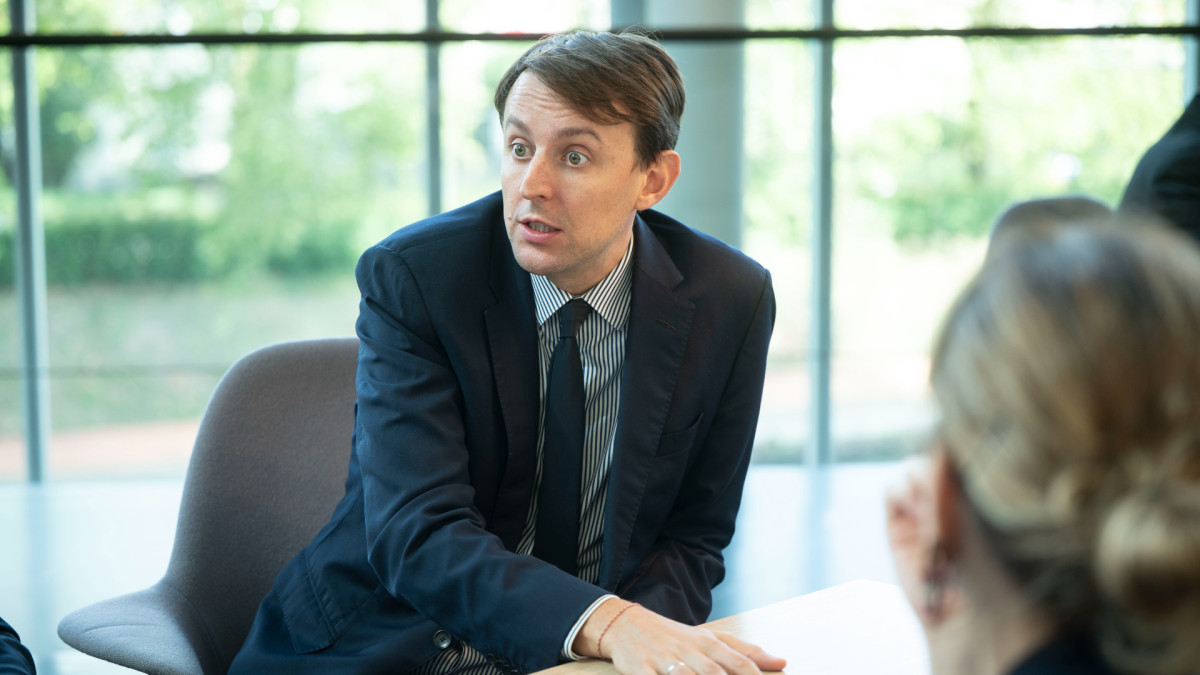
The MEPs analyse the Ceuta crisis as a challenge combining migration, security and relations with Morocco. Photo: Agenda Pública / Dorothée Parent
In light of today's State of the Union debate, I would like each of you to identify one development you would like to see before the end of the parliamentary term and one risk that particularly concerns you.
A. V.: I am going to focus a little on my own area: the package on the protection of minors. Von der Leyen presented a concrete and very specific proposal. It is something practically all groups have been calling for throughout the parliamentary term, something we were already expecting before the summer, and it finally shows that the European Union is taking the protection of minors seriously. It also provides a counterweight to the major technology and digital companies that monetise addictive features targeted at children and also at adults, because it happens to all of us. I do not just think it will pass: I know it will happen. I think it will command a very broad consensus in this Chamber and that it is absolutely necessary for our society.
"The European Union is finally taking the protection of minors seriously"As for my concerns, I very much appreciated what Jonás said about expectations and the budget. The problem we have been facing lately is that we promise things the European Union cannot actually deliver. I try to lower expectations. The Member States bear most of the responsibility here: they often use the institutions as a scapegoat and, when those institutions achieve something successfully, they take the credit. It is natural and human, almost normal. But I am concerned that we may create expectations and then be unable to deliver what we promised because we lack the resources, capacity or powers to do so. It is an age-old issue. Forgive me, and thank you very much.
H. J.: For us, and particularly as far as I am concerned, the European critical raw materials corporation is important, and it needs to have a budget. We also need to continue investing in trade agreements. At the heart of all this is strategic autonomy, and that means delivering on what has been announced in defence and trade.
What concerns me is that we might stop working on international law and international maritime law. I am worried that we may forget about international law and stop working on it. I am talking about what is happening in Gaza, the two-state solution, Israel and Palestine, what is happening in Lebanon and Houthi terrorism. We need to keep working on all of these issues because we must also be an actor for peace and have political influence. If we want that influence, we need to continue investing in our foreign policy.
There was not much discussion of the European External Action Service either. We strongly support it. It was not mentioned today, and I think we also need to put it on the table. I am disappointed that it was not mentioned because it is part of what we need to continue investing in. I am also concerned that this may not happen.
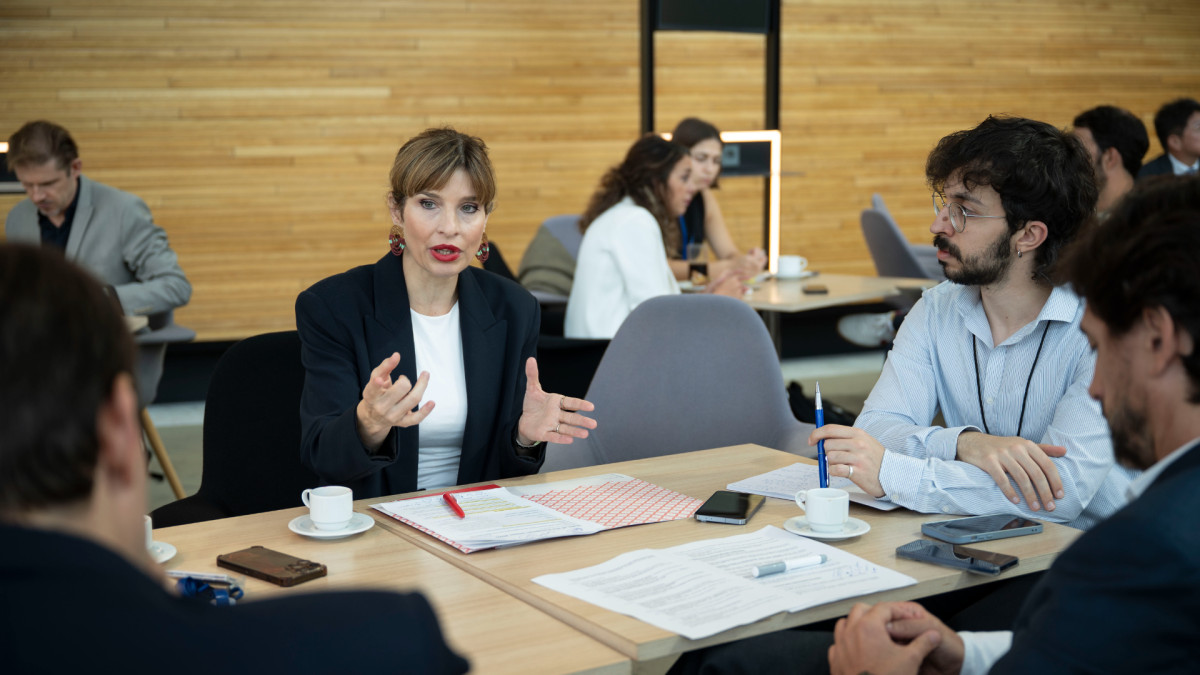
The final part of the conversation focuses on strategic autonomy, foreign policy, housing and the single market. Photo: Agenda Pública / Dorothée Parent
France and Germany have also put forward proposals to reform the European External Action Service.
H. J.: Our ambassadors abroad are our eyes on the ground and they do a great job. You cannot aspire to have political influence in places where you are not present, because the reality on the ground is different. We already have enough problems with MEPs who vote on issues they have neither seen nor know about. How are we going to talk, for example, about the Global Gateway in Africa without being present through our embassies and without checking whether its projects are actually being implemented?
J. L.: What I hope to see is progress in the partnership with Canada as a sign of a renewed push in our relationship with democracies and the world's middle powers in the face of Trump and Putin. That is the symbol.
And my concern is that our housing policy may fall short. A housing package has been announced, addressing one of Europeans' greatest concerns. We need ambitious and forceful action: regulating tourist accommodation, limiting property speculation, and facilitating and funding housing policy and the construction of new housing by public authorities. It is absolutely necessary in Europe.
J. F.: I share my colleagues' hopes. We are beginning to see movement towards implementing the One Europe, One Market plan, because the single market has serious problems. The International Monetary Fund and the European Central Bank published reports last year estimating the costs created by trade frictions within the single market. They calculate shadow tariffs of between 40% and 60% for goods and between 100% and 110% for services. Those figures are intolerable. When we complain, rightly, about tariffs negotiated with, for example, the United States, we should remember that European companies face substantially higher internal costs than they do when selling outside the Union itself.
That means implementing Letta's recommendations and a substantial part of Draghi's recommendations relating to the single market. We are talking about telecommunications, the digital sector, energy, banking and finance. These markets remain highly fragmented, and there is no way to restore the competitiveness of the European economy unless we move that agenda forward.
"How are we going to talk, for example, about the Global Gateway in Africa without being present through our embassies and without checking whether its projects are actually being implemented?"What I would not want to happen, in line with my earlier remarks, is for Europe, its institutions or its political majorities —we will see what happens in next year's elections— to end up consolidating an approach to immigration that I consider inhumane and misguided. We saw it this spring with the vote on the Return Regulation, when the People's Party and the far right secured a majority. I would not want that irresponsible approach to migration policymaking to lead us into scenarios that, to a large extent, we can already begin to foresee.
Thank you very much, everyone.
.png)