Domingo, 18 de octubre de 2026




LÓPEZ PLANA'S EUROPEAN COMPASS
Spain’s orientation with Washington: investment, power, and the era of Trump
The death of 'old Atlanticism' and the birth of strategic patience. While Europe oscillates between alarm and nostalgia in the face of Donald Trump, economic reality is handing down its own sentence: our allies are no longer the ‘old Atlanticists’ we once knew. In this installment of 'La Brújula Europea,' Marc López Plana, editor and director of 'Agenda Pública,' reflects on how Spain is playing the game of 'transatlantic capitalism.' Is the country prepared for an asymmetrical relationship that requires knowing how to say 'no' without putting 600,000 jobs at risk?

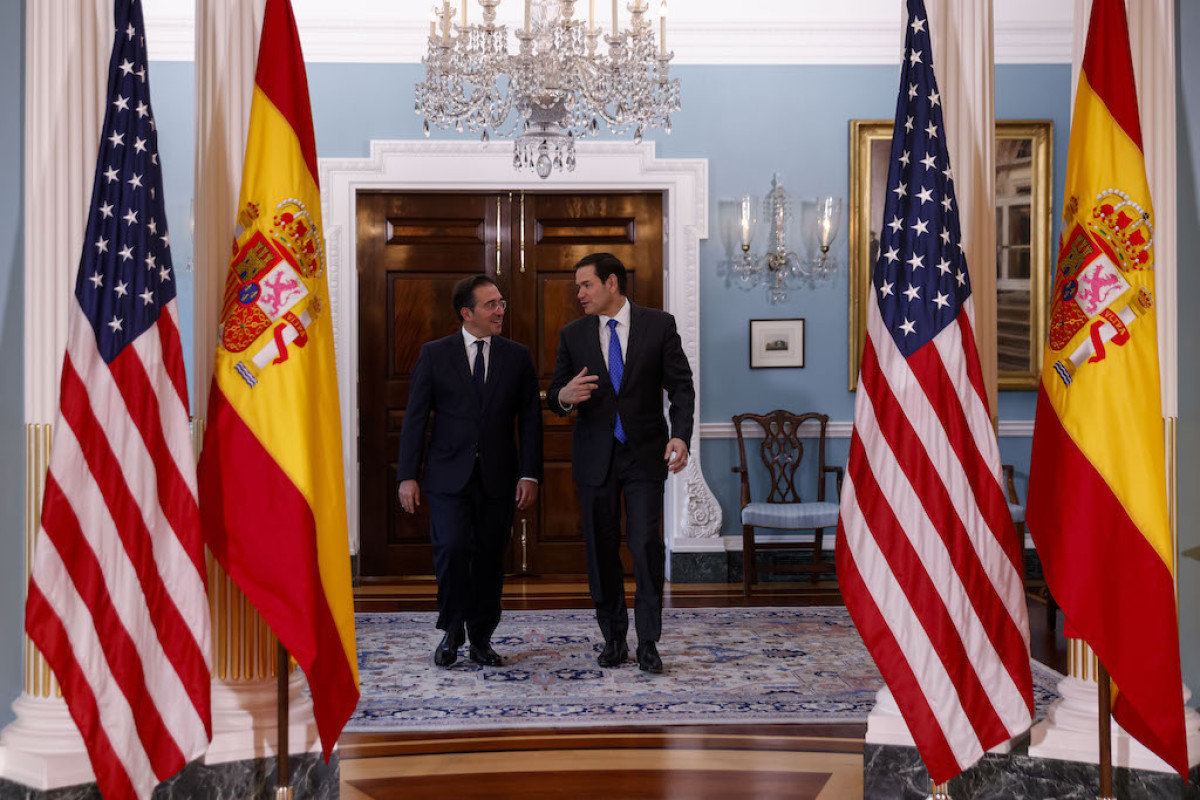
Marco Rubio meets with José Manuel Albares, Spain’s Minister of Foreign Affairs.Mehmet Eser / Zuma Press / ContactoPhoto
Europe has a long tradition of interpreting American politics through its own ideological categories. When an administration close to liberal multilateralism comes to power, the transatlantic relationship is described as a natural community of values. When dealing with a nationalist or unilateralist presidency, the European debate oscillates between alarm and condemnation. However, the latter view tends to be more moral than strategic, and now that U.S. politics are being redefined under the leadership of Donald Trump, Spain and Europe need more than knee-jerk reactions: they need a compass.
For Spain – and for a large part of its business fabric – the compass is pointing to a simple reality: the debate around U.S. relations isn’t restricted to whether or not that nation is a political or military ally. It’s also the largest developed market in the world and the main destination for Spanish foreign investment. In a geopolitical context marked by great power rivalries and increasing politicization of trade, the relationship with Washington must be handled with extreme intelligence.
The data illustrate this clearly. Spain’s investment position in the U.S. exceeds €117 billion, making it the main destination for Spanish foreign investment, and concentrating approximately 15% of total investment abroad.
In addition to that presence is a significant business reality: around 2,000 subsidiaries of Spanish companies operate in the United States today, generating nearly 600,000 jobs and a combined turnover of more than €255 billion. In other words, the transatlantic relationship isn’t just political, but profoundly economic.
This corporate network is part of a broader phenomenon: the existence of a truly transatlantic capitalism, where large European companies operate within the U.S. economy as local actors.
For many Spanish companies, the United States is not a foreign market – it is an expansion of the domestic market.
For Europe, this creates discomfort, but also clarity. U.S. economic policy is increasingly articulated around explicit national interests. And in that environment, foreign companies – including Spanish and European ones – must navigate a regulatory ecosystem where the weight of politics is growing.
This doesn’t necessarily imply hostility toward foreign investment. In fact, the U.S. remains one of the most open markets in the developed world. But it does mean that sectors considered to be strategic – energy, infrastructure, technology – are increasingly subject to political decisions.
This is particularly relevant in sectors like energy, infrastructure, and telecommunications. Texas, Florida, and California each have their particular regulatory frameworks, differentiated tax incentives, and political agendas that can diverge considerably from positions held in the White House.
This explains why many foreign multinationals have developed complex institutional networks within the United States, with a presence not only in Washington but in specific state capitals and regional chambers of commerce.
Big players in the sector from ExxonMobil to Chevron operate in an environment where energy policy is closely intertwined with national security strategy. Decisions on liquefied natural gas exports, sanctions on rival producers, or environmental regulations can disrupt entire markets.
For Europe, in the midst of a process of climate transition and still dependent on energy imports, this dynamic has direct consequences. U.S. energy policy is no longer a domestic issue: it is a factor that conditions the global energy balance. Understanding this, I recently wrote and sought to contextualize the presence of Repsol CEO Josu Jon Imaz at a White House meeting with Trump and other energy executives.
That optimism reflects a structural reality: the U.S. still offers a vast market, a stable institutional framework, and growth opportunities that are hard to find in other developed economies.
In my interview with Charles Powell, director of the Elcano Royal Institute, we touched on a concept that bears highlighting: strategic patience. According to Powell, "You have to assume that the current political situation in the United States will pass, although not completely. Those who come after Trump won’t be the old Atlanticists who believed in NATO or the European Union as parts of the same construction."
Assuming that reality, and even in the context of an EU and NATO where we still believe that problems can be solved multilaterally, our bilateral relations need to be strengthened in response to the undeniable weakening of multilateral institutions. "And it’s even more important in the relationship with the United States, where the structural asymmetry between a global power and a medium-sized country always demands especially sophisticated diplomacy," Powell told me.
The answer doesn’t lie in confrontation or in uncritical adaptation. Rather, it requires the development of a capacity in Spain for strategic analysis that includes political realism and the defense of its own interests.
Europe needs to understand Washington on its own terms, as a complex political system in which the White House, Congress, the 50 states, regulatory agencies, and a broad ecosystem of private actors all inter-relate.
After all, the relationship between Europe and the U.S. has never been completely harmonious but a continuous mix of cooperation and competition.
In a world where geopolitics is again blending with economics, that duality has become more evident. For Europe, the task is not to choose between alignment with or distance from Washington, but to develop the ability to better understand it.
The transatlantic relationship will be different from before. But Spain still has cards to play, and playing them correctly will require more than strategic nostalgia: it will require an accurate compass.
For Spain – and for a large part of its business fabric – the compass is pointing to a simple reality: the debate around U.S. relations isn’t restricted to whether or not that nation is a political or military ally. It’s also the largest developed market in the world and the main destination for Spanish foreign investment. In a geopolitical context marked by great power rivalries and increasing politicization of trade, the relationship with Washington must be handled with extreme intelligence.
"The debate around U.S. relations isn’t restricted to whether or not that nation is a political or military ally. It’s also the largest developed market in the world and the main destination for Spanish foreign investment"In last week’s Brújula Europea, I stated that Europe’s strategic autonomy begins with knowing how to say ‘no’ to a friend and ally like the United States. But that strategic autonomy also involves defense of the economic interests of European companies operating in the U.S.
The data illustrate this clearly. Spain’s investment position in the U.S. exceeds €117 billion, making it the main destination for Spanish foreign investment, and concentrating approximately 15% of total investment abroad.
In addition to that presence is a significant business reality: around 2,000 subsidiaries of Spanish companies operate in the United States today, generating nearly 600,000 jobs and a combined turnover of more than €255 billion. In other words, the transatlantic relationship isn’t just political, but profoundly economic.
Transatlantic capitalism
Over the past two decades, Spanish investment in the United States has grown steadily. Large multinationals have consolidated strategic positions in key sectors of the U.S. economy, from energy to infrastructure to financial services."For many Spanish companies, the United States is not a foreign market – it is an expansion of the domestic market"Companies such as Iberdrola have made the U.S. market one of their main hubs for growth, especially in renewable energies and electricity grids. Other companies such as Ferrovial and the ACS Group are involved in some of the country’s largest infrastructure projects, from highways to airports. In the energy sector, Repsol maintains a significant presence in exploration and production, while Banco Santander has consolidated its U.S. subsidiary as a pillar of its international business.
This corporate network is part of a broader phenomenon: the existence of a truly transatlantic capitalism, where large European companies operate within the U.S. economy as local actors.
For many Spanish companies, the United States is not a foreign market – it is an expansion of the domestic market.
Trump and the logic of geoeconomics
The Trump presidency didn’t invent the notion of the U.S. geoeconomy, but it has made it unusually explicit. In Trump’s view, foreign policy is closely linked to trade policy, energy security, and industrial competitiveness."Tariffs, economic sanctions, and technological restrictions have become instruments of foreign policy"Tariffs, economic sanctions, and technological restrictions have become instruments of foreign policy. Multilateral institutions like the World Trade Organization continue to exist, but their capacity for arbitration has diminished under the logic of bilateral negotiation.
For Europe, this creates discomfort, but also clarity. U.S. economic policy is increasingly articulated around explicit national interests. And in that environment, foreign companies – including Spanish and European ones – must navigate a regulatory ecosystem where the weight of politics is growing.
This doesn’t necessarily imply hostility toward foreign investment. In fact, the U.S. remains one of the most open markets in the developed world. But it does mean that sectors considered to be strategic – energy, infrastructure, technology – are increasingly subject to political decisions.
The real power of States
One of the most common mistakes made in Europe is to suppose that all U.S. economic policy is decided in Washington. In reality, a significant part of the regulatory environment depends on the individual federated states.This is particularly relevant in sectors like energy, infrastructure, and telecommunications. Texas, Florida, and California each have their particular regulatory frameworks, differentiated tax incentives, and political agendas that can diverge considerably from positions held in the White House.
"For a Spanish company, the political geography of the U.S. is as important as its economy"For a Spanish company, the political geography of the U.S. is as important as its economy. Understanding who governs each state, what regulatory priorities exist, and what institutional alliances can conceivably be built are essential parts of business strategy.
This explains why many foreign multinationals have developed complex institutional networks within the United States, with a presence not only in Washington but in specific state capitals and regional chambers of commerce.
Energy, security, and power
If there’s one sector where U.S. policy has global implications, it is the energy sector. The United States has consolidated a position among the great energy powers of the 21st century, and that capacity has become a geopolitical instrument.Big players in the sector from ExxonMobil to Chevron operate in an environment where energy policy is closely intertwined with national security strategy. Decisions on liquefied natural gas exports, sanctions on rival producers, or environmental regulations can disrupt entire markets.
For Europe, in the midst of a process of climate transition and still dependent on energy imports, this dynamic has direct consequences. U.S. energy policy is no longer a domestic issue: it is a factor that conditions the global energy balance. Understanding this, I recently wrote and sought to contextualize the presence of Repsol CEO Josu Jon Imaz at a White House meeting with Trump and other energy executives.
A deep economic relationship
Despite any political or trade tensions that may arise, the data suggest that the economic relationship between Spain and the United States will remain profound. According to recent business surveys, 96% of Spanish companies present in the U.S. plan to stay for the next five years, and a majority plan to continue investing and expanding their workforce.That optimism reflects a structural reality: the U.S. still offers a vast market, a stable institutional framework, and growth opportunities that are hard to find in other developed economies.
A compass for Spain
All this raises a fundamental question: How should Spain relate to a U.S. administration whose view of the international order differs from Europe’s multilateral tradition?In my interview with Charles Powell, director of the Elcano Royal Institute, we touched on a concept that bears highlighting: strategic patience. According to Powell, "You have to assume that the current political situation in the United States will pass, although not completely. Those who come after Trump won’t be the old Atlanticists who believed in NATO or the European Union as parts of the same construction."
Assuming that reality, and even in the context of an EU and NATO where we still believe that problems can be solved multilaterally, our bilateral relations need to be strengthened in response to the undeniable weakening of multilateral institutions. "And it’s even more important in the relationship with the United States, where the structural asymmetry between a global power and a medium-sized country always demands especially sophisticated diplomacy," Powell told me.
"Those who come after Trump won’t be the old Atlanticists who believed in NATO or the European Union as parts of the same construction"Spain also has its own cards to play, and that is what Spain’s ambassador to the U.S., Ángeles Moreno Bau, has been doing. We mustn’t forget that the U.S. political system is composed of strong and active checks and balances that have historically allowed the country to absorb deep political crises without abandoning its democratic structure.
The answer doesn’t lie in confrontation or in uncritical adaptation. Rather, it requires the development of a capacity in Spain for strategic analysis that includes political realism and the defense of its own interests.
Europe needs to understand Washington on its own terms, as a complex political system in which the White House, Congress, the 50 states, regulatory agencies, and a broad ecosystem of private actors all inter-relate.
After all, the relationship between Europe and the U.S. has never been completely harmonious but a continuous mix of cooperation and competition.
In a world where geopolitics is again blending with economics, that duality has become more evident. For Europe, the task is not to choose between alignment with or distance from Washington, but to develop the ability to better understand it.
The transatlantic relationship will be different from before. But Spain still has cards to play, and playing them correctly will require more than strategic nostalgia: it will require an accurate compass.
Ahora en portada
18 de octubre de 2026
18 de octubre de 2026
17 de octubre de 2026
Noticias relacionadas
Hace 31 semanas
Spain’s orientation with Washington: investment, power, and the era of Trump
Lo más leído