Viernes, 16 de octubre de 2026




LETTER FROM THE DIRECTOR
Spanish industrial policy has names and surnames
The editor and director of 'Agenda Pública' advocates collaboration between institutions and companies so that "Spain and Spanish capital can participate in the European consolidation of our strategic sectors with a position of strength". There are names that belong to this Spanish industrial policy that must contribute to European strategic autonomy.
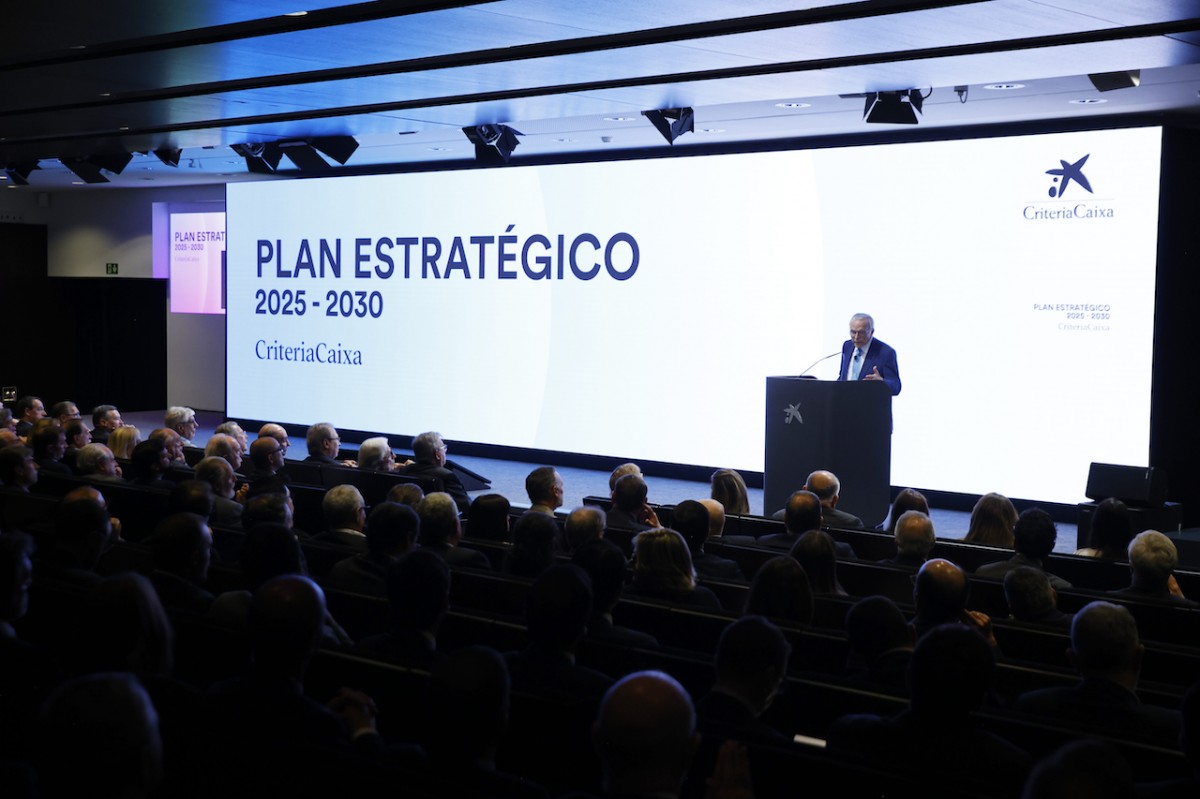
Presentation of CriteriaCaixa's 2025-2030 Strategic Plan.Kike Rincón / Europa Press / ContactoPhoto
Public debate is plagued with recurring platitudes about politics or economics. The latest fashionable platitude is the reiteration heard from many of our politicians, some probably without knowing exactly what they are talking about, when they say that "this is our opportunity to develop our industry and our strategic autonomy". It is a platitude, as long as there are no decisions driving it. But the reality is that it fundamentally depends on ourselves, our political representatives and our business leaders, and an alliance between them, to make the decisions that make it possible. The noise does not help, and it also distracts, but there is still time.
Public debate is full of platitudes: the United States does not have more industry because the market works better, but because the State has driven the market. Spain is not a less democratic country because the State invests in companies; it is more competitive when it does so. And although there are non-democratic countries that are increasingly driving investments to participate in strategic companies, it is precisely for this reason that democratic countries must also play on equal terms. Even more so when they also do so in ours.
Spain has always arrived late to all revolutions, but it has the opportunity to lead the next one. Both because of the not inconsiderable fact of belonging to the European Union, and having a structural role and conjunctural vocation of predominance, and, above all because it has the conditions to make it possible: energy that is much cheaper than that of our surroundings, a momentum of industrial development based on knowledge and business and institutional conditions that can make it possible. The strategic paradox in which our country has companies, once public, privatised and at the orders of third countries, may be left behind. What is needed? The ambition and collaboration necessary to take this match seriously.
Spanish industrial policy has a name and surname. Marc Murtra, today president of Telefónica, arrives at a key moment for the company, with the challenge of turning the Spanish company into an example of an industrial catalyst for our strategic autonomy. Not only in telecommunications, but also in security and defence. Its main objective is European consolidation, contributing to strategic autonomy from Spain. The history of Spanish industrial policy, as we said, has names and surnames. Ángel Escribano, now president of Indra, started working in a workshop with his father and brother. Today he provides defence material to 25 countries through his own company, with 1,300 employees, and a turnover of more than 300 million euros, whilst running in parallel the flagship of Spanish defence.
"Developing our industry and our strategic autonomy is a platitude if there are no decisions driving them"Today's world bears little resemblance to that of five years ago, and Spain's or Europe's advantages and limitations are more than clear. The United States, or China, have not promoted a position of economic and industrial leadership over the last century due to the free market, nor of chance, nor of historical determinism, nor of infused science. They have achieved it by making decisions that have made it possible. Faced with the Chinese authoritarian temptation, or the American nationalist reaction. Or the clarity with which States such as the French have assumed that institutions exist. Among other things, so that the economy responds to the general interest, project the answer, and the path, to overcome Spain's backwardness in this matter.
Public debate is full of platitudes: the United States does not have more industry because the market works better, but because the State has driven the market. Spain is not a less democratic country because the State invests in companies; it is more competitive when it does so. And although there are non-democratic countries that are increasingly driving investments to participate in strategic companies, it is precisely for this reason that democratic countries must also play on equal terms. Even more so when they also do so in ours.
"We have a fallacious public debate where it is assumed that intervention in the economy is a legacy of communism or that promoting the development of companies is an expression of unscrupulous capitalism"What makes us less democratic is not considering the State as an economic agent. Instead, we have a fallacious public debate where it is assumed that intervention in the economy is a legacy of communism or that promoting the development of companies is an expression of unscrupulous capitalism. China has created a new business ecosystem in the name of the Communist Party, and the United States has always intervened in the development of its economy. Now, it will do so even more, and in the name of freedom. And of its autonomy.
Spain has always arrived late to all revolutions, but it has the opportunity to lead the next one. Both because of the not inconsiderable fact of belonging to the European Union, and having a structural role and conjunctural vocation of predominance, and, above all because it has the conditions to make it possible: energy that is much cheaper than that of our surroundings, a momentum of industrial development based on knowledge and business and institutional conditions that can make it possible. The strategic paradox in which our country has companies, once public, privatised and at the orders of third countries, may be left behind. What is needed? The ambition and collaboration necessary to take this match seriously.
"The most paradigmatic and exceptional of the proper names of industrial policy is Isidre Fainé, president of the 'la Caixa' Foundation"Spanish industrial policy has names and surnames, and many good examples. And it has the ambition of proper names that will leave their mark on history yet to be written. One of the most paradigmatic and exceptional cases is that of Isidre Fainé, president of the "la Caixa" Foundation. He has created, through a non-profit organisation, directed by Josep María Coronas —another proper name in Spanish industrial policy— an industrial group, through his holding Criteria Caixa. In doing so, he appointed Ángel Simón —yet another proper name in Spanish industrial policy— to lead a new, more ambitious stage, which drives the financial, telecommunications or energy sector, and which is committed to the development and investment of industrial and strategic companies for Spain and Europe.
Spanish industrial policy has a name and surname. Marc Murtra, today president of Telefónica, arrives at a key moment for the company, with the challenge of turning the Spanish company into an example of an industrial catalyst for our strategic autonomy. Not only in telecommunications, but also in security and defence. Its main objective is European consolidation, contributing to strategic autonomy from Spain. The history of Spanish industrial policy, as we said, has names and surnames. Ángel Escribano, now president of Indra, started working in a workshop with his father and brother. Today he provides defence material to 25 countries through his own company, with 1,300 employees, and a turnover of more than 300 million euros, whilst running in parallel the flagship of Spanish defence.
"Marc Murtra, president of Telefónica, has as his main objective European consolidation and thus contributing to the strategic autonomy of the EU from Spain"Spanish industrial policy has names and surnames. And, today, some good decisions are being taken by some of our companies and institutions. Because only by collaborating among themselves, Spain and Spanish capital will have the capacity to compete with third-party investments but, above all, to participate in the European consolidation of our strategic sectors from a position of strength. Because only by collaborating among themselves, Spain and Spanish capital will be able to put themselves at the service of their citizens. Because only by collaborating among themselves, Spain and Spanish capital will be able to build a better future for Spain, and for Europe. Because only by collaborating among themselves, Spain and Spanish capital will build a desirable horizon of freedom, autonomy, and prosperity. Not everything is written. Industrial policy may not be a platitude.
Ahora en portada
16 de octubre de 2026
16 de octubre de 2026
16 de octubre de 2026
Noticias relacionadas
Hace 108 semanas
Talgo and the mutual national interest, in Germany, Spain and the EU
Lo más leído