Miércoles, 14 de octubre de 2026




TRUMP, PUTIN AND ZELENSKI
Ukrainian peace negotiation scenarios, explained
Following his recent calls with Putin and Zelenskyy, Trump is pushing for peace negotiations in Ukraine. But competing interests open up different scenarios. From Kyiv, Ihor Petrenko, director of United Ukraine, analyses possible outcomes.
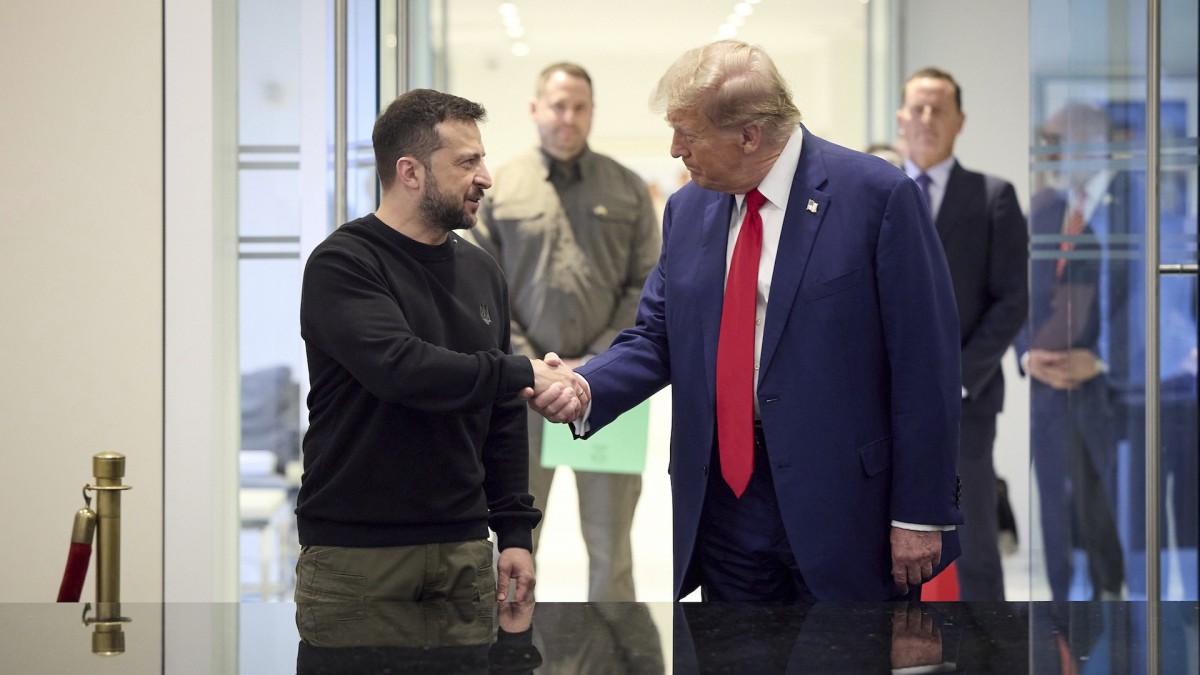
Volodymyr Zelenskyy meets with then-candidate Donald Trump in New York City, September 2024.Ukraine Presidency / Zuma Press / ContactoPhoto
Trump said after his conversation with Putin that they "agreed that they wanted to stop millions of deaths" and "work together." The Kremlin reported that Putin and Trump discussed the possibility of cooperation, including organizing a personal meeting. After his conversation with Trump, Zelenskyy emphasized Ukraine's readiness to "work together" and noted the discussion of security and economic cooperation between the countries. Trump emphasized the importance of the talks, which are to begin soon. It looks quite constructive, but what if we took a deeper look?
The phrase "working together" can be interpreted in different ways. In the context of the Kremlin, it could mean potential compromises on Ukraine, while for Washington, it could be standard diplomatic language.
Zelenskyy emphasized that Ukraine is ready for negotiations only if security guarantees are provided. His rhetoric indicates that he is wary of possible compromises with Russia.
Ukraine's European partners are also cautious about possible shifts in US policy. Against the backdrop of Trump's statements, NATO, and the EU may intensify their own initiatives to support Kyiv to prevent Ukraine from being forced to make unfavourable concessions.
Given all these statements, there are questions that remain open: Will these negotiations consider Ukraine's position? Is there a risk that the US will try to "freeze" the conflict without returning all Ukrainian territories? What compromises can be discussed? To find adequate answers to these questions, it is first of all worth considering the interests of each party.
Economic deals, such as access to Ukrainian resources, could become part of his geopolitical strategy. The US has handed Kyiv a draft agreement on cooperation in mining. Trump is interested in access to Ukrainian rare earth metals in exchange for aid. This could be an alternative to traditional military support. The deal is also geopolitically significant, as it will strengthen US control over key resources.
Ukraine seeks to restore its territorial integrity and security guarantees that will prevent new aggression from Russia. Zelenskyy is counting on continued US military and economic support, especially in the context of a potential new aid package. Kyiv seeks to maintain its subjectivity in international negotiations, not allowing the United States and Russia to negotiate without its participation.
Considering the interests of each party, three scenarios are possible:
The Trump administration's peace plan may contain several elements aimed at ending active hostilities, but it will not necessarily guarantee the full restoration of Ukraine's territorial integrity. We currently have some leads that can be grouped into three potential formats.
If Trump follows the "frozen conflict" approach, his hypothetical steps could include: reducing or terminating US military aid in exchange for Kyiv's negotiations with Moscow; establishing a temporary ceasefire on the current contact line; creating a demilitarized zone with international observers; and easing or partially lifting sanctions against Russia as an "incentive" to compromise.
If the priority is given to a phased demilitarization approach with international guarantees, the steps could be as follows: first, the withdrawal of heavy weapons under the control of the UN or another international organization; then negotiations on the future status of the occupied territories (including autonomy or special status under international control); a possible compromise on Russia's influence rights (for example, a guarantee of Ukraine's non-alignment with NATO in the short term while the peace process continues); and the consolidation of the Russian Federation's role in the conflict.
If the United States, which is unlikely for now, supports Ukraine's position on the liberation of its territories, the steps may include: expanding sanctions, especially financial ones (limiting access to the dollar system, freezing assets of people close to the Kremlin), expanding personal sanctions against the Russian elite and business; the United States may further complicate the access of Russian energy companies to Western markets or tighten restrictions on the export of oil and gas production technologies; pressure on NATO allies to increase military support for Eastern states.
It is important for Kyiv not only to maintain U.S. support, but also to consolidate international partners to prevent a scenario that benefits only Washington and Moscow. Ukraine's subjectivity and diplomatic activity will be key in determining the future of this war.
The phrase "working together" can be interpreted in different ways. In the context of the Kremlin, it could mean potential compromises on Ukraine, while for Washington, it could be standard diplomatic language.
"Trump said after his conversation with Putin that they 'agreed that they wanted to stop millions of deaths' and 'work together'""Stopping millions of deaths" is a strong message that hints at the US willingness to seek a quick resolution to the conflict, probably through negotiations. In the context of peace talks, the key issue will be their content and the level of concessions. What do the words "immediate start of negotiations" and the assignment of some officials (Rubio, Volz, Vitkoff) to lead the negotiation process mean? This may indicate a deepening of unofficial channels of communication with Russia.
Zelenskyy emphasized that Ukraine is ready for negotiations only if security guarantees are provided. His rhetoric indicates that he is wary of possible compromises with Russia.
Ukraine's European partners are also cautious about possible shifts in US policy. Against the backdrop of Trump's statements, NATO, and the EU may intensify their own initiatives to support Kyiv to prevent Ukraine from being forced to make unfavourable concessions.
Given all these statements, there are questions that remain open: Will these negotiations consider Ukraine's position? Is there a risk that the US will try to "freeze" the conflict without returning all Ukrainian territories? What compromises can be discussed? To find adequate answers to these questions, it is first of all worth considering the interests of each party.
"Trump's priority is to fulfil his campaign promises to end 'perpetual war' and reduce US spending on international conflicts"Trump's priority is to fulfil his campaign promises to end "perpetual war" and reduce US spending on international conflicts. He wants to present himself as an effective negotiator who can "make a deal" even with Putin. It is important for him to retain the support of isolationist forces in the Republican Party and business elites, who aim to normalize relations with Russia.
Economic deals, such as access to Ukrainian resources, could become part of his geopolitical strategy. The US has handed Kyiv a draft agreement on cooperation in mining. Trump is interested in access to Ukrainian rare earth metals in exchange for aid. This could be an alternative to traditional military support. The deal is also geopolitically significant, as it will strengthen US control over key resources.
"Putin is interested in consolidating his territorial gains, minimizing sanctions, and splitting Ukraine and its Western allies"Putin is interested in consolidating his territorial gains, minimizing sanctions, and splitting Ukraine and its Western allies. He is trying to psychologically influence Trump by exploiting his desire to appear as a peacemaker. The Kremlin wants guarantees that Ukraine will not become a NATO member and will not receive strategic weapons.
Ukraine seeks to restore its territorial integrity and security guarantees that will prevent new aggression from Russia. Zelenskyy is counting on continued US military and economic support, especially in the context of a potential new aid package. Kyiv seeks to maintain its subjectivity in international negotiations, not allowing the United States and Russia to negotiate without its participation.
"Ukraine seeks to restore its territorial integrity and security guarantees that will prevent new aggression from Russia"For Ukraine, it is critical to secure security guarantees. The United States may consider a bilateral security treaty that would partially compensate for the lack of NATO membership. The EU plays an important role, as its position can change the balance of power in the negotiations. Any agreement should include mechanisms to deter Russia, including sanctions and military guarantees.
Considering the interests of each party, three scenarios are possible:
- The freezing of the conflict without clear guarantees – acceptable to Trump and partly to Putin, but unacceptable to Ukraine, as it leaves the territories under Russian control.
- A phased demilitarization with international guarantees – a hypothetical option where the US and EU offer Ukraine and Russia a certain agreement that contains security elements, but may also include concessions on the status of certain territories.
- Ukraine's complete refusal to make concessions and increased support for NATO is the best option for Kyiv, but risky if the United States changes its course to isolationism.
The Trump administration's peace plan may contain several elements aimed at ending active hostilities, but it will not necessarily guarantee the full restoration of Ukraine's territorial integrity. We currently have some leads that can be grouped into three potential formats.
If Trump follows the "frozen conflict" approach, his hypothetical steps could include: reducing or terminating US military aid in exchange for Kyiv's negotiations with Moscow; establishing a temporary ceasefire on the current contact line; creating a demilitarized zone with international observers; and easing or partially lifting sanctions against Russia as an "incentive" to compromise.
If the priority is given to a phased demilitarization approach with international guarantees, the steps could be as follows: first, the withdrawal of heavy weapons under the control of the UN or another international organization; then negotiations on the future status of the occupied territories (including autonomy or special status under international control); a possible compromise on Russia's influence rights (for example, a guarantee of Ukraine's non-alignment with NATO in the short term while the peace process continues); and the consolidation of the Russian Federation's role in the conflict.
If the United States, which is unlikely for now, supports Ukraine's position on the liberation of its territories, the steps may include: expanding sanctions, especially financial ones (limiting access to the dollar system, freezing assets of people close to the Kremlin), expanding personal sanctions against the Russian elite and business; the United States may further complicate the access of Russian energy companies to Western markets or tighten restrictions on the export of oil and gas production technologies; pressure on NATO allies to increase military support for Eastern states.
"Trump has the tools for almost any game, but what will prevail is still a mystery"So, as we can see, Trump has the tools for almost any game, but what will prevail is still a mystery. So far, there is no concrete evidence that the United States is ready to accept the Russian version of the "settlement." However, Trump is using diplomatic rhetoric that may indicate his openness to compromise.
It is important for Kyiv not only to maintain U.S. support, but also to consolidate international partners to prevent a scenario that benefits only Washington and Moscow. Ukraine's subjectivity and diplomatic activity will be key in determining the future of this war.

Ihor Petrenko
Director del think tank United Ukraine
Doctor of Political Sciences, Associate Professor, Taras Shevchenko National University of Kyiv, Associate Professor of Political Science Department of the Faculty of Philosophy, city of Kyiv, Ukraine.
Etiquetas
Agenda Pública in English, ucrania, Paz, guerra, Rusia, putin, Zelenski, Donald Trump, Estados Unidos, Otan, Unión Europea, armas Ahora en portada
13 de octubre de 2026
14 de octubre de 2026
Noticias relacionadas
Hace 87 semanas
What Trump's return means for the war in Ukraine
Hace 88 semanas
Trump's trade wars: how much they threaten Germany and Europe and how we can protect ourselves
Lo más leído