Lunes, 19 de octubre de 2026




TRUMP'S FOREIGN POLICY
Trump will focus on Latin America in his second mandate, these are the five things to watch out for
The transition period in the US government is evidence, according to experts Juan Luis Manfredi and J. P. Carroll, that Donald Trump will focus his attention on Latin America as part of his new foreign policy. In their analysis, they break down the five main keys that will define this approach.
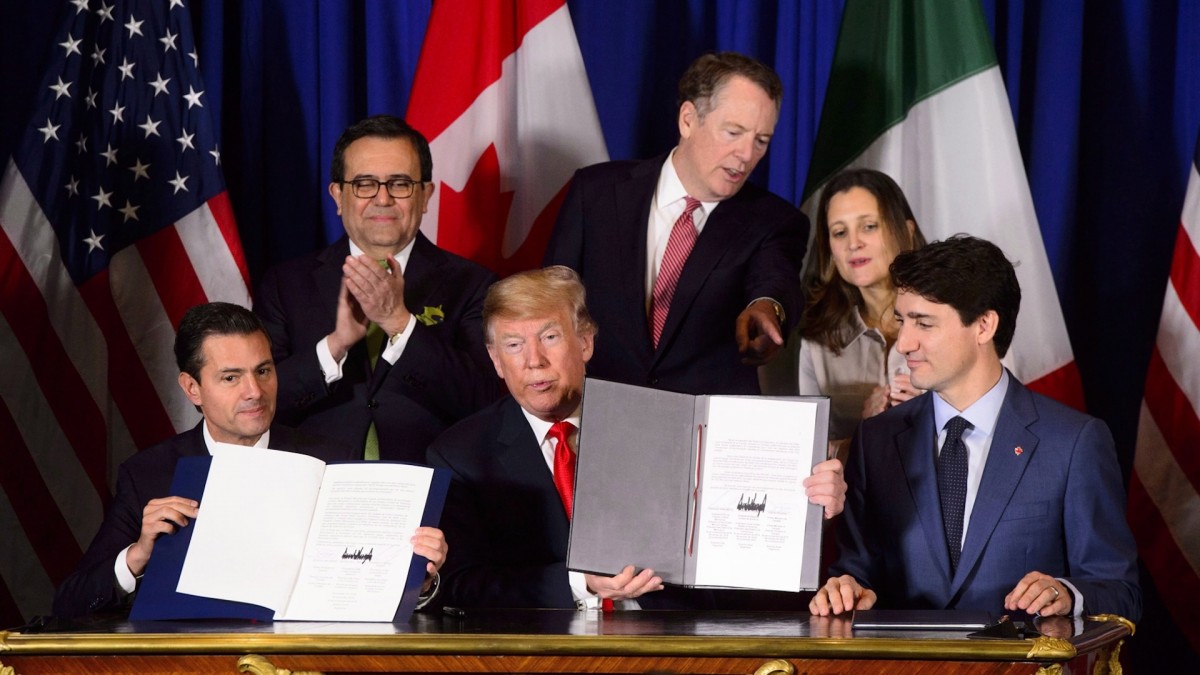
Donald Trump firma el acuerdo de libre comercio entre los tres países norteamericanos junto a Justin Trudeau, primer ministro de Canadá, e Ildefonso Guajardo Villarreal, secretario de Economía de México en 2018. Sean Kilpatrick / Zuma Press / ContactoPhoto
President-Elect Trump has made no secret of his intent to put an unprecedented focus on Latin America as a key part of his foreign policy vision. The last time a U.S. President put such a focus on the region was arguably George W. Bush. President Bush had the intention to put special emphasis on the Americas, but those plans were scrapped in the aftermath of the September 11th terrorist attacks. Do not look for an Obama or Biden doctrine on Latin America because it does not exist. Not even Trump back had much interest in the region during his first mandate, except during the 2016 election.
Yet now, Latin America seems to be back on the White House agenda as a priority concern. For this reason, we decided to look at the five hot issues likely to be prioritized in the region ahead of the first 100 days of the incoming Trump administration.
Recently, President Trump has made clear his desire to take back the Panama Canal in light of what he views as unfair fees on U.S. shipping firms. He also has concerns over Chinese influence over the Canal and across Latin America more broadly. The canal also symbolizes the changing state of global trade flows that are increasingly impacted by climate change. Forget politics or activism: the current effects of climate change are already being seen on trade routes beyond the canal, with less commercial capacity, greater navigational difficulty, and impacting the bottom line.
The emergence of this issue has an interesting timing, with former U.S. President Jimmy Carter having recently and sadly passed away at the age of 100. He was the U.S. President that signed the Torrijos-Carter Treaties, which handed over control of the Canal to Panama.
Trump has stated he intends to nominate current Miami-Dade Commissioner Kevin Marino Cabrera (District 6 – Coral Gables, Hialeah, City of Miami) to be the next U.S. Ambassador to Panama. Cabrera is well-known in Florida Republican circles, and it can be assumed that he would work well with Trump’s nominee for Secretary of State, fellow Floridian, U.S. Senator Marco Rubio. Cabrera serves as Vice Chair of the International Trade Consortium and the Community Safety, Security, and Emergency Management Committee, a position which has given him insight into U.S. trade with Latin America. Notably, the Port of Miami is one of the busiest container ports in the United States.
The U.S.-Mexico-Canada Agreement was one of the key achievements of Trump’s first term in office. This free trade agreement built upon the North American Free Trade Agreement (NAFTA) with a greater emphasis on manufacturing jobs for the United States along with key updates on trade regulation matters pertaining to intellectual property.
Just as in 2016, Trump made immigration a key theme of his 2024 election campaign. Particularly, there was a great deal of focus on the U.S.-Mexico border. This focus is reflected in Trump’s pick for U.S. Ambassador to Mexico, Ron Johnson.
The immigration policy will have a major impact, particularly in the first half of his mandate ahead of the 2026 midterm elections. It is logistically impossible to immediately expel eleven million people, but it is feasible to carry out some impactful operations. It seems likely that for managing logistics at scale that these operations they may involve the military. Ultimately, the administration’s immigration policy will undoubtedly impact Latin America, with many countries in the region having borders that are very sensitive to the migratory flow.
For any Republican president serious about Latin American policy, it has long been a core principle that cracking down on the authoritarian regimes of Venezuela, Cuba, and Nicaragua must be a key part of regional policymaking. In the cases of Nicaragua and, to a lesser extent, Venezuela, there is clear bipartisan support in Congress for sanctioning bad actors both within and outside the government in these countries. Regarding Cuba, Trump will face stronger opposition from Democrats in advancing sanctions, but as president, he will still have significant leeway in shaping foreign policy.
Personnel is Policy – It is clear from his personnel choices that Trump is taking Latin America particularly seriously. As previously mentioned, U.S. Senator Marco Rubio —a Cuban-American— will be his nominee for Secretary of State. The nominee for Deputy Secretary of State is Christopher Landau, Trump’s former Ambassador to Mexico. Mauricio Claver-Carone has been named Special Envoy to Latin America, having previously served in the Trump administration and having led the Inter-American Development Bank. And there is Ric Grenell, former acting Director of National Intelligence (DNI), former Ambassador to Germany, and former Special Presidential Envoy for Serbia and Kosovo Peace Negotiations in the first Trump term. Grenell —a key official in the Trump orbit who is greatly trusted by the President-Elect— will serve as Presidential Envoy for Special Missions, with a portfolio that includes Venezuela, as well as North Korea, among other hotspots.
Although not part of the region, China is becoming increasingly relevant. China's commercial presence in the region is expanding at a double-digit rate, which is a significant concern for the incoming Trump administration. They are closely watching how Chinese products, financing, and technology are flooding the continent, displacing domestic demand for U.S. investment, products, and technology within the hemisphere. This economic shift is laying the groundwork for an alternate regional hegemony. We can expect intensified trade-offs on this issue for countries like Peru, Colombia, and Chile.
"Latin America seems to be back on the White House agenda as a priority concern"There is an argument to be made that Latin America has largely been neglected by Washington for decades. Really, since the Iran-Contra scandal, which revealed the illicit financing of the Contra movement in Nicaragua. Since then, it appears that the unspoken bipartisan consensus in large part has been to neglect the region, with the rare exception of occasional sanctions on Nicaragua and Venezuela along with the Obama administration overture to Cuba. After the timid thaw in diplomatic relations, today Cuba is, for the most part, out of the conversation in Washington.
Yet now, Latin America seems to be back on the White House agenda as a priority concern. For this reason, we decided to look at the five hot issues likely to be prioritized in the region ahead of the first 100 days of the incoming Trump administration.
The Panama Canal
Recently, President Trump has made clear his desire to take back the Panama Canal in light of what he views as unfair fees on U.S. shipping firms. He also has concerns over Chinese influence over the Canal and across Latin America more broadly. The canal also symbolizes the changing state of global trade flows that are increasingly impacted by climate change. Forget politics or activism: the current effects of climate change are already being seen on trade routes beyond the canal, with less commercial capacity, greater navigational difficulty, and impacting the bottom line.
"Trump is concerned about Chinese influence over the Canal and across Latin America more broadly"
The emergence of this issue has an interesting timing, with former U.S. President Jimmy Carter having recently and sadly passed away at the age of 100. He was the U.S. President that signed the Torrijos-Carter Treaties, which handed over control of the Canal to Panama.
Trump has stated he intends to nominate current Miami-Dade Commissioner Kevin Marino Cabrera (District 6 – Coral Gables, Hialeah, City of Miami) to be the next U.S. Ambassador to Panama. Cabrera is well-known in Florida Republican circles, and it can be assumed that he would work well with Trump’s nominee for Secretary of State, fellow Floridian, U.S. Senator Marco Rubio. Cabrera serves as Vice Chair of the International Trade Consortium and the Community Safety, Security, and Emergency Management Committee, a position which has given him insight into U.S. trade with Latin America. Notably, the Port of Miami is one of the busiest container ports in the United States.
USMCA
The U.S.-Mexico-Canada Agreement was one of the key achievements of Trump’s first term in office. This free trade agreement built upon the North American Free Trade Agreement (NAFTA) with a greater emphasis on manufacturing jobs for the United States along with key updates on trade regulation matters pertaining to intellectual property.
"It seems troubles lie ahead for the trade deal, with Trump having stated he may impose tariffs of 25% on imports from Mexico and Canada"Notably, of the three leaders who signed this deal —Trump, Andrés Manuel Lopez Obrador (AMLO), then-Mexican President, and Canadian Prime Minister Justin Trudeau— only Trump is expected to be in office in the coming years. AMLO stepped down as his protégé Claudia Sheinbaum recently won and took over the Mexican presidency, while Trudeau is expected to leave the premiership in Ottawa any day now. This will give Trump an interesting vantage point and arguably greater institutional memory as it seems troubles lie ahead for the trade deal, with Trump having stated he may impose tariffs of 25% on imports from Mexico and Canada. Time will tell what the future of the USMCA trade deal looks like. The agreement will likely hold over time, but conditions will change. Expect some tariffs for aesthetic purposes, not so much a restructuring of trade. Restrictions and tariffs would hurt the U.S. economy itself and bring fast-track inflation. This is not a desirable scenario ahead of the 2026 midterm elections.
Inmigration
Just as in 2016, Trump made immigration a key theme of his 2024 election campaign. Particularly, there was a great deal of focus on the U.S.-Mexico border. This focus is reflected in Trump’s pick for U.S. Ambassador to Mexico, Ron Johnson.
"It is logistically impossible to immediately expel eleven million people, but it is feasible to carry out some impactful operations"If Mexico agrees and the U.S. Senate confirms, Johnson will bring his previous experience as the U.S. Ambassador to El Salvador during Trump's first term, where he focused significantly on immigration policy. Additionally, Johnson's career includes work with the CIA, highlighting Trump's emphasis on the security aspects of the U.S.-Mexico relationship, particularly in addressing cartels and reducing Chinese shipments of precursor chemicals for fentanyl production to Mexico.
The immigration policy will have a major impact, particularly in the first half of his mandate ahead of the 2026 midterm elections. It is logistically impossible to immediately expel eleven million people, but it is feasible to carry out some impactful operations. It seems likely that for managing logistics at scale that these operations they may involve the military. Ultimately, the administration’s immigration policy will undoubtedly impact Latin America, with many countries in the region having borders that are very sensitive to the migratory flow.
Venezuela, Cuba, Nicaragua
For any Republican president serious about Latin American policy, it has long been a core principle that cracking down on the authoritarian regimes of Venezuela, Cuba, and Nicaragua must be a key part of regional policymaking. In the cases of Nicaragua and, to a lesser extent, Venezuela, there is clear bipartisan support in Congress for sanctioning bad actors both within and outside the government in these countries. Regarding Cuba, Trump will face stronger opposition from Democrats in advancing sanctions, but as president, he will still have significant leeway in shaping foreign policy.
El personal es política
Personnel is Policy – It is clear from his personnel choices that Trump is taking Latin America particularly seriously. As previously mentioned, U.S. Senator Marco Rubio —a Cuban-American— will be his nominee for Secretary of State. The nominee for Deputy Secretary of State is Christopher Landau, Trump’s former Ambassador to Mexico. Mauricio Claver-Carone has been named Special Envoy to Latin America, having previously served in the Trump administration and having led the Inter-American Development Bank. And there is Ric Grenell, former acting Director of National Intelligence (DNI), former Ambassador to Germany, and former Special Presidential Envoy for Serbia and Kosovo Peace Negotiations in the first Trump term. Grenell —a key official in the Trump orbit who is greatly trusted by the President-Elect— will serve as Presidential Envoy for Special Missions, with a portfolio that includes Venezuela, as well as North Korea, among other hotspots.
"It is clear from his personnel choices that Trump is taking Latin America particularly seriously"
Although not part of the region, China is becoming increasingly relevant. China's commercial presence in the region is expanding at a double-digit rate, which is a significant concern for the incoming Trump administration. They are closely watching how Chinese products, financing, and technology are flooding the continent, displacing domestic demand for U.S. investment, products, and technology within the hemisphere. This economic shift is laying the groundwork for an alternate regional hegemony. We can expect intensified trade-offs on this issue for countries like Peru, Colombia, and Chile.
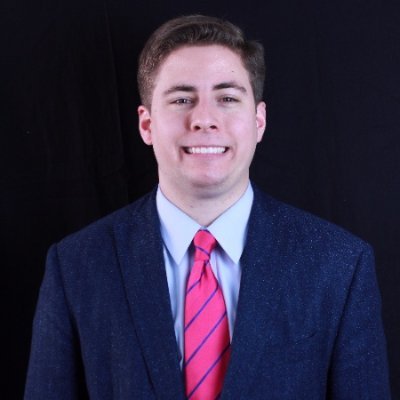
J. P. Carroll
Analista en Washington D. C. y columinsta de 'Agenda Pública'
MBA Internacional de IE Business School. Máster en Estudios Profesionales (MPS) en Relaciones Públicas y Comunicaciones Corporativas de la Universidad de Georgetown. Es el exdirector adjunto de Medios Hispanos del Comité Nacional Republicano (RNC). J.P. vive en el área de Washington, D. C.
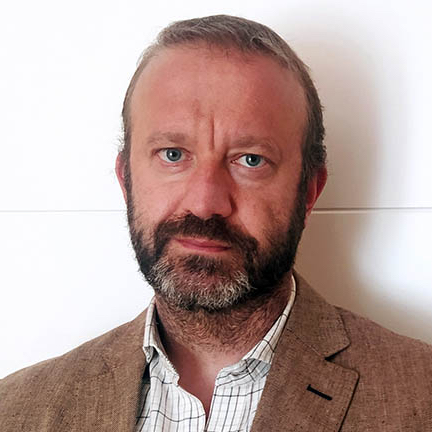
Juan Luis Manfredi
Catedrático de Estudios Internacionales en la Universidad de Castilla-La Mancha.
Antiguo catedrático Príncipe de Asturias en Georgetown University. Autor de 'Urban Diplomacy. A Cosmopolitan Outlook' (Brill, 2021) y de 'Diplomacia corporativa: la nueva inteligencia directiva' (UOC Editorial, 2018).
Ahora en portada
19 de octubre de 2026
19 de octubre de 2026
Noticias relacionadas
Hace 100 semanas
Los lazos de Aznar con Rubio dibujan un cerco sobre Feijóo
Hace 101 semanas
Trump no mirará a Europa: la política exterior americana tras las elecciones
Hace 92 semanas