Sábado, 17 de octubre de 2026




Focus Ukraine: The Russian regime is expanding the zone of instability in Europe and is ready to accept huge human losses

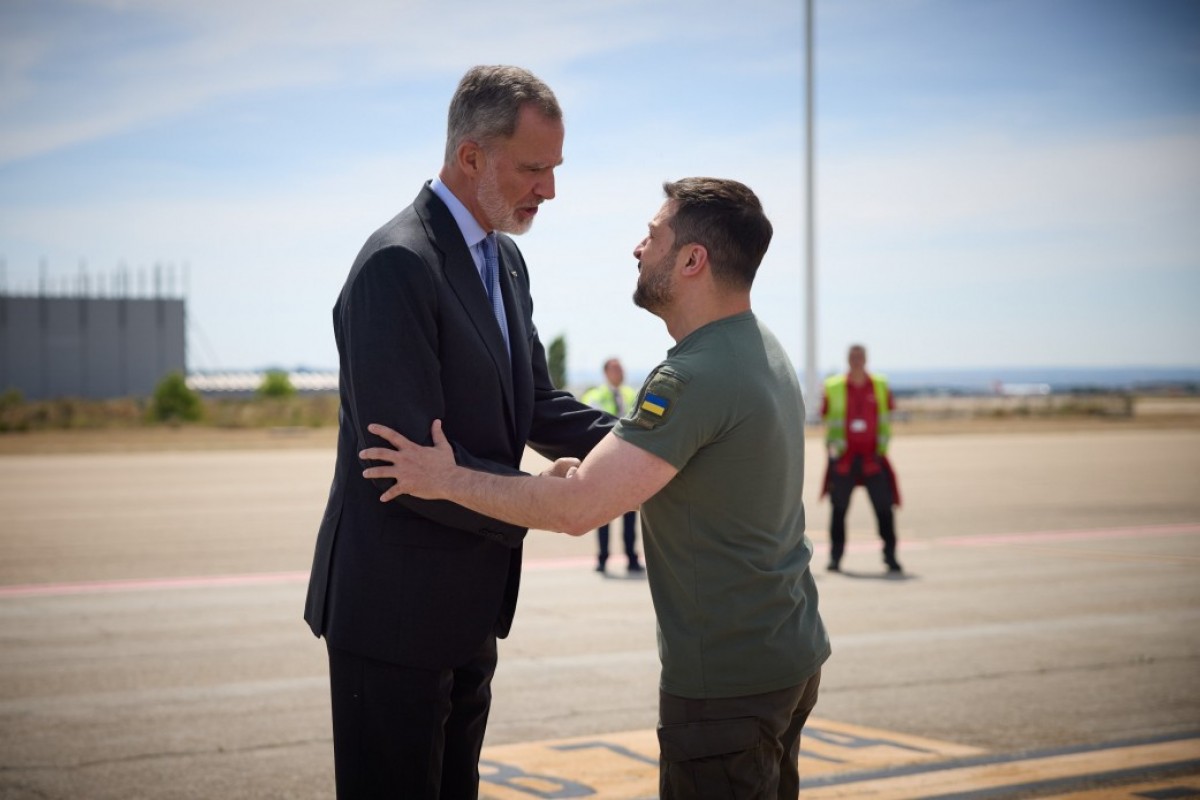
Agenda Pública and United Ukraine Think Tank present Focus Ukraine, a weekly article series analysing how the military conflict in Ukraine and the political and economic situation in the country will evolve. The articles are written by Ihor Petrenko, Dmytro Levus, Petro Oleshchuk and Oleksiy Kushch, experts of the United Ukraine Think Tank.
It is difficult to imagine a greater immorality – a murderer who pretends to grieve for his victims and continues to kill
The war in Ukraine has become a factor that is leading Russia to spread the zone of instability in Europe and to global conflict in general. This is how the Kremlin's obviously provocative ideas on unilateral revision of maritime borders with Finland and Lithuania in the Baltic Sea, expressed by the Russian military, should be perceived. The ideas were complemented by corresponding actions on Russia's river border with Estonia, where Russian border guards removed several dozen buoys marking the border line from the Narva channel. According to the Pentagon, Russia has launched an anti-satellite vehicle into Earth orbit capable of attacking U.S. satellites. Moreover, this device is in the same orbit as a US government satellite. In other words, Russia is expanding the conflict space. On the other hand, the war has led to purges among Russia's high-ranking military officers. It has been reported that Lieutenant General Vadim Shamarin, the head of the Main Communications Directorate of the Russian Armed Forces and Deputy Chief of the General Staff, was arrested for two months in a case of taking a bribe in a particularly large amount. Before that, the commander of the 58th Combined Arms Forces, General Ivan Popov, was arrested in Russia. He is accused of embezzling funds that the invaders spent on the construction of fortifications on the temporarily occupied territory of Ukraine. These arrests can be considered indirect losses of the Russian army from the actions of the Ukrainian Defense Forces.
The Ukrainian Defense Forces have thwarted Russian aggression plans and are defending Ukraine. Thanks to their actions, Russian losses exceeded half a million manpower units. At the beginning of this great war, many experts believed that the limit of losses in manpower, after which Russia would be horrified and stop fighting, was 100 thousand people. Russia has turned out to be an even more brutal and cannibalistic entity than these experts imagined. This does not mean that Russia is not sensitive to losses. It means that they should be greater. To achieve this, the flow of aid to Ukraine with Western-made weapons must become more intense. And there should be no restrictions on its use on Russian territory.
Russian troops continue to exert pressure in the north of the Kharkiv region. Kharkiv is a very important regional center for Ukraine. Due to the city's proximity to the Russian border, Russians are constantly shelling and destroying it to make life unbearable. More than ten thousand people have been evacuated in the Kharkiv region. They were evacuated from the areas that Russia seized on February 24, 2022, people there have lived through the occupation for several months and understand what these so-called “Russian liberators” will bring. In Vovchansk, on the border with Russia, Russians are shooting and taking civilians hostage. For example, the Russian occupiers killed an elderly woman, Halyna, who could not walk because of a leg problem. Together with her, a young man who helped to evacuate Galina after living under shelling for four days died. Her 70-year-old husband Oleksandr, who miraculously survived, managed to reach the positions of Ukrainian troops. The Russians who shot the group could clearly see that they were civilians. The body of a woman in a wheelchair was spotted by Ukrainian aerial reconnaissance. There are hundreds and thousands of such examples. Following this tragedy, the Kharkiv Regional Prosecutor's Office is conducting a pre-trial investigation into the violation of the laws and customs of war.
It was in Kharkiv that Russia committed its next crimes. On May 23, Russia launched a missile attack on the printing house of the Vivat Publishing House (Factor-Druk). Seven of its employees, including five women, were killed and the building was destroyed. “Vivat produces a variety of excellent literature in the Ukrainian language. They have wonderful children's books. This is a targeted attack. The Russians bombed the publishing house a week before the Book Arsenal. The main book fair in Ukraine, where books are presented and sold, where authors, readers and publishers communicate, where a huge number of books are sold. Many books for Arsenal were to be printed there, in Kharkiv. Russia is trying to kill the Ukrainian word. To destroy the Ukrainian book market by bombing. In the occupation right now, Russians are burning Ukrainian literature simply because it is Ukrainian, written in Ukrainian. This is one of the first and systematic actions of the occupiers. For the Russians, the Ukrainian printing house is a strategically important target. This is how they demonstrated their hatred for everything Ukrainian. Western intellectuals who call for “reconciliation” should take this into account. But the Russians will not achieve anything. In one evening, Ukrainians ordered a huge number of books from the Vivat publishing house in support of it and brought down its website. And on May 25, Russian aviation struck the Epicenter construction hypermarket in Kharkiv with two gliding bombs, probably UMPB D-30. These bombs can be used by aircraft from a distance of about 90 kilometers. There could have been about two hundred people in the Epicenter, a very popular chain, especially on a Saturday in the spring when sales are going on. A fire broke out, and heavy black smoke hung over the city. At least 14 people were reported dead. Forty-three people were injured, two of them in serious condition, and one person in burn intensive care. A 13-year-old child was operated on. 16 people are considered missing. An operational headquarters for the elimination of the consequences of the shelling is operating at the site. A mobile genetic examination laboratory is working. Rescuers say that they may have to sift through the ashes to find the victims. On the same day, the Russians also attacked one of the city's parks, injuring more than twenty people. It is especially cynical that one of the world's best-known Russian propagandists, Sergei Markov, wrote that Russia “feels sorry for the Kharkiv residents who died in the building materials supermarket.” It is hard to imagine a greater immorality - a killer who pretends to grieve for his victims and continues to kill.
On the night of May 26, Russia used strategic aviation and kamikaze drones to strike Ukraine. The targets of the strike were mainly in western Ukraine. As a result of the actions of Ukraine's air defense, all 31 Shahed missiles launched from the temporarily occupied Crimea and the Azov coast of the Russian Federation and all 12 X-101/X-555 cruise missiles launched from Tu-95MS aircraft from the airspace in the Saratov region of the Russian Federation were shot down. Two X-47M2 Kinzhal missiles launched from Mig-31K aircraft from the airspace over the Tambov region failed to be shot down. In the morning, another Kinzhal was launched. This suggests that there is a need to strengthen Ukraine's air defense with means capable of shooting down ballistic missiles like the Kinzhal, such as the latest modifications of the Patriot system, which Ukraine has been constantly talking about. In addition, the ability to launch strikes with Western weapons on Russian territory is also critical. But the countries transferring their weapons must agree to this and realize that this will not lead to an escalation in the war or, moreover, to their direct conflict with Russia. In an interview with Reuters, Ukrainian President Volodymyr Zelenskyy said that there is no threat in NATO and its member states helping to shoot down Russian missiles over Ukrainian territory, just as it was in the case of the Iranian attack on Israel. Russian missiles have flown into Poland. There is no guarantee that in the next attack they will not be aimed at its territory. Russian missiles are aimed at destroying gas storage facilities in western Ukraine, and they store not only Ukrainian gas but also gas from partners, and Europe needs this infrastructure. And it needs to be protected. If it is not possible to assist with anti-aircraft missile systems, Ukraine is ready for NATO aircraft to take off from airfields in Poland and shoot down Russian missiles in the air over western Ukraine. Ukraine understands that these missiles will fall and is ready to sign an agreement stating that it has no claims to the consequences of the strike.
The Russian Federation is trying to force the IAEA and the international community to accept the fact of the occupation of the Zaporizhzhia nuclear power plant and agree to allow Rosatom to start its full operation. Russia is allegedly building a pumping station to supply water to the cooling pond, which will allow the reactors to start up. All the actions of the Russian Federation are aimed at showing that it fulfills all the necessary requirements and there is no threat. But at the same time, the Russian military guarding the facility publish photos of themselves with weapons in firing positions on the roofs of the reactor compartments and inside the reactor compartment, which is a gross violation. By the way, the IAEA Mission cannot control these premises, they are simply not allowed there by the occupiers. This is what Russia's “compliance with nuclear and radiation safety” looks like. It is strange that many Western experts are more concerned about the risks of Russia's use of tactical nuclear weapons than about the risks of an accident at the ZNPP with huge radiation consequences not only for Ukraine but also for neighboring states in the face of the aggressor's barbaric behavior at a nuclear facility.
Ukraine conducts strikes on important Russian facilities. On the evening of Thursday, May 23, numerous explosions were heard in the temporarily occupied Crimea. The Simferopol region and Alushta on the southern coast were hit by Ukrainian missiles. The attack near Alushta targeted one of the Russian military units in the region - an important communication and control center in the village of Soniachnohirske. Guerrillas from the Atesh movement claim significant damage to equipment and Russian casualties. There was a fire in the FSB military unit in the village of Semidvirya, explosions near the Belbek military airfield. In Donetsk region, 5 ATACMS missiles hit the Mospino airfield. Three S-400 launchers, a control center and a radar were destroyed there. There is a video of this strike. The price of the S-400 can reach 1 billion dollars, and Russia is seeking to sell them abroad. Currently, the competitiveness of the S-400 has declined. Near Armavir, drones damaged the antennas of the Voronezh-DM radar, which is part of Russia's global missile attack warning system with a target detection range of up to 6,000 kilometers. The day before, attack drones were spotted in Tatarstan, Kazan, and Nizhnekamsk, where a number of strategically important enterprises whose products are used in the military industry are located. Tatarstan's airports were shut down. On the night of May 26, explosions were heard in the temporarily occupied Crimea near Yevpatoriya. A successful strike was made on the command and measurement complex, or the Center for Long-Range Space Communications of the Russian Aerospace Forces. It provides control over the orbital grouping of Russian spacecraft, including the GLONASS system. It is known that the strike was on the so-called “first site” of the complex near the village of Vitino. In December, the “third site” of this facility was hit. In addition, military facilities in Bielhorod, the rear base of the Russian offensive on Kharkiv, were hit, and Russian air defense systems were operating there, with falling missiles creating fires and killing Russians themselves. At the beginning of the week, a missile attack was launched on the building of the so-called Academy of Internal Affairs of the “Luhansk People's Republic” in the temporarily occupied Luhansk, where the occupiers' high headquarters was located. It is known that 13 occupants were killed and 26 wounded.
To defeat Russia, Ukraine uses not only military means but also political levers. Russia is an artificial country created from the territories of different nations that were forcibly annexed to it. Moscow oppresses them, deceives them, assimilates them, and involves them in its crimes, as it engages them in a war against Ukraine, where representatives of all these peoples are dying. Ukraine knows what it is like to be under Russian rule. That is why Ukraine supports national liberation movements in Russia. On May 17, Kyiv hosted an international conference on the rights of the enslaved peoples of the Russian Federation, organized by the Temporary Special Commission of the Verkhovna Rada. And on May 23, Lviv hosted the Forum of the Russian Opposition in Support of Ukraine, with the participation of more than 40 representatives of leading anti-Putin organizations. Russians who want Putinism to be defeated are beginning to appear. These are the people who gathered in Lviv. In particular, the forum was attended by Russian volunteers who have long been fighting side by side with the defenders of Ukraine. Ukraine is interested in ensuring that Russia, after its defeat, no longer poses a military threat to Ukraine, its neighbors, and the world. That is why we support the forces that are ready to take responsibility for this. We are thinking about what countries may emerge in the territories east of the Ukrainian border.
Politicizing the issue of prisoner exchange: a new front in the information war
The issue of the release of Ukrainian prisoners remains one of the most pressing for society. Many Ukrainian soldiers have been held captive for more than two years. In particular, we are talking about the defenders of Azovstal. All this time, the relatives of the prisoners of war have been waiting for their release.
At the same time, the process of prisoner exchange is very slow, and recently it has slowed down due to the position of the Russian side, which is obviously simply not interested in releasing its own military personnel.
Recently, Russian propagandist M. Simonyan accused Ukraine of refusing to release its own citizens, which is a distortion of facts and an attempt to spread a false version of events. The Russians are blocking prisoner exchanges, but at the same time, they are spreading information that Ukraine is blocking them.
The Russians' calculation is simple. Unlike Russia, Ukraine takes its own prisoners very seriously. Whereas Russian society simply turns a blind eye to its own prisoners, for Ukrainians, the captivity of their own military personnel is a very sensitive issue.
Accordingly, the Russians block exchanges and at the same time release information that everything is being blocked by the Ukrainians. In this way, they seek to influence the relatives of prisoners of war, to motivate them to protest and public discontent.
The cynicism of the Russians is that they seek to use any clue to wage an information war against Ukraine. Starting from direct terrorism in the form of shelling of cities, residential areas, destruction of power plants so that civilians are left without electricity, and ending with speculations around prisoners of war and hostages.
The release of prisoners will be one of the key issues at the Peace Summit in Switzerland to be held in June. In addition, the problem of civilian hostages, abducted Ukrainian children, for which Russian dictator Vladimir Putin has already received an arrest warrant from an international court, remains acute.
Meanwhile, the issue remains complex and difficult to resolve.
How are sanctions changing the Russian economy?
In 2023, Russia significantly changed the structure of its international trade. The total foreign trade turnover amounted to $710 billion, which is 39% of GDP. In 2013, before the sanctions were imposed, Russia's foreign trade turnover was $841 billion. But in relative terms (the ratio of trade turnover to GDP), the figures have not changed: they remained at 37%, due to a decline in nominal GDP in dollar terms.
In fact, the 37% figure suggests that Russia's dependence on foreign markets is significant, but not critical, as is implied in the current sanctions models and expectations for their application.
For comparison, in 2021, Ukraine's international trade turnover amounted to $141 billion, or 70% of GDP. Given these parameters, Ukraine had a small, open economy at the time.
Thus, over the ten years of sanctions, Russia has lost $131 billion in foreign trade, or 15.6% year-on-year. But it cannot yet be called a closed economy.
A closed economy is an economy that does not use national absolute and relative trade advantages of international trade. Such an economy does not participate in global technological value chains and focuses on internal, cyclical circulation of capital denominated in the national currency.
In the twenty-first century, countries with an international trade turnover of 27% or less were considered to be conditionally closed economies. In other words, Russia needs to reduce this figure by 10 percentage points to achieve this status.
Judging by the change in the structure of external trading partners, Russia is not yet on the path of autarky, like Iran, but is only radically changing the vector of trade interaction.
Russia's top five trading partners now look like this (trade turnover in 2023 in billions of dollars)
- China - $240 billion.
- India - $65 billion (an increase of 1.8 times).
- Turkey - $57 billion.
- Belarus - $55 billion.
- Kazakhstan - $26 billion.
These five countries account for $443 billion of the $710 billion trade turnover, or 62%.
In terms of the structure of trade, instead of the EU, Russia focuses on Asia and its growing economies that need energy resources. Russia's top ten trade partners also include South Korea, Germany, the UAE, Brazil, and the Netherlands. For example, the volume of trade with Germany amounted to $12 billion.
In the overall structure, 51% of Russia's trade was with Asia, 23% with Europe, 11% with the Middle East, 8% with the CIS, 4% with the Americas, and 3% with Africa.
In fact, what has happened now is only what would have happened anyway by 2050, when the EU planned to move to carbon neutral status by reducing, for example, natural gas imports to 40 billion cubic meters per year.
In other words, even without the war, Russia would have partially lost the European market for its energy exports (coal, oil, gas), but it would have happened in 10-15 years with the complete loss of this energy sales area in 2050.
Reorientation to Asia will give Russia another 20-30 years plus to generate revenue from carbon exports: Asia is 20-30 years behind the EU in achieving carbon neutrality (and possibly more). In addition, Asia will be growing strongly in the near future, which means that it will increase its energy consumption, and this figure will only grow in the medium term.
Extrapolating from the previous 10 years of sanctions, we can estimate the cost of this geopolitical maneuver by Russia at about $2.5 trillion, which is more than its annual GDP.
In qualitative terms, this means a loss of about 5% of GDP per year. But then why is the Russian economy growing (+4.2% in the first quarter of 2024, seasonally adjusted)?
This phenomenon is explained by the growth of the non-oil and gas sector and the emergence of new growth drivers in the form of a number of segments of the domestic economy, such as mortgages.
The non-resource sector contributes about +7-8% of GDP to the structural transformation of Russia's gross income.
As a result, taking into account the decline of the raw materials complex, the Russian economy is gaining a balance (growth of the non-resource sector minus the decline of the resource sector) of about +2-3% to the traditional (basic for its type of economy) growth rate of 2-2.5% annually.
The question is, how sustainable is this drive?
In fact, this is a factor-based, opportunistic growth due to import substitution, the military-industrial complex and mortgage, which are based on a boom in demand, investment and government orders.
This question has not yet been answered.
In terms of international trade, Russia can currently be classified as a large and relatively open economy.
So far, Russia has not entered the stage of autarky, as this could have a negative impact on its growth rates: as long as it is possible to sell gas, coal, oil, grain, uranium, diamonds and metals, Russia will do so. It is trying to develop its non-resource sector of the economy as much as possible during this period.
The current model of sanctions, strange as it may seem, even contributes to this, as it accelerates the transformation of the economy towards domestic, non-resource sectors that are quite resistant to external influences and are more focused on endogenous factors.
Until 2050, Russia will try to maintain its global integration into the world economy, reorienting it from the West to the South and East.
And starting from 2050, and maybe even earlier, the world economy may be divided into 5-6 global development clusters and a certain crisis of global development mechanisms, something like the “Age of Warring Clusters”, when certain rules will be followed only within certain clusters and these intra-cluster “moral codes” may differ significantly from the stable world of international law. The latter can only shift to a system of “inter-cluster” interaction and cooperation.
We should also expect the fragmentation of the world economy into competing geopolitical clusters and proto-clusters with the transition to the stage of defragmentation, i.e., the assembly of a new puzzle of the world economy, namely, the optimization of the world economic system with the rejection of unnecessary “country files”.
However, the date of 2050 does not mean that these processes will be triggered discretely, by a “switch” method. For example, the prelude to World War I was a series of wars, including the Russo-Japanese War of 1905. Many elements of these processes are already happening in the world. In addition, the date 2050 is conditional, it could be 2040 or another date in the period 2024-2050.
In this context, Ukraine, together with its Western allies, should look for new models of sanctions policy, such as a separate tax on the “Russian energy footprint” similar to the planned environmental tax on the “carbon footprint.” If Asia cannot refuse Russian oil and natural gas, then a tax mechanism for paying for their use should be created.
It is difficult to imagine a greater immorality – a murderer who pretends to grieve for his victims and continues to kill
The war in Ukraine has become a factor that is leading Russia to spread the zone of instability in Europe and to global conflict in general. This is how the Kremlin's obviously provocative ideas on unilateral revision of maritime borders with Finland and Lithuania in the Baltic Sea, expressed by the Russian military, should be perceived. The ideas were complemented by corresponding actions on Russia's river border with Estonia, where Russian border guards removed several dozen buoys marking the border line from the Narva channel. According to the Pentagon, Russia has launched an anti-satellite vehicle into Earth orbit capable of attacking U.S. satellites. Moreover, this device is in the same orbit as a US government satellite. In other words, Russia is expanding the conflict space. On the other hand, the war has led to purges among Russia's high-ranking military officers. It has been reported that Lieutenant General Vadim Shamarin, the head of the Main Communications Directorate of the Russian Armed Forces and Deputy Chief of the General Staff, was arrested for two months in a case of taking a bribe in a particularly large amount. Before that, the commander of the 58th Combined Arms Forces, General Ivan Popov, was arrested in Russia. He is accused of embezzling funds that the invaders spent on the construction of fortifications on the temporarily occupied territory of Ukraine. These arrests can be considered indirect losses of the Russian army from the actions of the Ukrainian Defense Forces.
The Ukrainian Defense Forces have thwarted Russian aggression plans and are defending Ukraine. Thanks to their actions, Russian losses exceeded half a million manpower units. At the beginning of this great war, many experts believed that the limit of losses in manpower, after which Russia would be horrified and stop fighting, was 100 thousand people. Russia has turned out to be an even more brutal and cannibalistic entity than these experts imagined. This does not mean that Russia is not sensitive to losses. It means that they should be greater. To achieve this, the flow of aid to Ukraine with Western-made weapons must become more intense. And there should be no restrictions on its use on Russian territory.
Russian troops continue to exert pressure in the north of the Kharkiv region. Kharkiv is a very important regional center for Ukraine. Due to the city's proximity to the Russian border, Russians are constantly shelling and destroying it to make life unbearable. More than ten thousand people have been evacuated in the Kharkiv region. They were evacuated from the areas that Russia seized on February 24, 2022, people there have lived through the occupation for several months and understand what these so-called “Russian liberators” will bring. In Vovchansk, on the border with Russia, Russians are shooting and taking civilians hostage. For example, the Russian occupiers killed an elderly woman, Halyna, who could not walk because of a leg problem. Together with her, a young man who helped to evacuate Galina after living under shelling for four days died. Her 70-year-old husband Oleksandr, who miraculously survived, managed to reach the positions of Ukrainian troops. The Russians who shot the group could clearly see that they were civilians. The body of a woman in a wheelchair was spotted by Ukrainian aerial reconnaissance. There are hundreds and thousands of such examples. Following this tragedy, the Kharkiv Regional Prosecutor's Office is conducting a pre-trial investigation into the violation of the laws and customs of war.
It was in Kharkiv that Russia committed its next crimes. On May 23, Russia launched a missile attack on the printing house of the Vivat Publishing House (Factor-Druk). Seven of its employees, including five women, were killed and the building was destroyed. “Vivat produces a variety of excellent literature in the Ukrainian language. They have wonderful children's books. This is a targeted attack. The Russians bombed the publishing house a week before the Book Arsenal. The main book fair in Ukraine, where books are presented and sold, where authors, readers and publishers communicate, where a huge number of books are sold. Many books for Arsenal were to be printed there, in Kharkiv. Russia is trying to kill the Ukrainian word. To destroy the Ukrainian book market by bombing. In the occupation right now, Russians are burning Ukrainian literature simply because it is Ukrainian, written in Ukrainian. This is one of the first and systematic actions of the occupiers. For the Russians, the Ukrainian printing house is a strategically important target. This is how they demonstrated their hatred for everything Ukrainian. Western intellectuals who call for “reconciliation” should take this into account. But the Russians will not achieve anything. In one evening, Ukrainians ordered a huge number of books from the Vivat publishing house in support of it and brought down its website. And on May 25, Russian aviation struck the Epicenter construction hypermarket in Kharkiv with two gliding bombs, probably UMPB D-30. These bombs can be used by aircraft from a distance of about 90 kilometers. There could have been about two hundred people in the Epicenter, a very popular chain, especially on a Saturday in the spring when sales are going on. A fire broke out, and heavy black smoke hung over the city. At least 14 people were reported dead. Forty-three people were injured, two of them in serious condition, and one person in burn intensive care. A 13-year-old child was operated on. 16 people are considered missing. An operational headquarters for the elimination of the consequences of the shelling is operating at the site. A mobile genetic examination laboratory is working. Rescuers say that they may have to sift through the ashes to find the victims. On the same day, the Russians also attacked one of the city's parks, injuring more than twenty people. It is especially cynical that one of the world's best-known Russian propagandists, Sergei Markov, wrote that Russia “feels sorry for the Kharkiv residents who died in the building materials supermarket.” It is hard to imagine a greater immorality - a killer who pretends to grieve for his victims and continues to kill.
On the night of May 26, Russia used strategic aviation and kamikaze drones to strike Ukraine. The targets of the strike were mainly in western Ukraine. As a result of the actions of Ukraine's air defense, all 31 Shahed missiles launched from the temporarily occupied Crimea and the Azov coast of the Russian Federation and all 12 X-101/X-555 cruise missiles launched from Tu-95MS aircraft from the airspace in the Saratov region of the Russian Federation were shot down. Two X-47M2 Kinzhal missiles launched from Mig-31K aircraft from the airspace over the Tambov region failed to be shot down. In the morning, another Kinzhal was launched. This suggests that there is a need to strengthen Ukraine's air defense with means capable of shooting down ballistic missiles like the Kinzhal, such as the latest modifications of the Patriot system, which Ukraine has been constantly talking about. In addition, the ability to launch strikes with Western weapons on Russian territory is also critical. But the countries transferring their weapons must agree to this and realize that this will not lead to an escalation in the war or, moreover, to their direct conflict with Russia. In an interview with Reuters, Ukrainian President Volodymyr Zelenskyy said that there is no threat in NATO and its member states helping to shoot down Russian missiles over Ukrainian territory, just as it was in the case of the Iranian attack on Israel. Russian missiles have flown into Poland. There is no guarantee that in the next attack they will not be aimed at its territory. Russian missiles are aimed at destroying gas storage facilities in western Ukraine, and they store not only Ukrainian gas but also gas from partners, and Europe needs this infrastructure. And it needs to be protected. If it is not possible to assist with anti-aircraft missile systems, Ukraine is ready for NATO aircraft to take off from airfields in Poland and shoot down Russian missiles in the air over western Ukraine. Ukraine understands that these missiles will fall and is ready to sign an agreement stating that it has no claims to the consequences of the strike.
The Russian Federation is trying to force the IAEA and the international community to accept the fact of the occupation of the Zaporizhzhia nuclear power plant and agree to allow Rosatom to start its full operation. Russia is allegedly building a pumping station to supply water to the cooling pond, which will allow the reactors to start up. All the actions of the Russian Federation are aimed at showing that it fulfills all the necessary requirements and there is no threat. But at the same time, the Russian military guarding the facility publish photos of themselves with weapons in firing positions on the roofs of the reactor compartments and inside the reactor compartment, which is a gross violation. By the way, the IAEA Mission cannot control these premises, they are simply not allowed there by the occupiers. This is what Russia's “compliance with nuclear and radiation safety” looks like. It is strange that many Western experts are more concerned about the risks of Russia's use of tactical nuclear weapons than about the risks of an accident at the ZNPP with huge radiation consequences not only for Ukraine but also for neighboring states in the face of the aggressor's barbaric behavior at a nuclear facility.
Ukraine conducts strikes on important Russian facilities. On the evening of Thursday, May 23, numerous explosions were heard in the temporarily occupied Crimea. The Simferopol region and Alushta on the southern coast were hit by Ukrainian missiles. The attack near Alushta targeted one of the Russian military units in the region - an important communication and control center in the village of Soniachnohirske. Guerrillas from the Atesh movement claim significant damage to equipment and Russian casualties. There was a fire in the FSB military unit in the village of Semidvirya, explosions near the Belbek military airfield. In Donetsk region, 5 ATACMS missiles hit the Mospino airfield. Three S-400 launchers, a control center and a radar were destroyed there. There is a video of this strike. The price of the S-400 can reach 1 billion dollars, and Russia is seeking to sell them abroad. Currently, the competitiveness of the S-400 has declined. Near Armavir, drones damaged the antennas of the Voronezh-DM radar, which is part of Russia's global missile attack warning system with a target detection range of up to 6,000 kilometers. The day before, attack drones were spotted in Tatarstan, Kazan, and Nizhnekamsk, where a number of strategically important enterprises whose products are used in the military industry are located. Tatarstan's airports were shut down. On the night of May 26, explosions were heard in the temporarily occupied Crimea near Yevpatoriya. A successful strike was made on the command and measurement complex, or the Center for Long-Range Space Communications of the Russian Aerospace Forces. It provides control over the orbital grouping of Russian spacecraft, including the GLONASS system. It is known that the strike was on the so-called “first site” of the complex near the village of Vitino. In December, the “third site” of this facility was hit. In addition, military facilities in Bielhorod, the rear base of the Russian offensive on Kharkiv, were hit, and Russian air defense systems were operating there, with falling missiles creating fires and killing Russians themselves. At the beginning of the week, a missile attack was launched on the building of the so-called Academy of Internal Affairs of the “Luhansk People's Republic” in the temporarily occupied Luhansk, where the occupiers' high headquarters was located. It is known that 13 occupants were killed and 26 wounded.
To defeat Russia, Ukraine uses not only military means but also political levers. Russia is an artificial country created from the territories of different nations that were forcibly annexed to it. Moscow oppresses them, deceives them, assimilates them, and involves them in its crimes, as it engages them in a war against Ukraine, where representatives of all these peoples are dying. Ukraine knows what it is like to be under Russian rule. That is why Ukraine supports national liberation movements in Russia. On May 17, Kyiv hosted an international conference on the rights of the enslaved peoples of the Russian Federation, organized by the Temporary Special Commission of the Verkhovna Rada. And on May 23, Lviv hosted the Forum of the Russian Opposition in Support of Ukraine, with the participation of more than 40 representatives of leading anti-Putin organizations. Russians who want Putinism to be defeated are beginning to appear. These are the people who gathered in Lviv. In particular, the forum was attended by Russian volunteers who have long been fighting side by side with the defenders of Ukraine. Ukraine is interested in ensuring that Russia, after its defeat, no longer poses a military threat to Ukraine, its neighbors, and the world. That is why we support the forces that are ready to take responsibility for this. We are thinking about what countries may emerge in the territories east of the Ukrainian border.
Politicizing the issue of prisoner exchange: a new front in the information war
The issue of the release of Ukrainian prisoners remains one of the most pressing for society. Many Ukrainian soldiers have been held captive for more than two years. In particular, we are talking about the defenders of Azovstal. All this time, the relatives of the prisoners of war have been waiting for their release.
At the same time, the process of prisoner exchange is very slow, and recently it has slowed down due to the position of the Russian side, which is obviously simply not interested in releasing its own military personnel.
Recently, Russian propagandist M. Simonyan accused Ukraine of refusing to release its own citizens, which is a distortion of facts and an attempt to spread a false version of events. The Russians are blocking prisoner exchanges, but at the same time, they are spreading information that Ukraine is blocking them.
The Russians' calculation is simple. Unlike Russia, Ukraine takes its own prisoners very seriously. Whereas Russian society simply turns a blind eye to its own prisoners, for Ukrainians, the captivity of their own military personnel is a very sensitive issue.
Accordingly, the Russians block exchanges and at the same time release information that everything is being blocked by the Ukrainians. In this way, they seek to influence the relatives of prisoners of war, to motivate them to protest and public discontent.
The cynicism of the Russians is that they seek to use any clue to wage an information war against Ukraine. Starting from direct terrorism in the form of shelling of cities, residential areas, destruction of power plants so that civilians are left without electricity, and ending with speculations around prisoners of war and hostages.
The release of prisoners will be one of the key issues at the Peace Summit in Switzerland to be held in June. In addition, the problem of civilian hostages, abducted Ukrainian children, for which Russian dictator Vladimir Putin has already received an arrest warrant from an international court, remains acute.
Meanwhile, the issue remains complex and difficult to resolve.
How are sanctions changing the Russian economy?
In 2023, Russia significantly changed the structure of its international trade. The total foreign trade turnover amounted to $710 billion, which is 39% of GDP. In 2013, before the sanctions were imposed, Russia's foreign trade turnover was $841 billion. But in relative terms (the ratio of trade turnover to GDP), the figures have not changed: they remained at 37%, due to a decline in nominal GDP in dollar terms.
In fact, the 37% figure suggests that Russia's dependence on foreign markets is significant, but not critical, as is implied in the current sanctions models and expectations for their application.
For comparison, in 2021, Ukraine's international trade turnover amounted to $141 billion, or 70% of GDP. Given these parameters, Ukraine had a small, open economy at the time.
Thus, over the ten years of sanctions, Russia has lost $131 billion in foreign trade, or 15.6% year-on-year. But it cannot yet be called a closed economy.
A closed economy is an economy that does not use national absolute and relative trade advantages of international trade. Such an economy does not participate in global technological value chains and focuses on internal, cyclical circulation of capital denominated in the national currency.
In the twenty-first century, countries with an international trade turnover of 27% or less were considered to be conditionally closed economies. In other words, Russia needs to reduce this figure by 10 percentage points to achieve this status.
Judging by the change in the structure of external trading partners, Russia is not yet on the path of autarky, like Iran, but is only radically changing the vector of trade interaction.
Russia's top five trading partners now look like this (trade turnover in 2023 in billions of dollars)
- China - $240 billion.
- India - $65 billion (an increase of 1.8 times).
- Turkey - $57 billion.
- Belarus - $55 billion.
- Kazakhstan - $26 billion.
These five countries account for $443 billion of the $710 billion trade turnover, or 62%.
In terms of the structure of trade, instead of the EU, Russia focuses on Asia and its growing economies that need energy resources. Russia's top ten trade partners also include South Korea, Germany, the UAE, Brazil, and the Netherlands. For example, the volume of trade with Germany amounted to $12 billion.
In the overall structure, 51% of Russia's trade was with Asia, 23% with Europe, 11% with the Middle East, 8% with the CIS, 4% with the Americas, and 3% with Africa.
In fact, what has happened now is only what would have happened anyway by 2050, when the EU planned to move to carbon neutral status by reducing, for example, natural gas imports to 40 billion cubic meters per year.
In other words, even without the war, Russia would have partially lost the European market for its energy exports (coal, oil, gas), but it would have happened in 10-15 years with the complete loss of this energy sales area in 2050.
Reorientation to Asia will give Russia another 20-30 years plus to generate revenue from carbon exports: Asia is 20-30 years behind the EU in achieving carbon neutrality (and possibly more). In addition, Asia will be growing strongly in the near future, which means that it will increase its energy consumption, and this figure will only grow in the medium term.
Extrapolating from the previous 10 years of sanctions, we can estimate the cost of this geopolitical maneuver by Russia at about $2.5 trillion, which is more than its annual GDP.
In qualitative terms, this means a loss of about 5% of GDP per year. But then why is the Russian economy growing (+4.2% in the first quarter of 2024, seasonally adjusted)?
This phenomenon is explained by the growth of the non-oil and gas sector and the emergence of new growth drivers in the form of a number of segments of the domestic economy, such as mortgages.
The non-resource sector contributes about +7-8% of GDP to the structural transformation of Russia's gross income.
As a result, taking into account the decline of the raw materials complex, the Russian economy is gaining a balance (growth of the non-resource sector minus the decline of the resource sector) of about +2-3% to the traditional (basic for its type of economy) growth rate of 2-2.5% annually.
The question is, how sustainable is this drive?
In fact, this is a factor-based, opportunistic growth due to import substitution, the military-industrial complex and mortgage, which are based on a boom in demand, investment and government orders.
This question has not yet been answered.
In terms of international trade, Russia can currently be classified as a large and relatively open economy.
So far, Russia has not entered the stage of autarky, as this could have a negative impact on its growth rates: as long as it is possible to sell gas, coal, oil, grain, uranium, diamonds and metals, Russia will do so. It is trying to develop its non-resource sector of the economy as much as possible during this period.
The current model of sanctions, strange as it may seem, even contributes to this, as it accelerates the transformation of the economy towards domestic, non-resource sectors that are quite resistant to external influences and are more focused on endogenous factors.
Until 2050, Russia will try to maintain its global integration into the world economy, reorienting it from the West to the South and East.
And starting from 2050, and maybe even earlier, the world economy may be divided into 5-6 global development clusters and a certain crisis of global development mechanisms, something like the “Age of Warring Clusters”, when certain rules will be followed only within certain clusters and these intra-cluster “moral codes” may differ significantly from the stable world of international law. The latter can only shift to a system of “inter-cluster” interaction and cooperation.
We should also expect the fragmentation of the world economy into competing geopolitical clusters and proto-clusters with the transition to the stage of defragmentation, i.e., the assembly of a new puzzle of the world economy, namely, the optimization of the world economic system with the rejection of unnecessary “country files”.
However, the date of 2050 does not mean that these processes will be triggered discretely, by a “switch” method. For example, the prelude to World War I was a series of wars, including the Russo-Japanese War of 1905. Many elements of these processes are already happening in the world. In addition, the date 2050 is conditional, it could be 2040 or another date in the period 2024-2050.
In this context, Ukraine, together with its Western allies, should look for new models of sanctions policy, such as a separate tax on the “Russian energy footprint” similar to the planned environmental tax on the “carbon footprint.” If Asia cannot refuse Russian oil and natural gas, then a tax mechanism for paying for their use should be created.

Ihor Petrenko
Director del think tank United Ukraine
Doctor of Political Sciences, Associate Professor, Taras Shevchenko National University of Kyiv, Associate Professor of Political Science Department of the Faculty of Philosophy, city of Kyiv, Ukraine.
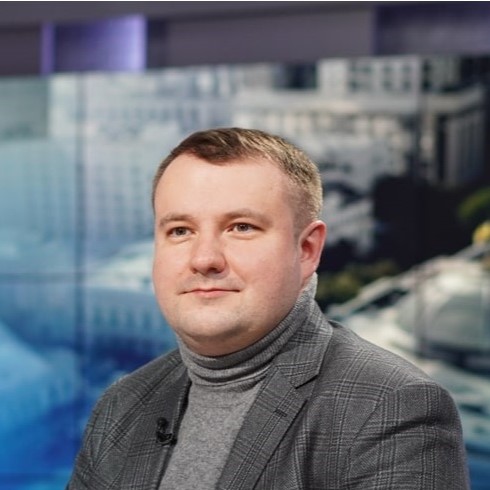
Petro Oleshchuk
Doctor en Ciencia Política y Profesor. Experto en el think tank United Ukraine

Oleksiy Kushch
Investigador en el think- tank United Ukraine
Es economista. Anteriormente dirigió el Departamento de Valores y el Centro Hipotecario en bancos comerciales y trabajó como director de gestión de valores en la Asociación de Bancos Ucranianos, así como director de una empresa de inversión.
Ahora en portada
16 de octubre de 2026
16 de octubre de 2026
16 de octubre de 2026
Lo más leído