Lunes, 19 de octubre de 2026




The Reasons behind South Africa’s International Leadership
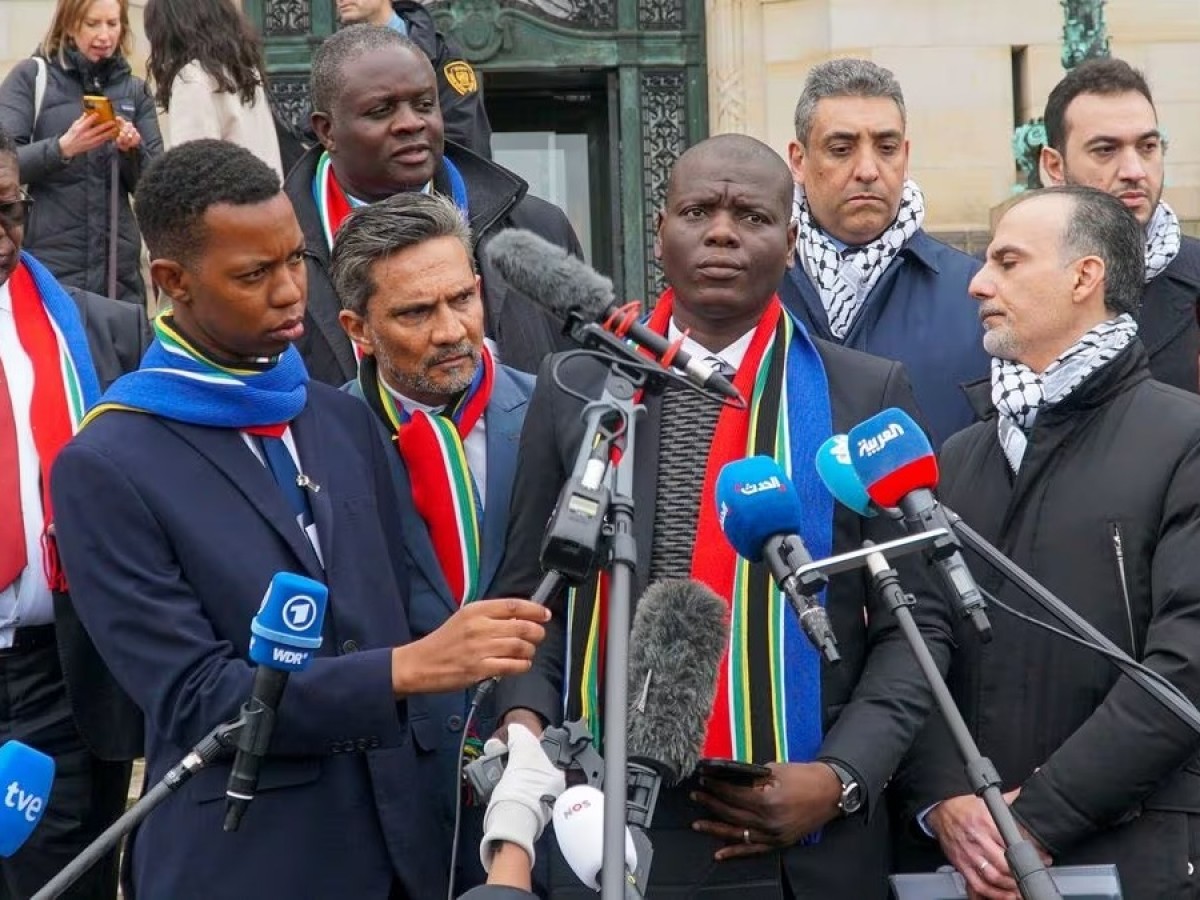
IMANE RACHIDI (EFE)
On 29 December 2023, South Africa filed a lawsuit at the International Court of Justice (ICJ) accusing Israel of genocide. The African country’s economic and defence capabilities are relatively smaller than those of the Western powers and the other BRICS members and are barely comparable to those of countries such as Malaysia or the Philippines. However, the ICJ action is only the latest example of South Africa’s ability to act as a normative superpower, surpassing even industrialised countries in its ability to influence global moral discourse.
Talk of South Africa’s role as a normative power contradicts much recent commentary on the country’s international relations. In recent years, some scholars and observers have argued that South Africa has lost its moral stature. Certainly, the South African government is not living up to its commitments to its citizens; the country suffers from very modest growth and rates of inequality, unemployment, and poverty are extraordinarily high – and rising. Moreover, in recent years, South Africa has dealt with systematic xenophobia and mass deportations of undocumented immigrants.
During apartheid, the world united to condemn the regime. The country became a pariah, and its membership of the United Nations was suspended. However, after the fall of apartheid, South Africans radically redefined their role in international politics. The prominence of the international anti-apartheid movement gave the state the opportunity to ride a wave of goodwill. In his famous “I am African” speech, then deputy president Thabo Mbeki addressed the complexities of South African identity, affirmed its special place in the global struggle against racism and colonialism, and pointed to its historic mission to bring what he would soon call an “African renaissance” to the world.
Despite its later limitations, this was an enthusiastic vision for a rising normative superpower. By putting this vision into practice, the country managed to position itself as a regional power and a leading actor on issues of global importance. In its 1999 White Paper on Peacekeeping, the then foreign ministry clearly articulated South Africa’s international vision:
On the whole, however, the South African government cultivated an image of neutrality and international leadership. The memorably dubbed “rainbow nation” consciously harnessed its unique demographic, political and economic fusion of East and West, North and South, to build a bridge between the developed and developing worlds. These extraordinary gifts, often wisely mobilised, have not been immediately available to other emerging powers. Those that might have surpassed South Africa in its bid for moral hegemony – including China, India, Indonesia, Brazil, Argentina, Egypt, and Russia – lacked South Africa’s fluency in acting as an interlocutor between diverse global perspectives and traditions. Others of these potential contenders descended to the status of ‘rogue states’, and others were too focused on domestic and regional issues, lacking South Africa’s sense of global moral purpose.
One possible explanation for South Africa’s active participation in international rulemaking is the country’s need to achieve a ‘soft balance’ with regional hegemonic powers and powers. This is the case in the BRICS, where South Africa is the weakest link. Despite this power gap, South Africa is much more active in regional organisations and the UN than its peers and has been more successful in mobilising its diplomatic resources to foster various international networks and reshape the rules of the game in its favour.
South Africa’s early membership of the BRICS group is an indicator of its leadership capacity. The country has become an important mediator of conflicts across Africa, helping to ameliorate violent disputes in Angola, Burundi, the Democratic Republic of Congo, the Comoros, Ethiopia, Côte d’Ivoire, Kenya, Madagascar, and Mozambique. In 1995, South Africa also played an important role in persuading some reluctant countries to sign the extension of the Non-Proliferation Treaty (NPT). During its first term as a non-permanent member of the UN Security Council in 2007-2008, South African diplomats succeeded in passing a resolution to strengthen the role of the African Union in regional conflict resolution. In the process, South Africa has positioned itself as a vital link between Africa and the world.
South Africa’s successes can also be measured by data. In the years between 1994 and 2023, the country consistently accumulated more co-authorships and sponsorships of UN General Assembly resolutions than more powerful countries. Overall, major powers such as China, Russia, Britain, Germany, Japan, and the United States have not achieved even half of South Africa’s figures.
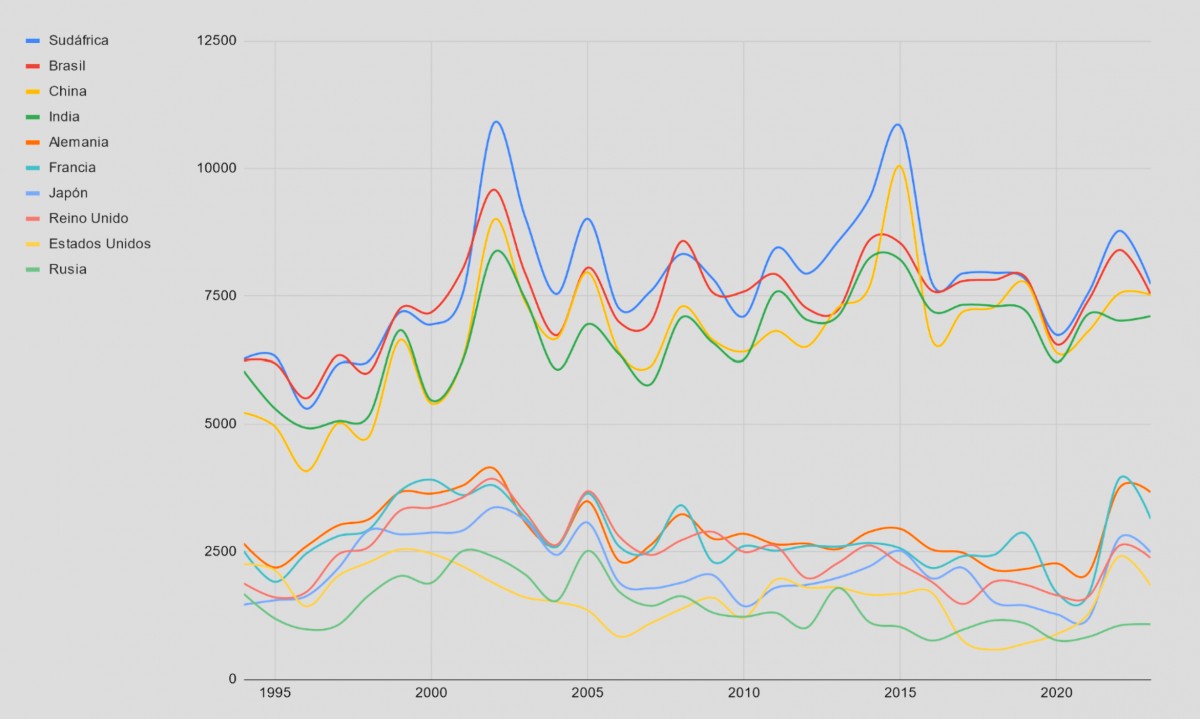 Source: Data generated with information from the UN Digital Library
This relative success puts South Africa’s ICJ claim into perspective. Undoubtedly, the country’s gravitation towards the BRICS countries exposes it to a number of criticisms. South Africa will find it increasingly difficult to maintain its moral standing in an increasingly complex and polarised world. Recently, it has already been heavily criticised for abstaining from voting to condemn Russia’s invasion of Ukraine and the ethnic cleansing of Rohingya Muslims in Myanmar. While these failures portray the country as an ally of Russia and China, South Africa still carries enormous normative weight at the global level. The country has been instrumental in mobilising most of the world’s nations behind its bold action to sue a powerful country like Israel that is strongly backed by the United States. This action carries with it considerable potential to impact the course of US domestic politics and reshape its rules-based global order. Gone are the days when less powerful countries had limited means of challenge and limited options to oppose unilateral actions by great powers.
South Africa can exploit its brokering power in the Global South to strengthen cooperation with other less powerful regional leaders such as Indonesia, Colombia, and Chile and collectively promote norms that rethink the Western-led system of global governance beyond bipolar and multipolar great power competition. The moral stature of such a coalition is likely to garner enough support from other countries in the Global South to revive the spirit of the NAM and the ICJ claim may be just the beginning of something much bigger. The vision of an African renaissance lives on.
Talk of South Africa’s role as a normative power contradicts much recent commentary on the country’s international relations. In recent years, some scholars and observers have argued that South Africa has lost its moral stature. Certainly, the South African government is not living up to its commitments to its citizens; the country suffers from very modest growth and rates of inequality, unemployment, and poverty are extraordinarily high – and rising. Moreover, in recent years, South Africa has dealt with systematic xenophobia and mass deportations of undocumented immigrants.
[Receive the most up-to-date analysis to your email or mobile through our Telegram channel]
The political leadership of the current ruling party, the African National Congress (ANC), has greatly undermined the country’s reputation. The ANC has been embroiled in widespread political abuse and corruption and complacent relations with autocratic and lawless regimes abroad. However, the legacy of Mandela’s global moral leadership continues, and South Africa continues to play a defining role in building international norms.During apartheid, the world united to condemn the regime. The country became a pariah, and its membership of the United Nations was suspended. However, after the fall of apartheid, South Africans radically redefined their role in international politics. The prominence of the international anti-apartheid movement gave the state the opportunity to ride a wave of goodwill. In his famous “I am African” speech, then deputy president Thabo Mbeki addressed the complexities of South African identity, affirmed its special place in the global struggle against racism and colonialism, and pointed to its historic mission to bring what he would soon call an “African renaissance” to the world.
Despite its later limitations, this was an enthusiastic vision for a rising normative superpower. By putting this vision into practice, the country managed to position itself as a regional power and a leading actor on issues of global importance. In its 1999 White Paper on Peacekeeping, the then foreign ministry clearly articulated South Africa’s international vision:
Domestic and international expectations have steadily increased for a new role for South Africa as a responsible and respected member of the international community. These expectations have included the expectation that South Africa will play a leadership role in a variety of international, regional, and sub-regional fora, and that the country will become an active participant in attempts to resolve various regional and international conflicts.In the early post-apartheid era, the country quickly caught up with its commitment to international organisations by becoming a member of several UN agencies and groups, such as the Conference on Trade and Development (UNCTAD), the Non-Aligned Movement (NAM), and the G77. Honouring the support it received from NAM and the UN during apartheid, the ANC embraced multilateralism and committed itself to reforming the Western rules-based order from within. But even in these contented years, the South African government revealed a dissonant streak, refusing to condemn human rights violations in Nigeria in 1995 and using military force to quell a coup in Lesotho in 1998 without prior UN approval.
On the whole, however, the South African government cultivated an image of neutrality and international leadership. The memorably dubbed “rainbow nation” consciously harnessed its unique demographic, political and economic fusion of East and West, North and South, to build a bridge between the developed and developing worlds. These extraordinary gifts, often wisely mobilised, have not been immediately available to other emerging powers. Those that might have surpassed South Africa in its bid for moral hegemony – including China, India, Indonesia, Brazil, Argentina, Egypt, and Russia – lacked South Africa’s fluency in acting as an interlocutor between diverse global perspectives and traditions. Others of these potential contenders descended to the status of ‘rogue states’, and others were too focused on domestic and regional issues, lacking South Africa’s sense of global moral purpose.
One possible explanation for South Africa’s active participation in international rulemaking is the country’s need to achieve a ‘soft balance’ with regional hegemonic powers and powers. This is the case in the BRICS, where South Africa is the weakest link. Despite this power gap, South Africa is much more active in regional organisations and the UN than its peers and has been more successful in mobilising its diplomatic resources to foster various international networks and reshape the rules of the game in its favour.
South Africa’s early membership of the BRICS group is an indicator of its leadership capacity. The country has become an important mediator of conflicts across Africa, helping to ameliorate violent disputes in Angola, Burundi, the Democratic Republic of Congo, the Comoros, Ethiopia, Côte d’Ivoire, Kenya, Madagascar, and Mozambique. In 1995, South Africa also played an important role in persuading some reluctant countries to sign the extension of the Non-Proliferation Treaty (NPT). During its first term as a non-permanent member of the UN Security Council in 2007-2008, South African diplomats succeeded in passing a resolution to strengthen the role of the African Union in regional conflict resolution. In the process, South Africa has positioned itself as a vital link between Africa and the world.
South Africa’s successes can also be measured by data. In the years between 1994 and 2023, the country consistently accumulated more co-authorships and sponsorships of UN General Assembly resolutions than more powerful countries. Overall, major powers such as China, Russia, Britain, Germany, Japan, and the United States have not achieved even half of South Africa’s figures.
This relative success puts South Africa’s ICJ claim into perspective. Undoubtedly, the country’s gravitation towards the BRICS countries exposes it to a number of criticisms. South Africa will find it increasingly difficult to maintain its moral standing in an increasingly complex and polarised world. Recently, it has already been heavily criticised for abstaining from voting to condemn Russia’s invasion of Ukraine and the ethnic cleansing of Rohingya Muslims in Myanmar. While these failures portray the country as an ally of Russia and China, South Africa still carries enormous normative weight at the global level. The country has been instrumental in mobilising most of the world’s nations behind its bold action to sue a powerful country like Israel that is strongly backed by the United States. This action carries with it considerable potential to impact the course of US domestic politics and reshape its rules-based global order. Gone are the days when less powerful countries had limited means of challenge and limited options to oppose unilateral actions by great powers.
South Africa can exploit its brokering power in the Global South to strengthen cooperation with other less powerful regional leaders such as Indonesia, Colombia, and Chile and collectively promote norms that rethink the Western-led system of global governance beyond bipolar and multipolar great power competition. The moral stature of such a coalition is likely to garner enough support from other countries in the Global South to revive the spirit of the NAM and the ICJ claim may be just the beginning of something much bigger. The vision of an African renaissance lives on.
Se puede leer el artículo original en español
ARTÍCULOS RELACIONADOS
The president of the Israeli Football Association shakes hands with his Palestinian counterpart.EFE


Juan Acevedo
Investigador asociado del Ralph Bunche Institute y el Graduate Center de la Universidad de la Ciudad de Nueva York
He impartido cursos de relaciones internacionales, economía política y comercio internacional en China, Colombia y Estados Unidos durante los últimos 7 años. Sus principales áreas de investigación son la economía política internacional, la política exterior y el poder blando.
Ahora en portada
19 de octubre de 2026
19 de octubre de 2026
Noticias relacionadas
Hace 144 semanas
On the Reawakening of the 1985 International Convention against Apartheid in Sports in the Context of the Israel-Palestine Conflict
Hace 144 semanas