Lunes, 19 de octubre de 2026




On the Reawakening of the 1985 International Convention against Apartheid in Sports in the Context of the Israel-Palestine Conflict
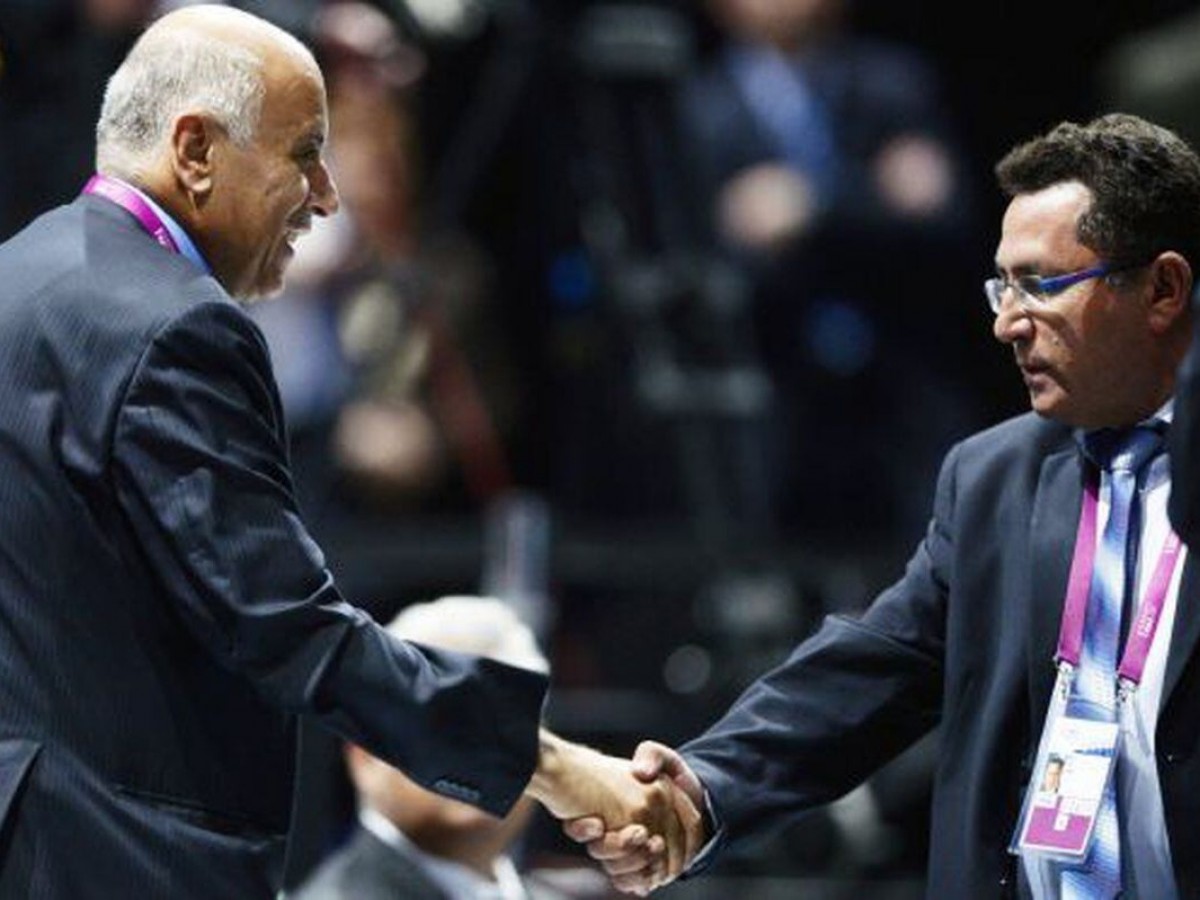
The president of the Israeli Football Association shakes hands with his Palestinian counterpart.EFE
Sport has the power to change the world (…) Sport can create hope where once there was only despair... -- Nelson Mandela
IHL ensures civilian protection through two primary aspects. Firstly, the principle of distinction distinguishes between civilians and combatants, forbidding direct attacks on civilians or civilian objects. Civilians generally enjoy protection from harm arising from hostilities, except when they directly participate in hostilities. But even if they are incidentally affected by attacks on legitimate targets, the principle of proportionality must be observed, and the attacker must take feasible precautions to minimize harm to civilians. Secondly, individuals designated as ‘protected persons’ receive special protection, including those who are not nationals of a party to the conflict and nationals of neutral states present in occupied territories. IHL also offers specific protection to vulnerable civilian groups, such as women, children, refugees, and displaced persons, due to the additional risks they face during armed conflicts. This set of rules has been enshrined in the Convention (IV) relative to the Protection of Civilian Persons in Time of War (Geneva, 12 August 1949) and the 1977 Protocols.
Beyond the current situation, Israeli violence in the West Bank and the Gaza Strip has been a constant since the establishment of the State of Israel following the widespread forced displacement and dispossession of Palestinians during the 1948 Arab-Israeli conflict, the so-known as Nakba. Systematic violations of the human rights of the Palestinian population have also been prevalent during the ongoing illegal occupation of the Palestinian territory. These violations take various forms. In the specific case of Gaza, the blockade situation that followed Israel’s disengagement from the Strip and Northern Samaria in 2005 has inflicted continuous and collective punishment on the Gazan population.
The severity of the situation has led to an increasing number of voices characterizing Israeli actions as apartheid and genocide. In particular, Israeli apartheid against the Palestinian population has been denounced by Academia (see here and here), non-governmental organizations (see here, here, and here) and the United Nations (see here and here). Undoubtedly, this question will be part of the discussions that will take place at the International Court of Justice in the process of drafting the Advisory Opinion on the Legal Consequences arising from the Policies and Practices of Israel in the Occupied Palestinian Territory, including East Jerusalem. In addition, it is worth noting that on 29 December 2023 South Africa instituted proceedings against Israel in the ICJ over alleged violations of the Genocide Convention. South Africa claims that Israel has committed acts of genocide against Palestinians in the Gaza Strip and has failed to prevent or punish these acts. South Africa is asking the ICJ to issue provisional measures to protect Palestinians from further harm and to ensure that Israel complies with its obligations under the Genocide Convention.
According both to article 7.1.j) of the Rome Statute of the ICC and the 1973 Convention on the Suppression and Punishment of the Crime of Apartheid, apartheid is a crime against humanity. It is not inconceivable that the perpetrators of these serious crimes may face international criminal responsibility. This will depend on how the ongoing investigation opened by the ICC Prosecutor on 3 May, 2021 (ICC-01/18), regarding the crimes within the jurisdiction of the Court that are alleged to have been committed in the State of Palestine since 13 June 2014, progresses and succeeds. However, notwithstanding this important step, the truth is that despite the gravity and prolonged duration of the conflict and the recurrence of humanitarian crises, the international community has proven incapable of effectively addressing a just resolution to the Israeli-Palestinian conflict.
The shameful paralysis of the United Nations Security Council (up to now it has failed on several occasions to reach consensus on any action addressed to the restoration of international peace and security) and the timid responses of Western countries (with the inaction of the European Union being particularly conspicuous) have been tragically exploited by the Israeli state. Its disregard for international law was evident in the response to the reminder from the United Nations Secretary-General, Antonio Guterres, that Hamas’ attack didn't happen in a vacuum. ‘The time has come to teach officials of the United Nations a lesson’, was the brash answer of the Israel ambassador to the United Nations.
In this context, this contribution aims to highlight the potential of sports as a tool to promote compliance with international law. In particular, it raises the need for the international community to consider the opportunity to reactivate of the International Convention against Apartheid in Sports.
Outside of that context, the Convention has had limited impact. One of the few examples is the statement adopted in 2021, following the Taliban government’s women sport ban, by a UN group of experts referring to the crime of ‘gender apartheid’ and calling for the vigorous reaction of international sporting associations with the aim that Afghanistan would not be able to participate in international sports competitions if women's rights to participate in sport were not guaranteed. According to the group, this reflected ‘the spirit of the International Declaration against Apartheid in Sports and the International Convention Banning Apartheid in Sports, which calls on States to use their best endeavors to ensure universal compliance with the Olympic principle of non-discrimination’.
The Convention against Apartheid in Sports is a legal tool with great potential, but underutilized by the international community. In summary, according to the Convention, States parties commit (i) to not permit sports contact with a country practising apartheid and to take appropriate action to ensure that their sports bodies, teams, and individual sportsmen do not have such contact (art. 3) and (ii) to take all possible measures to prevent sports contact with a country practising apartheid and shall ensure that effective means exist for bringing about compliance with such measures (art. 4).
Just as the issue of sports sanctions imposed on Russian and Belarusian athletes has showcased (see here, here and here), one of these demands would be the respect for the fundamental rights of athletes. However, the legitimate need to reconcile potential sport sanctions with the respect for the right to work and non-discrimination of athletes should not be a hindrance to outright rejecting the reactivation of an instrument that can contribute to addressing threats to international peace and security. Also, when they take the form of very serious violations of International Human Rights Law and International Humanitarian Law obligations.
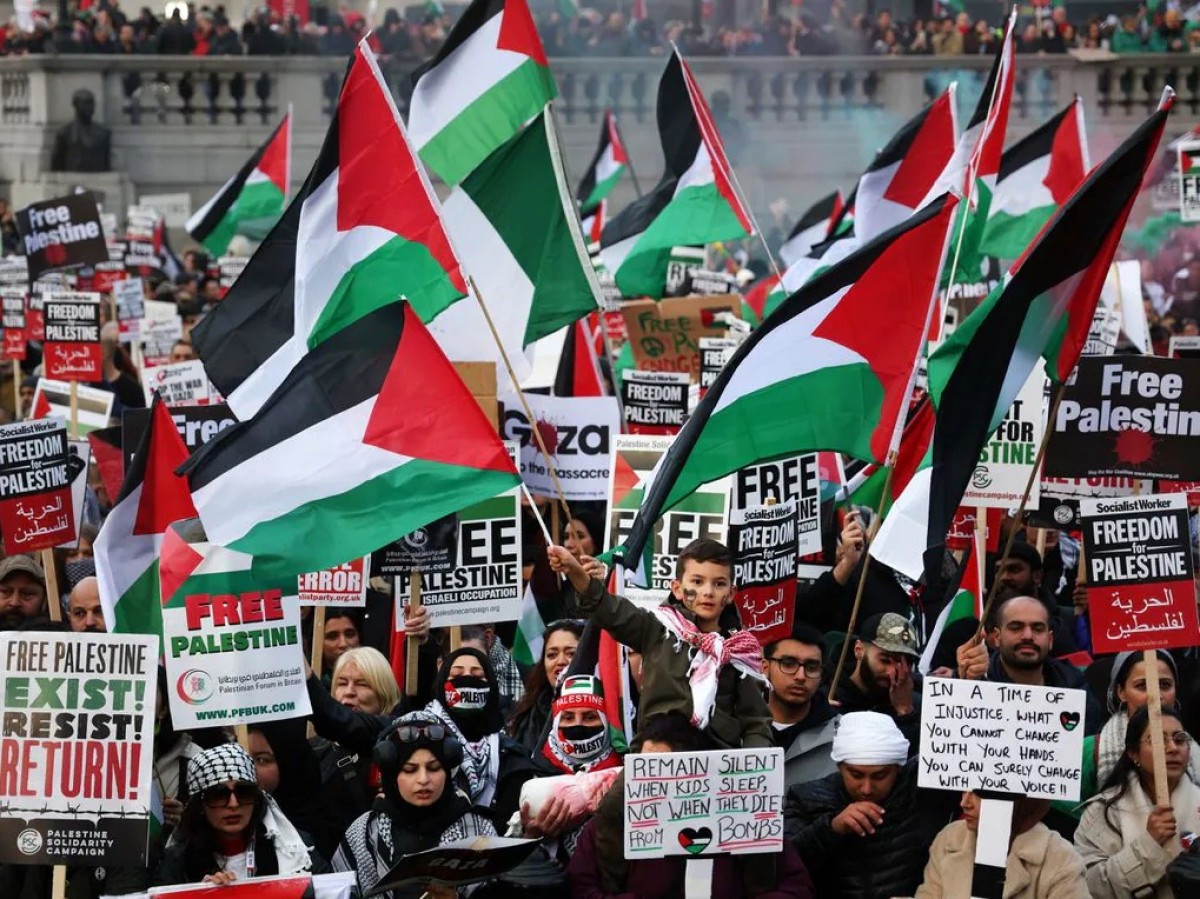
The Israel-Palestine Conflict: A long history of horror and extremely serious violations of International Human Rights Law and International Humanitarian Law obligationsSince the attack by Hamas militants on Israel on October 7th, in which they killed around 1,400 people and took more than 200 as hostages, the Israeli military has relentlessly bombed the Gaza Strip. After 2 months of hostilities, the humanitarian crisis has reached unbearable proportions. The number of civilian Palestinian casualties, including many minors, is counted in the thousands. According to UNRWA’s Report 51 on the situation, ‘as of 11 December, nearly 1.3 million internally displaced persons (IDPs) were sheltering in 155 UNRWA facilities across all five governorates of the Gaza Strip, including in the North and in Gaza City’. It is prudent to reiterate that protecting civilians in armed conflicts is a fundamental principle of International Humanitarian Law (IHL), which establishes a comprehensive framework for safeguarding civilians and their surroundings, including civilian property, referred to as ‘civilian objects’.
IHL ensures civilian protection through two primary aspects. Firstly, the principle of distinction distinguishes between civilians and combatants, forbidding direct attacks on civilians or civilian objects. Civilians generally enjoy protection from harm arising from hostilities, except when they directly participate in hostilities. But even if they are incidentally affected by attacks on legitimate targets, the principle of proportionality must be observed, and the attacker must take feasible precautions to minimize harm to civilians. Secondly, individuals designated as ‘protected persons’ receive special protection, including those who are not nationals of a party to the conflict and nationals of neutral states present in occupied territories. IHL also offers specific protection to vulnerable civilian groups, such as women, children, refugees, and displaced persons, due to the additional risks they face during armed conflicts. This set of rules has been enshrined in the Convention (IV) relative to the Protection of Civilian Persons in Time of War (Geneva, 12 August 1949) and the 1977 Protocols.
[Recibe los análisis de más actualidad en tu correo electrónico o en tu teléfono a través de nuestro canal de Telegram]
As stated by the ICRC, the duty to protect civilians from attacks also arises from an international customary norm. The paramount importance attributed by the international community to this obligation is evident in the fact that its serious violation may amount to war crimes, as stipulated, notably, in Article 8.2.b.i) and ii) of the Rome Statute of the International Criminal Court (ICC). On 12 December, the UNGA passed a new Resolution demanding an ‘immediate humanitarian ceasefire’, the immediate and unconditional release of all hostages and well as ‘ensuring humanitarian access’.Beyond the current situation, Israeli violence in the West Bank and the Gaza Strip has been a constant since the establishment of the State of Israel following the widespread forced displacement and dispossession of Palestinians during the 1948 Arab-Israeli conflict, the so-known as Nakba. Systematic violations of the human rights of the Palestinian population have also been prevalent during the ongoing illegal occupation of the Palestinian territory. These violations take various forms. In the specific case of Gaza, the blockade situation that followed Israel’s disengagement from the Strip and Northern Samaria in 2005 has inflicted continuous and collective punishment on the Gazan population.
The severity of the situation has led to an increasing number of voices characterizing Israeli actions as apartheid and genocide. In particular, Israeli apartheid against the Palestinian population has been denounced by Academia (see here and here), non-governmental organizations (see here, here, and here) and the United Nations (see here and here). Undoubtedly, this question will be part of the discussions that will take place at the International Court of Justice in the process of drafting the Advisory Opinion on the Legal Consequences arising from the Policies and Practices of Israel in the Occupied Palestinian Territory, including East Jerusalem. In addition, it is worth noting that on 29 December 2023 South Africa instituted proceedings against Israel in the ICJ over alleged violations of the Genocide Convention. South Africa claims that Israel has committed acts of genocide against Palestinians in the Gaza Strip and has failed to prevent or punish these acts. South Africa is asking the ICJ to issue provisional measures to protect Palestinians from further harm and to ensure that Israel complies with its obligations under the Genocide Convention.
According both to article 7.1.j) of the Rome Statute of the ICC and the 1973 Convention on the Suppression and Punishment of the Crime of Apartheid, apartheid is a crime against humanity. It is not inconceivable that the perpetrators of these serious crimes may face international criminal responsibility. This will depend on how the ongoing investigation opened by the ICC Prosecutor on 3 May, 2021 (ICC-01/18), regarding the crimes within the jurisdiction of the Court that are alleged to have been committed in the State of Palestine since 13 June 2014, progresses and succeeds. However, notwithstanding this important step, the truth is that despite the gravity and prolonged duration of the conflict and the recurrence of humanitarian crises, the international community has proven incapable of effectively addressing a just resolution to the Israeli-Palestinian conflict.
The shameful paralysis of the United Nations Security Council (up to now it has failed on several occasions to reach consensus on any action addressed to the restoration of international peace and security) and the timid responses of Western countries (with the inaction of the European Union being particularly conspicuous) have been tragically exploited by the Israeli state. Its disregard for international law was evident in the response to the reminder from the United Nations Secretary-General, Antonio Guterres, that Hamas’ attack didn't happen in a vacuum. ‘The time has come to teach officials of the United Nations a lesson’, was the brash answer of the Israel ambassador to the United Nations.
In this context, this contribution aims to highlight the potential of sports as a tool to promote compliance with international law. In particular, it raises the need for the international community to consider the opportunity to reactivate of the International Convention against Apartheid in Sports.
An International Legal Tool to Combat One of the Most Horrendous CrimesOn December 10, 1985, the United Nations General Assembly adopted the above-mentioned International Convention against Apartheid in Sports. The Convention entered into force on April 3, 1988. At the time of writing, 62 States are parties to it (Palestine ratified the Convention on March 22, 2018). As the International Declaration against Apartheid in Sports that preceded in 1977 stated, it was conceived as an international legal tool to combat apartheid, considered not only a gross violation of human rights, but also a serious threat to international peace and security. The work of the Commission established under Article 11 of the Convention contributed to the abolition of the apartheid regime in South Africa.
Outside of that context, the Convention has had limited impact. One of the few examples is the statement adopted in 2021, following the Taliban government’s women sport ban, by a UN group of experts referring to the crime of ‘gender apartheid’ and calling for the vigorous reaction of international sporting associations with the aim that Afghanistan would not be able to participate in international sports competitions if women's rights to participate in sport were not guaranteed. According to the group, this reflected ‘the spirit of the International Declaration against Apartheid in Sports and the International Convention Banning Apartheid in Sports, which calls on States to use their best endeavors to ensure universal compliance with the Olympic principle of non-discrimination’.
The Convention against Apartheid in Sports is a legal tool with great potential, but underutilized by the international community. In summary, according to the Convention, States parties commit (i) to not permit sports contact with a country practising apartheid and to take appropriate action to ensure that their sports bodies, teams, and individual sportsmen do not have such contact (art. 3) and (ii) to take all possible measures to prevent sports contact with a country practising apartheid and shall ensure that effective means exist for bringing about compliance with such measures (art. 4).
A Final Reflection on Sport, Peacebuilding and the Maintenance of International SecurityThe Convention against Apartheid in Sports delves into the complex relationship between sports, compliance with international law, and the maintenance of international stability. It assumes what I consider the well-established role of sport as a catalyst for peacebuilding and the preservation of security. In this context, it’s essential to recognize that sports wield significant symbolic influence, which means that States subjected to coercive measures in the realm of sports may suffer reputational damage. Ultimately, the primary goal of the Convention against Apartheid in Sports is to take advantage of the potential of sports in enforcing compliance with international law in the face of internationally wrongful acts. While this might appear to contradict the commonly held value of sports (political neutrality), its reactivation will also be an opportunity for a much-needed redefinition of this concept to align with the demands of 21st-century international society. This redefinition is crucial to address the accusations of complicity in human rights abuses that sports organizations often face (see here, here and here).
Just as the issue of sports sanctions imposed on Russian and Belarusian athletes has showcased (see here, here and here), one of these demands would be the respect for the fundamental rights of athletes. However, the legitimate need to reconcile potential sport sanctions with the respect for the right to work and non-discrimination of athletes should not be a hindrance to outright rejecting the reactivation of an instrument that can contribute to addressing threats to international peace and security. Also, when they take the form of very serious violations of International Human Rights Law and International Humanitarian Law obligations.
Y se puede leer el artículo en español
ARTÍCULOS RELACIONADOS
FINE ART IMAGES/HERITAGE IMAGES/GETTY IMAGES

ANDY RAIN (EFE)


Carmen Pérez
Profesora de Derecho Internacional Público en la Universidad Carlos III de Madrid
Ha escrito extensamente en el ámbito del Derecho deportivo internacional y de la UE, la lucha contra el dopaje y la protección de los derechos fundamentales de los deportistas. Entre 2005 y 2014, Carmen Pérez fue miembro del Comité Español de Disciplina Deportiva (Consejo Superior de Deportes). Entre septiembre de 2015 y julio de 2016, fue Miembro del Grupo de Alto Nivel sobre Diplomacia Deportiva de la Comisión Europea. Es Titular de la Cátedra UNESCO ELIS (Education Linkage through International Sports) establecida en 2021 en la UC3M.
Etiquetas
Democracia, igualdad de oportunidades, israel, palestina, Derechos Humanos, derechos sociales, guerra, Terrorismo, ONU, genocidio, UE, Unión Europea Ahora en portada
19 de octubre de 2026
19 de octubre de 2026
Noticias relacionadas
Hace 152 semanas
The European Sisyphus
Hace 152 semanas