Viernes, 16 de octubre de 2026




Macron’s Visit to India Will Strengthen the Dynamics of India-France Relations
TERESA SUAREZ (EFE)
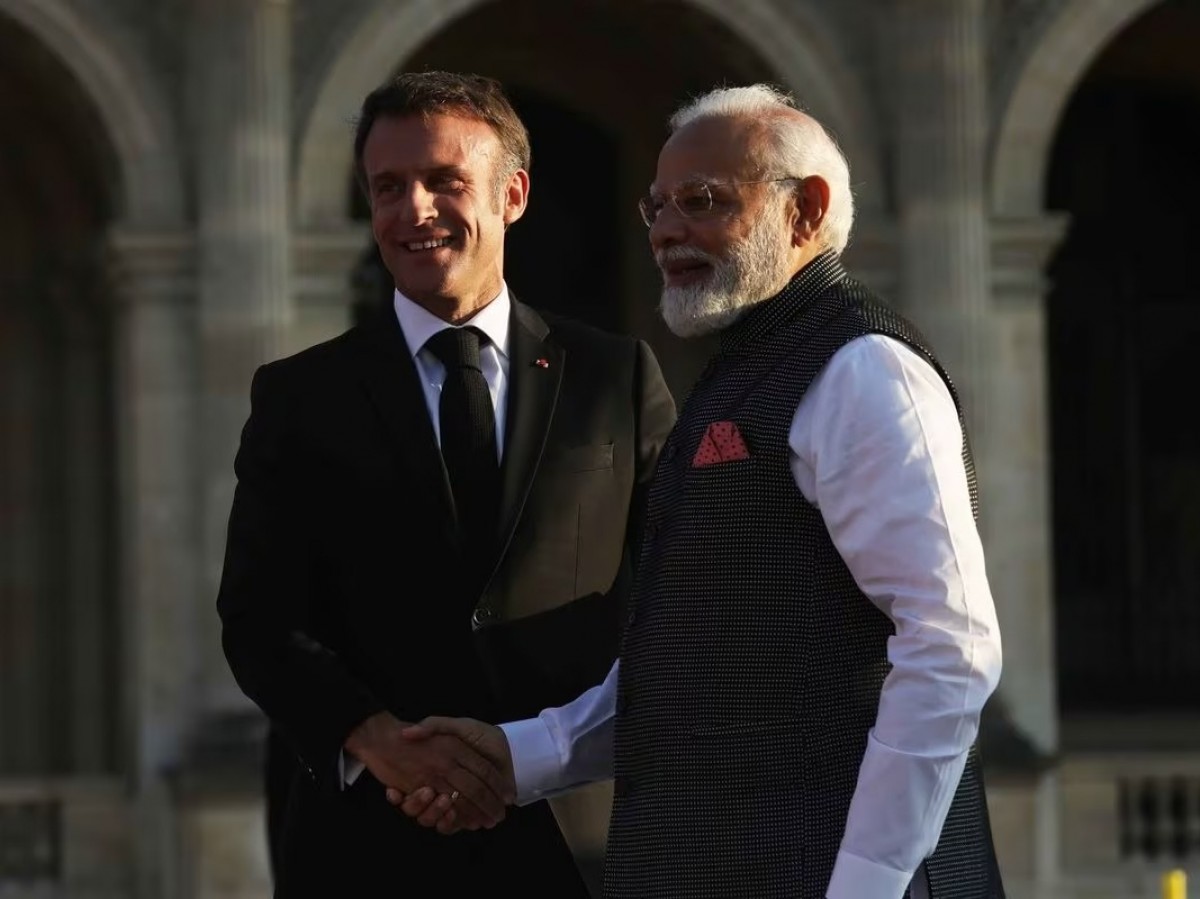
French President Emmanuel Macron is visiting India on January 26 as the Chief Guest for India’s Republic Day Parade.Macron’s visit to India comes just months after Indian Prime Minister Narendra Modi visited France in July 2023 as the Guest of Honour for the Bastille Day Parade. With Macron’s visit France becomes the country that has been invited six times, the most number of times, for the Republic Day. This will be Macron’s third visit to India since 2017. For his part Modi has also visited France three times in the last five years. The regular high-level engagements indicate the continuing proximity in the India-France relations. French Rafale jets and a contingent of French Army are also set to participate in the Republic Day Parade.
Since the end of the Cold War, India has strengthened its relations with the western countries including France. Strategic cooperation has played a major role in India’s close engagements with the West. However, in the three decades of India’s interactions with the western countries, France could be considered an outlier.
While defense cooperation has been the defining factor in the India-France relations, the two countries have also been engaging closely on global issues, which is similar to India’s engagements with other western countries. But France stands out as a country that has been sensitive to India’s security concerns. On several occasions when India’s otherwise close western partners such as the United States have been unmindful of India’s own strategic considerations, France has stood with India during such occasions.
[Receive the most up-to-date analysis to your email or mobile through our Telegram channel]
As regards to defense cooperation France has emerged as the second largest defence supplier to India. India imported around 30% of its total defence equipment from France between 2018 and 2022. Macron’s visit is expected to continue this trend of strengthening defence cooperation. New Delhi and Paris could finalize deals on India procuring 26 Rafale Marine combat aircraft and the construction of three submarines in India with the transfer of technology from France.New Delhi and Paris are also expected to adopt a roadmap for defence-industrial cooperation where the two sides are keen to step up defence cooperation in the areas of design, development, testing and manufacture of advanced defence technologies as well as to expand joint production of military hardware in India.
With respect to shared concerns, the Indo-Pacific Region has emerged as an area of cooperation between the two countries. France has formulated its own Indo-Pacific Strategy in 2018. France, being a resident power in the Indo-Pacific Region, is a direct stakeholder in the geopolitics of this region. France is the only EU member country to have territories in the Indo-Pacific Region. La Reunión and Mayotte Departments in the Western Indian Ocean and French Polynesia, New Caledonia and Wallis and Futuna in the South Pacific Ocean are French territories. 90% of France’s Exclusive Economic Zone (EEZ) is located in Indo-Pacific Region.
Parallel to France’s outreach to the Indo-Pacific Region, India is also taking steps to increase its footprint in the Mediterranean Region. Apart from engagements with France, a Mediterranean power, India has stepped up engagements with other Mediterranean powers such as Italy, Greece, Cyprus and Egypt. As the geostrategic construct of the Indo-Pacific Region is the confluence of two seas – Indian Ocean and the Pacific Ocean – India’s overtures towards the Mediterranean countries are now becoming instrumental in connecting the Indian Ocean and the Mediterranean Sea.
India’s ties with the western countries including France have strengthened in the past three decades. However, France could be considered as an outlier in these engagements; the West’s approach towards India has been inconsistent. Despite having deep economic and strategic ties with India, a number of western countries including the United States, at times, have expressed reluctance and displeasure about the strategic choices that India made to protect its own national security interests. Pakistan-supported terrorism directed against India, and India carrying out nuclear tests, are two examples where France has differed from other western countries in its approach towards India.
Apart from the region-based cooperation in the Indo-Pacific and the Mediterranean, India and France also converge on the concept of multipolar order. France has also been sympathetic to India’s specific security concerns, particularly those emanating from the neighbourhood. Also France has been sensitive to India as a civilizational state and has supported India in the instances where India has had to face hostility from the neighbourhood on the basis of identity and civilizational disputes. This is in particular reference to the Pakistan-supported and sponsored terrorism against India where France has stood by India.
Further France has also been supportive of India’s stature as a nuclear power. When India carried out nuclear tests in 1998 and declared itself as a nuclear-weapon state France was the first country to reach out to India and offer support. Consequently France became the first western country with which India concluded a strategic partnership agreement in 1998. The year 2023 marked 25 years of this agreement. As a resident power in the Indian Ocean Region, France has considered India as a stable partner to cooperate in the areas of mutual interests.
While strategic ties continue to boost the India-France ties, the two sides are also seeking cooperation in the areas of Artificial Intelligence, supercomputing, cloud computing and quantum technologies. Besides New Delhi and Paris are also cooperating in research and development of critical digital technologies to address the issue of climate change.
In the contemporary global order that is constantly in flux, the India-France relations have stood the test of time. Their ties are defined by trust, strategic convergence, independent foreign policies and an understanding of non-interference in each other’s internal issues. Macron’s visit on January 26 is a continuity of long and steady partnership between India and France.
ARTÍCULOS RELACIONADOS
EVELYN HOCKSTEIN (REUTERS)
NICOLÁS AZNÁREZ

Niranjan Marjani
Analista político residente
Fellow en Kalinga Institute of Indo-Pacific Studies. Sus áreas de especialización son las relaciones internacionales y la geopolítica. Escribe artículos para publicaciones nacionales e internacionales. Sus artículos se centran principalmente en el ángulo estratégico de la política internacional. Escribe artículos en español, ingles e hindi. Anteriormente trabajaba como el presentador de noticias en All India Radio, Pune. Máster en Ciencias Políticas (IGNOU, Nueva Delhi, India) y Diploma en Periodismo (Universidad de Pune, Pune, India).
Ahora en portada
16 de octubre de 2026
16 de octubre de 2026
16 de octubre de 2026
Noticias relacionadas
Hace 161 semanas
India Gives G20 a Dimension of Inclusivity
Hace 173 semanas
Will the US Convince India with NATO Plus?
Lo más leído