Domingo, 18 de octubre de 2026




Delors, a Full-Bodied Revolutionary
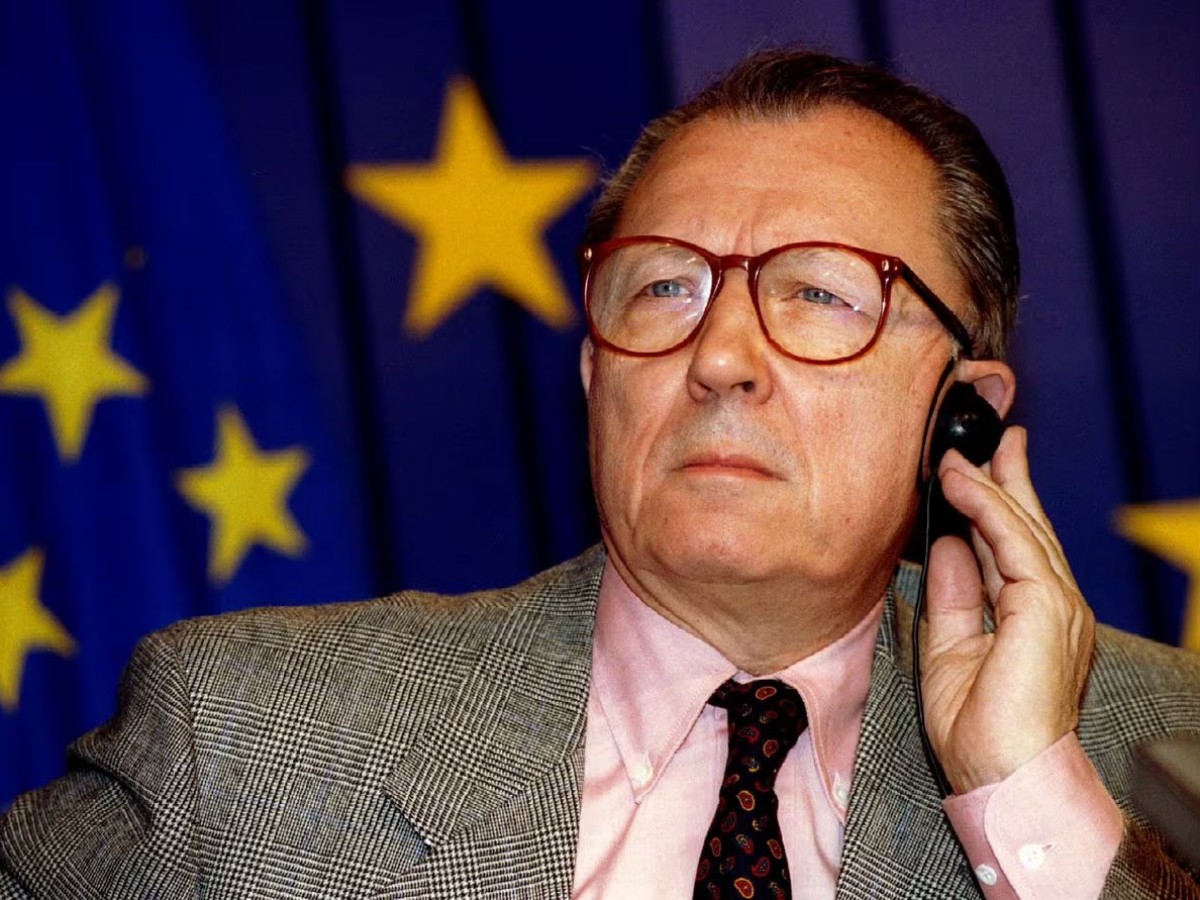
NATHALIE KOULISCHER (REUTERS)
On 27 December 2023, at the age of ninety-eight, Jacques Delors, the undisputed protagonist of the second half of the twentieth century in France and, above all, in Europe, passed away. Delors, a trade union activist in the CFTC (French Confederation of Christian Workers), a progressive Christian, and finally a member of the French Socialist Party, was several times a minister under different presidents of the French Republic, after having worked for much of his life at the Banque de France, the Economic and Social Council, and the office of the Commissioner for the plan.
A member of the first directly elected European Parliament in 1979, in 1985 he was appointed President of the European Commission, at that time the top post in the then European Economic Community. Under his ten-year term of office – the longest-serving Commission President – Delors promoted the Single European Act, a sort of package that incorporated the creation of the European single market, promoted the Maastricht Treaty that marked the beginning of modern Europe, laid the foundations of Economic and Monetary Union, and was the primary advocate for major advances such as cohesion policy, or the launch of the Erasmus programme, among many other initiatives. His report on competitiveness and growth, published in 1992, anticipated many of the problems of the European economy that have not yet been solved.
Delors’ working method at the Commission was based on taking European functionalism to its ultimate consequences. Helen Drake, in “Jacques Delors in Europe”, describes how, on arrival in Brussels, Delors consulted with the then leaders of the European Economic Community on what progress they would be prepared to make in deepening European integration. The common market was the basis on which to build, and from this he launched the single market project, which he materialised in the Single European Act, a new treaty that unified numerous procedures hitherto governed by the EEC, ECSC, and Euratom treaties, to lay the foundations of the Single Market. The success of the signing of the Single Act opened the door to the 1992 reform, through the Maastricht Treaty, cleverly using the so-called functionalist method: to make a reform effective, a new reform should also be undertaken in an adjacent sector, in a dynamic of “spillovers” that ended up restructuring the European Economic Community into the European Union. A bold, astute, and decisive exercise. While this was happening, Delors was concerned with giving the Union a human vision, with programmes aimed at young people, such as the Erasmus programme, the Youth for Europe programme, the consolidation of regional and cohesion policy, and the initiatives linked to the Europe of Citizens, which completed the impetus given by González at Maastricht.
When he left the Commission in 1995, he was at the height of his international prestige and, despite pressure from his party and much of society, he refused to run for the presidency of the French Republic, something that would possibly have changed the recent history of France. He then devoted himself to forming part of think tanks, to writing his memoirs – sadly not published in Spanish – and to setting up different think tanks with a markedly pro-European character. His death has taken him completely away from European public life.
Beyond his career in the Commission, Delors was also a man of the 20th century. A convinced Catholic, a contributor to the Christian magazine Esprit, an activist in the Young Christian Workers and the Vie Nouvelle association devoted to popular education, he was committed from an early age to the values of Emmanuel Mournier’s Christian humanism. He was committed to human capital formation and lifelong education. He understood well the transformations taking place in post-war Europe and focused on the steps to be taken by the continent at the turn of the century. Since then, his shadow has been cast over all Commission presidents, who have rarely stood comparison. In fact, it was the next Commission, the Santer Commission, that had to resign in haste, bringing it into disrepute and taking years to recover.
Reading about his life, which is extensively documented in French but also in a long interview with him by journalist Dominique Wolton in 1994, published in Spanish by Acento Editorial, any reader will find in it a person committed to his time, flexible and pragmatic, but who never renounced his deepest values. Wolton asked a sixty-something politician who had been almost everything in French and European politics, on the verge of giving up his post in the Commission and possibly having already given up internally on running for the presidency of the French Republic, if he considered himself a revolutionary:


A member of the first directly elected European Parliament in 1979, in 1985 he was appointed President of the European Commission, at that time the top post in the then European Economic Community. Under his ten-year term of office – the longest-serving Commission President – Delors promoted the Single European Act, a sort of package that incorporated the creation of the European single market, promoted the Maastricht Treaty that marked the beginning of modern Europe, laid the foundations of Economic and Monetary Union, and was the primary advocate for major advances such as cohesion policy, or the launch of the Erasmus programme, among many other initiatives. His report on competitiveness and growth, published in 1992, anticipated many of the problems of the European economy that have not yet been solved.
[Recibe los análisis de más actualidad en tu correo electrónico o en tu teléfono a través de nuestro canal de Telegram]
Delors came to the Commission with a reputation as a moderate socialist, after his time in Mitterrand’s government, and his accession to the Commission presidency was won with the approval of Margaret Thatcher and Helmut Kohl, the conservative leaders who accompanied the French premier. His character as an enlightened technocrat appealed to the EU leaders of the time, imbued as they were with what was known as “Eurosclerosis”, a kind of stagnation of the integration process that took place between the 1970s and 1980s. However, his mandate was characterised by a moment of acceleration of European integration, in a context of reconfiguration of the old continent’s international order, with the fall of the communist regimes and Gorbachev’s new European policy, which sought to renew the European political system in order to integrate a comatose Soviet Union.Delors’ working method at the Commission was based on taking European functionalism to its ultimate consequences. Helen Drake, in “Jacques Delors in Europe”, describes how, on arrival in Brussels, Delors consulted with the then leaders of the European Economic Community on what progress they would be prepared to make in deepening European integration. The common market was the basis on which to build, and from this he launched the single market project, which he materialised in the Single European Act, a new treaty that unified numerous procedures hitherto governed by the EEC, ECSC, and Euratom treaties, to lay the foundations of the Single Market. The success of the signing of the Single Act opened the door to the 1992 reform, through the Maastricht Treaty, cleverly using the so-called functionalist method: to make a reform effective, a new reform should also be undertaken in an adjacent sector, in a dynamic of “spillovers” that ended up restructuring the European Economic Community into the European Union. A bold, astute, and decisive exercise. While this was happening, Delors was concerned with giving the Union a human vision, with programmes aimed at young people, such as the Erasmus programme, the Youth for Europe programme, the consolidation of regional and cohesion policy, and the initiatives linked to the Europe of Citizens, which completed the impetus given by González at Maastricht.
When he left the Commission in 1995, he was at the height of his international prestige and, despite pressure from his party and much of society, he refused to run for the presidency of the French Republic, something that would possibly have changed the recent history of France. He then devoted himself to forming part of think tanks, to writing his memoirs – sadly not published in Spanish – and to setting up different think tanks with a markedly pro-European character. His death has taken him completely away from European public life.
Beyond his career in the Commission, Delors was also a man of the 20th century. A convinced Catholic, a contributor to the Christian magazine Esprit, an activist in the Young Christian Workers and the Vie Nouvelle association devoted to popular education, he was committed from an early age to the values of Emmanuel Mournier’s Christian humanism. He was committed to human capital formation and lifelong education. He understood well the transformations taking place in post-war Europe and focused on the steps to be taken by the continent at the turn of the century. Since then, his shadow has been cast over all Commission presidents, who have rarely stood comparison. In fact, it was the next Commission, the Santer Commission, that had to resign in haste, bringing it into disrepute and taking years to recover.
Reading about his life, which is extensively documented in French but also in a long interview with him by journalist Dominique Wolton in 1994, published in Spanish by Acento Editorial, any reader will find in it a person committed to his time, flexible and pragmatic, but who never renounced his deepest values. Wolton asked a sixty-something politician who had been almost everything in French and European politics, on the verge of giving up his post in the Commission and possibly having already given up internally on running for the presidency of the French Republic, if he considered himself a revolutionary:
“DW: Are you a revolutionary?The book of the interview, which should be required reading for any politician with a pro-European vocation, was entitled in Spanish “De cuerpo entero”. It is difficult to find a better title.
JD: Yes, I have never accepted the existing order.
DW: Never?
JD: Never.
DW: Not now either?
JD: Not now either. There has always been in me a feeling of rejection, also against the errors of my own action. The way of life in society, the human relations that are established in it, generates in me a deep dissatisfaction, and this is a feeling that will never leave me”.
Se puede leer el artículo original en español
ARTÍCULOS RELACIONADOS
VEX COLLECTIVE (GETTY IMAGES/ISTOCKPHOTO)

Gleb Garanich/Reuters
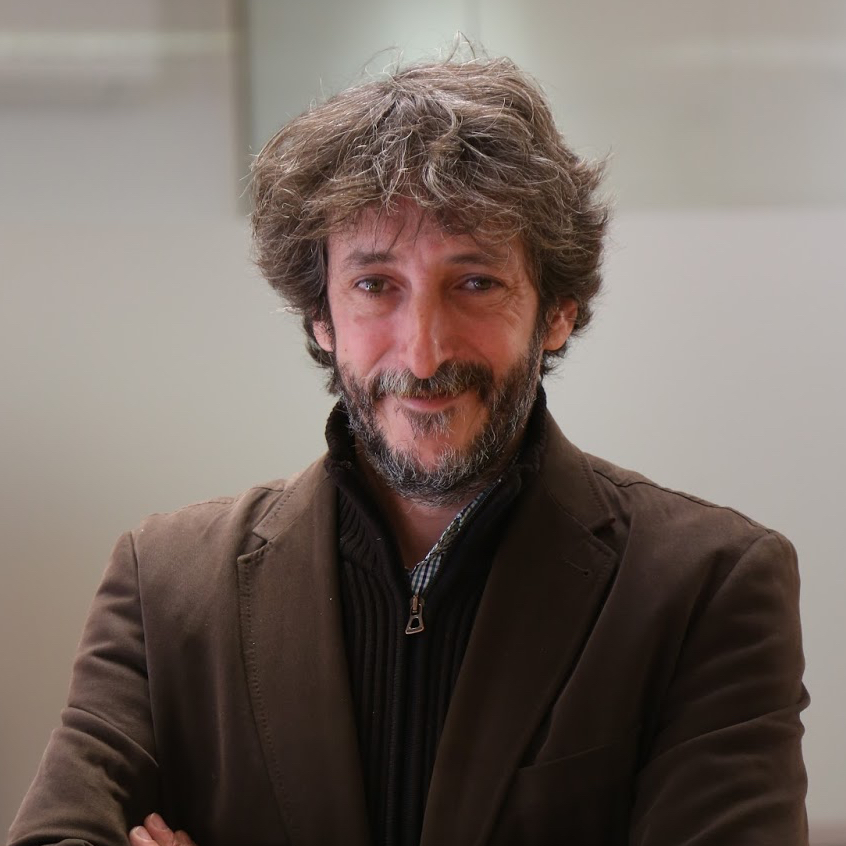
José Moisés Martín
Economista y consultor internacional.
Dirijo una firma de consultoría especializada en políticas públicas y desarrollo económico y social.
Ahora en portada
17 de octubre de 2026
16 de octubre de 2026
Noticias relacionadas
Hace 153 semanas
Why the European Union is Stronger Than You Think
Hace 148 semanas
Ukraine: We Must Do More
Lo más leído