Sábado, 17 de octubre de 2026




Xi Jinping Thought on Socialism with Chinese Characteristics for a New Era
JU PENG (AP)
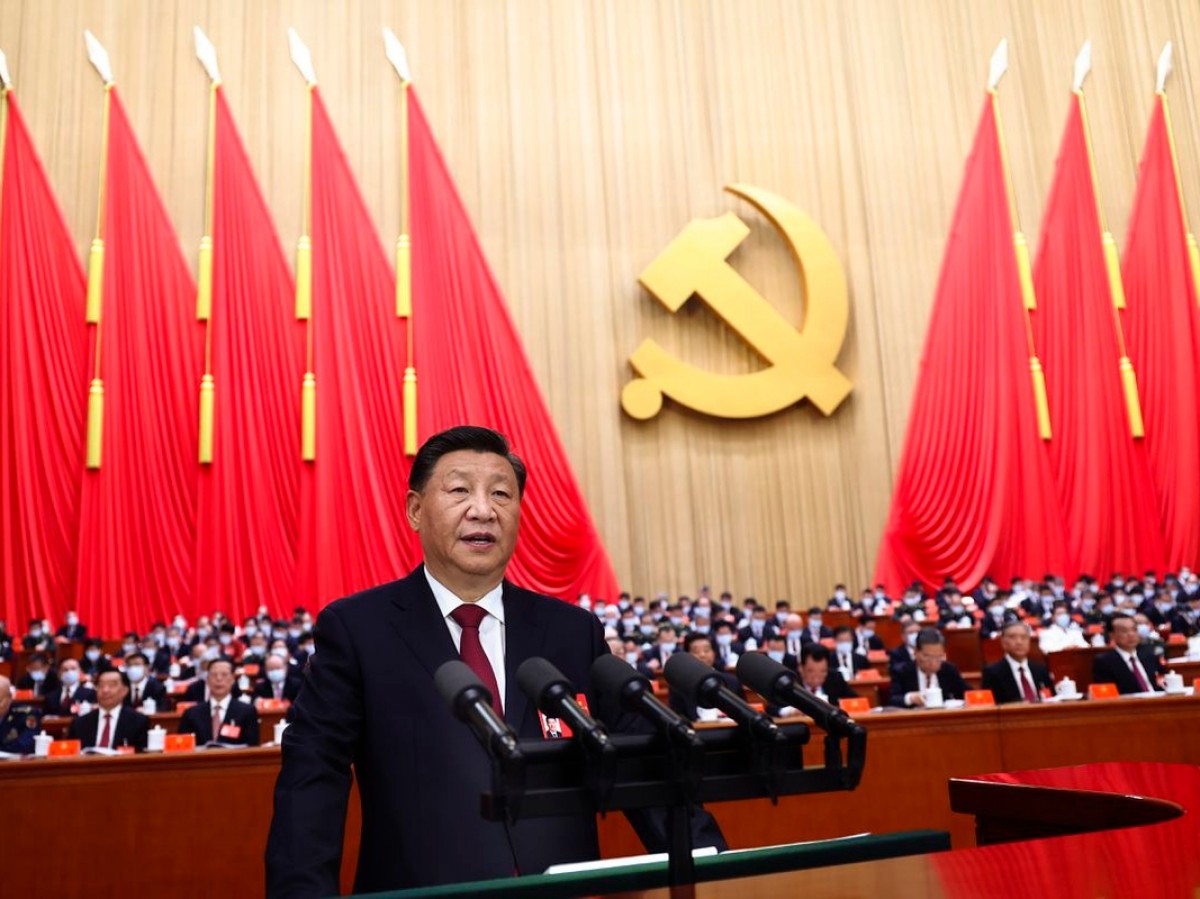
In the shadows of increasing US-China tensions and the war in Ukraine, crucial changes are unfolding at the domestic level in China. With the education campaign on 'Xi Jinping Thought on Socialism with Chinese Characteristics for a New Era', the Chinese President has introduced the latest chapter on power centralization and ideological streamlining. The implications could be felt globally.
In October 2022, Xi Jinping installed an ultra-loyal CCP standing committee. In March 2023, Xi was elected President for a third term. He is the most powerful leader of the Chinese Communist Party (CCP) since Mao, and his ambitions are far-reaching to transform the domestic and global political environment. In doing so, he has effectively broken away from Deng Xiaoping’s legacy, who prioritized catching up with the West while avoiding any claims for global leadership.
As part of the education campaign, the party elite is studying 'Xi Jinping thought'. On the one hand, it is the ultimate power move by Xi. On the other hand, it is a necessity to implement the ambitious long-term goals laid out by the Chinese President.
Understanding Xi Jinping thought is crucial for CCP members to implement Xi’s political agenda. It is also relevant for anyone interacting with China, as XJP Thought will ultimately frame the rhetoric and actions of the party-state in the years to come.
At the same time, abstract references to 'Xi Jinping thought' emerged. There are over 30 types of Xi Jinping Thought (e.g., on diplomacy, economic development, or rule of/by law). As Xi noted pointed out during his speech at the education campaign on 3 April 2023, XJP Thought covers all realms and respects, including "reform, development, social stability, domestic affairs, foreign relations, national defense, and governance of the Party, the state, and the military."
XJP Thought can be boiled-down to the so-called 10 affirmations (十个明确), 14 commitments (十四个坚持), and achievements in 13 areas (十三个方面成就).
Accordingly, the key message of XJP Thought is CCP leadership and the core role of Xi Jinping within the CCP. In October 2022, the 'two safeguards' (两个维护) were written into the CCP Constitution, institutionalizing (1) the 'core' status of Xi Jinping within the CCP and reiterating (2) the centralized authority of the Party. Party influence over the economy and the state has increased significantly in recent years.
While XJP Thought underlines the focus on development, economic growth is pursued as a function to achieve the 2049 'China Dream of the great rejuvenation of the Chinese nation'. By 2049, China aims to become 'a fully developed nation'. The PRC is increasingly promoting the narrative of "modernization does not equal westernization" to a global audience of developing countries. A priority component of 'China’s development path' is the focus on utilizing the law to strengthen CCP leadership. Beijing is in the process of establishing a coherent legal system ('socialist rule of law with Chinese characteristics'), which reduces day-to-day arbitrariness while rejecting the concepts of independent judiciary and checks and balances as "erroneous Western thoughts". Party leadership is framed as the cardinal rule in a 'socialist rule of law with Chinese characteristics'. The international dimension of Xi Jinping Thought on the rule of law may have significant implications within the realm of international law.
Strengthening the grip of the Party over the PLA and improving the abilities of the Chinese military is the key security-related component of Xi Jinping Thought. China aims to become a global military power to safeguard China’s "sovereignty, security, and development interests".
XJP Thought also includes an explicit international dimension. For instance, Beijing aims to bolster the diplomatic front (e.g., on climate issues and conflict resolution), to build a so-called "community of shared future for mankind", Beijing’s vision of a reformed international order, without the existing biases towards the West.
Whether China will be able to implement its long-term vision remains to be seen. The Chinese leadership acts long-term oriented and strategic. It appears increasingly confident, not shying away from promoting its global ambitions as the US is switching to presidential election mode, and Europe is being preoccupied with the war in Ukraine.
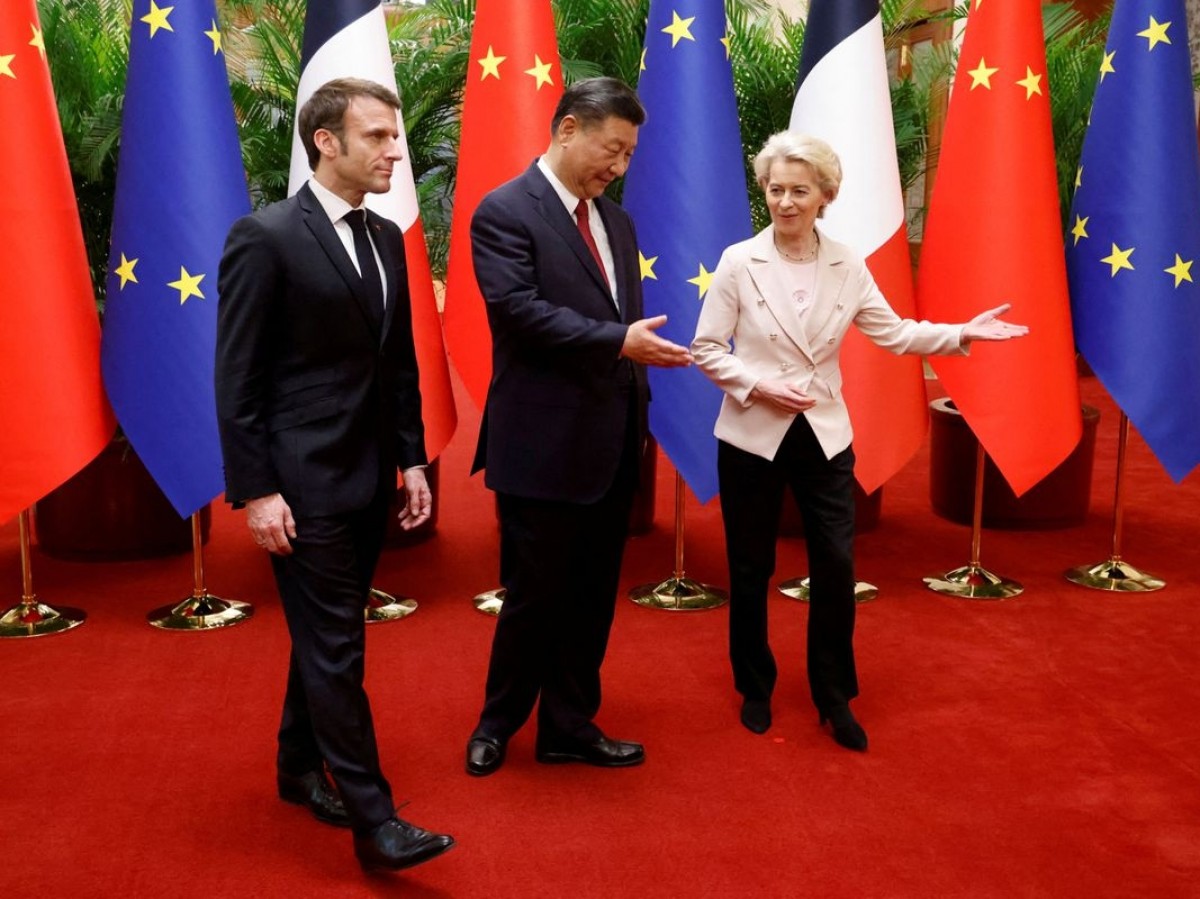
In October 2022, Xi Jinping installed an ultra-loyal CCP standing committee. In March 2023, Xi was elected President for a third term. He is the most powerful leader of the Chinese Communist Party (CCP) since Mao, and his ambitions are far-reaching to transform the domestic and global political environment. In doing so, he has effectively broken away from Deng Xiaoping’s legacy, who prioritized catching up with the West while avoiding any claims for global leadership.
As part of the education campaign, the party elite is studying 'Xi Jinping thought'. On the one hand, it is the ultimate power move by Xi. On the other hand, it is a necessity to implement the ambitious long-term goals laid out by the Chinese President.
Understanding Xi Jinping thought is crucial for CCP members to implement Xi’s political agenda. It is also relevant for anyone interacting with China, as XJP Thought will ultimately frame the rhetoric and actions of the party-state in the years to come.
[Recibe los análisis de más actualidad en tu correo electrónico o en tu teléfono a través de nuestro canal de Telegram]
While the policy shifts have been incremental, the most important event has been the 2017 National Congress of the Chinese Communist Party. Back then, the CCP redefined the so-called 'principal contradiction' from between "the ever-growing material and cultural needs of the people versus backward social production" to "unbalanced and inadequate development and the people's ever-growing needs for a better life". According to the CCP narrative, the 'principal contradiction' is what defines a society. In 1981, the redefinition of the principal contradiction provided the framework for Deng’s pragmatic reform and opening-up policy, which led to unprecedented economic growth and the international interconnectedness of China. The reinterpretation in 2017 marked a starting point for a more ideological orientation of the CCP in which the notion of 'common prosperity' trumps the focus on numbers-driven economic growth. At the same time, abstract references to 'Xi Jinping thought' emerged. There are over 30 types of Xi Jinping Thought (e.g., on diplomacy, economic development, or rule of/by law). As Xi noted pointed out during his speech at the education campaign on 3 April 2023, XJP Thought covers all realms and respects, including "reform, development, social stability, domestic affairs, foreign relations, national defense, and governance of the Party, the state, and the military."
XJP Thought can be boiled-down to the so-called 10 affirmations (十个明确), 14 commitments (十四个坚持), and achievements in 13 areas (十三个方面成就).
Accordingly, the key message of XJP Thought is CCP leadership and the core role of Xi Jinping within the CCP. In October 2022, the 'two safeguards' (两个维护) were written into the CCP Constitution, institutionalizing (1) the 'core' status of Xi Jinping within the CCP and reiterating (2) the centralized authority of the Party. Party influence over the economy and the state has increased significantly in recent years.
While XJP Thought underlines the focus on development, economic growth is pursued as a function to achieve the 2049 'China Dream of the great rejuvenation of the Chinese nation'. By 2049, China aims to become 'a fully developed nation'. The PRC is increasingly promoting the narrative of "modernization does not equal westernization" to a global audience of developing countries. A priority component of 'China’s development path' is the focus on utilizing the law to strengthen CCP leadership. Beijing is in the process of establishing a coherent legal system ('socialist rule of law with Chinese characteristics'), which reduces day-to-day arbitrariness while rejecting the concepts of independent judiciary and checks and balances as "erroneous Western thoughts". Party leadership is framed as the cardinal rule in a 'socialist rule of law with Chinese characteristics'. The international dimension of Xi Jinping Thought on the rule of law may have significant implications within the realm of international law.
Strengthening the grip of the Party over the PLA and improving the abilities of the Chinese military is the key security-related component of Xi Jinping Thought. China aims to become a global military power to safeguard China’s "sovereignty, security, and development interests".
XJP Thought also includes an explicit international dimension. For instance, Beijing aims to bolster the diplomatic front (e.g., on climate issues and conflict resolution), to build a so-called "community of shared future for mankind", Beijing’s vision of a reformed international order, without the existing biases towards the West.
Whether China will be able to implement its long-term vision remains to be seen. The Chinese leadership acts long-term oriented and strategic. It appears increasingly confident, not shying away from promoting its global ambitions as the US is switching to presidential election mode, and Europe is being preoccupied with the war in Ukraine.
ARTÍCULOS RELACIONADOS
POOL (REUTERS)

HUANG JINGWEN (EFE/EPA/XINHUA)


Moritz Rudolf
Investigador en Derecho en el 'Paul Tsai China Center' de Yale Law School
Se centra en las implicaciones del ascenso de China para el orden jurídico internacional. En 2020, completó el Segundo Examen Estatal Alemán de Derecho y obtuvo su doctorado en Derecho Internacional por la Universidad Humboldt de Berlín. Su tesis doctoral se titula "The Chinese Belt and Road Initiative - Political, Historical and International Legal Aspects". Anteriormente fue Asociado en la División Asiática del Instituto Alemán de Asuntos Internacionales y de Seguridad (SWP); Becario en el Grupo de Investigación Intlaw (KFG) "El Estado de Derecho Internacional - ¿Ascenso o Declive?", que examina el papel del Derecho Internacional en un orden global cambiante; e Investigador en el Instituto Mercator de Estudios sobre China. Ha estudiado Derecho, chino mandarín y economía en la Universidad de Heidelberg, la Universidad Humboldt de Berlín, la Universidad Tsinghua y la Universidad de Lengua y Cultura de Pekín.
Ahora en portada
17 de octubre de 2026
16 de octubre de 2026
Noticias relacionadas
Hace 182 semanas
The EU's Elusive China Policy
Hace 183 semanas
Europe’s Choice on China
Lo más leído