Jueves, 22 de octubre de 2026


INDUSTRIAL ACCELERATOR ACT
China shock 2.0: will EU leaders listen to industry?
The European Union is in the final stages of designing a new policy to face its industrial crisis. Tristan Beucler, an industry analyst at Strategic Perspectives, highlights the remaining disagreements as well as avenues to build a strong coalition to pass the Industrial Accelerator Act by the beginning of next year. The EU’s ability to manufacture its most strategic technologies and materials may depend on governments and Members of the European Parliament finding common ground.
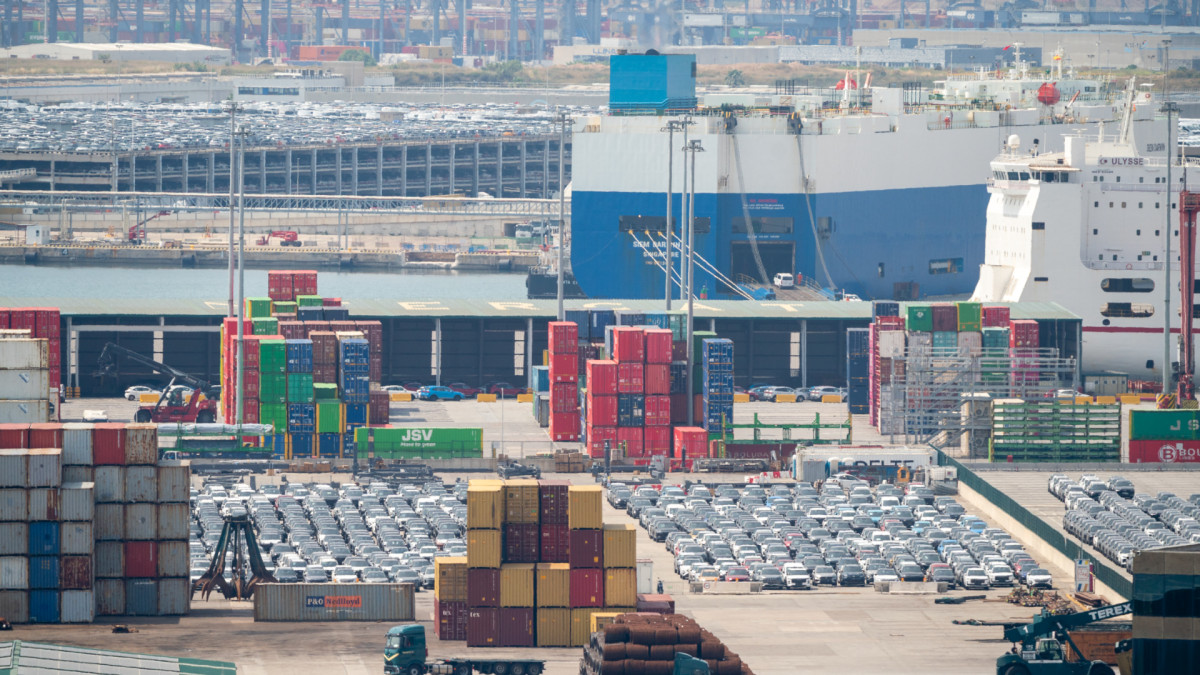
A fleet of electric cars imported from China at the Port of BarcelonaJoan Gosa / Xinhua News / Europa Press
"Some say the second China shock is looming. But it’s already here. It shows in our communities and factories across our Union". The words of the president of the European Commission, Ursula von der Leyen, during her State of the European Union speech, are a stark reminder of what is at stake when the European Union (EU) discusses industrial policy.
Chinese overcapacity is increasingly pricing out European manufacturers in the Single Market, leading to plant closures, job losses, and economic downturn. It is not just about the EU’s daily €1 billion trade deficit with China: this situation also causes potentially dangerous dependencies in some of the most strategic sectors of the EU’s economy. The EU is responding to this situation through trade and industrial policy. At the heart of this response is the Industrial Accelerator Act.
It sets out to dedicate a part of the market to low-carbon materials, such as steel, cement, and aluminium, and cleantech, such as batteries, heat pumps, or wind turbines. It does so by creating different criteria — mainly CO2 emissions during production and Made-in-Europe rules — to ensure public money supports EU-made products in certain sectors. This "lead market" policy could help address a crucial issue for the EU’s industry by creating predictable domestic demand for low-carbon materials and cleantech, lowering the pressure caused by Chinese overcapacity.
The Act has received wide-ranging support from the EU’s industrial sectors, from steelmakers to cement producers, automotive manufacturers and suppliers, cleantech companies, trade unions, and many others. Its demand signal could be crucial for some of the continent’s industrial frontrunners. Battery gigafactories, such as the PowerCo plant under construction in Sagunto (Valencia), and low-carbon steel plants, such as Hydnum in Puertollano, need predictable demand to scale up production and gain competitiveness.
The objectives of this Act, namely supporting the EU’s strategic industries through domestic demand, accelerating permitting times, and conditioning foreign investment to maximise its positive impacts, have received wide-ranging support across national governments and political parties. However, debates remain over the Act’s details, which can make or break this policy. Indeed, the industry needs a clear demand and investment signal to scale up its manufacturing in Europe — a signal that cannot come from half-measures and good intentions.
To be impactful, the Act’s Made-in-Europe definition cannot include too many countries, especially those that risk undermining the EU’s competitiveness. Reciprocal treatment of European companies in third countries is an essential factor — most of the EU’s trading partners are actively using local content policies to support their own industries. It is also crucial that measures be taken to limit the risk of circumvention and prevent dominant countries from investing in countries included in the "Made-in-Europe" definition to export to the Single Market while benefiting from public support.
The European People’s Party is showing much more division: some of its members have tabled an amendment to reject the Act altogether, while its shadow rapporteur in the Committee on Industry, Research and Energy (ITRE) is proposing amendments to reinforce it. The Spanish delegation of the party seems to be overall in favour of the Act, and is trying to strengthen its most important measures. Overall, the European Parliament is set to enter negotiations with a strong mandate in favour of an impactful Act.
In the Council, negotiations are underway to define the Made-in-Europe criteria. The lead market policy in the Act would benefit the entire European Union by creating growth and employment, especially in countries with relevant manufacturing capacity, such as Czechia, Slovenia, Slovakia, Hungary, Poland, or Germany. Almost all national governments have expressed support for the Act’s objectives, but debates continue over some of the details. Specifically, the geographical scope of Made-in-Europe criteria and some of the flexibilities present in the Commission’s proposal are at the centre of negotiations. Spain has played a crucial role in this discussion. As a major cleantech industrial hub, the country has much to gain from the Industrial Accelerator Act.
A preliminary Franco-German agreement on the automotive part of the Act has been reached. Drafts indicate that both countries have found common ground around strict Made-in-Europe criteria, with an option to opt in additional countries. This agreement could unlock the next steps towards adopting the Act, provided it ensures support for strategic parts of the value chain (including batteries), and broadens its approach to the other sectors of the Act.
Chinese overcapacity is increasingly pricing out European manufacturers in the Single Market, leading to plant closures, job losses, and economic downturn. It is not just about the EU’s daily €1 billion trade deficit with China: this situation also causes potentially dangerous dependencies in some of the most strategic sectors of the EU’s economy. The EU is responding to this situation through trade and industrial policy. At the heart of this response is the Industrial Accelerator Act.
"Chinese overcapacity is increasingly pricing out European manufacturers in the Single Market"This Act is this mandate’s most important piece of legislation for the EU’s strategic industries. Its objective is to condition access to EU taxpayer money, through public procurement and other forms of support (bonuses, social leasing schemes, auctions), on a degree of local production. It focuses on a limited number of strategic sectors, including steel, cement, electric vehicles, and cleantech.
It sets out to dedicate a part of the market to low-carbon materials, such as steel, cement, and aluminium, and cleantech, such as batteries, heat pumps, or wind turbines. It does so by creating different criteria — mainly CO2 emissions during production and Made-in-Europe rules — to ensure public money supports EU-made products in certain sectors. This "lead market" policy could help address a crucial issue for the EU’s industry by creating predictable domestic demand for low-carbon materials and cleantech, lowering the pressure caused by Chinese overcapacity.
The Act has received wide-ranging support from the EU’s industrial sectors, from steelmakers to cement producers, automotive manufacturers and suppliers, cleantech companies, trade unions, and many others. Its demand signal could be crucial for some of the continent’s industrial frontrunners. Battery gigafactories, such as the PowerCo plant under construction in Sagunto (Valencia), and low-carbon steel plants, such as Hydnum in Puertollano, need predictable demand to scale up production and gain competitiveness.
"Its demand signal could be crucial for some of the continent’s industrial frontrunners"The Act is also set to include measures to accelerate permitting for industrial plants in selected sectors and to condition certain foreign direct investments (FDI), ensuring that they create local jobs and technology transfers, and lead to shared ownership. A good example is the Stellantis-CATL joint venture in Zaragoza, which is built on a 50-50 ownership structure and plans to employ 4,000 local workers. The European Commission’s proposal, published in March, is currently being negotiated in the European Parliament and in the Council. Adoption could take place in late 2026 or during 2027.
The objectives of this Act, namely supporting the EU’s strategic industries through domestic demand, accelerating permitting times, and conditioning foreign investment to maximise its positive impacts, have received wide-ranging support across national governments and political parties. However, debates remain over the Act’s details, which can make or break this policy. Indeed, the industry needs a clear demand and investment signal to scale up its manufacturing in Europe — a signal that cannot come from half-measures and good intentions.
"The industry needs a clear demand and investment signal to scale up its manufacturing in Europe — a signal that cannot come from half-measures and good intentions"The Commission’s proposal, made in March 2026, is a clear result of political compromise which got in the way of industrial impact. Indeed, it proposes many flexibilities, limits its main measures to a very small part of the market, and extends its Made-in-Europe criteria to a broad set of third countries. This risks leading to a weak text with limited impact on demand, encouraging investment in third countries rather than in the EU.
What does "Made in Europe" mean under the new law?
One point in particular has been at the heart of debates: the geographical scope of the Act. Determining which countries should be included in the "Made-in-Europe" definition is proving far from easy, as some governments would like all trading partners included, while others would like to limit the definition to EU countries. The current proposal would include the 27 EU countries, along with countries that have signed a free trade agreement or a customs union agreement with the EU, or are parties to the WTO’s Agreement on Government Procurement, depending on the type of public intervention and the applicable conditions. In total, around 90 countries.To be impactful, the Act’s Made-in-Europe definition cannot include too many countries, especially those that risk undermining the EU’s competitiveness. Reciprocal treatment of European companies in third countries is an essential factor — most of the EU’s trading partners are actively using local content policies to support their own industries. It is also crucial that measures be taken to limit the risk of circumvention and prevent dominant countries from investing in countries included in the "Made-in-Europe" definition to export to the Single Market while benefiting from public support.
"To be impactful, the Act’s Made-in-Europe definition cannot include too many countries, especially those that risk undermining the EU’s competitiveness"Indeed, Chinese foreign direct investment has been skyrocketing in certain countries of the EU’s neighbourhood in recent years, such as Morocco, Serbia and Turkey, particularly in sectors covered by the Industrial Accelerator Act. This could pose a risk that Chinese companies produce batteries, EVs, and other cleantech in these countries for export to the EU, thus weakening the policy.
Negotiations in the European Parliament and Council
The co-legislators, namely the European Parliament and Council, are now preparing their negotiating positions on the text. In the European Parliament, the draft report written by members of the Socialists & Democrats, Renew, and Greens groups contains many measures meant to reinforce the Act. Amendments tabled by the different groups indicate broad alignment among the centrist parties on the Act’s priorities.The European People’s Party is showing much more division: some of its members have tabled an amendment to reject the Act altogether, while its shadow rapporteur in the Committee on Industry, Research and Energy (ITRE) is proposing amendments to reinforce it. The Spanish delegation of the party seems to be overall in favour of the Act, and is trying to strengthen its most important measures. Overall, the European Parliament is set to enter negotiations with a strong mandate in favour of an impactful Act.
In the Council, negotiations are underway to define the Made-in-Europe criteria. The lead market policy in the Act would benefit the entire European Union by creating growth and employment, especially in countries with relevant manufacturing capacity, such as Czechia, Slovenia, Slovakia, Hungary, Poland, or Germany. Almost all national governments have expressed support for the Act’s objectives, but debates continue over some of the details. Specifically, the geographical scope of Made-in-Europe criteria and some of the flexibilities present in the Commission’s proposal are at the centre of negotiations. Spain has played a crucial role in this discussion. As a major cleantech industrial hub, the country has much to gain from the Industrial Accelerator Act.
A preliminary Franco-German agreement on the automotive part of the Act has been reached. Drafts indicate that both countries have found common ground around strict Made-in-Europe criteria, with an option to opt in additional countries. This agreement could unlock the next steps towards adopting the Act, provided it ensures support for strategic parts of the value chain (including batteries), and broadens its approach to the other sectors of the Act.
"This agreement could unlock the next steps towards adopting the Act, provided it ensures support for strategic parts of the value chain (including batteries)"Both the Commission and the Council have announced their wish to wrap up negotiations on this Act before the end of the year. While that deadline is not necessarily realistic, it is clear that the EU wants to adopt an Industrial Accelerator Act in the coming months. This regulation is being discussed at a crossroads moment for the EU’s strategic industries. Its final form and adoption can make a big difference to the business case for investing and manufacturing in the EU in the coming decade. With 2027 being a year of national elections, there is a pressing deadline to adopt an impactful industrial policy urgently needed by the EU’s strategic industries.
Tristan Beucler
Analista industrial en Strategic Perspectives
Es analista industrial en el 'think tank' europeo Strategic Perspectives. Anteriormente fue responsable de políticas públicas en Cleantech for France, donde representó al sector de las tecnologías limpias en París y Bruselas. También ha trabajado en el Parlamento Europeo y en el Ministerio Federal de Asuntos Exteriores de Alemania.
Ahora en portada
22 de octubre de 2026
22 de octubre de 2026
21 de octubre de 2026
Noticias relacionadas
Hace una hora
¿Está Europa preparada para responder a la industria china?
Hace 6 semanas
¿Puede la UE reanimar su industria? Las claves de su nuevo plan
Hace 25 semanas