Viernes, 16 de octubre de 2026




LÓPEZ PLANA'S EUROPEAN COMPASS
What Trump’s voters can explain to European leaders
In his weekly column, the editor and director of 'Agenda Pública' reflects on a study entitled 'Beyond MAGA' to better comprehend the foreign policy of the United States. According to Marc López Plana, Trump should no longer be interpreted as a political anomaly. Instead, we should understand that transformations within U.S. society are conditioning Trump’s international policy, challenging European perceptions of stability and alliance.

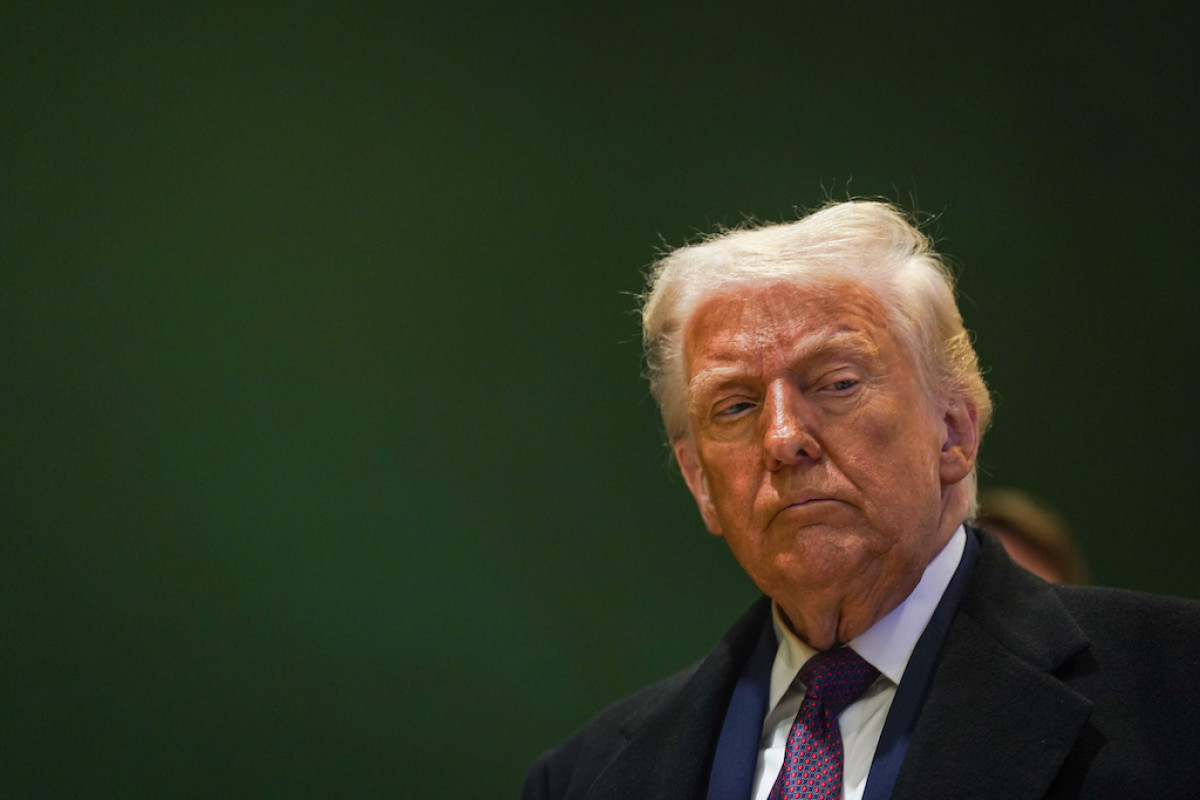
U.S. President Donald Trump after his meeting with Ukrainian President Volodymyr Zelensky at Davos.Peng Ziyang / Xinhua News / ContactoPhoto
Do European elites understand Trump?, I recently asked Giuliano Da Empoli. "Not only do we fail to fully understand his logic, but, as we have seen during his year in power, the idea also persists among European leaders that they are somehow smarter than he is", he replied. I would add that the defeat after Trump’s first term led European leaders to interpret US politics as a succession of cycles: phases of stability interrupted by episodes of disruption that the system itself would ultimately correct. Trumpism was thus read as an anomaly, a personalistic accident in an essentially liberal trajectory.
This diagnosis fits with a well-established literature that challenges the idea of a foreign policy autonomous from public opinion. Voters’ attitudes are neither erratic nor irrelevant: they display relatively stable patterns that delimit what is politically feasible in advanced democracies. Leaders do not act in a vacuum: they interpret, aggregate and, at times, amplify pre-existing social dispositions. Trump is not an exception to this logic; he is its most visible expression.
Only a minority of Trump voters consider that identity central to their political life. Trumpism functions as an ecosystem. A radical core pushes the limits of discourse and institutional practice; intermediary sectors—cultural conservatives and traditional Republicans—legitimise and normalise that shift; and a more reluctant right remains within the coalition out of rejection of Democrats and fear of social decline. The result is not an abrupt rupture of the democratic order, but a gradual drift in which the exceptional progressively becomes acceptable.
European leaders should not diagnose the risk by looking to the extremes. In fact, the study suggests that the stability of the project lies in intermediary sectors that share the crisis frame even if they disagree on methods. For these voters, alliances are not communities of values, but contractual arrangements assessed in terms of immediate cost-benefit. This social disposition structurally limits the room for manoeuvre of any US administration, even those that speak a more cooperative language.
This logic helps explain the recent evolution of transatlantic relations. Support for Ukraine is increasingly reframed in terms of domestic cost, social fatigue and a visible strategic return. Trade policy is justified less by global efficiency and more by national protection and economic sovereignty. Multilateral institutions are judged by their alignment with US interests, not by their normative legitimacy. Even when the diplomatic tone is conciliatory, the underlying logic has become more conditional and less predictable.
What is new about the current moment is the convergence of internal polarisation, a perception of decline and the delegitimation of the liberal international order. That convergence reduces political incentives to sustain global public goods whose benefits are not immediately visible to the electorate.
The cultural component of trumpism reinforces this difficulty. The war against "the woke"—which the study identifies as the coalition’s main symbolic glue—is not a marginal dispute. It is a moral framework through which institutions, adversaries and allies are evaluated. In that context, Europe is perceived not as a natural partner, but as a decadent space—normatively hostile and politically dysfunctional. This perception does not prevent cooperation, but it makes it more fragile and more vulnerable to the internal swings of US politics.
Generational data add another layer of concern. Among young trumpist voters, a greater acceptance of social hierarchies is emerging, alongside a growing willingness to relativise judicial authority. The erosion of attachment to liberal checks and balances is not only reactive or temporary; it is a trend likely to reproduce over time. For Europe, this weakens the expectation that simple demographic turnover will automatically restore a more predictable America.
For decades, Europe’s strategic comfort rested on the idea of American exceptionalism: the conviction that, when push came to shove, the US system would always self-correct. Today, that conviction is increasingly untenable. The United States Europe is dealing with is not temporarily off course; it is structurally different. Adjusting to that reality will be uncomfortable. Not doing so will, predictably, be far more costly.
"Europe’s mistake has been to read trumpism as an anomaly, a personalistic accident in an essentially liberal trajectory"The study Beyond MAGA, by More in Common, recently published, forces Europeans to abandon that analytical comfort for good. What it describes is a durable transformation of American society, with structural implications for the country’s foreign policy and, by extension, for Europe.
This diagnosis fits with a well-established literature that challenges the idea of a foreign policy autonomous from public opinion. Voters’ attitudes are neither erratic nor irrelevant: they display relatively stable patterns that delimit what is politically feasible in advanced democracies. Leaders do not act in a vacuum: they interpret, aggregate and, at times, amplify pre-existing social dispositions. Trump is not an exception to this logic; he is its most visible expression.
A mass coalition
The main lesson of the study goes beyond the radicalism of Trump’s hard core to reach the breadth and stability of the coalition that sustains him. Trumpism has become a mass coalition—heterogeneous and functional—held together less by a closed ideology than by a shared emotional diagnosis: the perception that the United States is undergoing a profound national crisis—economic, cultural, moral and security—and that the ordinary rules of politics are no longer sufficient to confront it. That sense of existential threat activates latent preferences for order, strong leadership and institutional exceptionalism. Beyond MAGA confirms that this pattern is not confined to a marginal segment of the electorate. It runs through a large part of the trumpist coalition, including sectors that see themselves as moderate and pragmatic."The problem is no longer what the next US president will do, but what kind of society now conditions Washington’s decisions"For European leaders, this point is decisive. The problem is no longer what the next US president will do, but what kind of society now conditions Washington’s decisions. A society that normalises political exceptionalism as a legitimate response to a crisis perceived as total will hardly sustain a stable foreign policy—normatively coherent and grounded in long-term commitments. Domestic exceptionalism tends, almost inevitably, to project outward.
Only a minority of Trump voters consider that identity central to their political life. Trumpism functions as an ecosystem. A radical core pushes the limits of discourse and institutional practice; intermediary sectors—cultural conservatives and traditional Republicans—legitimise and normalise that shift; and a more reluctant right remains within the coalition out of rejection of Democrats and fear of social decline. The result is not an abrupt rupture of the democratic order, but a gradual drift in which the exceptional progressively becomes acceptable.
Transactional unilateralism
From the standpoint of foreign policy, this drift is consistent with what the recent literature on populism and international relations has described with precision. Populism does not necessarily produce isolationism, but rather a form of transactional unilateralism: hostility toward rules, intermediaries and multilateral institutions, combined with a willingness to use power directly and asymmetrically. This framework helps explain why trumpist foreign policy combines the rejection of "endless wars" with the acceptance of sanctions, threats, economic pressure or selective uses of force. This is not incoherence—on the contrary: it is a logic centred on identity protection and the minimisation of visible costs for the electoral base."Trump’s transactional unilateralism focuses on identity protection and the minimisation of visible costs for the electoral base"Trump does not create his electorate’s preferences out of nothing; he orders them, amplifies them and translates them into government action. His main contribution is institutional: he reduces the normative and bureaucratic filters that traditionally cushioned the direct influence of public opinion on foreign policy. Rather than correcting those preferences, he turns them into an explicit political mandate.
European leaders should not diagnose the risk by looking to the extremes. In fact, the study suggests that the stability of the project lies in intermediary sectors that share the crisis frame even if they disagree on methods. For these voters, alliances are not communities of values, but contractual arrangements assessed in terms of immediate cost-benefit. This social disposition structurally limits the room for manoeuvre of any US administration, even those that speak a more cooperative language.
This logic helps explain the recent evolution of transatlantic relations. Support for Ukraine is increasingly reframed in terms of domestic cost, social fatigue and a visible strategic return. Trade policy is justified less by global efficiency and more by national protection and economic sovereignty. Multilateral institutions are judged by their alignment with US interests, not by their normative legitimacy. Even when the diplomatic tone is conciliatory, the underlying logic has become more conditional and less predictable.
What is new about the current moment is the convergence of internal polarisation, a perception of decline and the delegitimation of the liberal international order. That convergence reduces political incentives to sustain global public goods whose benefits are not immediately visible to the electorate.
"The convergence of internal polarisation, a perception of decline and the delegitimation of the liberal order reduces incentives to sustain global public goods if there is no benefit immediately visible to the electorate"Europe has reacted to this shift with a mix of rhetoric and ambivalence. Strategic autonomy has become a central concept in European discourse, but its practical translation remains limited and uneven. Increased defence spending has not eliminated structural dependence on US security guarantees. More worrying still is the cognitive lag: the persistence of a reading that interprets US volatility as cyclical—correctable with the right electoral turnover—rather than as the reflection of a durable reconfiguration of public opinion. The vice-president of the European Parliament, Javi López, is right to call for an end to the policy of appeasement with the United States: "the strategy we followed last year—appeasement—has failed".
The cultural component of trumpism reinforces this difficulty. The war against "the woke"—which the study identifies as the coalition’s main symbolic glue—is not a marginal dispute. It is a moral framework through which institutions, adversaries and allies are evaluated. In that context, Europe is perceived not as a natural partner, but as a decadent space—normatively hostile and politically dysfunctional. This perception does not prevent cooperation, but it makes it more fragile and more vulnerable to the internal swings of US politics.
Generational data add another layer of concern. Among young trumpist voters, a greater acceptance of social hierarchies is emerging, alongside a growing willingness to relativise judicial authority. The erosion of attachment to liberal checks and balances is not only reactive or temporary; it is a trend likely to reproduce over time. For Europe, this weakens the expectation that simple demographic turnover will automatically restore a more predictable America.
What Europe still refuses to see
European leaders should expect greater volatility, less diplomatic patience and a growing willingness in Washington to apply economic or strategic pressure even on formal allies."Trump acts as an institutional translator of pre-existing social dispositions, aligning foreign policy and public opinion in a way that reduces the room for classical liberal internationalism"Trump is not the cause of this transformation, but its most effective political vehicle. He acts as an institutional translator of pre-existing social dispositions, aligning foreign policy and public opinion in a way that reduces the room for classical liberal internationalism. For Europe, the challenge is to adapt to an American society that no longer sustains—by a majority—the basic assumptions of the liberal international order.
For decades, Europe’s strategic comfort rested on the idea of American exceptionalism: the conviction that, when push came to shove, the US system would always self-correct. Today, that conviction is increasingly untenable. The United States Europe is dealing with is not temporarily off course; it is structurally different. Adjusting to that reality will be uncomfortable. Not doing so will, predictably, be far more costly.
Ahora en portada
16 de octubre de 2026
16 de octubre de 2026
16 de octubre de 2026
Noticias relacionadas
Hace 37 semanas
Lo que los votantes de Trump explican a los líderes europeos
Hace 38 semanas
Estados Unidos (de Europa) para hacer frente a Estados Unidos (de América)
Lo más leído