Viernes, 16 de octubre de 2026




ASIA
Deciphering the conflict between India and Pakistan
Political analyst Niranjan Marjani examines tensions between India and Pakistan in the aftermath of Operation Sindoor. He warns of the risk of escalation and stresses that the instability stems from Pakistan's support for terrorism, despite an international context favourable to India and Pakistan's domestic weaknesses.
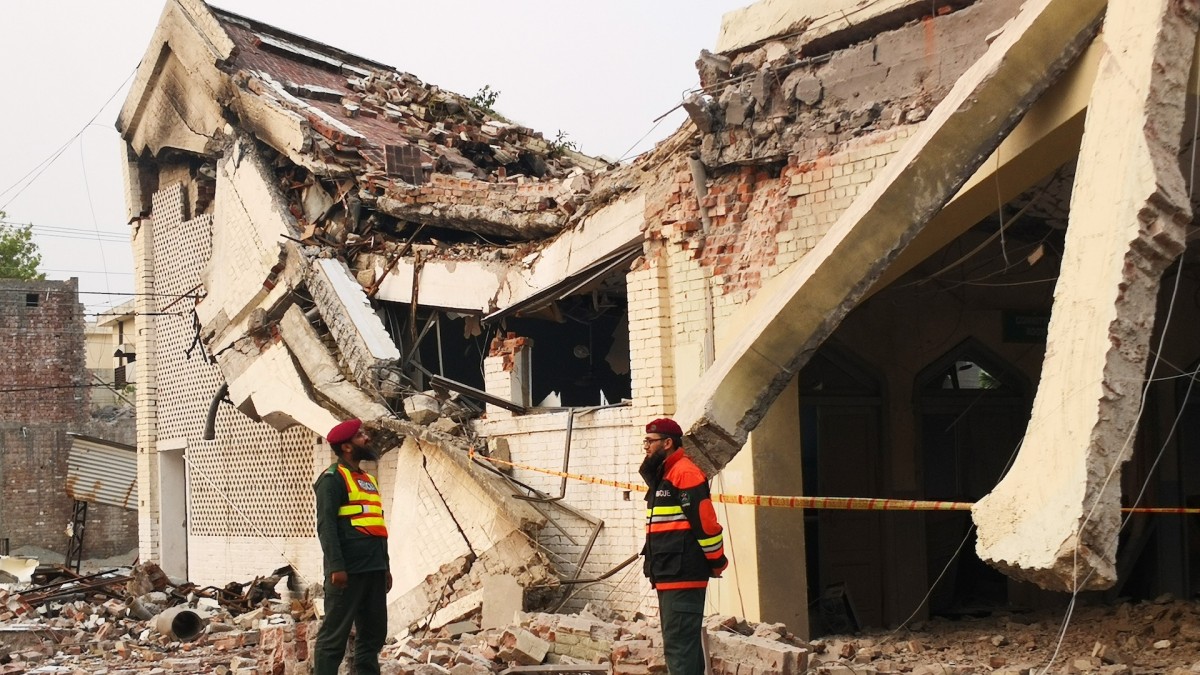
Rescuers examine a building destroyed by an Indian missile attack in Muridke, near Lahore, Pakistan.Jamil Bhatti / Xinhua News / ContactoPhoto
In the early hours of May 7, India's military carried out precision strikes against nine locations across Pakistan and Pakistan-Occupied Kashmir (POK). These nine locations were identified as terror hubs and terror launch pads by the Indian military and intelligence agencies. In the operation that lasted twenty-five minutes, forty missiles were fired on nine locations in which at least seventy terrorists are believed to be killed.
This operation, named Operation Sindoor, came in the wake of a Pakistan-sponsored terrorist attack in Pahalgam on April 22 in which terrorists killed twenty-six tourists after confirming they were Hindus. The name Sindoor is chosen to represent the tragedy that befell the Hindu tourists on April 22. Sindoor is vermilion, a red coloured powder that married Hindu women usually apply in their hair. On April 22, the terrorists not only segregated Hindus from the Muslims, they also segregated husbands from their wives. These husbands were then killed at point-blank range in front of their wives. The name Sindoor is a tribute to all those women who lost their husbands in this attack. Symbolically, it means that the terrorists wiped off Sindoor from these women, indicating that the women were widowed.
India's military strikes against Pakistan have given the impression that there could be escalation of conflict which could spread across South Asia and beyond. It is necessary to consider three perspectives.
Second, in continuation of the first point. The Pakistani government will be under pressure from its own citizens to take some action in response to these strikes. While not totally undermining the strength of the Pakistani armed forces, the question is how much Pakistan is prepared to sustain an escalated conflict with India. The reason being at present there are several flashpoints inside Pakistan. There is widespread unrest in provinces like Balochistan, Khyber Pakhtunkhwa and Sindh. Pakistan's armed forces are regularly sustaining losses against the Baloch insurgents. In the past couple of years, Tehreek-e-Taliban Pakistan (TTP), an organization supported by the Afghan Taliban, are carrying out attacks against Pakistan at various locations inside and outside of Khyber Pakhtunkhwa. Despite these limitations, Pakistan has been continuously violating the ceasefire at the border with India. Also, Pakistan's attempts to carry out aerial attacks against India following the May 7 strikes were neutralized by Indian defence forces.
Another point from the international perspective is that China may be hesitant in case the conflict escalates. The reason being should Islamabad use defence equipment purchased from Beijing and if New Delhi gains an upper hand in the conflict, it could expose the limitations of Chinese equipment, which could impact China's defence exports. Already there are reports of Pakistan's JF-17 aircraft being shot down. Moreover, Chinese-made HQ-9 air defence missile system failed to intercept a single missile from India.
Further, India being one of the top economies in the world is a preferred partner for most countries. The Gulf States, once supporting Pakistan, have shown little enthusiasm in supporting Islamabad. The Gulf States are now India’s close strategic and economic partners. India recently concluded a free trade agreement with the United Kingdom. India is in talks for a similar deal with the United States and the European Union. The Gulf Cooperation Council is also interested in a trade deal with India. This implies has India has leverage at the international level since many countries are now major stakeholders in the Indian economy. In the case of a full-blown conflict, India is likely to receive more international support than Pakistan.
This operation, named Operation Sindoor, came in the wake of a Pakistan-sponsored terrorist attack in Pahalgam on April 22 in which terrorists killed twenty-six tourists after confirming they were Hindus. The name Sindoor is chosen to represent the tragedy that befell the Hindu tourists on April 22. Sindoor is vermilion, a red coloured powder that married Hindu women usually apply in their hair. On April 22, the terrorists not only segregated Hindus from the Muslims, they also segregated husbands from their wives. These husbands were then killed at point-blank range in front of their wives. The name Sindoor is a tribute to all those women who lost their husbands in this attack. Symbolically, it means that the terrorists wiped off Sindoor from these women, indicating that the women were widowed.
India's military strikes against Pakistan have given the impression that there could be escalation of conflict which could spread across South Asia and beyond. It is necessary to consider three perspectives.
"If Pakistan were to take any retaliatory action against India, the question is against whom Pakistan will strike"First, if Pakistan were to take any retaliatory action against India, the question is against whom Pakistan will strike. For India, terror camps inside Pakistan and the POK were the clear targets. For Pakistan, there are no such targets inside India. Should Pakistan decide on launching a military attack it would be against Indian military or against Indian civilians. India's strikes did not target Pakistan’s military and civilians. Any attack against Indian military or civilians from Pakistan's side could lead to escalation of conflict as India too would hit back, this time engaging directly with the Pakistani military.
Second, in continuation of the first point. The Pakistani government will be under pressure from its own citizens to take some action in response to these strikes. While not totally undermining the strength of the Pakistani armed forces, the question is how much Pakistan is prepared to sustain an escalated conflict with India. The reason being at present there are several flashpoints inside Pakistan. There is widespread unrest in provinces like Balochistan, Khyber Pakhtunkhwa and Sindh. Pakistan's armed forces are regularly sustaining losses against the Baloch insurgents. In the past couple of years, Tehreek-e-Taliban Pakistan (TTP), an organization supported by the Afghan Taliban, are carrying out attacks against Pakistan at various locations inside and outside of Khyber Pakhtunkhwa. Despite these limitations, Pakistan has been continuously violating the ceasefire at the border with India. Also, Pakistan's attempts to carry out aerial attacks against India following the May 7 strikes were neutralized by Indian defence forces.
"Pakistan lacks the international support that India has"Third is the international angle. Overall, the international opinion in this entire incident has favoured India. India’s close partners like the United States, Russia, Israel, France, and the European Union have supported India in the fight against terrorism. While some did express concern over rising tensions between the two neighbours, in general, India has not attracted any condemnation. Pakistan, on the other hand, lacks the international support that India has. A few countries like Türkiye, Malaysia, and Azerbaijan have backed Pakistan. China, Pakistan's all-weather friend, has given a measured response, urging both the sides to resolve all the disputes peacefully.
Another point from the international perspective is that China may be hesitant in case the conflict escalates. The reason being should Islamabad use defence equipment purchased from Beijing and if New Delhi gains an upper hand in the conflict, it could expose the limitations of Chinese equipment, which could impact China's defence exports. Already there are reports of Pakistan's JF-17 aircraft being shot down. Moreover, Chinese-made HQ-9 air defence missile system failed to intercept a single missile from India.
Further, India being one of the top economies in the world is a preferred partner for most countries. The Gulf States, once supporting Pakistan, have shown little enthusiasm in supporting Islamabad. The Gulf States are now India’s close strategic and economic partners. India recently concluded a free trade agreement with the United Kingdom. India is in talks for a similar deal with the United States and the European Union. The Gulf Cooperation Council is also interested in a trade deal with India. This implies has India has leverage at the international level since many countries are now major stakeholders in the Indian economy. In the case of a full-blown conflict, India is likely to receive more international support than Pakistan.
"It is important that the international community too stands with India and unequivocally build pressure on Pakistan not to engage in promoting proxy war through support to terrorists"The recent tensions between India and Pakistan are a reason for concern for South Asia as well as the world. However, it is significant that the international community too stands with India and unequivocally builds pressure on Pakistan not to engage in promoting proxy war through support to terrorists. Constant support to terrorism from Pakistan to create security concerns inside India are the real causes of instability that could impact the region and the world.

Niranjan Marjani
Analista político residente
Fellow en Kalinga Institute of Indo-Pacific Studies. Sus áreas de especialización son las relaciones internacionales y la geopolítica. Escribe artículos para publicaciones nacionales e internacionales. Sus artículos se centran principalmente en el ángulo estratégico de la política internacional. Escribe artículos en español, ingles e hindi. Anteriormente trabajaba como el presentador de noticias en All India Radio, Pune. Máster en Ciencias Políticas (IGNOU, Nueva Delhi, India) y Diploma en Periodismo (Universidad de Pune, Pune, India).
Ahora en portada
16 de octubre de 2026
16 de octubre de 2026
16 de octubre de 2026
Noticias relacionadas
Hace 102 semanas
Pedro Sánchez's mission in India: How Spain aims to balance strategic interests in Asia
Lo más leído