Sábado, 10 de octubre de 2026




OPEN LETTER
The response to The Economist from the first Prince of Asturias Professor in the US: "your own research places Spain in a strong democratic position".
Jesús M. de Miguel responds to the article 'Pedro Sánchez clings to office at a cost to Spain's democracy'. The first Prince of Asturias professor, in the United States, argues that the weekly magazine assumes the ideas of the Spanish right and far-right, failing in its obligation to provide complete and contrasted information. For him, the danger to democracy does not come from Sánchez remaining in power, but from the fierce struggle between the government coalition and the opposition.
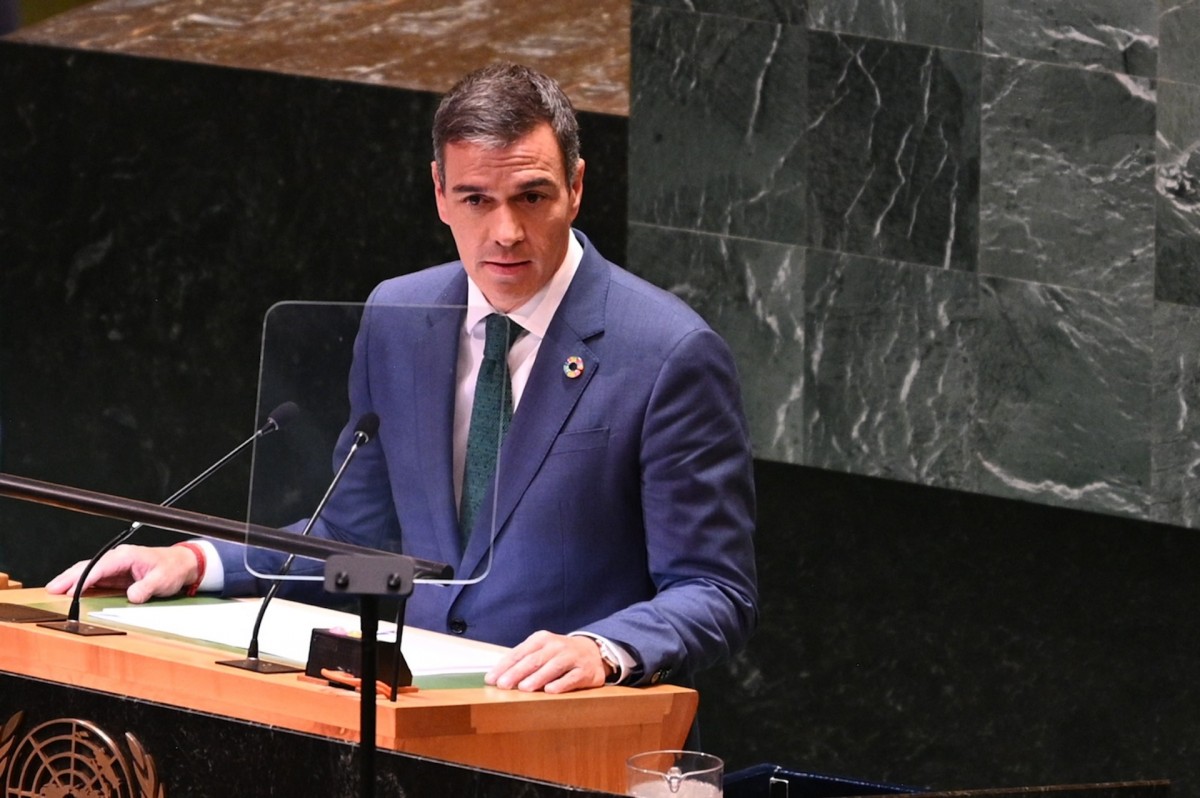
Pedro Sánchez before the UN General Assembly, in its 79th session, New York City.Borja Puig de la Bellacasa /Europa Press/ContactoPhoto
I am a long-time subscriber to The Economist. The magazine provides superb information on what is happening in the world. But it tends to take a relatively conservative stance. I consider its intellectual attitude to China and Russia to be politically correct. Last week, for example, I read meticulously their extensive article on Hong Kong, as well as a shorter one on the adoption of Chinese girls.
However, the news it usually publishes on Spain could be improved. I think they fail to understand our country, and they also adopt irresponsible positions.
The Economist publishes an annual analysis of democracy in the world —the Democracy Index— carried out by its own organisation, The Economist Intelligence Unit. It is an excellent source of information. These studies currently place Spain among the best democracies in the world. In this they coincide with what is surely the world's best study on democracy, the Swedish V-Dem Institute (Varieties of Democracy). In both, Spain's position is the 23rd best in the world. There is therefore no doubt that Spain is currently a fully democratic country. Moreover, its economy is doing well, with the exception of a traditionally high unemployment rate, which is gradually coming down.
To air unfounded suspicions is irresponsible. On the 3rd of October, The Economist published an article suggesting that Spanish Prime Minister Pedro Sánchez is clinging to power "at the cost of Spain's democracy". The problem is that the article uses the arguments of the opposition, the Popular Party (PP) and the far-right Vox [Editor's note: Vox admits to having received 9.2 million from a Hungarian bank close to Orbán], without rationally judging what is going on. It takes hoaxes as facts, disinformation as reality. It adopts the position of the right and far right. It is true that the current central government in Spain is based on a coalition of parties, sometimes unstable. But in Europe this is becoming more and more common. It does not diminish a country's democracy if it is based on a coalition government. Very dominant governments can sometimes tend dangerously towards autocratic measures. Democracy is therefore very much based on balance and criticism.
The problem is rather that in Spain the opposition party —the Popular Party— fails to be truly popular. Even if it were to join forces with a far-right party with Francoist overtones —the Vox party— it cannot achieve an alternative parliamentary majority to carry out a vote of no confidence in the current government. But it is close, and this encourages it to pursue a dog-faced opposition policy, constantly attacking, always voting against it (even when it could favour it), and constantly creating hoaxes. It is a conservative opposition (with alliances with the far right) but not very effective.
The reality of the country is that the economy is doing very well. Moreover, peripheral nationalism (Catalan and Basque) is much calmer. They are still there, and will continue to be, but at least they negotiate, appear in Congress, and present their demands. Catalonia now has a president of the Generalitat, Salvador Illa, a socialist. The measures taken by the central democratic government have been risky. But they have worked. They are the amnesty and the promotion of a reform of the economic resources of the peripheral nationalities.
What is keeping the right-wing opposition awake at night is the insistence that the current democratic government intends to continue until the natural end of the legislature. The pressure is on to call general elections, to see if the right and the far right have better luck. The Centre for Sociological Research (colloquially ‘Tezanos’) gives them hope one day and takes it away the next. In the meantime the assault on power by every conceivable means, as expressed by former Prime Minister José María Aznar, is continuous. The current government is resisting.
Meanwhile the right wing of the PP must make a clearer decision on whether or not to adopt the extravagant demands of the far right. In this respect, the PP has been shifting its opinion. For a few months the PP adopted the demands of the far-right Vox, and even of the brand new far-right party Se Acabó la Fiesta (sic). In recent weeks, disoriented by their ineffectiveness, they have decided to go on a different offensive. Now the PP is trying to present some policies in social areas such as housing, employment, and education. But the problem is that the right has traditionally opposed almost all improvements in these areas. Their current alternatives are therefore not very credible. After failing again they will probably change their strategy.
The Economist article's argument is that of the conservative and far-right opposition. It presents the same hoaxes, misinformation, and opinions of the opposition. This is not responsible journalism. Complete information should be provided, not hoaxes and lies. It is irresponsible for The Economist to take such positions. Responsible journalism should inform, not take sides. On the other hand, I cannot imagine —personally— what a right-wing coalition government in Spain would be like, with the ultra-right and the Catalan independentists. Does The Economist seriously think that this would be a more democratic solution for Spain? On the other hand, how does this article justify the Economist Intelligence Unit's own democracy studies that place Spain in such a good democratic position?
True, democracy in Spain seems fragile, given the infighting between the current progressive government and the conservative (and ultra) opposition. But the problem cannot be blamed on Pedro Sánchez's desire to cling to power. He is not clinging: he is the democratically elected Prime Minister. On the other hand, if he did not hold on, perhaps the situation would be much worse: a right-wing government in coalition with the far-right Vox, and perhaps with the Catalan independentists themselves. In Europe, we do not need more uncertainty or more far-right governments.
However, the news it usually publishes on Spain could be improved. I think they fail to understand our country, and they also adopt irresponsible positions.
The Economist publishes an annual analysis of democracy in the world —the Democracy Index— carried out by its own organisation, The Economist Intelligence Unit. It is an excellent source of information. These studies currently place Spain among the best democracies in the world. In this they coincide with what is surely the world's best study on democracy, the Swedish V-Dem Institute (Varieties of Democracy). In both, Spain's position is the 23rd best in the world. There is therefore no doubt that Spain is currently a fully democratic country. Moreover, its economy is doing well, with the exception of a traditionally high unemployment rate, which is gradually coming down.
To air unfounded suspicions is irresponsible. On the 3rd of October, The Economist published an article suggesting that Spanish Prime Minister Pedro Sánchez is clinging to power "at the cost of Spain's democracy". The problem is that the article uses the arguments of the opposition, the Popular Party (PP) and the far-right Vox [Editor's note: Vox admits to having received 9.2 million from a Hungarian bank close to Orbán], without rationally judging what is going on. It takes hoaxes as facts, disinformation as reality. It adopts the position of the right and far right. It is true that the current central government in Spain is based on a coalition of parties, sometimes unstable. But in Europe this is becoming more and more common. It does not diminish a country's democracy if it is based on a coalition government. Very dominant governments can sometimes tend dangerously towards autocratic measures. Democracy is therefore very much based on balance and criticism.
"The problem is rather that in Spain the Popular Party fails to be really popular"
The problem is rather that in Spain the opposition party —the Popular Party— fails to be truly popular. Even if it were to join forces with a far-right party with Francoist overtones —the Vox party— it cannot achieve an alternative parliamentary majority to carry out a vote of no confidence in the current government. But it is close, and this encourages it to pursue a dog-faced opposition policy, constantly attacking, always voting against it (even when it could favour it), and constantly creating hoaxes. It is a conservative opposition (with alliances with the far right) but not very effective.
The reality of the country is that the economy is doing very well. Moreover, peripheral nationalism (Catalan and Basque) is much calmer. They are still there, and will continue to be, but at least they negotiate, appear in Congress, and present their demands. Catalonia now has a president of the Generalitat, Salvador Illa, a socialist. The measures taken by the central democratic government have been risky. But they have worked. They are the amnesty and the promotion of a reform of the economic resources of the peripheral nationalities.
What is keeping the right-wing opposition awake at night is the insistence that the current democratic government intends to continue until the natural end of the legislature. The pressure is on to call general elections, to see if the right and the far right have better luck. The Centre for Sociological Research (colloquially ‘Tezanos’) gives them hope one day and takes it away the next. In the meantime the assault on power by every conceivable means, as expressed by former Prime Minister José María Aznar, is continuous. The current government is resisting.
"Sanchez does not hold on, he is the democratically elected Prime Minister"
Meanwhile the right wing of the PP must make a clearer decision on whether or not to adopt the extravagant demands of the far right. In this respect, the PP has been shifting its opinion. For a few months the PP adopted the demands of the far-right Vox, and even of the brand new far-right party Se Acabó la Fiesta (sic). In recent weeks, disoriented by their ineffectiveness, they have decided to go on a different offensive. Now the PP is trying to present some policies in social areas such as housing, employment, and education. But the problem is that the right has traditionally opposed almost all improvements in these areas. Their current alternatives are therefore not very credible. After failing again they will probably change their strategy.
The Economist article's argument is that of the conservative and far-right opposition. It presents the same hoaxes, misinformation, and opinions of the opposition. This is not responsible journalism. Complete information should be provided, not hoaxes and lies. It is irresponsible for The Economist to take such positions. Responsible journalism should inform, not take sides. On the other hand, I cannot imagine —personally— what a right-wing coalition government in Spain would be like, with the ultra-right and the Catalan independentists. Does The Economist seriously think that this would be a more democratic solution for Spain? On the other hand, how does this article justify the Economist Intelligence Unit's own democracy studies that place Spain in such a good democratic position?
True, democracy in Spain seems fragile, given the infighting between the current progressive government and the conservative (and ultra) opposition. But the problem cannot be blamed on Pedro Sánchez's desire to cling to power. He is not clinging: he is the democratically elected Prime Minister. On the other hand, if he did not hold on, perhaps the situation would be much worse: a right-wing government in coalition with the far-right Vox, and perhaps with the Catalan independentists themselves. In Europe, we do not need more uncertainty or more far-right governments.
.png)
Jesús M. De Miguel
Doctor en Sociología y Ciencias Políticas
Doctor en Ciencias Políticas por la Universidad Complutense y en Sociología por la Yale University. Ha ocupado la Cátedra de Estudios Españoles Príncipe de Asturias en la Georgetown University, Washington D. C.
Etiquetas
Agenda Pública in English, economía, democracia, España, medios de comunicación, PP, vox, PSOE, Pedro Sánchez Ahora en portada
10 de octubre de 2026
10 de octubre de 2026
9 de octubre de 2026