Viernes, 16 de octubre de 2026




What Does Narendra Modi’s Visit to the United States Mean?
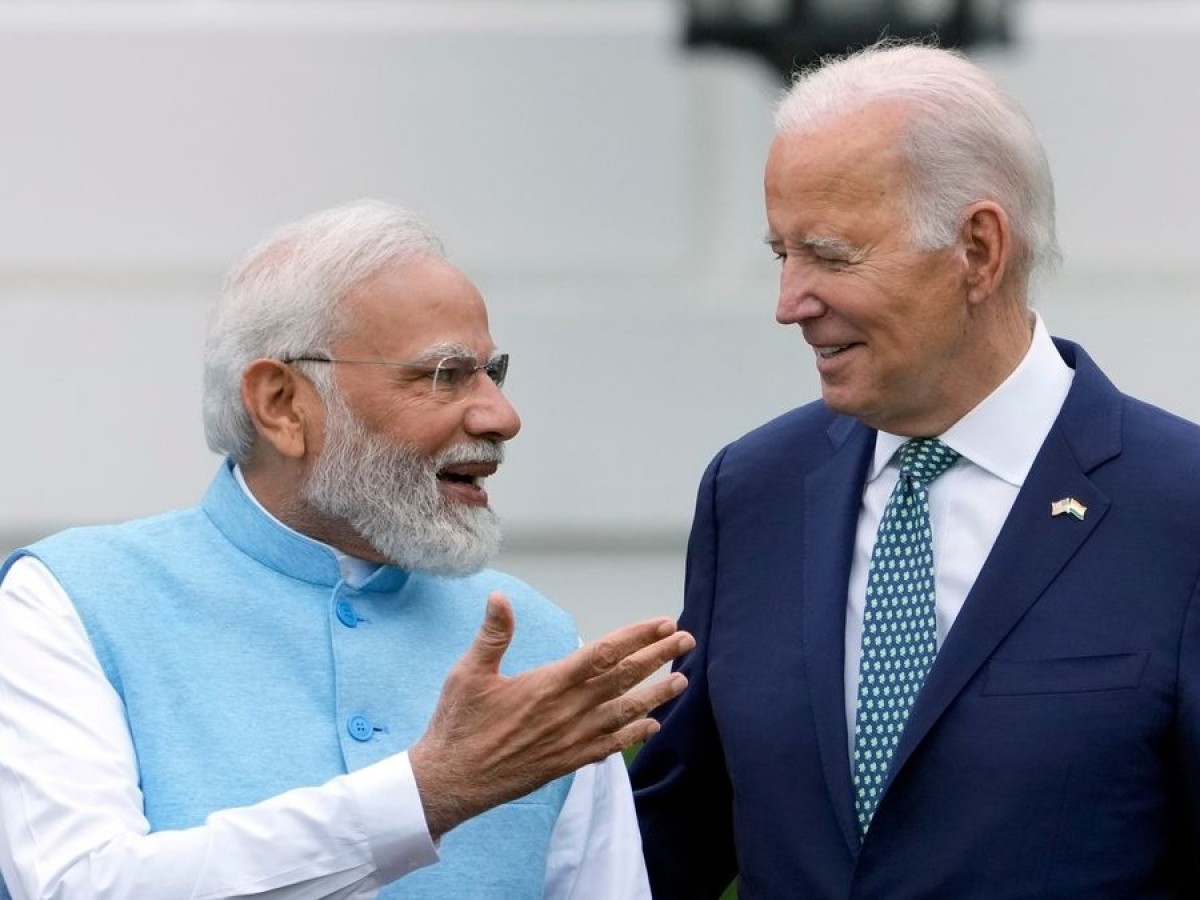
MANUEL BALCE CENETA (AP)
Indian Prime Minister Narendra Modi paid a state visit to the United States (US) from June 21-23. This was his first state visit during the 9 years in office as India’s prime minister. All his earlier visits to the US were for attending either the United Nations General Assembly or for other multilateral conferences.
During his visit, Modi also became the first Indian prime minister to address the joint session of the US Congress for the second time. He had earlier addressed the US Congress during the 2016 visit.
At the conclusion of Modi’s visit the US and India issued a joint statement focusing on the enhanced status of the India-US relations. The joint statement highlighted that the Comprehensive Global and Strategic Partnership between the two countries spans from seas to stars.
Micron Technology along with Indian Semiconductor Mission will make an investment of $800 million (which will progressively go up to $2.75 billion) to set up semiconductor assembly and test facility in India. Applied Materials will build a Semiconductor Centre for Commercialization and Innovation in India.
Modi’s visit also saw India becoming a partner of the US-led Minerals Security Partnership (MSP). This initiative is established to accelerate development of diverse and sustainable critical energy minerals global supply chains.
India and the US have also launched public-private joint forces to develop and deploy Open RAN systems and advanced telecom research and development.
India signed the Artemis Accords under which NASA will train Indian Space Research Organization astronauts to launch a joint effort to the International Space Station in 2024.
As regards to defence, General Electric in collaboration with India’s Hindustan Aeronautics Limited will jointly produce the F414 jet engine in India. India will also procure MQ-9B SeaGuardian UAVs or drones that will enhance India’s intelligence and surveillance capabilities.
Among other defence cooperation, India and the US have agreed to strengthen the undersea domain awareness. The two countries are currently negotiating a Security of Supply Arrangement and Reciprocal Defence Procurement Arrangement. This agreement will enable supply of defence goods should there be unanticipated disruptions of supply chains.
For India, there is a two-fold benefit from the defence agreements. One, the joint production initiatives would boost India’s domestic defence production. Since the past few years, India has been focusing on enhancing its defence production capabilities. Two, continuing defence cooperation with the US would allow India to reduce its dependence on Russian arms and defence technology platforms. Further, the defence cooperation would undoubtedly strengthen India’s defence systems in the view of security challenges presented by China and Pakistan.
For the US, it further shed its inhibitions about sharing or transfers of technology. For decades, the US had been viewed as an unreliable partner. However, since the past three decades, the two countries have steadily built up a strong partnership. While the ties soured in the aftermath of nuclear tests carries out by India in 1998 but the US has come to recognize India’s security challenges. Further the strategic cooperation between both was strengthened by the 2005 nuclear deal.
Also recognizing that India would not totally abandon Russia, the US has worked its way around this arrangement. The US has been making positive overtures towards India in defence sector in recent times.
A week before Modi’s visit, the US National Security Advisor Jake Sullivan travelled to India to lay the foundation of the Indian prime minister’s visit to the US. Sullivan also held talks with Modi to push forward with defence and strategic cooperation.
In the first week of June, the US Secretary of Defense Lloyd Austin visited India. Lloyd’s visit resulted in conclusion of a Roadmap for US-India Defense Industrial Cooperation. This roadmap will fast-track technology cooperation and co-production in areas of air combat and land mobility systems as also in surveillance, intelligence and reconnaissance.
By focusing on supply chains, the US has also acknowledged India’s proposition of diversification of supply chains. Without naming China, India has been calling on various countries to end dependence of supply chains on a single country, read China.
While China remains a common challenge, there is less likelihood of India joining the US in direct conflict with China in the Pacific Region, in particular if the Taiwan issue flares up. India would most likely work towards deterring China in partnership with the US and other like-minded countries. India’s priority will always remain protecting its own borders against China and Pakistan.
Mindful of India’s sensitivities, the joint statement has not mentioned Russia. Also there is mention of the Quad but not NATO which is concomitant to India’s stand which prefers partnerships but not formal military alliances.
Overall, Modi’s visit to the US laid the foundation for the two countries to increase inter-operability in the coming years. With technology driving defence, economy and supply chains, India and the US have taken an important futuristic step in their relations by boosting the cooperation in technology sector.
Se puede leer el artículo en español

During his visit, Modi also became the first Indian prime minister to address the joint session of the US Congress for the second time. He had earlier addressed the US Congress during the 2016 visit.
At the conclusion of Modi’s visit the US and India issued a joint statement focusing on the enhanced status of the India-US relations. The joint statement highlighted that the Comprehensive Global and Strategic Partnership between the two countries spans from seas to stars.
[Recibe los análisis de más actualidad en tu correo electrónico o en tu teléfono a través de nuestro canal de Telegram]
As summed up by the joint statement, India and the US stepped up their cooperation in the areas of defence, technology, business and space. However, technology was the stand out sector in this recent India-US engagement. Micron Technology along with Indian Semiconductor Mission will make an investment of $800 million (which will progressively go up to $2.75 billion) to set up semiconductor assembly and test facility in India. Applied Materials will build a Semiconductor Centre for Commercialization and Innovation in India.
Modi’s visit also saw India becoming a partner of the US-led Minerals Security Partnership (MSP). This initiative is established to accelerate development of diverse and sustainable critical energy minerals global supply chains.
India and the US have also launched public-private joint forces to develop and deploy Open RAN systems and advanced telecom research and development.
India signed the Artemis Accords under which NASA will train Indian Space Research Organization astronauts to launch a joint effort to the International Space Station in 2024.
As regards to defence, General Electric in collaboration with India’s Hindustan Aeronautics Limited will jointly produce the F414 jet engine in India. India will also procure MQ-9B SeaGuardian UAVs or drones that will enhance India’s intelligence and surveillance capabilities.
Among other defence cooperation, India and the US have agreed to strengthen the undersea domain awareness. The two countries are currently negotiating a Security of Supply Arrangement and Reciprocal Defence Procurement Arrangement. This agreement will enable supply of defence goods should there be unanticipated disruptions of supply chains.
For India, there is a two-fold benefit from the defence agreements. One, the joint production initiatives would boost India’s domestic defence production. Since the past few years, India has been focusing on enhancing its defence production capabilities. Two, continuing defence cooperation with the US would allow India to reduce its dependence on Russian arms and defence technology platforms. Further, the defence cooperation would undoubtedly strengthen India’s defence systems in the view of security challenges presented by China and Pakistan.
For the US, it further shed its inhibitions about sharing or transfers of technology. For decades, the US had been viewed as an unreliable partner. However, since the past three decades, the two countries have steadily built up a strong partnership. While the ties soured in the aftermath of nuclear tests carries out by India in 1998 but the US has come to recognize India’s security challenges. Further the strategic cooperation between both was strengthened by the 2005 nuclear deal.
Also recognizing that India would not totally abandon Russia, the US has worked its way around this arrangement. The US has been making positive overtures towards India in defence sector in recent times.
A week before Modi’s visit, the US National Security Advisor Jake Sullivan travelled to India to lay the foundation of the Indian prime minister’s visit to the US. Sullivan also held talks with Modi to push forward with defence and strategic cooperation.
In the first week of June, the US Secretary of Defense Lloyd Austin visited India. Lloyd’s visit resulted in conclusion of a Roadmap for US-India Defense Industrial Cooperation. This roadmap will fast-track technology cooperation and co-production in areas of air combat and land mobility systems as also in surveillance, intelligence and reconnaissance.
By focusing on supply chains, the US has also acknowledged India’s proposition of diversification of supply chains. Without naming China, India has been calling on various countries to end dependence of supply chains on a single country, read China.
While China remains a common challenge, there is less likelihood of India joining the US in direct conflict with China in the Pacific Region, in particular if the Taiwan issue flares up. India would most likely work towards deterring China in partnership with the US and other like-minded countries. India’s priority will always remain protecting its own borders against China and Pakistan.
Mindful of India’s sensitivities, the joint statement has not mentioned Russia. Also there is mention of the Quad but not NATO which is concomitant to India’s stand which prefers partnerships but not formal military alliances.
Overall, Modi’s visit to the US laid the foundation for the two countries to increase inter-operability in the coming years. With technology driving defence, economy and supply chains, India and the US have taken an important futuristic step in their relations by boosting the cooperation in technology sector.
Se puede leer el artículo en español
ARTÍCULOS RELACIONADOS
NICOLÁS AZNÁREZ
GUGLIELMO MANGIAPANE (REUTERS)


Niranjan Marjani
Analista político residente
Fellow en Kalinga Institute of Indo-Pacific Studies. Sus áreas de especialización son las relaciones internacionales y la geopolítica. Escribe artículos para publicaciones nacionales e internacionales. Sus artículos se centran principalmente en el ángulo estratégico de la política internacional. Escribe artículos en español, ingles e hindi. Anteriormente trabajaba como el presentador de noticias en All India Radio, Pune. Máster en Ciencias Políticas (IGNOU, Nueva Delhi, India) y Diploma en Periodismo (Universidad de Pune, Pune, India).
Etiquetas
Democracia, Estados Unidos, Seguridad Nacional, India, defensa, armas, diplomacia, Rusia, China Ahora en portada
16 de octubre de 2026
16 de octubre de 2026
16 de octubre de 2026
Noticias relacionadas
Hace 173 semanas
Will the US Convince India with NATO Plus?
Hace 175 semanas
Meloni and the China Belt and Road Decision
Lo más leído