Sábado, 17 de octubre de 2026




Less Eurocentrism with China
ANDY WONG (AP)
It is much better to overcome the binary (and unproductive) dialogue of democracies against autocracies, and better focus on how to articulate the fractured relations with the second world power.
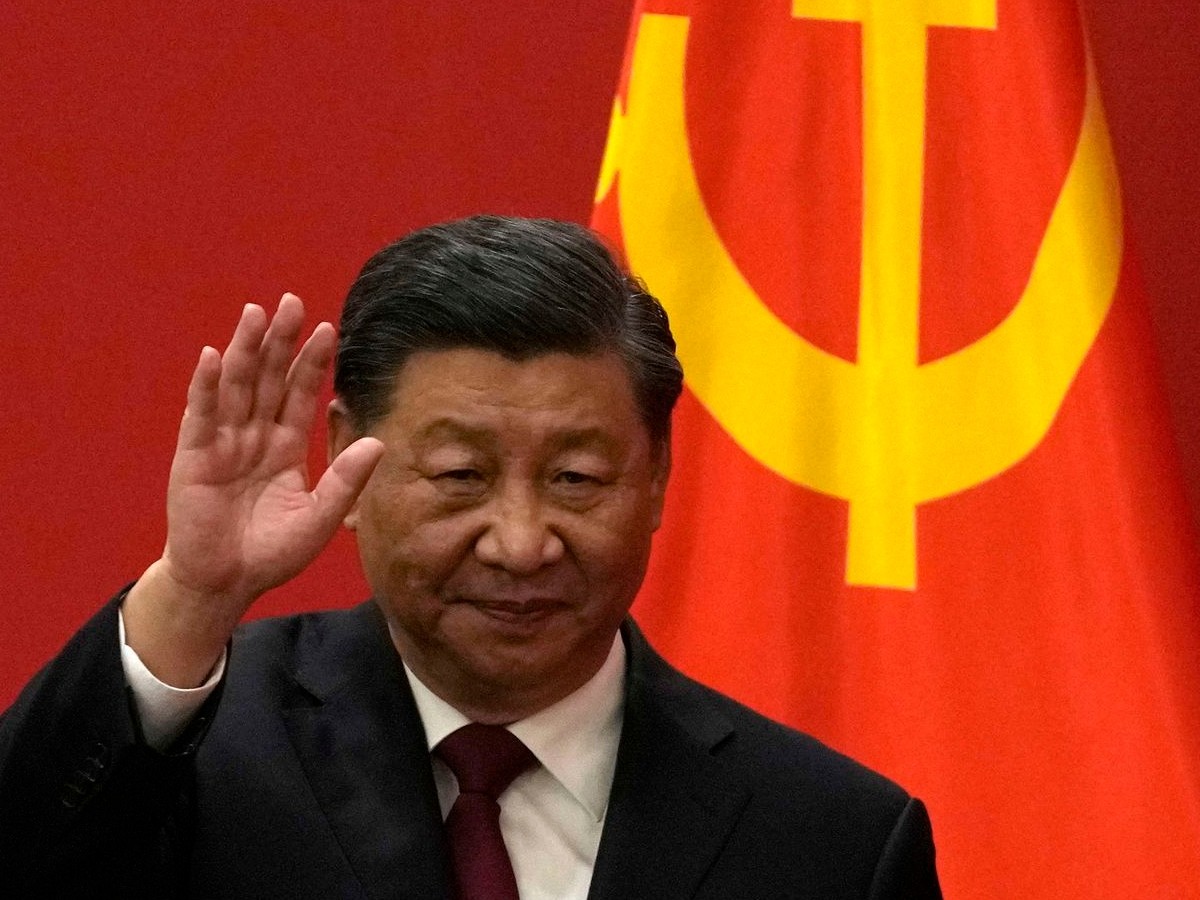
The recent Congress of the Chinese Communist Party (CCP) and the meeting between Chancellor Scholz and Xi Jinping have generated much noise in international media; and to our pleasant surprise likewise in national headlines. It is important that we dedicate resources and efforts to observing and understanding China. Undoubtedly, to be conscious of the relevance and influence Beijing has and will have as a fundamental actor within the system of the balance of power, the development of our economy, and the future wellbeing is something very positive for our society.
However, it is a shame that the majority of the coverage and analysis have not been published in efforts to understand China, rather, in general terms, driven by what Shane Weller in his book The Idea of Europe has denounced as “Euro-centrism, Euro-supremacism, and Euro-universalism”. A condition which has been with us for centuries.
In this Congress, Xi Jinping has openly disengaged the model of “growth at all cost” promoted during the mandate of his predecessor, Hu Jintao, at an internal level, and has cleared up any doubt about whether or not he will embrace the Western model of liberal democracy. The objective is to develop a country on one hand more balanced and sustainable, thus achieving the objectives set out for 2049, which are none other than overcoming the middle-income trap which has plagued many other developing countries. But along the way there, there will be socialism with Chinese characteristics.
Xi’s formula to deal with his greatest recent threats: the separatism of Hong Kong and Taiwan, COVID, the trade and technological war with the US, and the economic deacceleration after the housing bubble will have popped, as well as the the one he has revealed that he will apply when facing future challenges, are the same: more and more Party. The Party as the guarantee that the state will not be trapped by giant technological and financial firms (many in China believe that this is happening in the US). The Party in order to avoid becoming limited by foreign powers (in the eyes of much of the Chinese elite, this occurs in Europe).
Seeing the media attention given to Hu Jintao’s less than honourable, even humiliating, exit from the Congress, it is worth questioning (except logically the distances between democratic and authoritarian systems) do we not have politically similar behaviours in the West? In the parties, is it easy to enter, grow, or become a leader? Are political rivals not eliminated in a less than chivalrous way? The Bible or Quijote have already echoed this ancestral problem: it is easier to see a speck in someone else’s eye than a plank in one’s own.
From the West, we are dedicating maybe too much energy to criticising the model of Chinese governance, questioning the leadership of Xi, or entering into the debate of Beijing domestic policy. China deserves this scrutiny, but we must also analyse the policies which underlie the Party’s Leninist propaganda. As Yuen Yuen Ang pointed out, Xi Jinping has dismantled the collective decision-making introduced by Deng Xiaoping but not the technocratic state structure which implements the policies.
In this congress, China publicly has unveiled what will be its priorities and objectives. The goals it seeks to reach, projects to reinforce, and challenges it wishes to overcome (economic, political, social, and cultural). We must follow very attentively since all the spheres of the economy and policy will be defined by the goals of achieving a “shared prosperity” and the “modernisation” of the country which Xi so frequently emphasises.
With a more nationalist and ideological vision, and with a clear goal of achieving its own “strategic autonomy”, we will see a surge of opportunities for foreign businesses in sectors where China still does not possess a complete strategic independence. And it is autonomy that China seeks, just as us, and not supremacy. At least, for now.
It is precisely technological development, scientific innovation, health, fortification of its supply chains, or development of green energy which captures the interest of Beijing. And it is there where the greatest possibilities of cooperation and business remain. Business and Spanish experts agree on a common analysis: be prudent, get away from short sightedness, and seek to understand the dynamics locally. The Chinese market will continue to be a large consumer of all types of products and possibly will set many of the standards in the future; it is necessary to develop long-term strategies, far from the noise of geopolitical tensions, so as not to fall behind. German Chancellor Olaf Scholz’s visit last week to Beijing follows this same vision, under the clear conviction that for Germany to turn its back on China would be a historical error.
The new age which China embarks on will not necessarily be a success. It is likely that the concentration of power which Xi pursues will have negative consequences, as Daron Acemoglu predicts. The loss of the weight and influence of traditional factions and political families like those from Shanghai or that of the Youth League, who were close to former presidents Jiang Zemin or Hu Jintao, respectively, is not good news. Many Chinese liberals, (and there are many) are very disappointed with the trajectory that their country is taking. And with good reason. But to modify, adjust, or change the internal checks and the political and economic model of China will be up to the 1.4 billion Chinese citizens.
To continue to delegitimize the CCP (when few political science experts on China do so) only succeeds in creating more geopolitical tensions, in a moment when our own democracies are undergoing profound crises of legitimacy. It is arrogant to insist on our Euro-centrism, Euro-supremacism, and Euro-universalism when our own model of society is in question. It is also ironic to criticise China for imposing more state and less market, while we are on the same trend. And just as cynical is to reject fundamentally the Chinese autocratic model, when relations are growing closer with the Gulf monarchies.
It is much better to overcome the binary (and unproductive) dialogue of democracies against autocracies, and focus more on how to articulate future relations with China. While it is not up to Spain, Europe, or Western democracies to decide the future of any sovereign third country; it does lie in our power to decide with whom, to what extent, and how to develop our international and trade relations. On a strategic level, it is important to reduce the dependencies we have on China, but it is equally vital to be able to cooperate with the second global superpower, which although to our despite, will not be a democracy in the close future, but it will certainly be a key actor in the entire future agenda of global governance, from security to the economy and all the way to the environment. Precisely, our greatest challenge as humanity is to reach a collective action against climate change. Do we really think that we can achieve that by almost always presenting China as a threat?
The recent Congress of the Chinese Communist Party (CCP) and the meeting between Chancellor Scholz and Xi Jinping have generated much noise in international media; and to our pleasant surprise likewise in national headlines. It is important that we dedicate resources and efforts to observing and understanding China. Undoubtedly, to be conscious of the relevance and influence Beijing has and will have as a fundamental actor within the system of the balance of power, the development of our economy, and the future wellbeing is something very positive for our society.
However, it is a shame that the majority of the coverage and analysis have not been published in efforts to understand China, rather, in general terms, driven by what Shane Weller in his book The Idea of Europe has denounced as “Euro-centrism, Euro-supremacism, and Euro-universalism”. A condition which has been with us for centuries.
[Recibe los análisis de más actualidad en tu correo electrónico o en tu teléfono a través de nuestro canal de Telegram]
In a present marked by geopolitical rivalry and digital revolution (which compresses space and time, and accelerates and increases social tensions) and with a future more uncertain than ever, marked by radical uncertainty; China believes that the only way to ride the coming tidal wave is to reinforce the leadership of Xi Jinping, and, thus, transmit certainty to his population in times of great insecurity. In this Congress, Xi Jinping has openly disengaged the model of “growth at all cost” promoted during the mandate of his predecessor, Hu Jintao, at an internal level, and has cleared up any doubt about whether or not he will embrace the Western model of liberal democracy. The objective is to develop a country on one hand more balanced and sustainable, thus achieving the objectives set out for 2049, which are none other than overcoming the middle-income trap which has plagued many other developing countries. But along the way there, there will be socialism with Chinese characteristics.
Xi’s formula to deal with his greatest recent threats: the separatism of Hong Kong and Taiwan, COVID, the trade and technological war with the US, and the economic deacceleration after the housing bubble will have popped, as well as the the one he has revealed that he will apply when facing future challenges, are the same: more and more Party. The Party as the guarantee that the state will not be trapped by giant technological and financial firms (many in China believe that this is happening in the US). The Party in order to avoid becoming limited by foreign powers (in the eyes of much of the Chinese elite, this occurs in Europe).
Seeing the media attention given to Hu Jintao’s less than honourable, even humiliating, exit from the Congress, it is worth questioning (except logically the distances between democratic and authoritarian systems) do we not have politically similar behaviours in the West? In the parties, is it easy to enter, grow, or become a leader? Are political rivals not eliminated in a less than chivalrous way? The Bible or Quijote have already echoed this ancestral problem: it is easier to see a speck in someone else’s eye than a plank in one’s own.
From the West, we are dedicating maybe too much energy to criticising the model of Chinese governance, questioning the leadership of Xi, or entering into the debate of Beijing domestic policy. China deserves this scrutiny, but we must also analyse the policies which underlie the Party’s Leninist propaganda. As Yuen Yuen Ang pointed out, Xi Jinping has dismantled the collective decision-making introduced by Deng Xiaoping but not the technocratic state structure which implements the policies.
In this congress, China publicly has unveiled what will be its priorities and objectives. The goals it seeks to reach, projects to reinforce, and challenges it wishes to overcome (economic, political, social, and cultural). We must follow very attentively since all the spheres of the economy and policy will be defined by the goals of achieving a “shared prosperity” and the “modernisation” of the country which Xi so frequently emphasises.
With a more nationalist and ideological vision, and with a clear goal of achieving its own “strategic autonomy”, we will see a surge of opportunities for foreign businesses in sectors where China still does not possess a complete strategic independence. And it is autonomy that China seeks, just as us, and not supremacy. At least, for now.
It is precisely technological development, scientific innovation, health, fortification of its supply chains, or development of green energy which captures the interest of Beijing. And it is there where the greatest possibilities of cooperation and business remain. Business and Spanish experts agree on a common analysis: be prudent, get away from short sightedness, and seek to understand the dynamics locally. The Chinese market will continue to be a large consumer of all types of products and possibly will set many of the standards in the future; it is necessary to develop long-term strategies, far from the noise of geopolitical tensions, so as not to fall behind. German Chancellor Olaf Scholz’s visit last week to Beijing follows this same vision, under the clear conviction that for Germany to turn its back on China would be a historical error.
The new age which China embarks on will not necessarily be a success. It is likely that the concentration of power which Xi pursues will have negative consequences, as Daron Acemoglu predicts. The loss of the weight and influence of traditional factions and political families like those from Shanghai or that of the Youth League, who were close to former presidents Jiang Zemin or Hu Jintao, respectively, is not good news. Many Chinese liberals, (and there are many) are very disappointed with the trajectory that their country is taking. And with good reason. But to modify, adjust, or change the internal checks and the political and economic model of China will be up to the 1.4 billion Chinese citizens.
To continue to delegitimize the CCP (when few political science experts on China do so) only succeeds in creating more geopolitical tensions, in a moment when our own democracies are undergoing profound crises of legitimacy. It is arrogant to insist on our Euro-centrism, Euro-supremacism, and Euro-universalism when our own model of society is in question. It is also ironic to criticise China for imposing more state and less market, while we are on the same trend. And just as cynical is to reject fundamentally the Chinese autocratic model, when relations are growing closer with the Gulf monarchies.
It is much better to overcome the binary (and unproductive) dialogue of democracies against autocracies, and focus more on how to articulate future relations with China. While it is not up to Spain, Europe, or Western democracies to decide the future of any sovereign third country; it does lie in our power to decide with whom, to what extent, and how to develop our international and trade relations. On a strategic level, it is important to reduce the dependencies we have on China, but it is equally vital to be able to cooperate with the second global superpower, which although to our despite, will not be a democracy in the close future, but it will certainly be a key actor in the entire future agenda of global governance, from security to the economy and all the way to the environment. Precisely, our greatest challenge as humanity is to reach a collective action against climate change. Do we really think that we can achieve that by almost always presenting China as a threat?
(Se puede encontrar el artículo original en El País)
ARTÍCULOS RELACIONADOS

Luis Sevillano


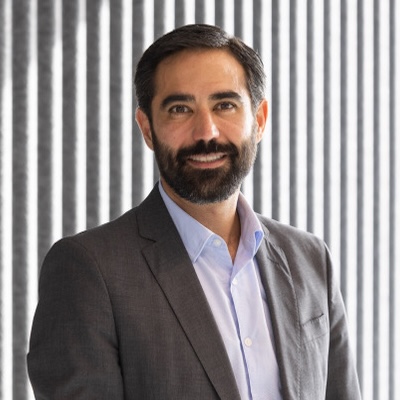
Miguel Otero Iglesias
Investigador principal del Real Instituto Elcano.
También es investigador asociado del Instituto Unión Europea-Asia perteneciente a la Escuela de Negocios ESSCA de París y regularmente profesor visitante en el Instituto de Economía y Política Mundial de la Academia China de las Ciencias Sociales en Pequín. A su vez es profesor asociado de la Universidad Pontificia Comillas ICAI-ICADE y de la Universidad del Instituto de Empresa. Es doctor por la Universidad de Oxford Brookes, fue investigador post-doctoral en la London School of Economics y profesor asociado en la Universidad de Oxford. Su campo de investigación es la economía política internacional, con particular interés en la política y la gobernanza monetaria europea e internacional. Es el autor de The Euro, the Dollar and the Global Financial Crisis (Routledge, Nueva York, 2014) y ha publicado en numerosos revistas científicas internacionales.
Carlos Santana
Profesor adjunto en la IE Business School y experto en cadenas de suministro.
Investiga sobre la Relación entre la empresa privada y el Estado en China: Mecanismos de Comunicación, Coordinación y Control en su Presencia Internacional (2008-2020). WGL (Workshop in global Leadership) en la Harvard Kennedy School. MBA (IE Business School y Brown University). Máster en Ciencias de la Comunicación. Publicidad y Relaciones Públicas. (UCM)
Ahora en portada
17 de octubre de 2026
16 de octubre de 2026
Noticias relacionadas
Hace 208 semanas
European Defense Needs the EU
Hace 224 semanas
Nato's precarious revival
Lo más leído